


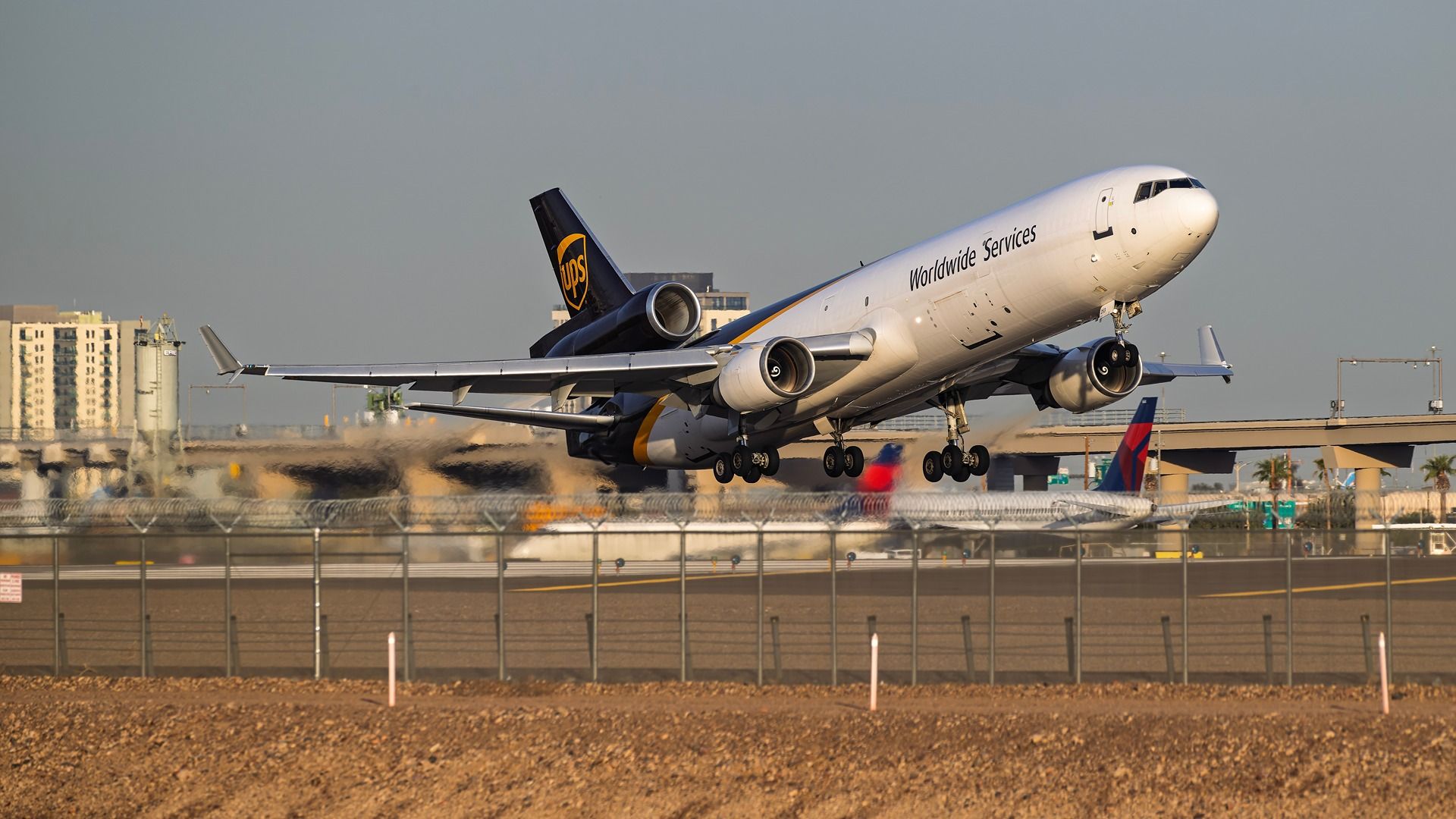
The McDonnell Douglas MD-11F operated by UPS Airlines that tragically crashed on Tuesday evening at Louisville Muhammad Ali International Airport (SDF)was a relic by comparison to most commercial planes in service today. The jet is serial number (MSN) 48417, according to the Aviation Safety Network. It rolled off the line in 1991, which was the same year that the Soviet Union dissolved and the Cold War came to an end.
UPS has been working towards sunsetting the MD-11F fleet it owns, which includes the last airframe of the type ever made, but it still flies 27 examples to this day. So, on the heels of a terrible crash that killed at least 12 people, the question is, why does UPS still rely on such antiquated cargo jets?
Over The Hill: The UPS Fleet

The UPS fleet has an average age of 30 years, according to Planespotter.net data. The MD-11 is a rare sight in the sky today, owing to performance issues from day one when the jet debuted. The last passenger flight of an MD-11 was flown by KLM of the Netherlands in 2014, and UPS is one of the few carriers in the world still flying the type. Its disappointing tenure as an airliner led to a brief production run of just 200 aircraft, which dragged out even after its original creator was absorbed in the merger with Boeing.
While passenger airlines were not pleased, cargo haulers have found the MD-11F to offer a good balance of payload and range with economics that work well for the industry. UPS has been planning to replace the MD-11F with the Boeing 767-300F, which will remain in production until 2027. Perhaps surprisingly, the newer jet has lower performance metrics by comparison, which likely contributes to UPS’ prolonged fleet renewal schedule.
UPS raised its total order for Boeing 767 freighters to more than 100 in 2022, and to date, it has received 98 of the newer jets. The average age of these planes is 16 years old, and at least ten more are yet to be delivered. UPS Executive Vice President and President US, Nando Cesarone, commented on the 2022 order increase:
“With these aircraft, our fleet will continue to be among the most modern in our industry, meeting our customers’ needs while improving our efficiency, sustainability and reliability.”
Hard To Handle: The Notorious MD-11

The MD-11 has a long list of crashes during approach and landing due to its notoriously difficult handling characteristics. One other MD-11F has previously been written off by UPS due to a mishap. That accident, Flight 61 in 2016, was one of many mishaps that occurred on landing in the history of the type.
Over a decade ago, NPR attempted to draw attention to the starkly higher accident rate among cargo jets compared to passenger jets. Following the crash of UPS Airlines 1354, an Airbus A300, NPR highlighted the fact that cargo jets crash far more often than passenger jets despite flying roughly 90% fewer missions.
The following year, the National Transportation Safety Bureau (NTSB) published a report specifically addressing the high rate of hard landings common to MD-11F operations. The NTSB recorded 13 mishaps between 1994 and 2010 and largely blamed pilot error, but it did acknowledge that the jet has some of the highest landing speeds of any cargo jet. It also described unforgiving handling characteristics that make the plane react to poor control inputs unpredictably.
Despite a poor safety record, a reputation for difficult landing behavior, and the old age of its fleet, UPS has only retired about 30% of its historic total of MD-11Fs. The slow arrival of new planes is also responsible for carriers keeping old jets in service. The demand for air commerce has steadily increased every year, but aircraft production has been disrupted by global supply chain issues, exacerbated by the Coronavirus Pandemic, which severely cut air traffic from 2020 to 2022.
Tragic History: Made By McDonnell Douglas

UPS is not unique in its choice to continue flying jets for over three decades since it rolled off the line. The global freighter fleet averages nearly 40 years of active service before retirement but it is a standout for its number of trijets. There are roughly 60 MD-11Fs operating around the world, which means that UPS owns nearly half the total still flying around the world.
The video footage of the incident revealed a disturbing similarity to the deadliest commercial aviation mishap in American history. The left engine of UPS Flight 2976 appears to have separated from the wing just like the 1979 crash of American Airlines Flight 191 that killed 273 people.
Flight 191 was a DC-10 trijet made by McDonnell Douglas, the predecessor to the MD-11. Many industry analysts highlight the DC-10 and MD-11 as examples of how McDonnell Douglas was a failure as a planemaker because engineering was given a backseat to the marketing and sales department.
That culture is attributed with not only destroying the iconic company that made incredible aircraft like the F-15 Eagle and F-4 Phantom fighters, but also poisoning the company that it joined in 1997: Boeing. Many attribute the 737 MAX crashes and the debacle that has followed to that fateful merger.
