


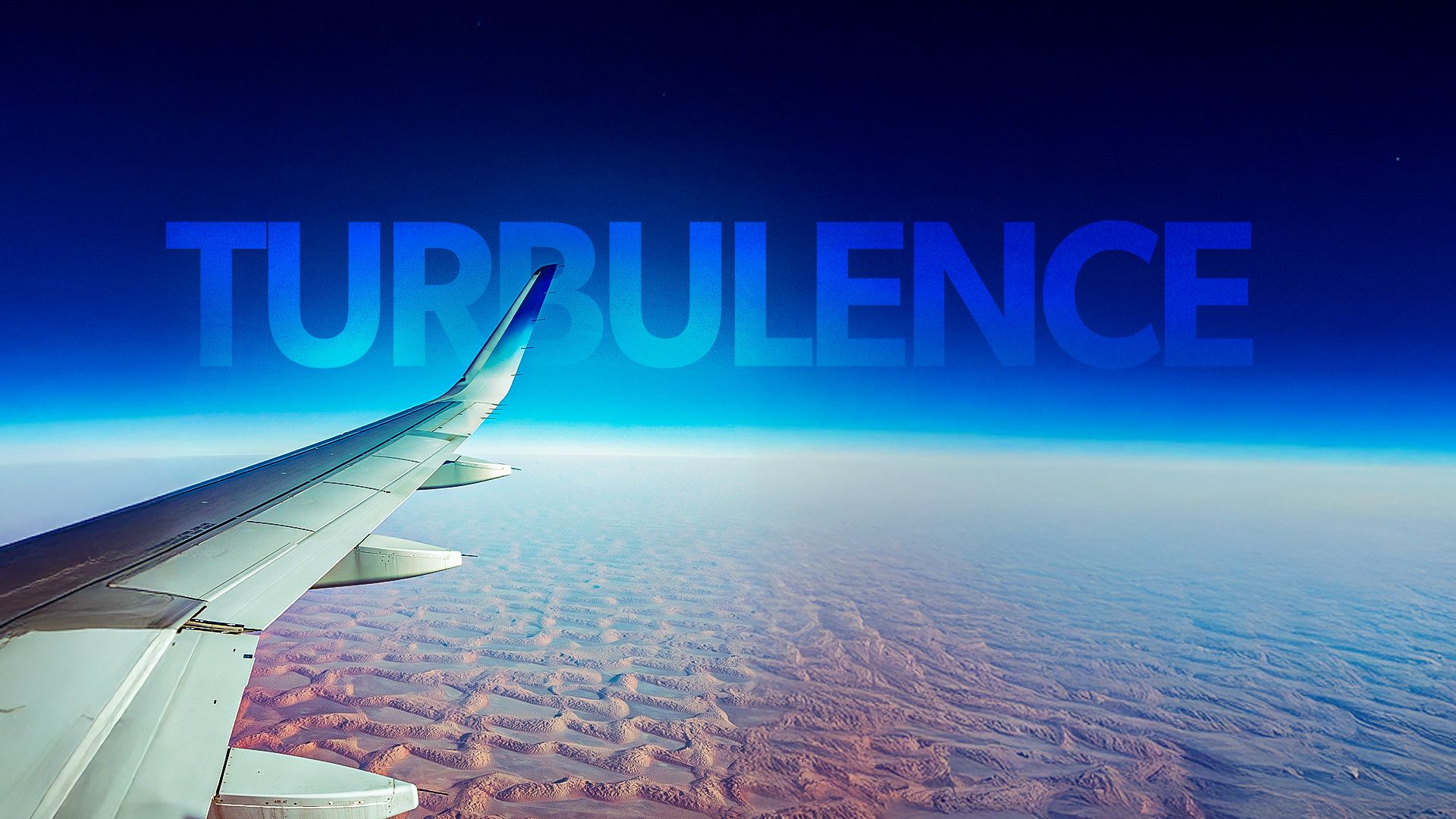
Turbulence is a natural part of flying, one that’s unlikely to disappear. With thousands of flights taking off and landing every day, almost all of them encounter some degree of bumpy air, with most aircraft experiencing moderate to “severe-or-greater” turbulence 68,000 times every year. In the vast majority of cases, it has no real effect on the aircraft, its crew, or the passengers on board.
Yet while turbulence poses little actual danger, it’s understandable that first-time or infrequent flyers find it unsettling. In this article, we take a closer look at what causes turbulence, how pilots manage it, and how flight crews become so accustomed to something that can feel so intimidating from the cabin.
A Pilot’s Perspective On Turbulence

Turbulence affects all levels and aspects of flight. Whether you’re flying a 747 from London to New York, a light aircraft at your local flying school, or a helicopter across the Grand Canyon, all aircraft, no matter their size, experience turbulence. Knowledge of turbulence in flight is no doubt most with pilots, who analyze, predict, and actively deal with it daily. So, doesn’t turbulence worry them?
In short, and generally, no, it doesn’t. The majority of turbulence encountered is light to moderate, having little effect on the aircraft or flight. It is usually predictable, and the effects can be mitigated by avoiding areas likely to cause turbulence. For pilots, turbulence is often ‘part of the job’ and definitely not thrilling, but not dangerous. Modern aircraft are built to withstand far more stress than typical turbulence.
That said, caution is warranted when dealing with certain types and severities of turbulence. Pilots are trained to recognize conditions that may require a change in altitude, speed, or route to keep the flight safe and comfortable, and they treat these situations with measured professionalism rather than concern.
The Causes Of Turbulence

Turbulence has several causes depending on geographic location, altitude, and other factors. Some higher-altitude turbulence, including Clear-Air Turbulence (CAT), which occurs near the jet stream in clear skies, is caused by strong wind shear and is undetectable by onboard radar. Frontal turbulence occurs along high-altitude weather fronts, where temperature gradients and wind shifts disturb the smooth flow of air. Temperature inversion turbulence can also occur when warm air lies above cooler air. The boundary layer at altitude can create light to moderate turbulence.
Turbulence caused at lower altitudes includes mechanical turbulence, caused by airflow disruption from buildings, terrain, or rugged landscapes. Convective turbulence, where strong thermals on hot days cause rising and falling air. Another example is wake turbulence created by other aircraft, especially large/heavy ones. This is most hazardous during takeoff and landing when aircraft are closer together.
Although not an exhaustive or comprehensive list of every turbulence type or its exact formation, it clearly illustrates how many atmospheric factors can influence an aircraft in flight. With so many dynamic forces interacting at different altitudes, it’s easy to see why turbulence is such a frequent and unavoidable part of air travel.

Cruising Altitude: How Low Is Too Low?
Elevating or descending? Cruising altitude is a direct result of safety, fuel use, and comfort in a myriad of ways.
Predicting And Avoiding Turbulence

Extensive planning is part of every flight. Everything from approach planning to NOTAMs to mass and balance. Another key area that is analyzed before and during flight is the weather. Weather planning starts before passengers even step foot on the aircraft, with pilots having access to a range of weather reports and forecasts, including ATIS (Automatic Terminal Information Service), which provides current weather and operational information for an airport, METAR (Meteorological Aerodrome Report), a coded weather report for a specific airport and TAF (Terminal Aerodrome Forecast), which is similar to METAR, but provides a forecast as opposed to an observation.
There are a whole host of ways pilots can predict turbulence or poor weather conditions, with around 75% of turbulence successfully predicted up to 18 hours beforehand, enabling them to avoid or mitigate its effects. Some ways they do this can include climbing/descending or routing around to avoid specific areas. Another way they maintain aircraft safety is by ensuring they fly within published and approved parameters for turbulence penetration. ‘Vb’ is the maximum speed at which the aircraft can safely withstand loads induced by a severe vertical gust without exceeding its structural design limits. If avoiding turbulence is not possible, pilots ensure the aircraft operates safely through it.
One of the biggest dangers in severe turbulence isn’t really on the airframe, but instead, on the people inside it. Passengers who are standing or moving around the cabin could be knocked off balance by unexpected severe turbulence. Another risk is items moving around the cabin or drinks being spilled. This is especially a risk if the drinks are hot. To mitigate this risk, drinks are generally not served when the crew has passed any anticipated stronger turbulence, seat belt signs are illuminated to ensure passenger safety, and the cabin is secure.
Growing Challenge: Turbulence & Climate Change

In general, it is believed and evidenced that climate change is increasing the amount of heat and energy in the atmosphere, which alters temperature gradients, the differences between warm and cold air that help drive atmospheric motion. As these gradients shift, the atmosphere becomes more prone to unstable and chaotic movement. This added instability contributes to more frequent and intense turbulent conditions.
Warming also allows the air to hold more moisture, fueling stronger convection. That means rising warm air can climb higher and faster, creating more vigorous storm systems. These storms, in turn, generate more turbulent air, especially in extreme weather events like severe thunderstorms and tropical cyclones. Although on the extreme end of the weather spectrum, this will still contribute to global turbulence.
|
Turbulence Level (AGU) |
Increase Since 1979 |
Notes / Region Focus |
|---|---|---|
|
Light or greater |
+17% |
North Atlantic cruising altitudes (~39,000 ft) |
|
Moderate or greater |
+37% |
Strongest trends over mid-latitudes |
|
Severe or greater |
+55% |
The sharpest increase in severe turbulence, raising aviation risks |
Another climate-driven effect is the strengthening and shifting of jet streams. As the Arctic warms more quickly than lower latitudes, as a result of global warming, wind patterns aloft become more irregular. This leads to an increase in clear-air turbulence, which is especially notable for aviation but also signals broader atmospheric instability driven by ongoing climate change. A study conducted shows clear-air turbulence has risen sharply over recent decades, with light-or-greater turbulence up 17%, moderate-or-greater up 37%, and severe-or-greater up 55% since 1979.

How Mountains Influence Turbulence
There are several things pilots have to consider while flying over mountains.
Aircraft Design And Passenger Safety

Aircraft design incorporates several features that help reduce the impact of turbulence on both safety and passenger comfort. One major element is wing design: modern airliners use flexible, swept-back wings that can bend and absorb turbulent energy rather than transferring it directly to the fuselage. This flexibility acts like a shock absorber, smoothing out the aircraft’s motion during rough air.
Advanced flight control systems further enhance stability in turbulent conditions. Fly-by-wire technology allows computers to make rapid, precise adjustments to control surfaces, far faster than a human pilot could, helping maintain smooth flight even when the aircraft encounters sudden air disturbances. These systems continuously monitor factors like airspeed, angle of attack, and wind changes, making micro-corrections that keep the aircraft stable.
Engine placement and fuselage design also contribute to turbulence resilience. Mounting engines beneath the wings helps distribute weight and increase the wing’s ability to flex, while the aerodynamic shaping of the fuselage reduces drag and improves overall handling. As turbulence becomes more common due to climate change, ongoing innovations, such as adaptive wings, improved sensors, and predictive turbulence modeling, are being developed to further enhance aircraft performance and safety.
The Bottom Line: Turbulence Is A Nuisance

Turbulence is a normal part of flying, caused by many different changes in the atmosphere. While it can feel unsettling, it’s something aircraft handle every day, and they’re built to withstand far more than the bumps passengers experience. Understanding this helps take some of the mystery out of why turbulence happens so often.
For pilots and flight attendants, turbulence is mostly routine. They are trained to recognize the conditions that create turbulence and know how to adjust flight parameters to keep everyone safe and as comfortable as possible. Even when the bumps get stronger, crews follow procedures that have been used safely for decades.
For passengers, turbulence may never be pleasant, but it doesn’t have to be frightening. Knowing what causes it and how prepared pilots are to deal with it can make the experience easier to manage. While there are some inherent risks and some isolated incidents in the past, turbulence is usually just a temporary inconvenience rather than a real danger. The result is usually having to wait a little longer for that coffee or to use the restroom while those seat belt signs stay on.
