


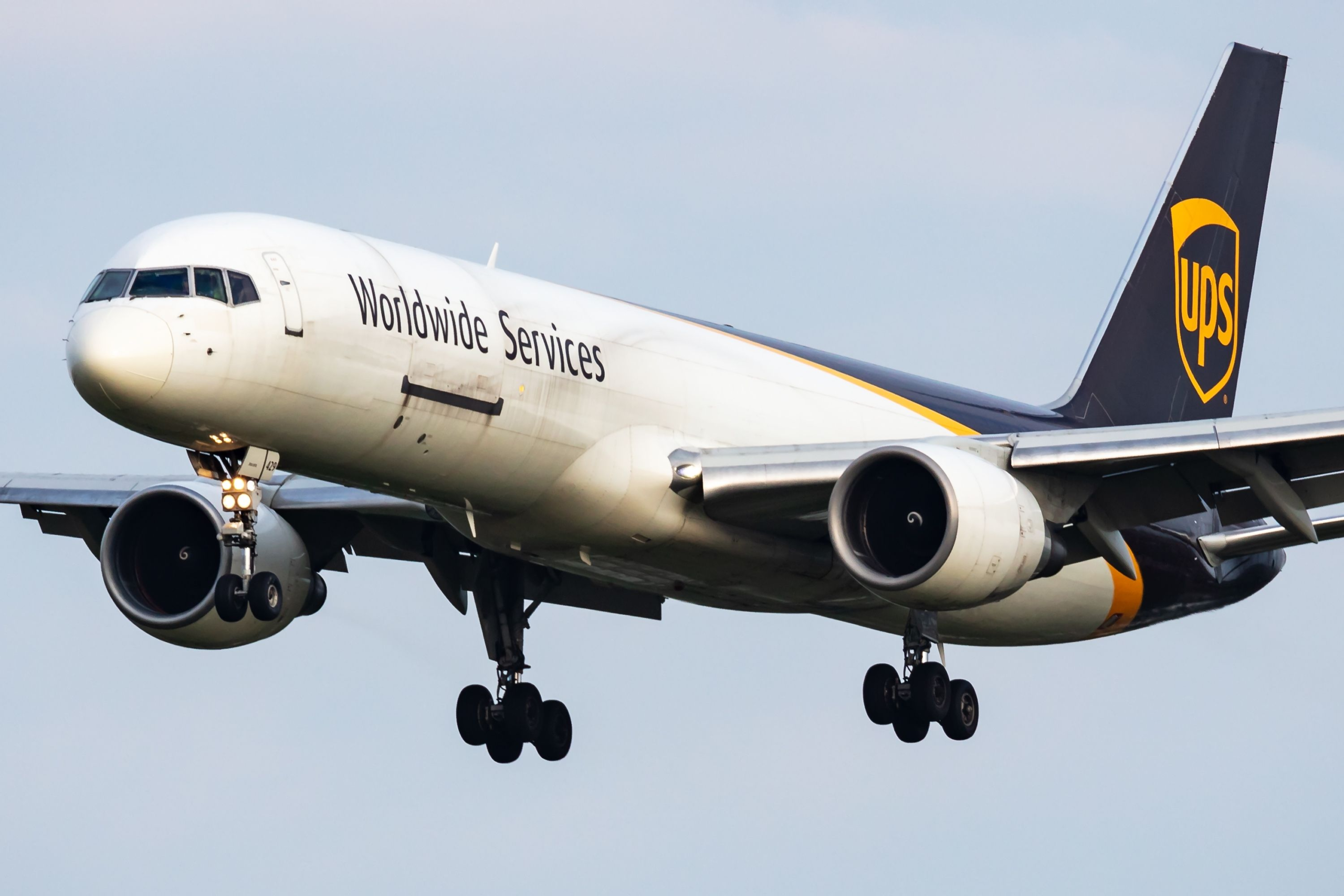
Few aircraft are truly as iconic as the Boeing 757, a long-range twin-engine aircraft that has distinguished itself for being able to serve both short and medium-haul routes crossing continents and oceans. These kinds of services fundamentally restructured airline route networks in the early 2000s, opening up access to new kinds of destinations for carriers that had previously been off-limits due to range and demand considerations. The Boeing 757, a long-range narrowbody that fits right in the capacity sweet spot between single-aisle and widebody jets, helped address this demand and has been used for decades to serve routes that would be completely infeasible without the jet.
Aircraft like the Boeing 757, which are commercial successes popular with multiple different kinds of carriers, are almost always re-engineered into new variants that offer more competitive features with the hope of ultimately boosting sales. The Boeing 737 MAX and Airbus A320neo families of aircraft are both excellent examples of these kinds of models, which both bring quite a lot to the table. However, Boeing never decided to build a re-engined version of the Boeing 757. Let’s take a deeper look at this model and why Boeing elected not to upgrade it.
A Brief History Of The Boeing 757

The Boeing 757 is a US-built narrowbody airliner, and it was designed to serve as the principal successor to the capable three-engine Boeing 727. Originally launched as the Boeing 7N7, the aircraft first won orders from customers in August 1978, and the jet took to the skies for the first time on February 19, 1982, before receiving FAA certification that December. The jet entered service with Eastern Air Lines on January 1, 1983. The first model in this family, the Boeing 757-200, was later adapted into a versatile freighter in 1987 and a combi aircraft in 1988, before the introduction of the stretched Boeing 757-300, which was ultimately launched in 1996.
Production of this aircraft ended in October 2004 after 1,050 aircraft had been built, with larger Boeing 737NG variants primarily positioned to succeed the 757-200, albeit with a significantly weaker range profile. An aircraft powered by Rolls-Royce RB211 or Pratt & Whitney PW2000 turbofan engines, the aircraft is certified to have a maximum takeoff weight (MTOW) exceeding 250,000 lbs. The dynamic Boeing 757 features a supercritical wing, alongside a six-abreast fuselage and a two-pilot cockpit which shares the same instrument rating as the Boeing 767. Some additional specifications for the model are available in the table below:
|
Category: |
Boeing 757-200 Specification: |
|---|---|
|
Maximum takeoff weight (MTOW): |
255,000 lbs (115,000 kg) |
|
Service ceiling: |
42,650 ft (13,000 m) |
|
Cruising speed: |
Mach 0.8 |
Across the board, the aircraft quickly emerged as one of the key players in the mid-size market, and one of the few jets that could balance the range of shorter-range widebody jets with the capacity of large narrowbodies. The aircraft quickly began to rewrite the playbook when it came to different kinds of airline operations, especially in the North Atlantic.
Who Were The Boeing 757’s Principal Customers?

Throughout the Boeing 757’s operational history (the model certainly remains in operational service), Delta Air Lines and United Airlines have remained the jet’s largest operators on the passenger side. Cargo operators FedEx and UPS have also been key players, operating very large fleets and qualifying as primary users. By 2018, the largest remaining operators were these four, with American Airlines having previously operated a large fleet of around 140 jets until 2007, when it removed these older-generation jets from its fleet.
Delta has only continued to see its Boeing 757 fleet grow, having inherited several airframes following its merger with Northwest Airlines. Among freighter operators, the Boeing 757 has remained in service for decades, with fleets of hundreds of 757s continuing to carry cargo all across the globe today.
In August, around 600 Boeing 757s were flying worldwide, led by Delta, FedEx, UPS, and United, with the next largest carrier currently being Icelandic flag carrier Icelandair. Former operators include British Airways, which operated the type for 27 years before retiring it in 2010.
What Were The 757’s Different Variants And Why Were They Developed?

US-based manufacturer Boeing built the dynamic Boeing 757 in two different principal families. The standard Boeing 757-200 (which entered service in 1983) replaced the Boeing 727 on several short and medium-haul routes. The original model offered high-lift wings and was powered by incredibly capable Rolls-Royce RB211 or Pratt & Whitney PW2000 engines. These powerplants enabled the aircraft to have transcontinental range and exceptionally strong field performance. Airlines later purchased some higher-weight variants of the Boeing 757, which were ETPS capable and could fly long-thin transatlantic segments that could not justify a widebody jet.
In order to serve demand from end-to-end integrators, Boeing created the Boeing 757-200PF, which featured a main-deck cargo door and a strengthened floor, capable of hauling 15 large cargo pallets. Aftermarket conversion freighters also sold well, as they could extend an airframe’s life at a relatively low capital cost. The Boeing 757-300 is a 23-foot stretch of the earlier Boeing 757-200 model, which is optimized for high-density leisure travel and operating hub-to-hub services while retaining commonality in engines, systems, and pilot training capabilities.
Some Boeing 757-200 and Boeing 757-300 aircraft were fitted with winglets and performance improvement packages. The United States Air Force also acquired some modified cargo variants that also served as VIP transports. Across the board, all of these variants were designed to ensure that transcontinental flights could be operated while also maintaining strong payload capabilities.
Why Didn’t Boeing Build A Re-Engined Variant?

Boeing did not decide to build an advanced or re-engined version of the Boeing 757, a popular twinjet which clearly punched far above its weight. In 2015, the company indicated that it had performed a feasibility analysis for re-engining the aircraft, ultimately settling on the idea that there was simply “no business case” for it. Even though airlines were somewhat interested in the idea, restarting an aircraft program that had been shut down more than a decade prior would have proven extremely expensive.
Attempting to completely rebuild a supply chain was already a massive challenge, one that only multiplied when it was considered that the factory which had previously produced the Boeing 757 had been reconfigured to build Boeing 737 models. The largest technical barrier was the aircraft’s engine production, with no powerplant on the market that could adequately provide the roughly 40,000 pounds of thrust the new jet would need.
Analyst models demonstrated that this new kind of engine would be needed to ultimately match the performance of older-generation 757s, adding billions and years to a program that had been long abandoned. Strategically, Boeing attempted to better focus on marketing its single-aisle models that pushed the upward limits of capacity, such as the Boeing 737 and the Airbus A321. It simply determined that the additional costs associated with bringing back the Boeing 757’s development pipeline would not be worth the benefit of a few additional orders, according to Reuters.
What Did Boeing Lose Out On As A Result Of This Decision?

Boeing did ponder the idea of building a re-engined Boeing 757 for a good reason. There was proven demand in the market for this kind of mid-capacity aircraft. While historically, air travel has revolved around long-haul connections between major global hubs, today’s market is more interested in point-to-point connections, with passengers primarily looking for new kinds of direct flights which open up access to new kinds of destinations.
The upgraded Boeing 757 would have been capable of servicing this demand effectively, as well as meeting the demand from large legacy operators of the type. United Airlines, Delta Air Lines, and freight operators would certainly look to upgrade their fleets by incorporating a new 757 model into their network plans. This type of jet would have expanded airlines’ ability to serve new destinations.
For carriers looking to fly across the North Atlantic specifically, this kind of jet could have opened up air service between smaller European destinations and core US markets. However, there is an aircraft in the market which has benefitted significantly from Boeing’s decision not to re-engine the Airbus A321.
Airbus Is The Biggest Winner From This Decision

European legacy aerospace manufacturer Airbus is undeniably the biggest winner to emerge from this decision. The planemaker holds this distinction by being the principal manufacturer behind the Airbus A320 family.
The Airbus A320 family includes a number of longer-range models like the Airbus A321neo, the Airbus A321LR and the Airbus A321 XLR, all of which are able to compete quite effectively with the Boeing 757. By not entering this market, Boeing ceded this entire segment to its principal European rival, according to FlightGlobal.
Boeing’s decision not to enter the market was driven by a combination of financial and strategic factors. The company did not want to invest the capital needed to bring the Boeing 757 program back to life, doing so out of fear of competition in this space and a lack of confidence that the aircraft would sell exceptionally well.
