


In commercial aviation, there is a clear split in how different programs approach engine selection. The Boeing 737, which long held the title of the most successful jet-powered airliner, has always only been equipped with one engine type at a time, switching from Pratt & Whitney to the CFM56 in the 1980s. The competing Airbus A320, which has recently taken the title away from the 737, has always offered two engine options.
The Boeing 757 is one of the most unique narrowbodies among aviation enthusiasts due to its incredible power and performance. However, compared to other single-aisle planes, the aircraft sold relatively few units. Indeed, only 1,050 units were produced, which is fewer than many widebody programs. However, the 757 was offered with two engine types: the Rolls-Royce RB211 and the Pratt & Whitney PW2000. Here’s why Boeing did this.
The Advantages Of Offering A Choice Of Engines

Offering different engines means that customers have choices on how to configure their airplane. Just as a 757 has design differences that give it various advantages and disadvantages against other aircraft, different engine models have advantages and disadvantages. An engine with superior climb efficiency may be better for airlines mainly operating shorter flights, whereas an engine optimized for lower fuel burn during cruise is better suited for carriers operating longer routes.
Additionally, competition between multiple engine models on a single aircraft type often leads to lower pricing, given that manufacturers have to directly compete. Not only that, but a choice of engines means that airlines have more opportunity for fleet commonality. In the case of the 757, United chose the PW2000 while also utilizing Pratt & Whitney engines on most of the rest of its fleet. This also worked for a carrier like British Airways, which uses Rolls-Royce engines on most of its fleet.
While the aforementioned benefits primarily serve the airlines, engine options also benefit manufacturers. Primarily, this has the effect of broadening market appeal, as a carrier like United would likely have been more reluctant to order the 757 if it exclusively came with the RB211, and vice versa for major Rolls-Royce customers. For engine manufacturers, this helps them enter new markets that may have been closed off if a certain airliner only used one engine model.
The Disadvantages Of Dual Sourcing Engines

For airlines, an airliner being sold with multiple engine choices has virtually no downside, but it does come with added costs and complexity for manufacturers. As such, the trend in recent years has notably been to sole-source. Airbus only has one aircraft program that offers a choice of engines (A320neo), and the same is true for Boeing (the 787). Boeing is relying on General Electric (777X) and CFM (737 MAX), while Airbus is focusing on Rolls-Royce (A330neo, A350) and Pratt & Whitney (A220).
Boeing only needs to certify the 737 MAX with its CFM LEAP engines, but, when developing the 757, it had to certify the type with the PW2000 and the RB211 separately, increasing costs. Manufacturers need to make changes to the aircraft and its systems to accommodate different engine models, while pricing contests often lead to reduced margins for engine manufacturers.
|
Aircraft |
Engine |
Aircraft |
Engine |
Aircraft |
Engine |
|---|---|---|---|---|---|
|
Airbus A220 |
Pratt & Whitney PW1500G |
Boeing 737 MAX |
CFM LEAP-1B |
Embraer E-Jet |
General Electric CF34 |
|
Airbus A320neo |
CFM LEAP-1A, Pratt & Whitney PW1100G |
Boeing 777X |
General Electric GE9X |
Embraer E2 |
Pratt & Whitney PW1900G |
|
Airbus A330neo |
Rolls-Royce Trent 7000 |
Boeing 787 Dreamliner |
General Electric GEnx, Rolls-Royce Trent 1000 |
||
|
Airbus A350 XWB |
Rolls-Royce Trent XWB |
Providing multiple engine options does partially protect an aircraft type from issues with a particular model (see issues with the 787’s Rolls-Royce engines). However, this hasn’t appeared to be enough to motivate manufacturers to move away from sole-sourcing. The Airbus A330 went from having three engine options to one with the A330neo, while the Boeing 777 went from three choices to one with the second-generation 777 in the 2000s.
Why Did Boeing Offer Two Choices On The 757?

The Boeing 757 was envisioned as a replacement for the trijet Boeing 727, at the time the world’s most successful jet-powered airliner. The 727 was designed at the beginning of the Jet Age, when the low-bypass turbofan was the only type of turbofan engine available. The 757, having been developed in the late 1970s for Entry-Into-Service in 1983, could be equipped with high-bypass turbofans that were more powerful and more efficient than the Pratt & Whitney JT8Ds on the 727.
Rolls-Royce’s new RB211 engine was already proving to be an excellent engine on the Lockheed L-1011 TriStar, but the program was challenged by development issues, and ultimately proved to be a relative failure. Rolls-Royce, however, further developed the RB211, and 757 launch customers British Airways and Eastern Airlines ordered their examples with the RB211-535. This marked the first time that a Boeing airliner had been launched with foreign engines.
|
Aircraft |
Engine Model (At Launch) |
|---|---|
|
Boeing 707 |
Pratt & Whitney JT3C |
|
Boeing 727 |
Pratt & Whitney JT8D |
|
Boeing 737 |
Pratt & Whitney JT8D |
|
Boeing 747 |
Pratt & Whitney JT9D |
|
Boeing 757 |
Rolls-Royce RB211 |
Pratt & Whitney had initially developed the PW2000 for the McDonnell Douglas YC-15 demonstrator, later adapting the model for use on the 757. The PW2000 on the 757 was later confirmed when Delta Air Lines placed its initial order for 60 examples. General Electric also sought to enter the competition by offering a derivative of the CF6; however, this initiative was cancelled due to a lack of airline interest in a 757 powered by a scaled-down CF6.
Looking Deeper At The Rivalry Between Pratt & Whitney And Rolls-Royce

During the time in which the 757 was developed, it was far more common for manufacturers to add an engine option at the request of customers. Enough airlines desired the PW2000 or the RB211 that it outweighed the drawbacks of added development and certification costs. This was also less of a concern in the 1970s than today, as certification standards have risen.
While the Rolls-Royce RB211 was always an efficient, innovative engine, it was initially used on the Lockheed L-1011 Tristar, the worst selling Western widebody in the 1970s. The later 524 series was found on improved Tristars while also being offered on the Boeing 747 and 767. However, it was with the 535 series developed for the 757 that the RB211 hit its stride, with its low noise level and reliability being two major advantages.
|
Series |
Applications |
|---|---|
|
RB211-22 |
Lockheed L-1011 Tristar |
|
RB211-524 |
Boeing 747, Boeing 767, Lockheed L-1011 Tristar |
|
RB211-535 |
Boeing 757 |
The Boeing 757 is the only civilian aircraft to use the PW2000, and McDonnell Douglas would later select the military variant, the F117, to power the famous C-17 Globemaster III. The PW2000 entered service in 1985, two years after the RB211, and while the PW2000 was also remarkably fuel efficient for its day, the model ended up experiencing reliability issues in its early years of operations. As a whole, the PW2000 proved to be the less popular of the two engine models.
Market Analysis: PW2000 Vs RB211

One of the biggest orders for the RB211 came from  American Airlines in 1988 for 50 examples. This was one of the most public endorsements for the RB211, and helped further solidify the engine as the leading choice for the Boeing 757. In the US, other notable customers for the RB211 included Continental Airlines and Eastern Airlines. Today, prominent 757 operator Icelandair also equips its fleet with the RB211.
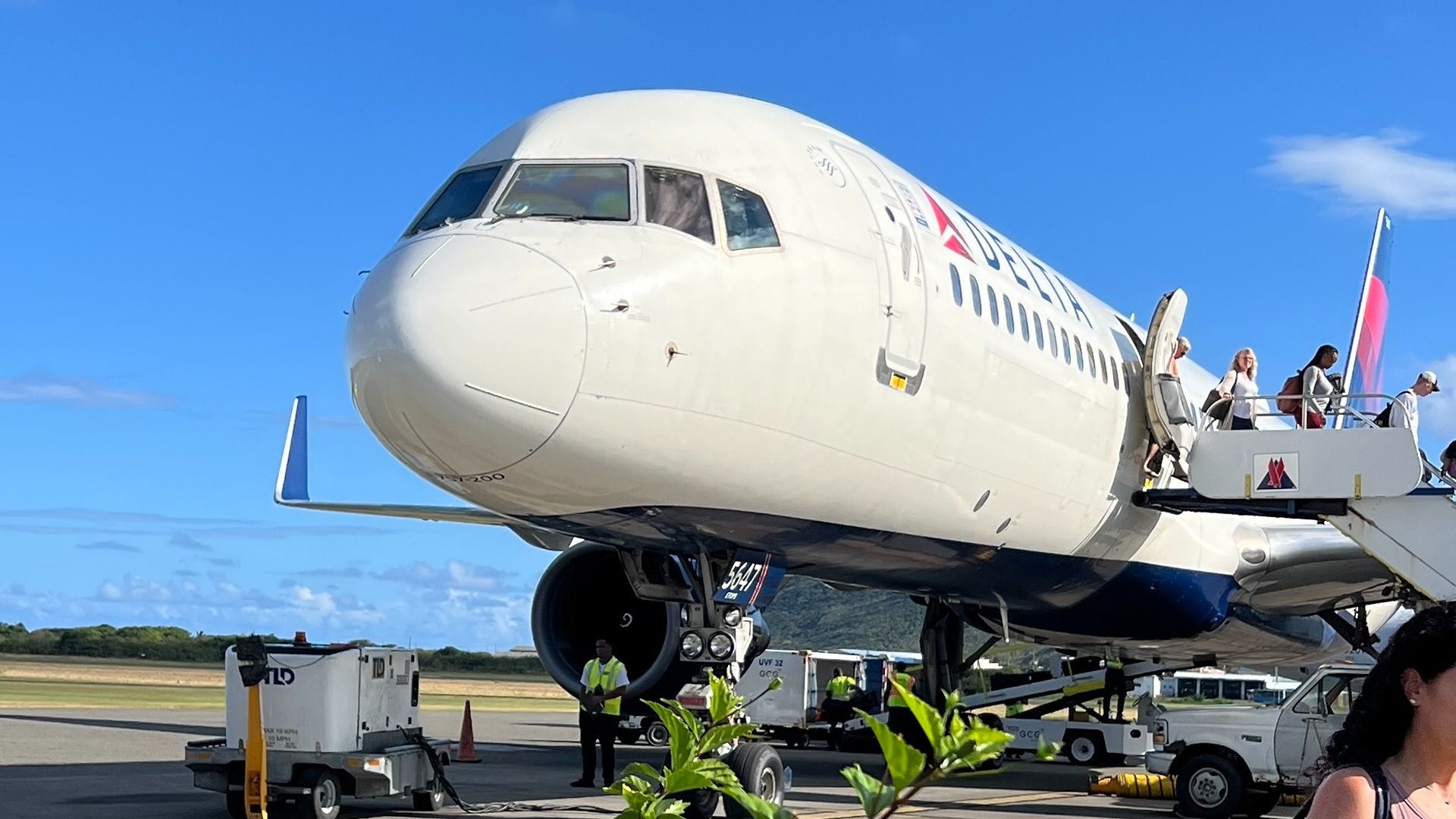
United Airlines, Delta Air Lines, and Northwest Airlines were three major customers for PW2000-powered 757s, and United, in particular, has long favored Pratt & Whitney engines over the competition. While all of United’s original 757s were retired (it now only operates ex-Continental examples with RB211 engines), the PW2000 still lives on in Delta’s enormous 757 fleet.
Although PW2000 attracted some major customers early on, the RB211 was the more popular of the two. Rolls-Royce developed numerous versions of the 535 series, but it was with the 535E4 variant that led to the RB211 becoming the preferred variant. This is the model that was first ordered by American in 1988, and the engine is renowned for its reliability, low noise footprint, and power.
The Bottom Line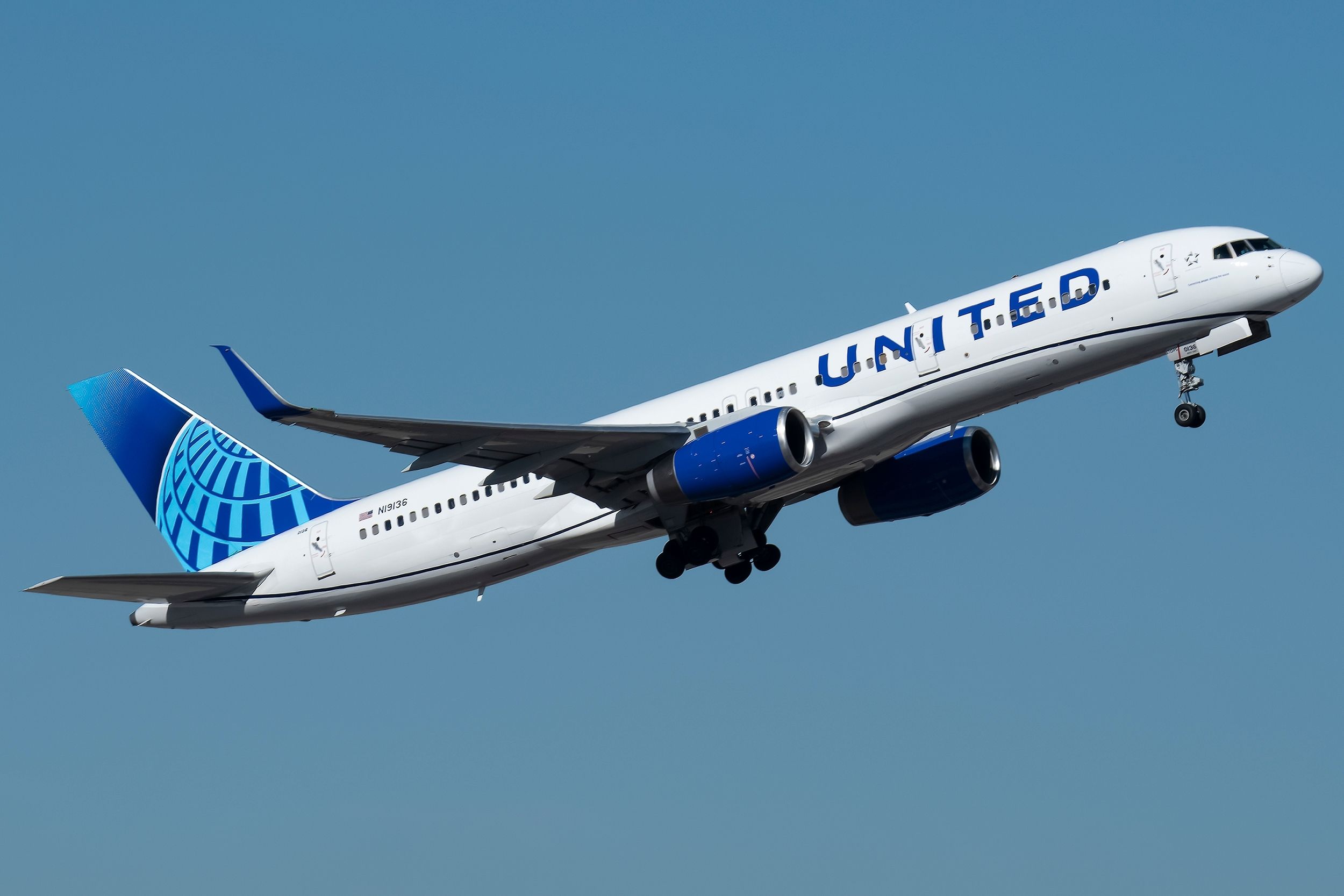
 Boeing developed the 757 with two engine choices because numerous customers demanded either the RB211 or the PW2000. This is also the reason why General Electric did not offer a CF6 derivative on the 757, as the concept did not attract enough demand. The two engines have different advantages and disadvantages; however, the PW2000 suffered from early reliability issues. In the meantime, Rolls-Royce refined the RB211, and the engine became the primary choice for this aircraft.
Today, increases in certification standards and higher development costs have made it more difficult to justify dual-sourcing. During the 20th century, manufacturers often added engine options simply because one or a handful of airlines wanted it, and so while the 757 stands out today for its engine options, having a choice was somewhat standard during its development.

- First Delivery
-
December 22, 1982
- Last Delivery
-
November 28, 2005
- Number Delivered
-
1,050
