


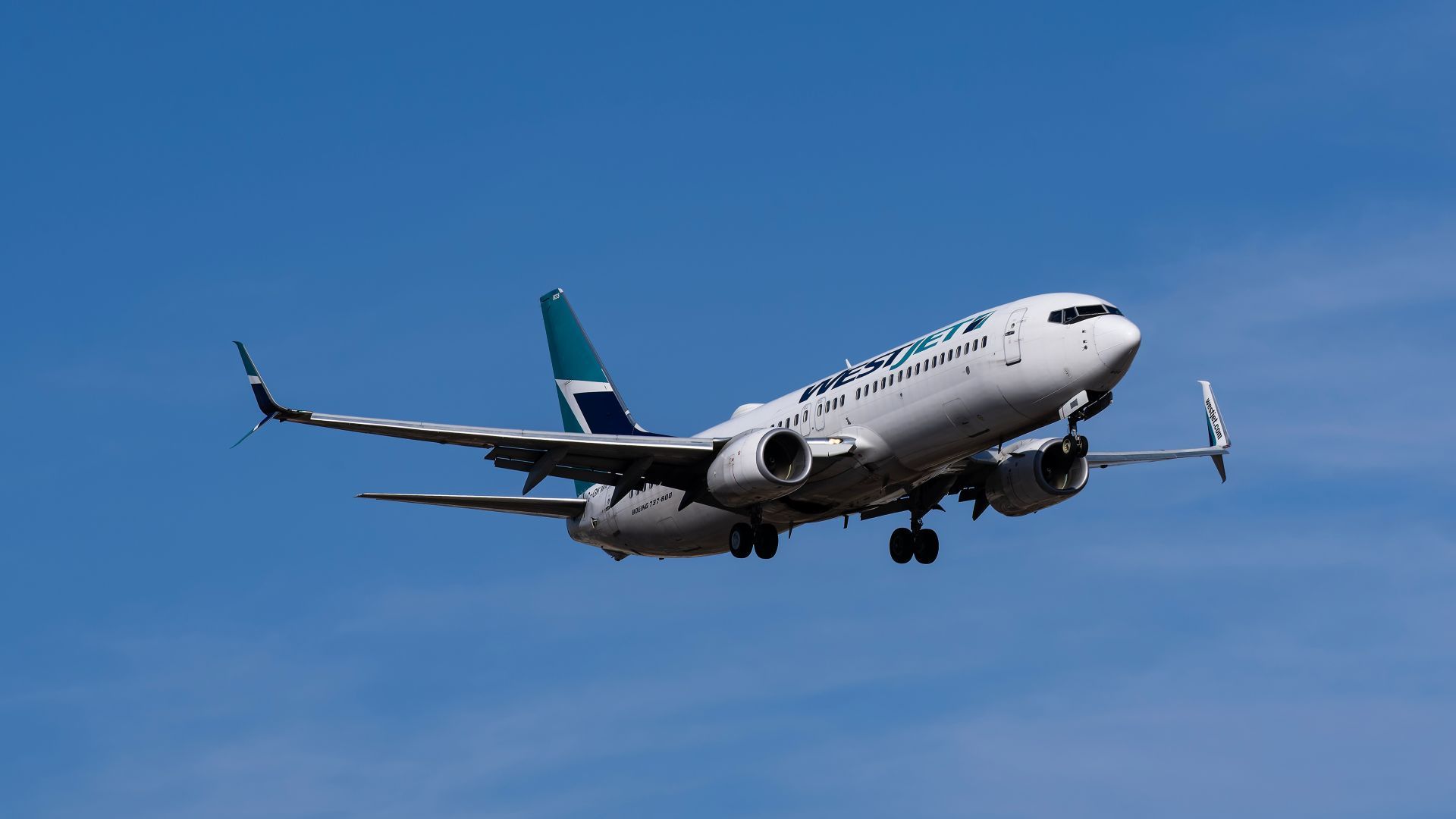
A WestJet Boeing 737 was on approach to Toronto-Pearson when the crew had to perform a go-around on Thursday, November 20. Data from Flightradar24 shows that there was another aircraft on the runway, a NetJets Cessna Citation, which had just landed ahead of the 737. The Citation was attempting to exit the runway when the 737 performed a go-around.
A go-around, while discomforting for most passengers, is a routine procedure that is practised rigorously by pilots for exactly such scenarios. This is performed when a landing is deemed to be potentially unsafe by air traffic control or the pilots, including due to the presence of another aircraft on the runway. Ultimately, the 737 re-entered the traffic pattern and made a safe landing shortly afterwards.
The Two Flights And The Go-Around

WestJet flight WS2101 is a daily flight from Punta Cana International Airport to Toronto Pearson International Airport. It was being operated by C-FRWA, a 13-year-old Boeing 737-800. Data from Planespotters.net shows that the aircraft has a maximum capacity of 174 passengers, carrying up to 12 in Premium and 162 in economy. This flight would have required two pilots and four flight attendants.
N389QS is a Cessna Citation Sovereign operated by NetJets. On November 20, it first flew from Orlando to Tampa, then from Tampa to Asheville, under the callsign EJA389. On its final leg, the aircraft was flying from Asheville to Toronto Pearson International Airport, a flight that lasted one hour and 39 minutes. NetJets advertises that its Citation Sovereigns can carry up to eight passengers, and the aircraft requires two pilots.
|
Flight |
Aircraft |
Pilots |
Capacity |
Origin |
Destination |
|---|---|---|---|---|---|
|
WestJet WS2101 |
C-FRWA (Boeing 737-800) |
2 |
8 |
Punta Cana |
Toronto |
|
NetJets 1I389 |
N389QS (Cessna Citation Sovereign) |
2 |
174 |
Asheville |
Toronto |
N389QS had landed on Toronto-Pearson’s Runway 06R and was exiting as WS2101 was on approach. A recording from LiveATC shows that the aircraft was instructed to take high-speed exit D1, but that N389QS had instead stopped on the runway. The Tower controller instructed WS2101 to go around to avoid a potential collision as the Citation exited the runway. Simple Flying has reached out to WestJet and NetJets for additional comment, but representatives were not immediately available.
Understanding What Happened Here

Toronto Pearson International Airport has five runways, and on November 20, the airport was using Runway 06R for its arrivals. There are four high-speed exits (D1/D3/D5/D7) for traffic landing on Runway 06R and three high-speed exits for arriving aircraft on Runway 24L (D2/D4/D6). N389QS was instructed to exit on D1, but instead stopped slightly ahead of D4.
While the Cessna Citation Sovereign is large for a business jet, it’s still a tiny airplane even compared to a Boeing 737. The flight stopped well short of the designated D1 exit, and the crew likely got confused, which could possibly be attributed to unfamiliarity with the airport. The tower controller noted that the exit is meant to be taken at 55 knots and sent the WestJet 737 on a go-around.
The crew of N389QS elected to turn around on the runway and proceed towards exit D4. This was likely closer to the aircraft, although it is intended for arriving traffic landing the other way on Runway 24L. The aircraft exited and was handed off to Ground control, which provided a phone number to copy down. WS2101 reentered the traffic pattern and landed safely.

Near-Miss In Boston As Delta A330 Goes Around To Avoid Cape Air Plane On Runway
The two aircraft reportedly came in half a mile of each other, with Delta’s aircraft as low as 150 feet before going around.
The Importance Of Awareness On The Runway

In September 2025, an American Airlines Airbus A321 was taking off from Los Angeles International Airport when an AeroLogic Boeing 777F entered the same runway. LAX Tower control instructed the A321 to reject its takeoff, and the 777F proceeded to its gate. In this case, the AeroLogic crew had made a wrong turn and ended up crossing Runway 25R rather than the assigned Runway 25L.
This was a riskier scenario than the incident at Toronto, as this incident involved an aircraft taking off with another aircraft on the same runway. A high-speed rejected takeoff is also a more serious maneuver than a go-around, as it can include significant strain on the aircraft’s tires and landing gear.
In both situations, a lack of awareness on the runway introduced a safety risk, which was averted in both cases, but remained concerning incidents. As such, it’s important for flight crews to be fully aware of the layout of the airport and to thoroughly understand the instructions of air traffic controllers. In such situations, the pilots may have received some remedial training as well to ensure that the situation does not repeat itself.
