


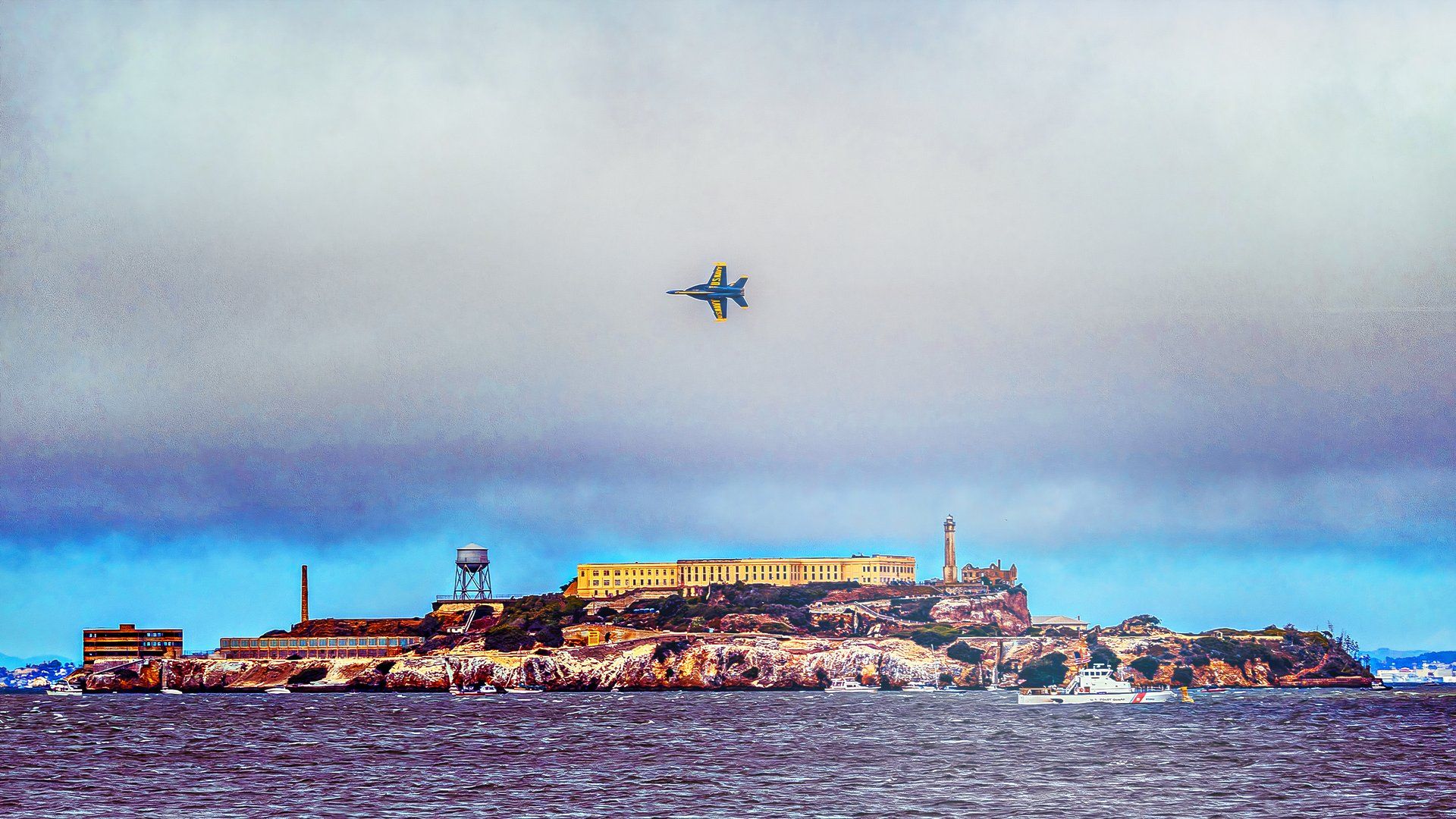
When looking at the United States Air Force (USAF) and the US Navy (USN), some aviation and military enthusiasts and professionals often compare their aviation fleets in terms of size, composition, roles, and capabilities. This comparison is highly relevant in today’s geopolitical landscape, where air superiority and naval projection are critical to national defense. As the world’s leading military power, the US relies on both branches to maintain global influence, deter adversaries, and respond to threats ranging from peer competitors such as China and Russia to asymmetric challenges such as terrorism.
In our article, we will provide background on the distinct missions of the USAF and US Navy aviation arms; the USAF focuses on air dominance, space operations, and global strike, while the Navy emphasizes carrier-based operations, maritime patrol, and expeditionary support. We’ll explore fleet numbers, aircraft types and roles, historical context, global comparisons, including the US Marines and Army Aviation, modern challenges such as standardization and drones, and conclude with why both remain pivotal to US strength.
What Is The Short Answer?

At a high level, the US Air Force operates a larger, more diverse fixed-wing fleet focused on global reach, strategic strike, air superiority, and support roles. At the same time, the US Navy’s aviation component is smaller (in terms of aircraft numbers) but uniquely structured for naval operations, carrier-based aviation, maritime patrol, and direct fleet support. The “stronger” fleet depends on the mission domain (over land, sea, long range, or from the deck of a carrier).
The USAF boasts a larger and more diverse fleet of around 5,300 aircraft, emphasizing strategic bombers, fighters, and global transport aircraft. Supporting this, the USAF’s inventory includes a mix of active duty, reserve, and National Guard assets, enabling rapid global response. For instance, its fighter force alone numbers over 1,600, dwarfing the Navy’s roughly 1,000 fighters. This gives the USAF an edge in sheer numbers and land-based power projection. In comparison, according to WDMMA, the US Navy’s aviation arm operates about 2,500 aircraft, focused on carrier operations and maritime roles.
The Navy, however, excels in the specific domain of sea-based aviation: carrier operations, maritime surveillance (such as anti-submarine warfare), and direct integration with naval surface fleets. The Navy’s aircraft are designed from the outset to launch from and recover onto aircraft carriers, operate in maritime and littoral environments, and sustain deployment across the world’s oceans, missions that the Air Force’s land-based fleets aren’t optimized for.
What Factors Influence Both Fleets?

To compare meaningfully, one must consider mission roles, aircraft types (fighters, bombers, maritime surveillance, helicopters, UAVs), operational domain (sea vs land), logistical constraints, and modernization paths. Key variables include where aircraft operate (carrier deck vs land base), whether they perform strike, air superiority, reconnaissance, electronic warfare, tanker/refueling, maritime patrol, or vertical-lift roles. Also of importance: the degree of specialization (naval vs generic), size and weight constraints, and interdependence with ships or land bases. Here is the list of some major factors:
- Carrier-based vs land-based: Navy aircraft must be designed or adapted for catapult launches, arrested recoveries, folding wings, corrosion protection, and ruggedness for sea operations. These constraints add weight and cost and limit which aircraft can be fielded.
- Maritime roles: The Navy has strong capabilities in anti-submarine warfare (ASW), maritime patrol, carrier strike group defense, airborne early warning, and electronic warfare. These roles are largely unique to the Navy.
- Strategic reach and sustainment: The USAF emphasizes long-range strike (e.g., bombers such as the B-2 and B-1), air-to-air superiority, global logistics, and aerial refueling. The Navy’s reach is mediated through carrier battle groups, but its aviation must integrate multi-domain warfighting (ships, air, subs).
- Helicopters & vertical lift: The Navy uses helicopters (e.g., SH-60 series, MH-53, etc.) extensively for shipborne tasks (ASW, search & rescue, anti-surface, logistics). The USAF’s rotorcraft roles are more limited (e.g., search & rescue, special operations).
- Unmanned systems and new tech: Different environments (land vs. sea) are increasingly shaping the relative strengths, designs, weapons, tech, and drones, tailored to different missions.
|
Factor / Domain |
USAF Strengths |
Navy Aviation Strengths |
|---|---|---|
|
Number & diversity |
Larger fleet, broad types |
Smaller but mission-focused |
|
Strategic reach |
Heavy bombers, global refuelers |
Carrier strike capability |
|
Maritime / naval roles |
Limited dedicated naval patrol |
ASW, sea control, maritime strike |
|
Carrier constraints |
None (land-based) |
Requires ship-based design |
|
Helicopters / tiltrotors |
Limited SR/CSAR |
Strong integration with naval ships |
|
Unmanned / future |
Leading in drones, loyal wingmen |
Smaller unmanned naval assets & integration |
Consider the Boeing P-8 maritime patrol aircraft: it is a Navy asset used for long-range naval surveillance, submarine hunting, and anti-surface warfare. These are missions the USAF does not typically perform. On the other hand, the USAF’s B-2 stealth bomber can fly intercontinental strike missions with stealth over denied airspace – something no carrier-based aircraft can currently match. The Navy’s F/A-18E/F Super Hornets and EA-18G Growlers bring carrier-capable strike and electronic warfare fast, but their range and payload are constrained compared to land-based strike aircraft.
The Insights From Analysts

Military analysts, including those from RAND and the Center for Naval Analyses, emphasize that USAF and USN aviation are complementary, not rival forces. Comparing them in isolation overlooks their integrated roles within joint operations. Naval aviation is specialized for “denied environments,” where land bases are unavailable, requiring aircraft that prioritize flexibility over range or payload. Historically, the rise of carrier aviation during World War II (e.g., the Battle of Midway), its evolution through the Cold War, and its modern role in power projection have shaped the Navy’s aviation doctrine, as outlined in documents like Naval Aviation Vision 2030-2035.
Naval analysts, such as those writing in the US Naval Institute’s Proceedings, stress that carrier air wings must “punch above their weight” compared to land-based air forces, necessitating multipurpose aircraft like the F/A-18 Hornet or F-35C Lightning II. In contrast, USAF aircraft, such as the B-2 Spirit bomber, are optimized for long-range strike and heavy payload, as they don’t face carrier landing constraints.
USAF doctrine, as outlined in Air Force Doctrine Publication 1 and fact sheets on airmanmagazine.af.mil, prioritizes missions such as “global strike,” “rapid global mobility,” and “command and control.” Experts in various defense publications also note that naval airframes endure greater fatigue from saltwater exposure, deck operations, and ship motion, increasing maintenance demands compared to USAF assets, which benefit from stable land bases and more frequent upgrades.
These insights highlight that while the USAF excels in sheer scale and long-range capabilities, naval aviation is critical for projecting power across oceans, particularly in regions without friendly land bases, such as the Indo-Pacific. The requirement to operate from carriers imposes trade-offs, limiting naval aircraft in range and payload compared to their USAF counterparts. However, this flexibility ensures the Navy’s indispensable role in global operations, balancing the joint force’s strategic needs.
USAF vs USN vs Other Forces

To get a better perspective, we should also compare USAF and USN aviation not only with each other but also against other US aviation arms (Marines, Army) and major air forces globally (Russia, China, Europe).
The USMC aviation arm is a hybrid force with ~1,211 aircraft, including fixed-wing (e.g., F/A-18 Hornets, AV-8B Harriers, F-35B/C Lightning II) and rotary-wing assets, operating from amphibious ships like LHAs/LHDs and forward bases. Pros: Versatile STOVL capabilities for rapid deployment; cons: Limited endurance and payload compared to USAF bombers, with higher maintenance in expeditionary environments. Its missions center on amphibious assaults, expeditionary operations, and close air support for ground forces, while avoiding direct competition with the USAF’s strategic roles.
Alternatives include expanding the use of unmanned systems, such as the MQ-9A Reaper, for persistent surveillance. The US Army’s aviation fleet totals ~4,409 aircraft, dominated by helicopters (e.g., AH-64 Apaches, UH-60 Black Hawks) and UAVs, and focuses on tactical mobility, medevac, reconnaissance, and close ground support. Pros: High mobility for battlefield integration; cons: Vulnerability to anti-air threats and shorter range, prompting shifts to drone swarms (e.g., Replicator program). This mission set differs vastly in scale from air superiority branches, with limited overlap.
Global Air Power Chart
|
Entity |
Approx. Aircraft |
Primary Role / Note |
|---|---|---|
|
USAF |
5,300 |
Strategic/global reach; airpower backbone (1,610 fighters, 141 bombers). |
|
USN Aviation |
2,626 |
Carrier-based maritime projection; F-35C focus. |
|
USMC Aviation |
1,211 |
Expeditionary/close support; amphibious with STOVL. |
|
US Army Aviation |
4,409 |
Tactical lift/recon; helicopter/UAV heavy, shifting to AI drones. |
|
Russia (total) |
4,292 |
Ranked 2nd; Su-57 stealth limited (~30), sanctions impact. |
|
China (total) |
3,309 |
Growing force; J-20 (~300), but few tankers (~10). |
|
India (total) |
2,296 |
Regional power; Su-30MKI dominant, most aircraft manufactured locally, Tejas growth. |
|
Europe (NATO excl. US aggregate) |
~4,500 |
Fragmented but allied; F-35 integration key, and locally manufactured Eurofighter Typhoon, Rafale, Saab Gripen etc. |
|
Japan (total) |
1,459 |
Defensive focus; F-35A/B acquisitions. |
|
Egypt (total) |
1,069 |
African leader; Soviet/Russian and NATO equipment mix. |
Source: Simple Flying
Globally, the USAF’s ~5,300 aircraft eclipse most national air forces in numbers and reach, with the combined US inventory at ~14,486 across branches far surpassing rivals. Russia follows with ~4,292 total aircraft, emphasizing multirole fighters like Su-35s but hampered by sanctions and attrition. China’s ~3,309-3,733 aircraft (primarily PLAAF) show rapid growth with J-20 stealth jets, but lag in global projection and tankers. European forces (e.g., combined NATO excl. the US ~4,000) are fragmented but advanced, with France and the UK leading them.
This comparison reinforces the USAF’s standout scale and strategic breadth, while USN aviation delivers essential naval projection in denied areas. The USMC and the Army fill specialized niches with minimal overlap, creating a cohesive US air power. Globally, no peer matches this integration; Russia and China trail in quality/readiness (e.g., US 75% vs. Russia’s 65%), and Europe’s forces rely on alliances for scale. As tensions rise, US dominance ensures deterrence.
The Main Challenges

Several challenges may complicate any “USAF wins” narrative. First, interoperability and coordination are crucial. For example, a mission may depend on Navy aircraft, Air Force tankers, and Marine close support, all working together. Second, budget constraints, platform aging, and maintenance burdens can erode advantages. Third, emerging technologies (drones, contested logistics, anti-access/area-denial environments) may shift the balance. Finally, the Navy may face limitations in replacing large carrier-based aircraft due to cost and technological constraints.
In contested littoral zones, a carrier-based strike may be the only option, giving naval aviation the edge. Or, for close engagement with enemy ship or submarine threats, the Navy’s maritime patrol and ASW aircraft may be uniquely suited. In heavily defended airspace over land, the USAF’s stealth bombers or long-range assets may dominate. However, it’s worth mentioning that unmanned systems might gradually erode the “manned aircraft count” advantage.
The number of active aircraft might also be limited; deployable assets differ from the total inventory, and some might undergo maintenance or updates, not being ready for combat quickly. Also, one must consider modernization programs (new drone types, new ships, next-generation aircraft) and how they shift capability over time.
Overall Takeaway

Both forces are indeed “cool” but in their own way: the Air Force commands stealth bombers, supersonic aircraft, and global tanker chains, while Navy aviators are based on carriers, fly anti-submarine missions, and extend naval battle groups. For anyone interested in military aviation, the interplay between sea and sky assets is where the magic lies.
Looking ahead, the rise of unmanned systems, autonomous swarming, AI-enabled decision support, and contested domain warfare may blur distinctions. The USAF is already extensively experimenting with unnamed aircraft and smaller drones. The Navy, too, is exploring unmanned maritime aircraft. The following decades may see hybrid fleets in which manned and unmanned assets cooperate in harmony, making the classical “which is better?” question more nuanced. But for now, each branch brings complementary strengths to America’s global aviation power.
