


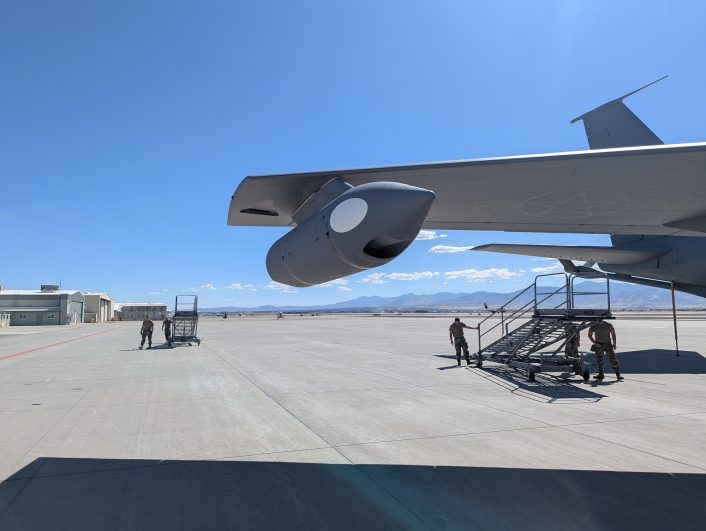
The KC-135 was used to expand tactical communications across joint and combined forces for contested, multi-domain operations, and is now testing the High Value Airborne Asset Pod.
The Air National Guard Air Force Reserve Command Test Center (AATC) has just disclosed that its KC-135 Test Detachment, working alongside the Utah Air National Guard’s 151st Wing, tested advanced connectivity systems aboard a KC-135 during the recent Resolute Force Pacific 25 (REFORPAC 25) exercise in July. These systems allowed to expand tactical communications across joint and combined forces, demonstrating “how warfighter-driven innovation can transform the proven KC-135 Stratotanker into a next-generation asset ready for contested, multi-domain operations.”
REFORPAC 25 was a large exercise focused on the new challenges which will be faced in future scenarios by the U.S. military, part of the Department of the Air Force’s broader Department-Level Exercise series. REFORPAC tasked units across the Indo-Pacific to rapidly disperse, operate, and integrate across thousands of miles, applying the Agile Combat Employment concept.
“For AATC, the exercise offered an ideal environment to push new technologies under real-world stressors and demonstrate how rapid modernization strengthens America’s ability to respond in the Pacific,” explained the press release. The aging KC-135 Stratotanker has been eyed for use as a communication and data relay node as it adapts for future scenarios.
REFORPAC’s Testing
The press release detailed the activities of the AATC’s KC-135 Test Detachment during REFORPAC 25, noting that they built on previous demonstration. While not mentioned, this could also refer to test conducted as far as 2020 while the Air Force was developing the Advanced Battle Management System (ABMS).
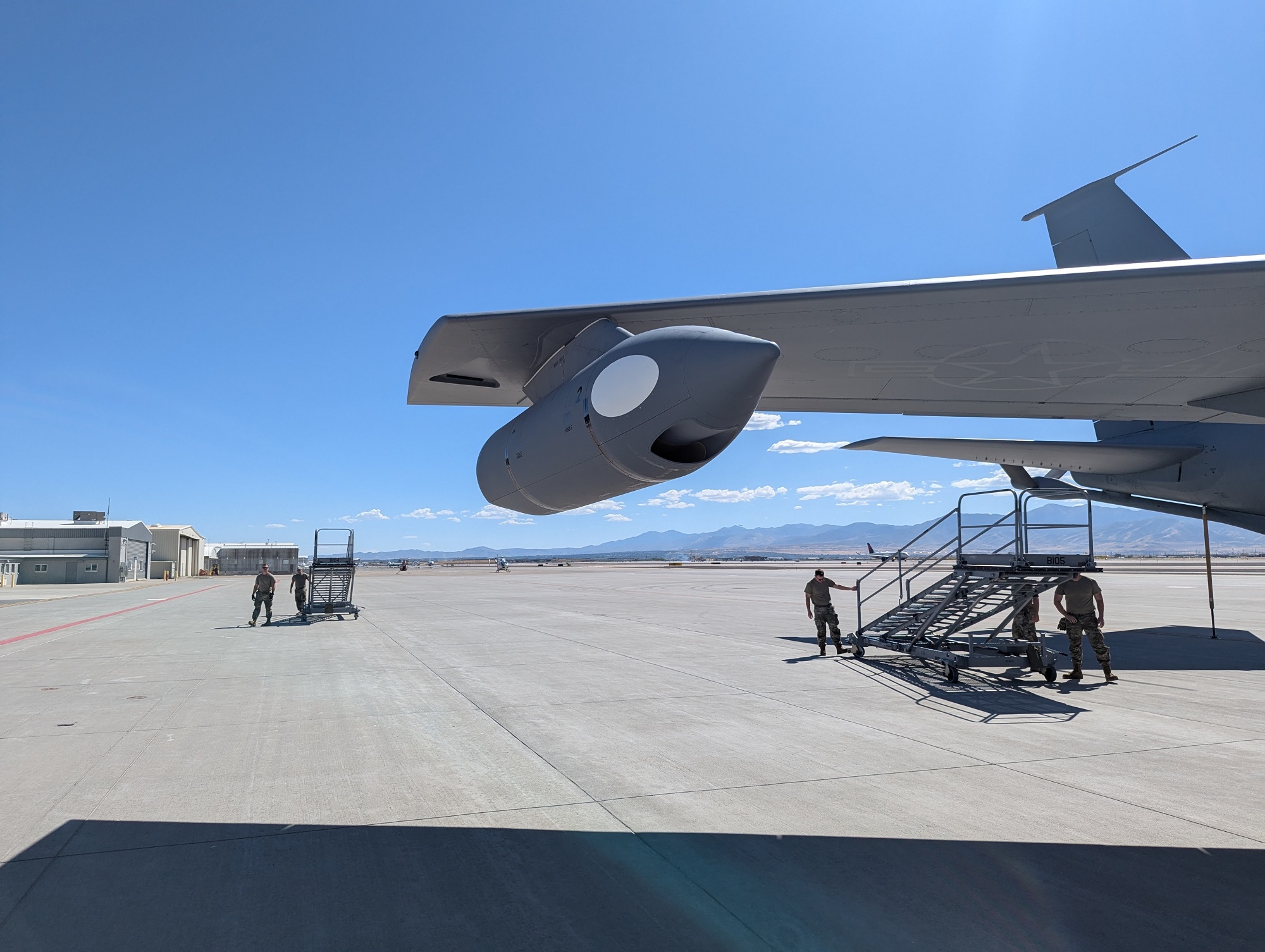
The ABMS was a cloud-based data sharing network to connect U.S. forces during Multi-Domain Operations (MDO) across land, sea, space, and cyberspace, allowing a joint force to use cutting-edge methods and technologies to rapidly collect, analyze, share information and make decisions in real time in future battlefields characterized by information saturation. As part of the tests, a KC-46 Pegasus tanker was used to establish a communications pathway and was planned, along the KC-135, to receive a new pod to relay info and translate them in the native language of the F-22 Raptor’s Intra-Flight Data Link (IFDL) and F-35 Lightning II’s Multifunction Advanced Data Link (MADL).
AATC said it evaluated a capability called the Datalink Enhancement–Minimum Viable Product (DE-MVP), designed to fuse data from three Line-of-Sight (LOS) Tactical Data Link networks and multiple Beyond Line-of-Sight (BLOS) connections. Using Advanced Intelligent Gateway technology aboard the KC-135, the system connected joint and coalition mission partners in real time, tightening decision timelines and extending sensing and targeting information across the battlespace.
Notably, the service said this allowed to reduce traditional decision-making cycles “from hours to minutes,” explaining that “conventional intelligence processes often follow a 72-hour battle rhythm from collection to action,” while the KC-135 demonstrated “the ability to condense that cycle to near-real time.”
“The air refueling enterprise is in a unique position to leverage theater-wide mass at any given moment to connect strategic information with the forward tactical edge, expediting sensor-to-shooter data passage and tightening a global kill web,” said Lt. Col. Spencer Liedl, AATC KC-135 operational test director.
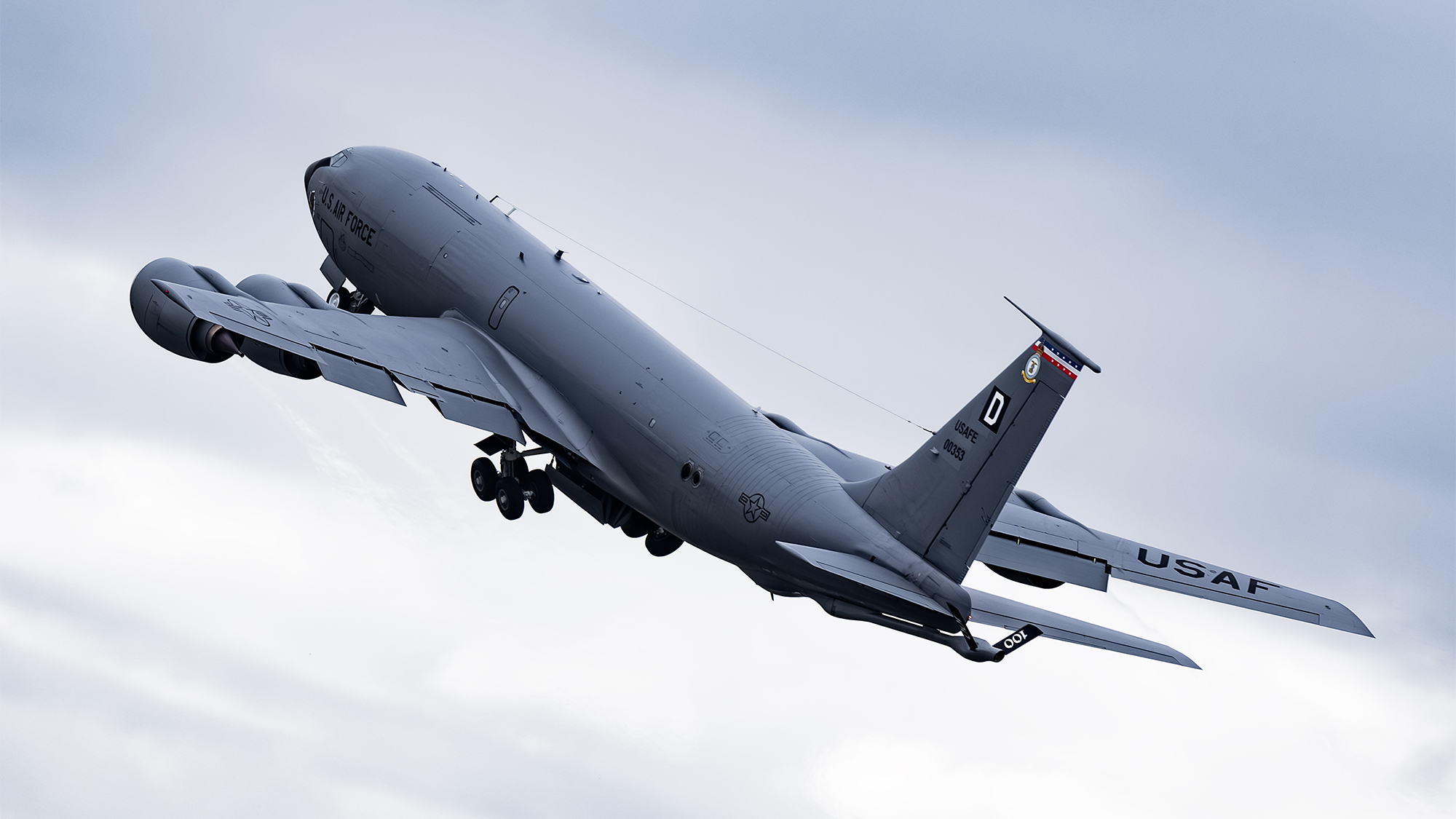
This capability is considered especially important for mission execution across contested environments, as the enhanced systems can provide real-time situational awareness through moving map displays while sharing them over the network. “This shift enables tanker crews to make timely, independent tactical decisions in contested and degraded environments, turning a traditionally support-focused aircraft into an active node in the command-and-control ecosystem,” said the service.
HVAA Pod
In the press release, the service explained that the AATC is also developing the High Value Airborne Asset (HVAA) Pod at Roland R. Wright Air National Guard Base in Salt Lake City, Utah. The pod is aimed at providing self-protection capabilities to the KC-135 when operating in high-threat areas, and is described as “a significant leap from simple awareness to survivability, ensuring tankers can continue enabling operations even in environments where threat envelopes are expanding.”
This is not the first time the HVAA pod comes around. In fact, the service previously disclosed in the Modernization chapter of the 2021 National Guard Year in Review that the ANG was collaborating with the Johns Hopkins Applied Physics Laboratory and Georgia Tech Research Institute to build the HVAA pod.
On that occasion, the service said the pod would “provide real-time threat data to mobility aircrew, beginning with the KC-135, and deliver additional capacity for future expansion of kinetic and non-kinetic defensive systems.” The HVAA pod was also previously called the Gladiator Pod, and described as a communications, sensors and defensive pod.
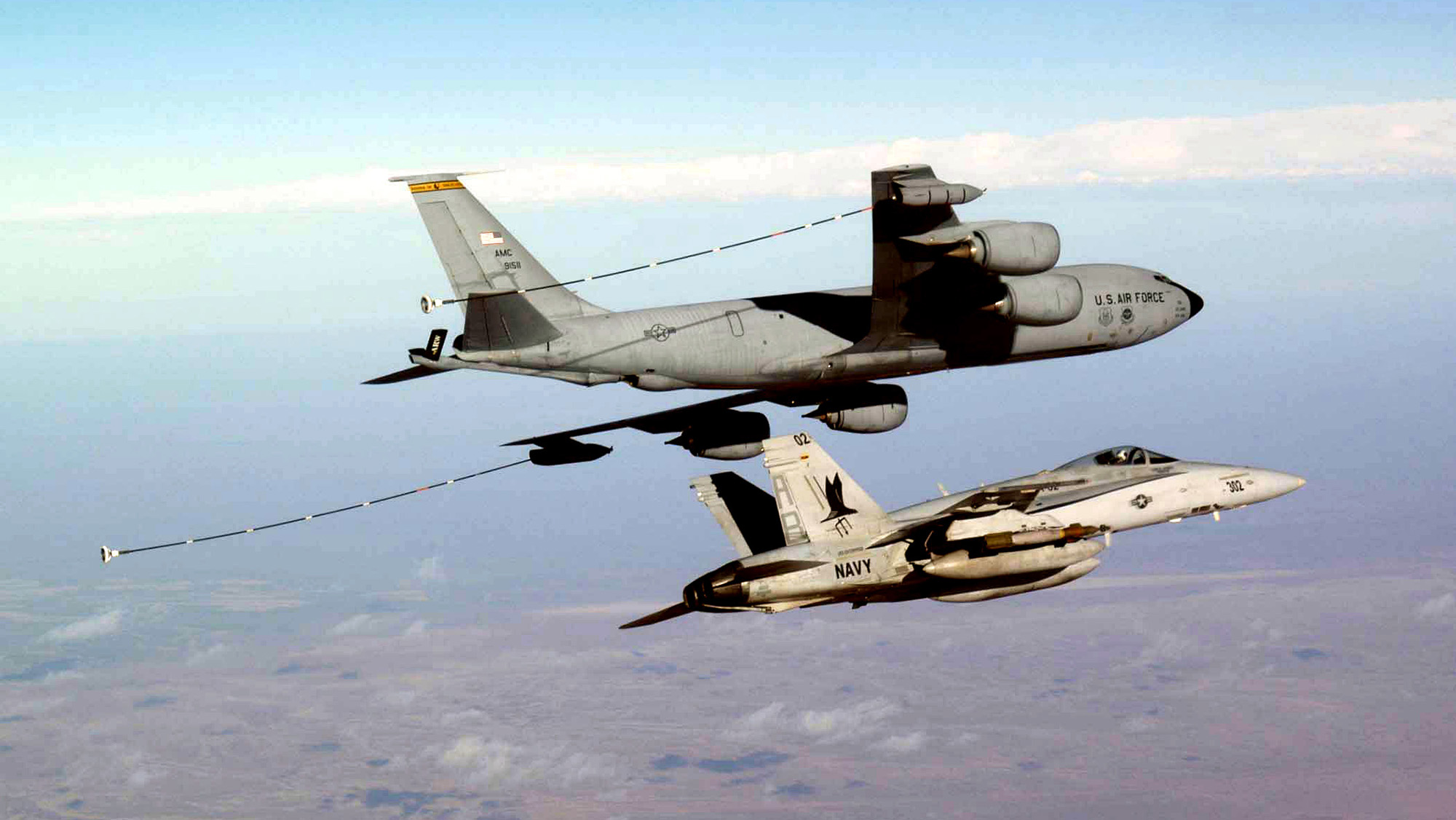
. Air Force refuelers are equipped to refuel
The starting point was the shell of a Multipoint Refueling System (MPRS) pod, already employed by the KC-135 for hose-and-drogue refueling from the wingtips, which AATC intended to pack with communication, defensive, and sensor technologies on an open-architecture. Specifically, AATC said it planned on equipping the pod with the necessary sensors capable of detecting, identifying, tracking, and defending as a data node within ABMS.
Among the notable modifications of the pod, compared to the original MPRS, are the presence of a RAM air inlet and multiple antenna mounts. The HVAA pod was also identified in simulations as one of the best Combined Joint All-Domain Command and Control + Defensive Electronic Warfare (CJADC2+) options to upgrade the Mobility Air Forces and increase their survivability, lethality an ability to support all mission sets.
