


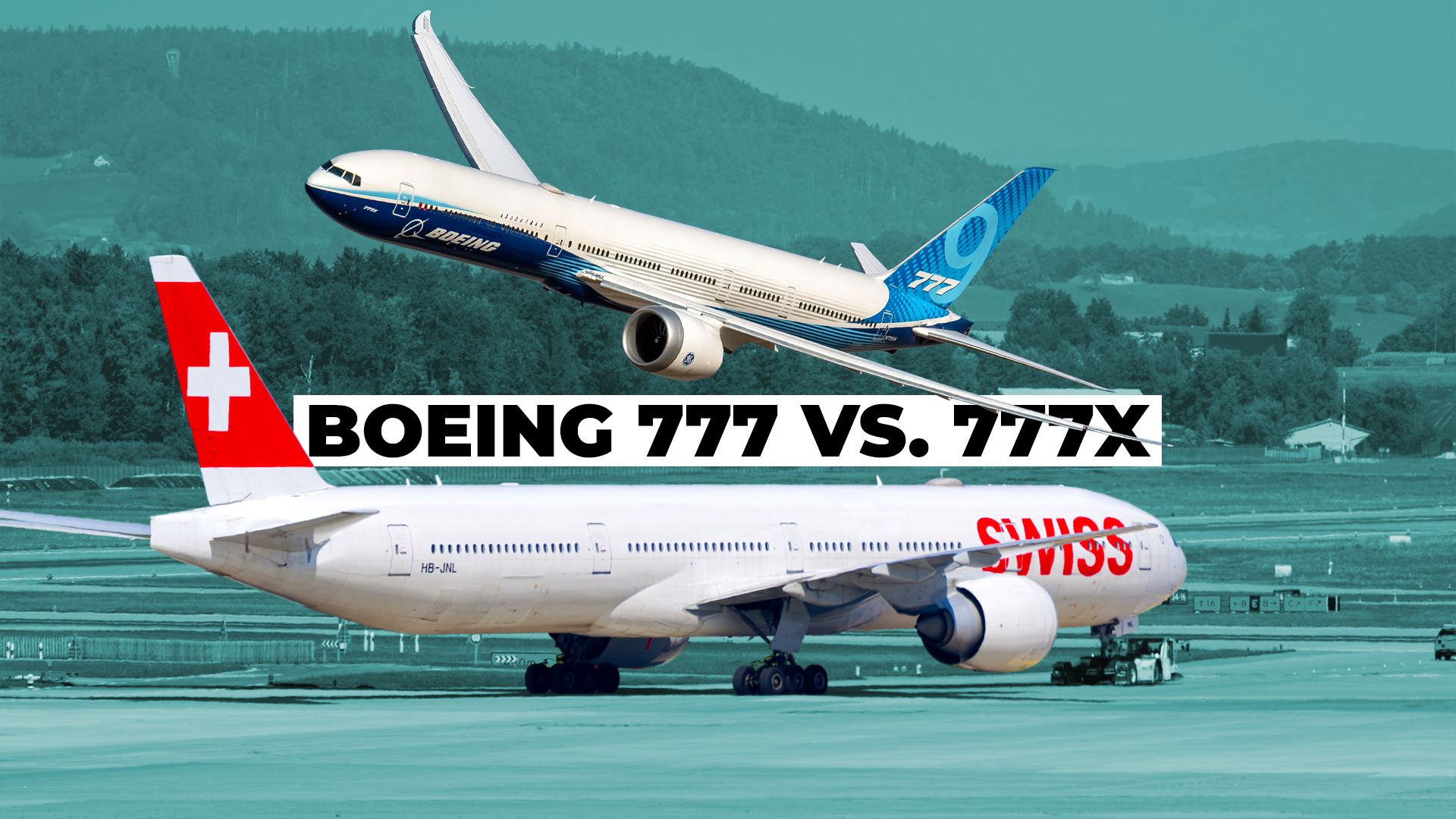
The Boeing 777 is one of the most successful widebody aircraft programs of all time. Powered by the incredibly capable GE90 engine, which offers exceptional long-range performance and best-in-class fuel efficiency, the aircraft has long commanded the top of the twin-engine long-haul market. As airlines have gradually shifted away from four-engine aircraft, the Boeing 777’s competitive appeal in the market has become more and more valuable over time. Offering space for hundreds of passengers, the aircraft’s exceptional long-range performance and high-gauge make it the ideal choice for long-haul trunk routes, especially those with a large amount of premium demand.
Despite its extensive success in the market, the Boeing 777’s time as a best-in-class passenger airliner and capable air freighter has come to an end, and the aircraft’s operating economics have begun to lag behind those of some competitors like the European-built Airbus A350. As a result, Boeing has determined to upgrade the Boeing 777. The Boeing 777X, a capable ultra-long-range model, will soon enter service, offering numerous upgrades over its predecessor. We analyze the role that the Boeing 777X serves in the market, breaking down the specific upgrades it provides over its predecessor.
A Brief Overview Of The Boeing 777X

The Boeing 777X is the newest generation of Boeing long-haul twin-engine aircraft, designed to serve as the successor to the capable Boeing 777-300ER, the best-selling variant of the Boeing 777 family. The jet comes in two main variants, the larger Boeing 777-9 and the smaller Boeing 777-8. While the former offers exceptional capacity (more than 400 seats), the latter primarily emphasizes long-range capabilities. A dedicated Boeing 777-8F freighter is also in the family’s lineup.
Key technologies include a new carbon-fiber composite wing that offers a record wingspan and features fold-up wingtips, which allow the aircraft to fit into Code E-sized gates on the ground (as opposed to larger aircraft, which are forced to use much more rare Code F gates). The aircraft will be powered by the high-bypass GE9X engines, which are aimed at lowering overall fuel burn and noise generation. The aircraft’s cabin will feature the same wide cross-section while adding larger windows, lower cabin altitude, and updated aircraft systems.
The Boeing 777-9 first took to the skies in January 2020. The aircraft’s certification timeline has slipped a few times amid tougher overall regulatory scrutiny and design refinements, ultimately pushing entry into service to the mid-2020s for the Boeing 777-9 and even later for the Boeing 777-8 and ultimately the 777-8F. Major customers for the model include Emirates, alongside Lufthansa and Qatar Airways. The model is positioned against the Airbus A350-1000, and the Boeing 777X targets high-density, long-haul routes where trip costs can be spread across many seats while preserving the plane’s twin-engine efficiency.
The Aircraft Offers Advanced Engine Capabilities

The Boeing 777X’s GE9X engines are the most efficient high-thrust turbofan engines that Boeing has ever elected to use on a twin-engine aircraft. Though not actually as powerful as the earlier-generation GE90 engines, the aircraft engine differentiates itself through impressive gains in operating efficiency. Compared with the Boeing 777-300ER’s GE90-115B, the GE9X targets a 10% reduction in specific fuel consumption, with a 134-inch composite fan and carbon fiber casings. The aircraft offers an impressively high overall pressure ratio.
Ceramic-matrix composites in the hottest turbine components are capable of withstanding higher temperatures at a lower overall weight, while the TAPS III lean-burn combustor cuts emissions and visible smoke exhaust. Several acoustic treatments have led to overall fan tip speeds being lowered, and ultimately, the aircraft’s overall noise footprint will be shrunk relative to legacy Boeing 777s, easing curfew constraints and overall community impact.
Crucially, the aircraft engine is optimized for cruise efficiency, not just takeoff thrust, allowing airlines to more effectively spread trip costs across the aircraft’s 400+ seats, remaining competitive on CASM for 12-15 hour missions. The aircraft offers exceptional reliability, with dense sensor suites and predictive maintenance analytics, ultimately reducing unscheduled aircraft removals.
An All-New Composite-Built Wing

Beyond the aircraft’s folding tips, the Boeing 777X’s carbon-fiber composite wing offers a wholesale aerodynamic improvement over the aircraft’s predecessor. This wing is not only larger and thinner, but it also offers a higher aspect ratio than a traditional aluminum Boeing 777 wing, which reduces induced drag at cruising speeds and helps cut overall fuel burn. Composite construction helps permit tailored stiffness, and the wing itself flexes much more while in flight. This overall reduces gust loads and turbulence, allowing for a lighter overall structure.
A redesigned high-lift system, which included modernized Krueger leading-edge devices and a simplified low-drag trailing-edge flaps system, ultimately delivers the best takeoff/landing performance of any twin-engine aircraft. It also does not come along with many of the inefficiencies inherent in the Boeing 777’s older design. This has helped the aircraft become an extremely exciting upcoming fleet addition for many of the world’s largest long-haul carriers. Here are some specifications for the Boeing 777X’s wing, according to data from manufacturer Boeing:
|
Category: |
Boeing 777X specification: |
|---|---|
|
Extended wingspan: |
235 ft, 5 in. (71.75 m) |
|
Gate wingspan (with folded tips): |
212 ft, 9 in. (64.85 m) |
|
Wing area: |
5,562 sq. ft. (516.7 sq. m) |
The aircraft’s larger wing also lifts the jet’s payload range, as airlines can carry more seats and cargo farther while also maintaining competitive field length. More importantly, Boeing integrates gust-load alleviation and automatic flaperon scheduling into the aircraft’s aerodynamic toolkit, further reducing turbulence and improving the overall passenger experience. This wing is quieter, smoother, and, at the end of the day, more economical. This allows the Boeing 777X to match or even surpass the Airbus A350-1000’s fuel economics while preserving the capacity and operational commonality with earlier generation Boeing 777 models.
A Unique First That Offers Operational Benefits

The Boeing 777X’s unique feature is obviously its folding wingtips, which resolve a classic airport-compatibility trade-off. While in flight, these tips extend to a record wingspan, which allows for a higher aspect ratio and lower overall drag. On the ground, these wingtips fold up to keep the aircraft within the International Civil Aviation Organization (ICAO) Code-E gate/taxiway limits, meaning the aircraft will be just as easy to handle on the ground as the existing Boeing 777-300ER, according to documents from manufacturer Boeing.
These wingtips are incredibly valuable for airlines, which gain big-wing efficiency without incurring the cost of Code-F stand scarcity or longer tows, and they can turn the jet at existing  Boeing 777 gates with minimal airport modifications. This tip mechanism is integrated with flight controls and overall dispatch logic, including sensors, locks, and cockpit indications, which prevent takeoffs with aircraft tips folded. This also ensures that the aircraft can experience automatic sequencing (the folding of the wingtips does not impact ground operations) during the taxi process.
From an operational perspective, this preserves schedule integrity for the operator while also reducing the additional costs that would be borne by any airline looking to fly the aircraft to places without Code-F stand capabilities. Compared with the Boeing 777X, the aircraft’s extended wing is a key factor driving its improved operational performance, while helping protect hub-bank punctuality across the board.
What Else Does The Boeing 777X Bring To The Table For Operators?

The Boeing 777X borrows a lot of its passenger-friendly ideas from the Boeing 787, and applies them onto the larger airframe. For starters, the manufacturer has made the 777X’s windows noticeably larger and set them higher on the wall, allowing better views for passengers. This also helps the cabin feel brighter and open. Air quality and pressure improved significantly compared to older-generation Boeing 777s, with a lower cabin altitude and better overall humidity, all small changes that help travelers feel less dehydrated and less jet-lagged during a long flight.
Overall noise is also reduced, mostly thanks to quieter engines and cleaner overall aerodynamics, so that aircraft conversions and sleep will come easier. The jet’s lighting will move to full-cabin LEDs, with smooth color changes that are designed to mimic sunrise or sunset and help crews set the mood for boarding and meals on ultra-long-haul services. These lighting changes also make it easier for passengers to sleep.
Overhead bins are larger and shaped to swallow more carry-on bags without passengers having to engage in a chess match with others to get their bag in an optimal location. Sculpted walls and other slimmer fittings help improve the quality of passenger travel without adding significantly higher costs. In-seat power, modern entertainment, and strong inflight WiFi will be available to passengers throughout their journeys.
What’s The Bottom Line?

Ultimately, the Boeing 777X offers incredible long-haul capabilities, and it is set to fundamentally change aviation for years to come. The ultra-long-haul model will connect destinations worldwide, offering exceptional operating economics that will ultimately help airlines lower fares across the board.
The aircraft will serve as a testbed platform for a number of technologies, including the aircraft’s first-of-its-kind folding wingtips. The plane’s advanced engines also offer exceptional performance across the board. A model with unique capabilities, airlines have certainly lined up to take delivery of the model.
The only concern that remains is that carriers are somewhat uncertain as to when the jet will be formally certified. Boeing’s certification timeline somehow continues to slip, and the FAA doesn’t look like it is in a rush to certify the jet.
