


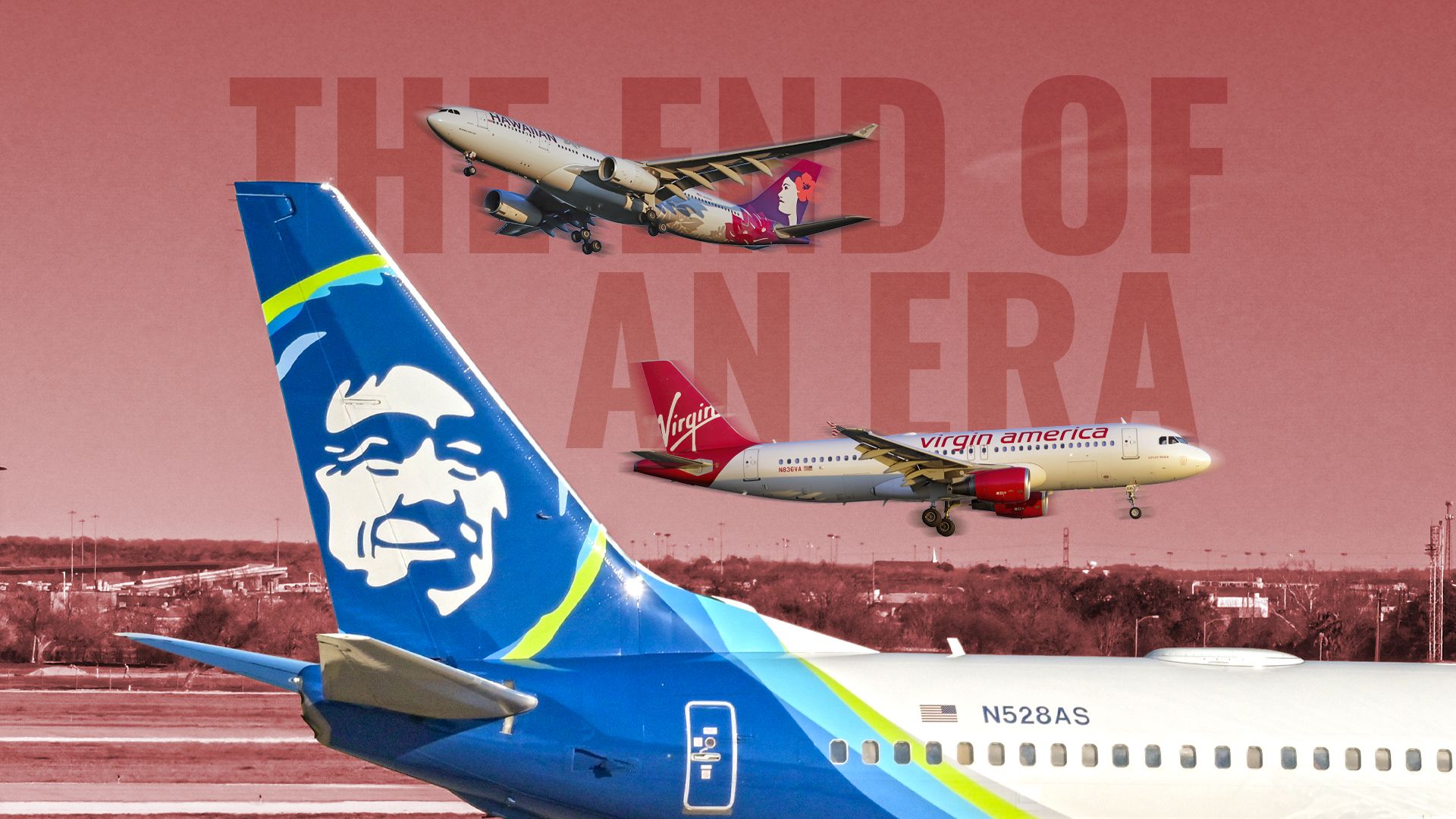
Hawaiian Airlines has begun operating under the same certificate as  Alaska Airlines, as its flights now use the ‘AS’ IATA code and ‘ASA’ICAO code, while pilots now use the ‘Alaska’ callsign when communicating with air traffic control. Flights are sold online as Alaska Airlines with the following remark: “Plane and crew by Alaska as Hawaiian Airlines.” For passengers, little has changed, but behind the scenes, Hawaiian Airlines has practically ceased to exist.
Before the 2010s, Alaska Airlines had not made any major airline acquisitions since its acquisitions of Jet America Airlines and Horizon Air in the 1980s, but in 2018, Alaska Airlines acquired Virgin America in one of the recent mergers of a large airline. Now, less than eight years later, Alaska Airlines has completed the acquisition of another major US carrier. Here’s what it did to purchase Hawaiian Airlines, and how it compares to its acquisition of Virgin America
Alaska Airlines In A Nutshell

Alaska Airlines is currently the fifth-largest airline in the US, after United Airlines, American Airlines, Delta Air Lines, and Southwest Airlines. Despite the name and being originally based in Anchorage, Alaska now centers its operations at  Seattle-Tacoma International Airport, where it is the dominant carrier. Alaska is currently a oneworld member and also operates hubs in Anchorage, Los Angeles, Portland, San Diego, and San Francisco.
Alaska Airlines has long operated a fleet of only Boeing 737s (excluding the Embraers operated by its Horizon Air regional partner). Currently, this consists of the 737-700, 737-800, 737-900ER, 737 MAX 8, and 737 MAX 9 variants. It prominently promotes its close relationship with Boeing, and while the Hawaiian Airlines merger includes a large Airbus fleet, Alaska Airlines’ operations remain all-Boeing for now.
Alaska Airlines offers a similar onboard experience to the three US legacy carriers, but the airline enjoys high satisfaction ratings due to its reliability and customer service. Additionally, it also offers more legroom than any other US airline in domestic first class, and is also known for its friendly onboard service. With its well-regarded loyalty program and lucrative oneworld partnerships, Alaska Airlines is viewed as one of the country’s best airlines.
What The Hawaiian Airlines Merger Means

Operationally, Hawaiian Airlines essentially doesn’t exist anymore. Instead, Alaska now has crew bases in Hawaii and employs Hawaiian’s former staff. Workers like pilots and flight attendants are now on the same seniority lists as Alaska crews, while the airline now has Airbus A321neos, A330-200s, Boeing 717s, and 787s based in Honolulu. Furthermore, as previously mentioned, the Hawaiian flights use the same codes and callsigns as Alaska Airlines.
Unlike other airline mergers, Alaska Airlines has promised to maintain the Hawaiian Airlines brand due to its historical significance. It’s also committed to maintaining Hawaiian’s island operations, which are critical to the state of Hawaii. For now, Alaska Airlines’ leadership has stated that flights to or from Hawaii will keep the Hawaiian Airlines branding, while all other flights will be branded as Alaska Airlines.
Hawaiian Airlines currently operates four Boeing 787-9s and holds orders for eight more. However, future 787s will be allocated to Alaska Airlines, which also converted five orders to 787-10s and added five more 787-9s. These planes will be painted in a new Alaska Airlines livery with new cabins and will fly out ot Seatte, with the four Hawaiian 787s also to be transferred. Hawaiian will keep its A330-200 fleet, which will receive interior retrofits.
Why Alaska Airlines Acquired Hawaiian Airlines

Hawaiian Airlines had been struggling for years, while Alaska Airlines remains a juggernaut on the West Coast. Although Hawaiian had a strong network in the large but low-yielding Hawaii market, the real prize was its assets. Primarily, these were pilots, aircraft, and gates. While the aircraft don’t have commonality with Alaska Airlines’ Boeing 737 fleet, they would allow the carrier to grow its overall market share on the West Coast more quickly.
The Hawaiian Airlines name is being retained due to its name recognition and cultural significance to the islands, but, in the long term, Alaska Airlines is looking to further grow its own brand. This is perhaps most evident with the transfer of the Boeing 787 fleet. Alaska Airlines is already using Hawaiian’s Airbus A330s to operate flights between Seattle and Tokyo Narita, while using the Boeing 787-9 to fly between Seattle and Seoul.
While Alaska Airlines is the dominant airline in Seattle, rival  Delta Air Lines has been growing its presence and, crucially, has developed a long-haul network. As international networks become increasingly important, Alaska Airlines has recognized the need to compete across the Pacific and the Atlantic. By acquiring Hawaiian Airlines, Alaska can operate international widebodies today, as opposed to waiting years for brand new Boeing 787s.
Why Alaska Airlines Acquired Virgin America

Virgin America built a cult following on the West Coast due to its stylish interiors, unique branding, onboard amenities like personal televisions, and friendly service. In this sense, it was essentially the JetBlue of the West Coast. The carrier had trouble making money, but was a strong competitor in a field where Alaska already had stiff competition from United and Delta. Virgin America’s financial struggles made it an attractive target for an acquisition.
Alaska Airlines was one of two main parties interested in acquiring Virgin America. The other was JetBlue, but, while both sought to eliminate a competitor, JetBlue would have posed an even bigger threat. At the time, the company was successful with its East Coast operations, and a JetBlue that swallowed up Virgin America would now be strong on both coasts. With JetBlue’s larger size and loyal following, this would have negative implications for Alaska Airlines.
|
2018 |
JetBlue |
Virgin America |
|---|---|---|
|
Hubs |
Boston, Fort Lauderdale, Long Beach, New York-JFK, Orlando, San Juan |
Los Angeles, San Francisco |
|
Aircraft |
Airbus A320-200, Airbus A321-200, Embraer E190 |
Airbus A319-100, Airbus A320-200, Airbus A321neo |
Instead, Alaska Airlines bid roughly $2.6 billion to acquire Virgin America. The two had largely similar route networks, although the former was able to gain a sizeable presence in Los Angeles and San Francisco. Additionally, it acquired Airbus A320 family aircraft that had no commonality with its 737 fleet. Ultimately, however, the deal proved worth it for Alaska Airlines, which was able to grow substantially and strengthen its following.
How The Two Mergers Differ

The merger with Virgin America was about reducing competition. Not only was Virgin America problematic for Alaska Airlines on its own, but the prospect of JetBlue taking over the company was even more worrisome. As such, Alaska Airlines topped JetBlue’s bid and eliminated Virgin America. While much of the California network remains, Seattle has continued to be the carrier’s priority, and the Airbus jets have all been removed in favor of more Boeing planes.
In contrast, the Hawaiian Airlines merger is about rapid growth. With Delta continuing to grow in Seattle while operating a long-haul network that Alaska Airlines cannot hope to match on its own, it saw an opportunity to acquire assets that would facilitate a more rapid response. As a benefit, Alaska Airlines also gains more narrowbody planes and a stronger position in Hawaii, which remains an important market for US airlines.
|
Alaka Airlines Fleet |
Hawaiian Airlines Fleet |
|---|---|
|
Boeing 737-700 |
Airbus A321neo |
|
Boeing 737-800 |
Airbus A330-200 |
|
Boeing 737-900ER |
Boeing 717-200 |
|
Boeing 737 MAX 8 |
Boeing 787-9 (To be transferred) |
|
Boeing 737 MAX 9 |
Alaska Airlines is giving more importance to Hawaiian’s former operations than to Virgin America’s, in part because it has to. The island flights are crucial transport links in the region, in addition to the significance of the brand name. However, the widebodies are the true prize in this merger. The Virgin merger was about eliminating a threat on the West Coast, with the A320s being more of a nuisance than anything else due to the lack of commonality with the 737.
The Bottom Line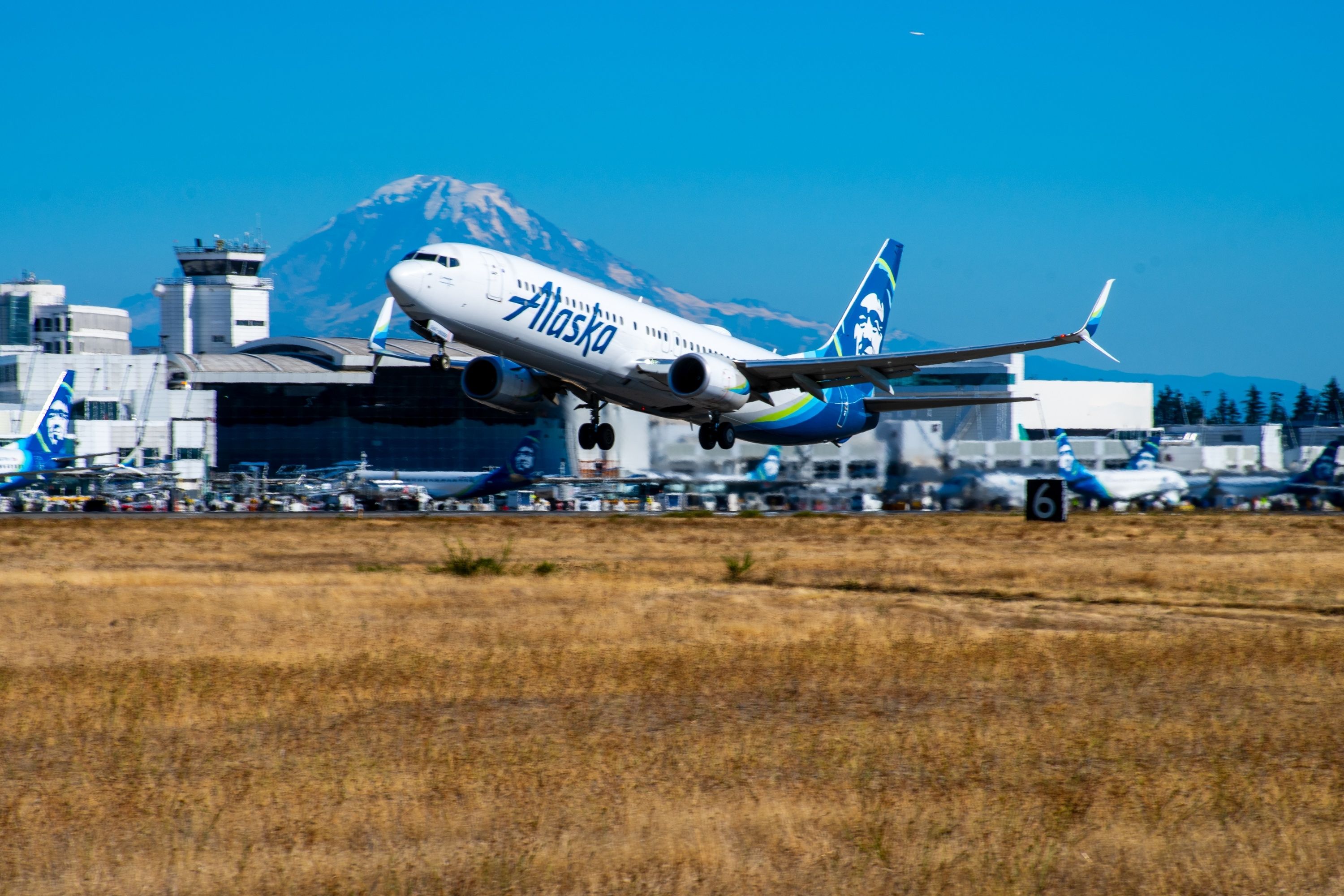
The Alaska-Hawaiian merger is one of the most unique developments in the aviation industry, as there will be two brands under one operating certificate. While this isn’t without precedent (Delta’s Song and United’s Ted subbrands are other examples), Alaska Airlines is the only US carrier currently operating under this model. It’s difficult to determine the long-term sustainability of this arrangement, but the Hawaiian network is reportedly making money again.
The Boeing 787s will go to Seattle, while Hawaiian’s Airbus A330s are here to stay. The 717s will likely be replaced due to their age, and it’s unclear what the long-term future is for the A321neo fleet, although these may also stick around due to their capabilities. As a whole, this merger is an opportunistic buy to grow rapidly and build a long-haul network, as opposed to Alaska’s prior acquisition of Virgin America that was motivated by competition.
While, operationally, Hawaiian has ceased to exist, the brand and spirit of the airline live on. Alaska Airlines is trying a new model that’s unique in the US today, and although it’s primarily focusing on the Seattle operations, it’s also turning around the Hawaiian network to be more successful. With 787s inbound to Seattle, retrofits coming for the A330s, and a more cost-effective operation together, the future is bright for Alaska and Hawaiian Airlines.
