


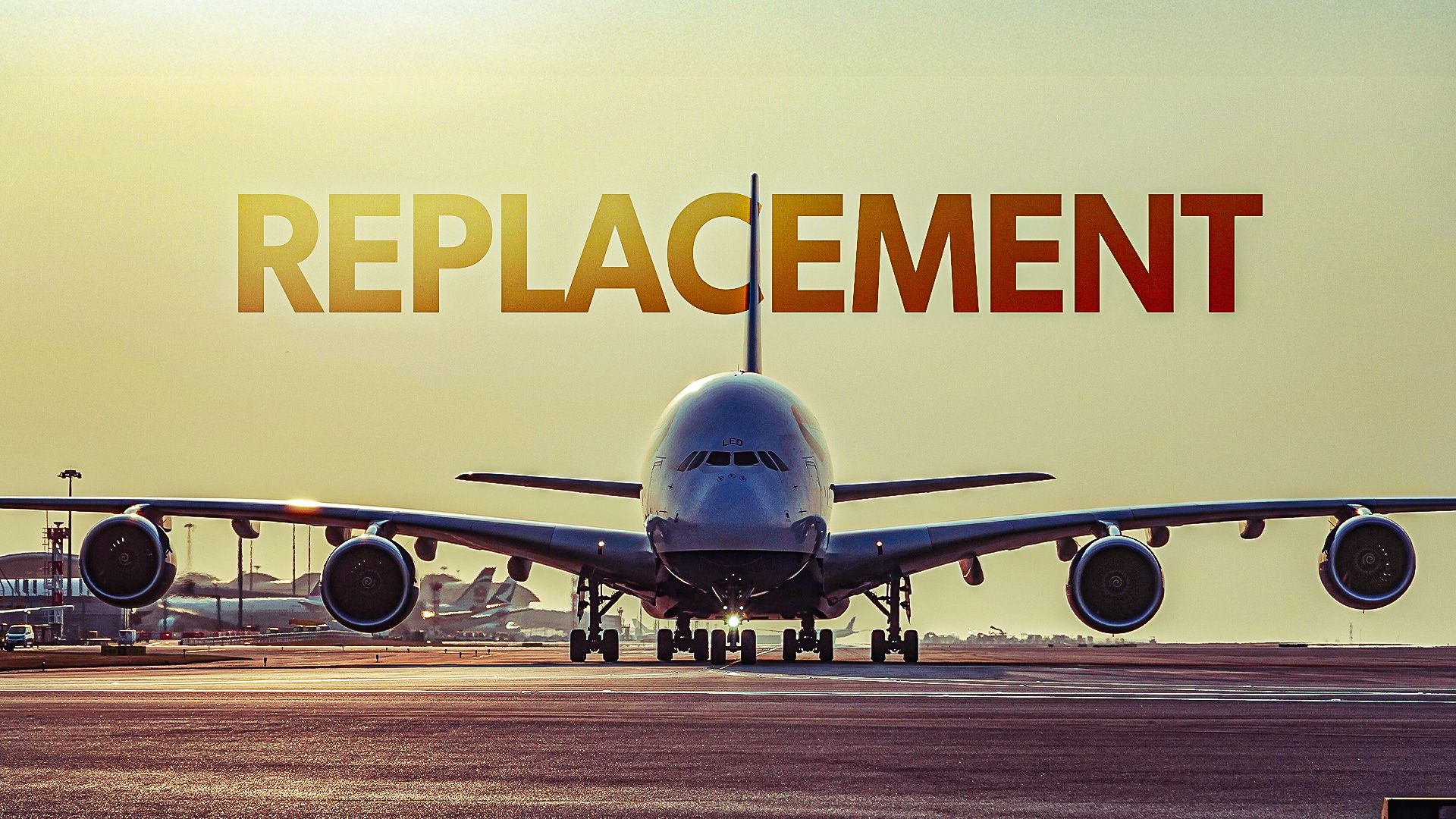
Since its introduction in 2007, the Airbus A380 has been unrivaled in terms of scale and passenger experience, a true spectacle of the skies. Its grandeur brought with it an expectation of resounding success, but in a rapidly changing and ever-dynamic aviation landscape, airlines began to turn away from the aircraft. Now, the focus is on finding a successor that retains the same allure while also being highly adapted to the efficiency-driven environment of the current aviation industry.
Boeing has been tirelessly working on this exact successor. A new generation of their widely successful 777 series, the 777X. Development setbacks and delays have continued to push back the aircraft’s entry into service, but it is now only a matter of time before it becomes commonplace in the skies.
The Fall Of A Giant

The Airbus A380 has been a marvel of modern engineering since its introduction to service in 2007. It captured the imagination of aviation enthusiasts and travelers alike, ushering in a golden era of long-haul travel, one in which the likes of Emirates and Singapore Airlines could utilize its staggeringly high capacity to connect more passengers to global hubs, unlike anything seen before. Based on this alone, it would be hard to imagine how such a behemoth could fail, but every story ultimately has an end.
The aircraft’s success primarily relied on hub-to-hub network demand, surging passenger numbers, and cheaper fuel, much as seen across the industry before the COVID-19 pandemic. The aviation industry, unfortunately, is far from stationary and, with shifting market dynamics, saw a shift in airline strategy. Twin-engined, high-efficiency aircraft that could be deployed on a wide range of routes became the priority, leading the Toulouse-based manufacturer to cease production in 2021.
Today, the question remains: what could fill in for the role that the A380 once reigned over? It seems that Airbus’ rival manufacturer Boeing might have the answer to that, and in a different way from what you might expect.
New Era Of Efficiency

The abandonment of ultra-large aircraft was driven by more than just size concerns; it was also driven by economics. Airlines around the world reached the same conclusion: flexibility and efficiency were particularly important in the current aviation market, and so twin-engined widebody aircraft such as the Boeing 787 and Airbus A350 became more sought after. These aircraft offered a far greater range of route flexibility, allowing airlines to steadily reduce their dependence on major hubs.
Consumer mindsets have also shifted from the passenger side. Direct flights are becoming increasingly popular rather than connecting via congested global hubs, as outlined by the Airports Council International in its most recent connectivity report. Airlines have been able to make this shift possible primarily through the use of the far more efficient and flexible twin-engine aircraft, and the engines that power them have enabled these smaller aircraft to fly even further than previously possible, compared to the A380. The 787, in particular, has even been deployed on services in excess of 24 hours, inclusive of stops.
Despite its incredible popularity amongst passengers, the A380 could not compete with the new generation of efficient aircraft. Both Airbus and the airlines that operated its giant aircraft had to accept that change was needed. There had to be a way to balance the immense scale of the A380, for which it was so well known, with the economic requirements demanded by the nature of the airline market. That is where the 777X now fits in.
A New Type Of Giant

In steps the Boeing 777X, the latest and most advanced airliner to date. An aircraft that seamlessly blends capacity and efficiency, utilizing a familiar look but with a whole new construction underneath that familiarity. Most notably, its folding wingtips, which are a first for commercial aviation, allow a massive 71.8-meter wingspan for flight and a compact 64.8 meters for taxiing and gate compatibility. This, according to Boeing, would enable the aircraft to avoid various spacing restrictions that often limited the superjumbo, so no more rebuilding of gates or taxiways would be needed to accommodate it.
Powered by the new GE9X from General Electric, the world’s largest and most efficient turbofan engine, the 777X-9 delivers a 10–12% improvement in fuel burn compared to the widely successful 777-300ER, a figure that is especially important amidst the increasing pressure that airlines face environmentally and economically. It has a range of over 13,500 kilometers and seats around 400 passengers in a typical two-class layout. Similar to other additions to the Boeing family, there will be varied sizes produced, with current plans to release a 777X-8 and 777X-9 variants, allowing for further route and operational flexibility.
|
Specification |
A380 |
777X-9 |
|---|---|---|
|
Capacity |
555 passengers |
400 – 426 passengers |
|
Range |
8,200 nautical miles (15,200 km) |
7,285 nautical miles (13,500 km) |
|
Length |
238 feet, 7 inches (72.7 meters) |
251 feet, 9 inches (76.7 meters) |
|
Wingspan |
261 feet, 8 inches (79.75 meters) |
FULL:235 feet, 5 inches (71.8 meters) / FOLDED:212 feet, 8 inches (64.8 meters) |
|
Height |
79 feet, 1 inch (24.1 meters) |
64 feet, 9 inches (19.7 meters) |
|
Engine Model |
Rolls-Royce Trent 900 / Engine Alliance GP7200 |
GE9X-105B |
|
Maximum Take Off Weight (MTOW) |
1,268,000 lbs (575,000 kg) |
775,000 lbs (351,500 kg) |
Beyond the impressive numbers, it features a number of other notable additions, such as a new composite wing design similar to what is seen on the 787 series, as well as larger windows and improved cabin pressurization. Passenger experience has been highly prioritized in the aircraft’s development, a key potential selling point for the Seattle-based manufacturer, which remains in fierce competition with Airbus.
Powered By The Future

The 777X has brought significant advancements in technology and materials science to aircraft manufacturing. The composite wings are lighter and more flexible, which improves lift and reduces drag, further enhancing the aircraft’s industry-leading efficiency.
The GE9X engine is even more noteworthy. It is designed with ceramic matrix composites and a larger fan diameter than previous models, resulting in less noise and lower emissions. It not only meets but exceeds ICAO environmental standards for new-generation jets, cementing its position as the pinnacle of environmentally friendly aircraft.
There are also upgrades to the flight deck, using updated avionics and flight systems to refresh the iconic 777 cockpits. What is evident is that Boeing is embracing the sustainability age, helping airlines reduce fuel consumption while maintaining long-haul range and payload.
A Popular Choice For All

The 777X-9 has attracted many airlines worldwide, many of which see the aircraft as a solution to their desires for a fleet overhaul.  Lufthansa, Cathay Pacific, and
  Emirates, the world’s largest A380 operator, have all placed orders, with the latter leading the charge. The Dubai-based carrier is expecting the 777X to eventually become its next flagship, cementing the aircraft as the true replacement for the super jumbo.
Its journey to the skies has been slower than initially planned, however. The aircraft’s certification program has faced multiple delays since its maiden flight in January 2020. Factors included extended testing requirements, production challenges, and continually evolving FAA certification standards. Despite this, orders are on the horizon. Lufthansa is set to receive its first delivery later than initially planned, now scheduled for 2026, marking the program’s first delivery.
Across all the orders, a very clear plan and strategy can be deduced. Many seek to pair the 777X with smaller types like the 787 or A350, to help balance capacity. This mixed-fleet strategy brings with it a new reality. The era of relying on one “super aircraft” is over. Airlines are now combining the strengths and opportunities of multiple aircraft to create a new generation of fleet strategy and management.
Carrying On The Legacy

The future of long-haul travel is near; Boeing’s 777X stands ready to reshape what is possible for a widebody aircraft. Ultimately, its combination of scale and sustainability firmly positions it as the aircraft best able to fill the A380’s void. The superjumbo will still be in our skies, just in a different role than it was initially intended for, making way for the 777X to lead the fleets of the world’s largest airlines.
It marks far more than the end of an era; it represents a pivotal turning point for Boeing, a chance to reassert leadership in the widebody market after many challenging years. Boeing has a crucial opportunity to outperform its long-standing rival and solidify itself as the global leader in aircraft production. For passengers, the aircraft promises quieter cabins, larger windows, and a new standard of long-haul comfort, potentially driving a surge in passenger demand that could be vital to the continued growth of airlines and the industry as a whole following the COVID-19 pandemic.
The giant may be defeated, but the industry is gaining something much more innovative: a jet designed for a world that values efficiency, global reach, and, above all, responsibility for the skies it flies in.
