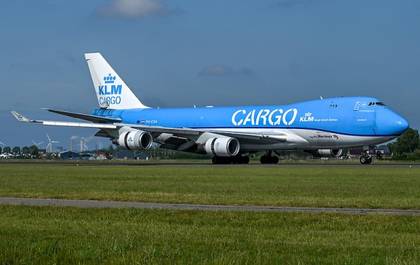


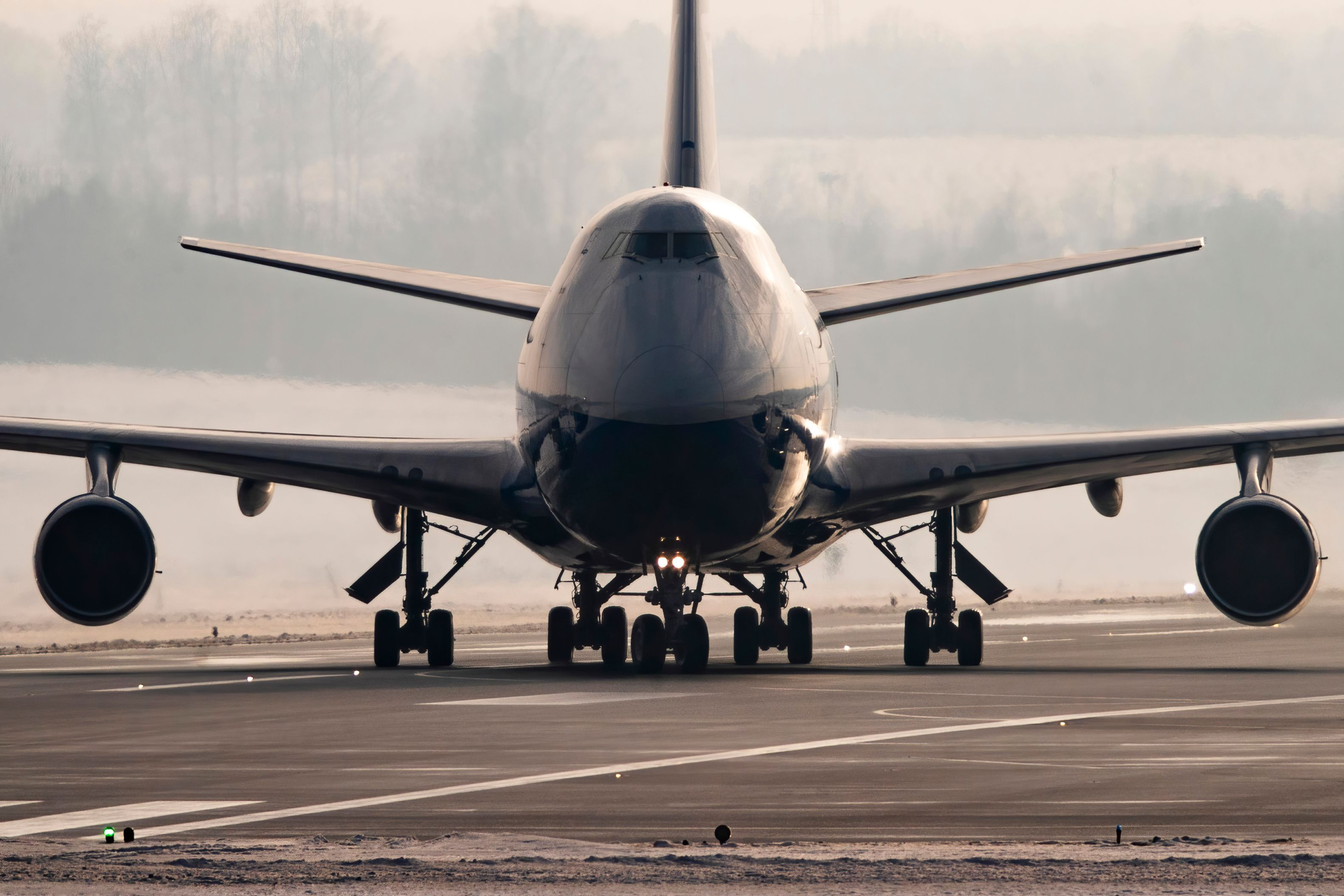
The Boeing 747 has long been a symbol not only of long-haul, comfortable passenger trips but also a crucial part of global air freight. The majestic “Queen of the Skies” redefined cargo transport with its massive size and capacity. However, in an era driven by fuel efficiency, environmental concerns, and changing operational economics, the 747 freighter is being gradually replaced by a new generation of aircraft, mostly by more fuel-efficient twin-engine jets. In our comprehensive guide, we will examine the emerging alternatives, from Boeing’s 747-8F and 777-series freighters to Airbus’ innovative A350F, and evaluate how they compare as the next leaders in heavy air cargo.
Understanding these new cargo platforms isn’t just about technical upgrades or fleet changes; it offers insight into how the air freight industry is adapting to climate goals, digital logistics, and rising e-commerce demand. This detailed exploration, with each chapter focusing on a specific aircraft, provides background information, comparisons, and future-oriented analysis to equip both aviation enthusiasts and industry observers.
The Boeing 747-Series Freighters

The Boeing 747 freighter, particularly the Boeing 747-400F and the newer 747-8F, has served as the backbone of global air cargo for decades. Its iconic hump, high-volume mains deck, and unique nose-loading capability made it indispensable for outsized or high-density freight. Although no longer at the forefront of innovation, its operational track record remains unmatched in terms of longevity.
Over its service life, the 747 freighter enabled carriers to maximize volume and flexibility, as seen in airline fleets such as Lufthansa Cargo, Silk Way West, Air Bridge Cargo, and others. Its continued presence is mainly due to a combination of low acquisition costs (on secondary markets) and incredible on-board handling capabilities. Even today, carriers use the 747 for specific heavy-load missions or to support legacy infrastructure.
However, challenges are growing. As fuel costs, carbon emissions regulations, and maintenance complexity increase, the 747 freighters are becoming more costly to operate. Their four-engine design and older technology give them a clear disadvantage compared to newer twin-engine models, which are designed for greater efficiency and reduced environmental impact.
The Boeing 747-8F: The Final Jumbo Freighter

Boeing 747-8 is the last of the Jumbos. And the Boeing 747-8F represents the final evolution of the 747-cargo family. It is the largest and most advanced variant produced in this series. It offers improved engines with distinctive chevrons, updated avionics, and aerodynamic refinements compared to earlier models. Still, it’s a four-engine behemoth carrying forward the legacy of the original design from the late 1960s.
While the 747-8F provides increased payload and efficiency relative to older 747 versions, it remains less efficient than modern twin-engine freighters. Many operators are now phasing it out or considering alternatives for long-term fleet planning, even as it continues to serve niche roles in some cargo markets. That is why both the passenger and the freighter versions didn’t become as popular as the original series, with only about 155 747-8 were built, with the freighter version (-8F) being a bit more popular than the passenger one (8I).
Some cargo operators truly value the payload and power of the new 747. Therefore, the aircraft continues to be used in regions where its loading flexibility or compatibility with existing infrastructure outweighs operational inefficiencies, but it hasn’t become a widespread practice. That said, the broader industry trend is clearly shifting toward newer platforms that offer improved fuel efficiency and lower emissions, which are crucial factors in a carbon-conscious era.
Boeing’s Newer Freighter Alternatives

Boeing 777 Family leads the way: Boeing’s modern answer to replacing the 747-400F in cargo operations is the dedicated Boeing 777F freighter. Introduced over a decade ago and based on a Boeing 777-200LR, the 777F provides twin-engine efficiency, along with significant payload and extended range capabilities, making it a vital part of many fleets.
Indeed, the 777F has proven itself in global service, with carriers such as  Emirates and Silk Way West expanding their orders. Emirates confirmed its commitment to the 777F and is evaluating further options, including the Airbus A350F and Boeing 777X freighters, as reported by Reuters. Silk Way West, for its part, is actively replacing older 747-series jets with 777Fs, and plans to acquire 777-8Fs and A350Fs by 2030.
Concurrently, Boeing is progressing with freighter conversions of passenger jets, such as the 777-200LR, with P2F and LR conversions under development. These conversions offer cost-effective capacity with enhanced volume and modern freighter capabilities, serving markets where new-build production slots are limited. One company, The Mammoth Freighters specializes in P2F conversions and is currently converting some of the ex-Delta 777-200LRs for cargo operators.
But Boeing 777F is not the only cargo twinjet that Boeing offers. The next frontier is the Boeing 777-8F. The next chapter in the 777 series freight lineup is the 777-8F freighter, part of the 777X family. Announced with strong payload capacity and next-generation fuel efficiency, it’s being adopted with early orders by major cargo companies.
Boeing has officially commenced production of the 777-8F, citing a revenue payload of 112.3 tonnes, and marketing it as the most fuel-efficient and lowest-emission model in the 777X line, according to Reuters. Qatar Airways, as the launch customer, has placed orders for 34 units with options for 16 more.
Despite some delays in delivery from Boeing’s original 2027 timeline, the 777-8F’s specs and customer interest indicate strong momentum. It is shaping up to be a powerful successor to the 747 for cargo missions that require high payload capacity and global range, with improved economics.
Airbus’s Answer — The A350F

 Boeing is not the only aircraft manufacturer that builds cargo planes. Airbus is responding to market demand with its A350F freighter: a clean-sheet design derived from the popular Airbus A350 passenger series. It incorporates advanced composite wings, aerodynamic refinements, and efficiency improvements designed for cargo operators.
Airbus celebrated a milestone with the completion of the first A350F wingset at Broughton, UK, in May 2025. Built alongside passenger A350s, this shared production line creates industrial synergies. The Airbus A350F promises at least 20% lower fuel consumption and CO₂ emissions compared to current in-service freighters, while featuring the industry’s largest cargo door, which simplifies loading operations.
Airbus is building two A350F prototypes slated for flight testing in 2026–2027. With enhanced range and high payload, the A350F quickly becomes one of the most compelling options for operators seeking an efficient, future-proof freighter aircraft.
Multiple carriers have shown interest in the A350F. For instance, STARLUX and MNG Airlines have signed orders or MOUs to acquire A350F aircraft, as stated by Airbus, signaling early commercial confidence in the platform.
The A350F’s design prioritizes both sustainability and operational flexibility. Key differentiators that may sway operators choosing between it and the 777-8F or remaining with phased-out 747-series wings. As orders accumulate and flight tests progress, the A350F stands to become a flagship freighter model, the one that redefines efficiency and cargo-handling ease for the next generation of air logistics.
Comparative Analysis Of All Aircraft

To understand the transition from 747 freighters, let’s compare key specs of the Boeing 747-8F, 777F, 777-8F, and Airbus A350F. These include payload, range, fuel efficiency, and technological features.
The 747-8F, while still robust, is significantly less efficient than the twin-engine models. The 777F offers proven long-range performance (approximately 100 tons payload). The upcoming 777-8F surpasses this, by boasting over 112 tons payload and leading fuel economy. Meanwhile, the A350F achieves a 20% efficiency gain over current freighters, along with an industry-best cargo door design and extended range capabilities.
Detailed Payload, Range & Volume Side-by-Side Comparison
|
Aircraft |
Payload |
Range |
Volume Capacity |
Notes / Highlights |
|
Boeing 747-400F |
Max revenue payload: ~113,000 kg (249,100 lb) |
~4,110 nm / 4,720 mi (7,620 km) |
~25,000 feet³ (710 m³) |
Workhorse of global cargo in the 1990s–2000s; nose-door made it versatile for oversized freight |
|
Boeing 747-8F |
Max revenue payload: ~134,000 kg (295,400 lb) |
~4,120 nm / 4,740 mi (7,630 km) |
~30,288 feet³ (857 m³) |
Largest freighter in service; retains iconic nose-door loading flexibility |
|
Boeing 777F |
Structural payload: 107.0 t (235,900 lb) Revenue payload: 102.0 t (224,900 lb) |
~4,970 nm / 5,720 mi (9 (,200 km) |
~23,051 feet³ (653 m³) |
Twin-engine efficiency; strong range-to-payload balance |
|
Boeing 777-8F |
Structural payload: 118.2 t (260,600 lb) Revenue payload: 112.3 t (247,500 lb) |
~4,410 nm / 5,070 mi (8,167 km) |
~27,047 feet³ (766 m³ |
Next-gen efficiency; projected to be Boeing’s backbone freighter from 2028 onward |
|
Airbus A350F |
Max payload: ~111,000 kg (244,700 lb) |
~4,700 nm / 5,405 mi (8,700 km) |
~24,534 feet³ (695 m³) |
Composite construction, ~20% more efficient; largest main-deck cargo door in class |
The 777F remains a workhorse for modern fleets, but freighter operators targeting next-gen economics and environmental standards may favor the upcoming 777-8F and A350F. The 747-8F endures in niche areas, yet its days as a mainstream workhorse are waning.
The Next Chapter For Air Cargo

The Boeing 747 freighter has defined the air cargo landscape for decades, but its successor era is here. A combination of efficiency, sustainability, and operational economics now defines the modern freighter market.
Boeing’s strategy evolves from the solid 777F foundation to the cutting-edge 777-8F, while Airbus brings fresh competition with the A350F. Both platforms offer operators a blueprint for cost-effective, high-capacity, and environmentally conscious freight operations in the coming decades.
As delivery schedules firm up with 777-8F beginning perhaps in 2028, and A350F testing in 2026–27, the next chapter for air cargo is clear. We will see twin-engine, tech-forward, and greener aircraft. For airlines, it’s about transitioning legacy assets towards agile, modern fleets. For passengers of the supply chain, it’s about faster, cleaner, and more reliable goods movement around the globe.