


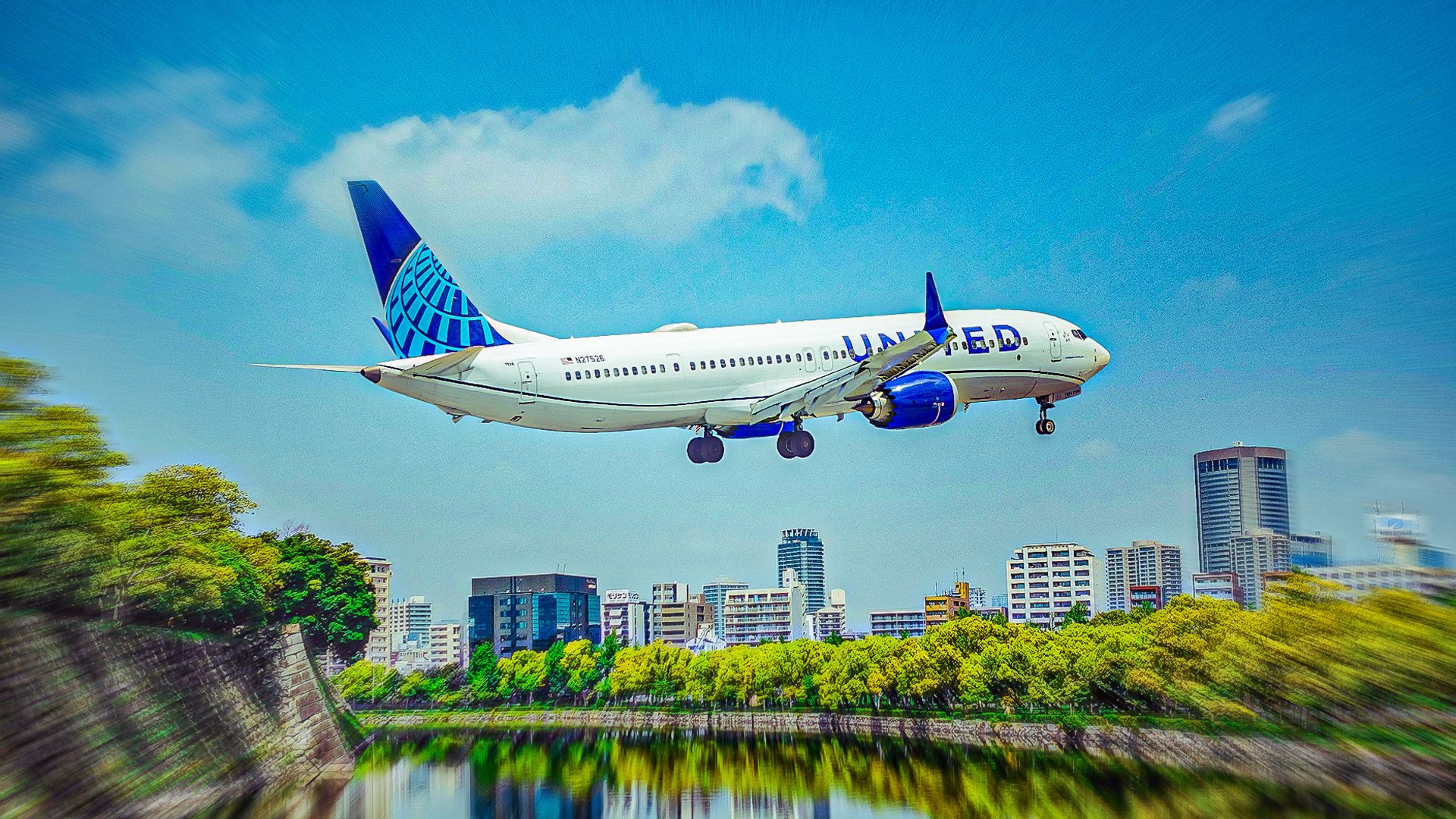
Artificial intelligence is the next big thing in tech, and now,  United Airlines is getting in on it. As per the transcript from United’s Q3 earnings call on Seeking Alpha, United’s deployment of AI has already eliminated approximately 4% of its headquarters workforce, with plans for additional job reductions in the future. These cuts are part of a broader corporate push to streamline operations, improve efficiencies, and reduce costs as the airline integrates more digital tools across functions.
United’s leadership framed the move as inevitable in an evolving airline landscape where AI and automation promise to reshape support functions, predictive maintenance, scheduling, and analytics. The move is helping to make existing workers more efficient and reduce costs at the airline’s corporate headquarters, making for an overall more streamlined operation.
Changes At United Airlines

The 4% reduction reflects roles within United’s headquarters, primarily corporate, administrative, and support functions, rather than frontline operations. According to the company, AI has already supplanted tasks such as data entry, analytics preparation, forecasting, workflow automation, and internal reporting. These are jobs where algorithms and systems can handle repetitive or data-intensive work.
United did not specify precisely which departments bore the cuts, but it would appear that roles in finance, planning, revenue management, and possibly business intelligence were among those impacted. The intention appears to be to reduce headcount where AI can add equivalent or better output without degrading quality or oversight. While AI systems do cost money, it’s overall most cost-effective than maintaining current staffing levels.
The airline also warned that further cuts are expected over time. As AI tools mature and expand into adjacent processes, additional roles may be trimmed or restructured. United is setting expectations that this shift is not a one-time event, but a multi-year transformation impacting support layers across the organization. In other words, this is the future at United Airlines.
Risks And Long-Term Strategy

United’s leadership argues that AI and automation can yield cost savings, faster analytics, error reduction, and scalability. In competitive markets with tight margins, those advantages can translate into better yields, leaner operations, and greater agility. The cutback is portrayed as reinvesting in data infrastructure, AI development, and digital tools rather than headcount.
Of course, there are drawbacks. Workforce morale may suffer, particularly among staff who see human judgment and domain expertise being supplanted. Employee morale is important to ensuring output quality, so United has to find a careful balance of streamlining its operations while keeping workers happy. Communication and a clear transition plan will be key here.
AI deployment in heavily regulated, safety-critical industries like aviation must be cautious. Errors in forecasting, scheduling, or maintenance decisions have knock-on effects. Oversight, validation, transparency, and human-in-the-loop checks remain essential to avoid systemic failures driven by algorithmic missteps.
The Implications Of AI In Aviation

United’s move is part of a growing wave where airlines, logistics firms, and large enterprises look to AI to reduce corporate overhead. In aviation, incumbents are rethinking roles in scheduling, crew management, predictive maintenance, and revenue modeling. The goal is often leaner staff and smarter systems, and in turn, a more efficient corporate workforce.
Some airlines already use automation for baggage matching, operations recovery, fuel planning, or crew optimization. United’s public acknowledgment of job cuts tied to AI is among the more prominent cases and may accelerate similar shifts elsewhere. Competitors will watch to see if cost savings materialize without operational harm. This may be a sign of what’s to come not just in aviation, but across the world as AI continues to advance.
Overall, we’re seeing a shift towards cooperation between AI and humans, with AI almost serving as an assistant to workers. Roles involving repetition or administrative tasks are the most vulnerable, and upskilling, adaptability, and hybrid human–AI competence will increasingly matter. This is in pursuit of a workforce that is not just cheaper for airlines, but is also more effective with the assistance of AI at its fingertips.
