



A Wildcat helicopter conducted simulated Martlet missile strikes on moving targets at the National Drone Hub, Predannack, using live data provided by Puma and Providence UAVs.
The trials, involving a Wildcat from 815 Naval Air Squadron (NAS), uncrewed aerial vehicles (UAVs) from 700X NAS at nearby RNAS Culdrose, and support from 847 NAS and industry partners MarWorks, TeleplanForsberg, General Dynamics, C3IA, UAV Aerosystems and Collins Aerospace, took place not long after the National Drone Hub at Predannack Airfield, Cornwall, hosted the maiden flight of the Proteus helicopter.
An RQ-20 Puma UAV – which has been in the Royal Navy’s inventory since 2020 and recently deployed on Carrier Strike Group 25 – teamed with a UAV Aerosystems Providence to capture and transmit data in near real time to personnel in the cabin of the Wildcat HMA2 helicopter. These personnel, from specialist drone unit 700X NAS, also controlled the Puma from inside the helicopter. A new mesh network was tested and used to incorporate the different data sources seamlessly.
This data was used to conduct simulated strikes using Martlet lightweight multirole missiles (LMM), including attacks from beyond visual line of sight (BVLOS) and over the horizon (OTH).
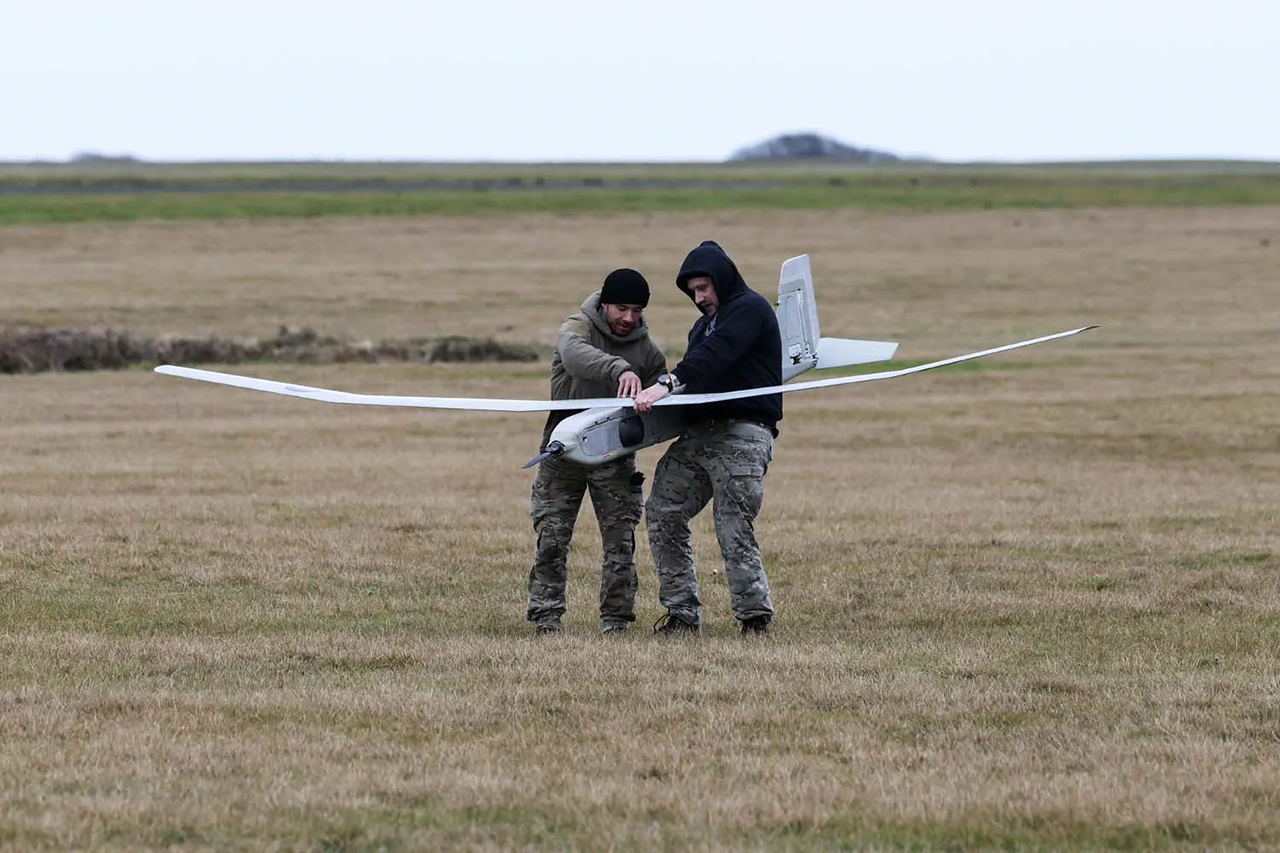
“We turned a Wildcat helicopter into a flying command centre. For the first time, while flying a mission, a Royal Navy crew sent and received live data from multiple drones from within the aircraft across a node network,” explained Lieutenant Commander Rhydian Edwards, Officer in Command of the Wildcat Maritime Force Operational Advantage Group, based at RNAS Yeovilton in Somerset.
“The important thing here is that remote data nodes were used to send and receive information from any system on the MESH network, getting that into the aircraft instantly whilst also setting the foundations for taking control of those systems when tactically appropriate – the Puma, combined with the Providence, were just a means to an end to prove that the system will work and develop initial tactics.”
“This is essentially a universal translator. In the past, every new drone and sensor came with its own unique interface. This breaks that cycle,” Lt Cdr Edwards added.
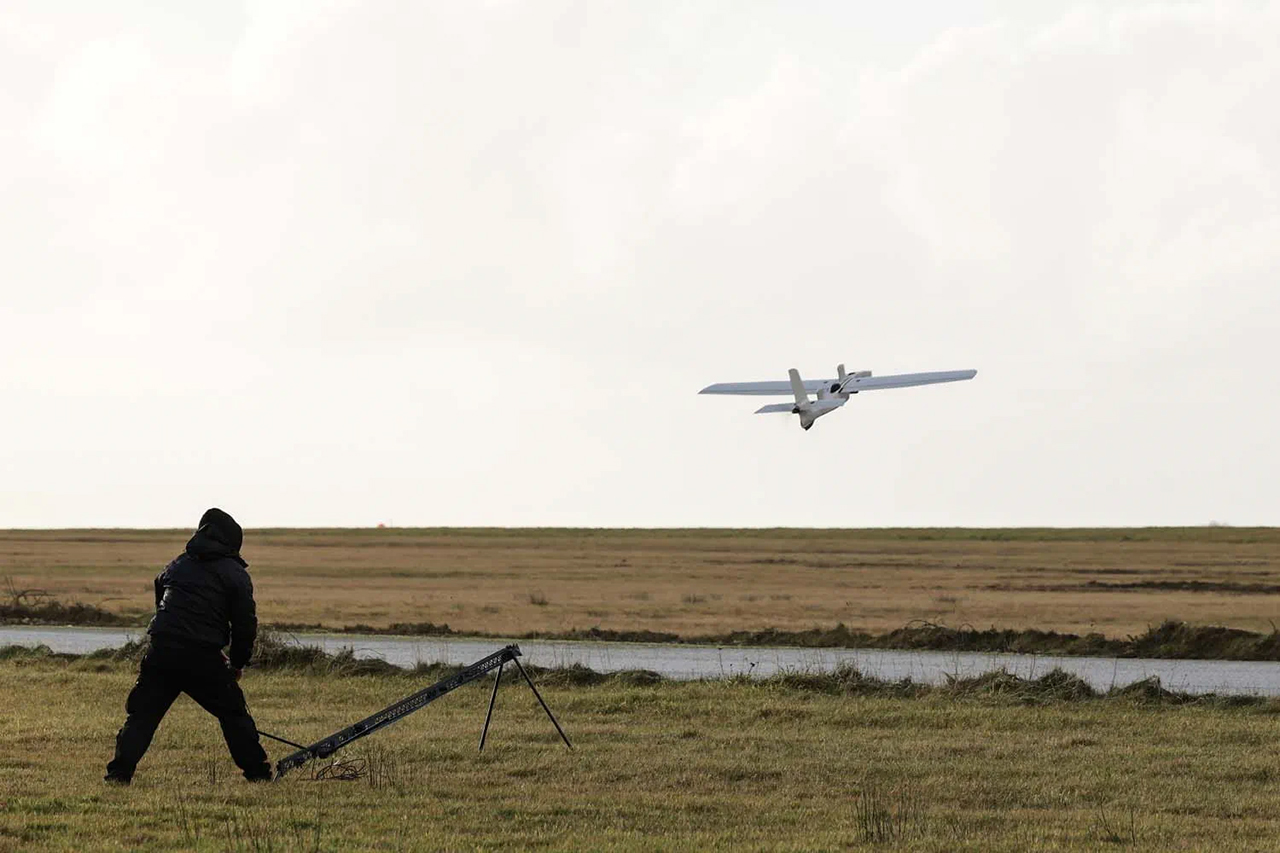
The trials – known as ‘Eagles Eye’ – were part of the inital steps towards the UK’s Hybrid Air Wing concept, where the Royal Navy’s two Queen Elizabeth class aircraft carriers (and potentially other vessels) will serve as hubs for both crewed and uncrewed aircraft. This provides a significant force multiplier for intelligence, surveillance, and reconnaissance (ISR) as well as wider mission sets including kinetic attacks with live weapons.
“This shows exactly where the Wildcat Maritime Force is heading as we embrace the Hybrid Navy model,” said Commander Andrew Henderson, Commanding Officer of the Wildcat Maritime Force (WMF). “It’s not just about the drone, it’s also about the network access. By learning lessons from the war in Ukraine we are securing these links into MESH networks, increasing interoperability and proving we can connect sensors and strike assets across the battlefield instantly. We are building a system that is modular and survivable – embracing the latest tech to make us deadlier and harder to defeat in a fight on the modern battlefield.”
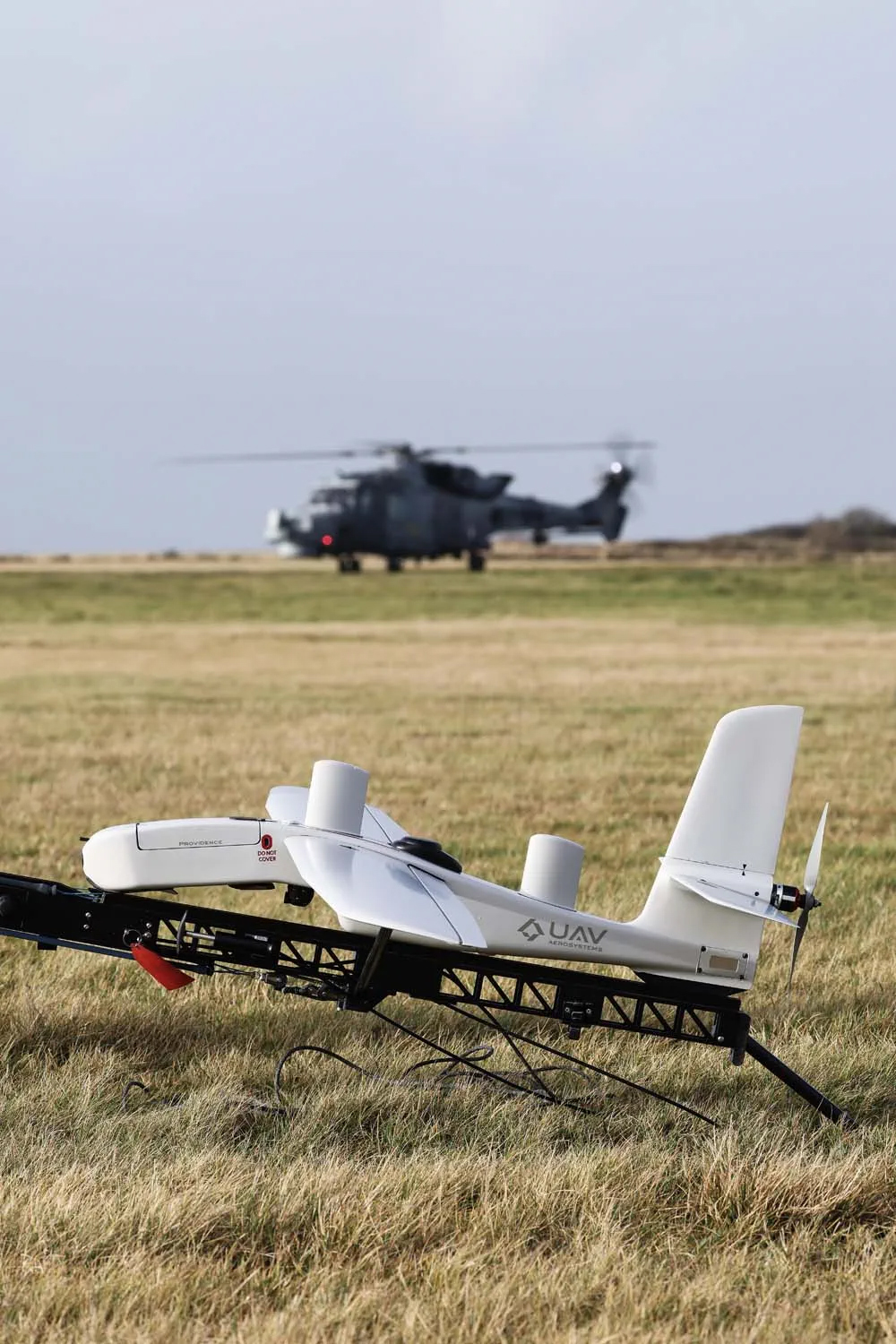
Further trials of the concepts demonstrated at Predannack will be carried out by Wildcat crews when they deploy to Norway for Exercise Tamber Spring in a few months’ time. The annual exercise takes place in the Norwegian fjords and involves simulated threats from waterborne fast attack craft (FAC), which is one of the adversaries that the potent Wildcat and Martlet missile combination is heavily geared towards.
National Drone Hub Expansion
The Aviationist was one of the first to report on the recent expansion of Predannack’s National Drone Hub facility, the results of which can be seen in the images released from this trial. Two new hangars were constructed, far larger than the ones already on site, and computer renderings depicted them supporting sizeable drones such as the MQ-9 Reaper.
No MQ-9s have yet used Predannack, but the hangars are one of the ways that the facility has been future-proofed for the growing drone sector. A new deal was struck in December 2025 between the National Drone Hub – operated as a joint endeavor by WholeShip Ltd and the Royal Navy – and Spaceport Cornwall, located at Cornwall Airport Newquay 30 miles (50 kilometers) to the northeast with a view to grow the already expansive areas available off the Cornish coast for segregated drone testing even further.
Strengthening Cornwall’s position as a cutting-edge aerospace hub: Working with @Newquay_Airport and the National Drone Hub, we’re building infrastructure capable of supporting next-gen autonomous systems across the county👇https://t.co/wHXInlNGSd@CWLSpaceCluster pic.twitter.com/BeZl4HwEVP
— Spaceport Cornwall (@SpaceCornwall) December 15, 2025
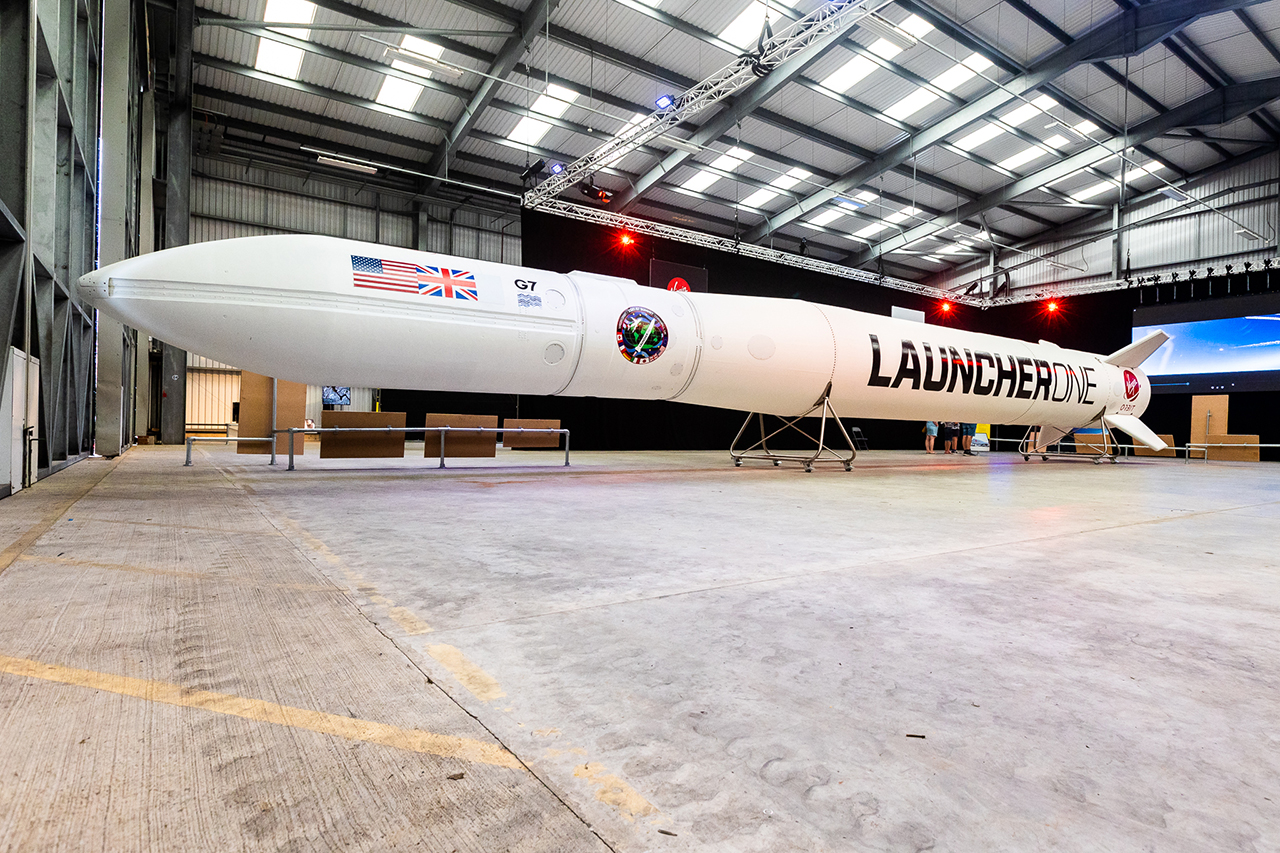
Spaceport Cornwall was officially opened in 2022 and included a brand new space systems integration facility, which was put to use by flagship partner Virgin Orbit to integrate satellites for a launch attempt of its LauncherOne rocket in January 2023. The facility positioned itself as a global hub for horizontal launch operations like the LauncherOne, which was carried to altitude and then dropped from a Boeing 747. Unfortunately this test launch failed to achieve orbit and the Virgin company did not survive subsequent financial pressures, which left Spaceport Cornwall still with a healthy level of space sector investors but without the high profile launch capability.
New airspace zones off the north coast will allow testing to also take place from Newquay, using the airport’s 9000 feet long runway – which previously acted as a hub for NATO maritime patrol aircraft when the airfield belonged to adjacent RAF St Mawgan – to enable trials of larger, higher-speed uncrewed aircraft that would be beyond the ideal scope of Predannack’s shorter, older runways which in recent years have predominantly been used as a relief landing ground by helicopters.
A Specific Operations Risk Assessment (SORA) is being established to support the development of this testing area. If successful, this would further bolster Cornwall’s status as one of the UK’s primary centres for uncrewed aircraft development.
