


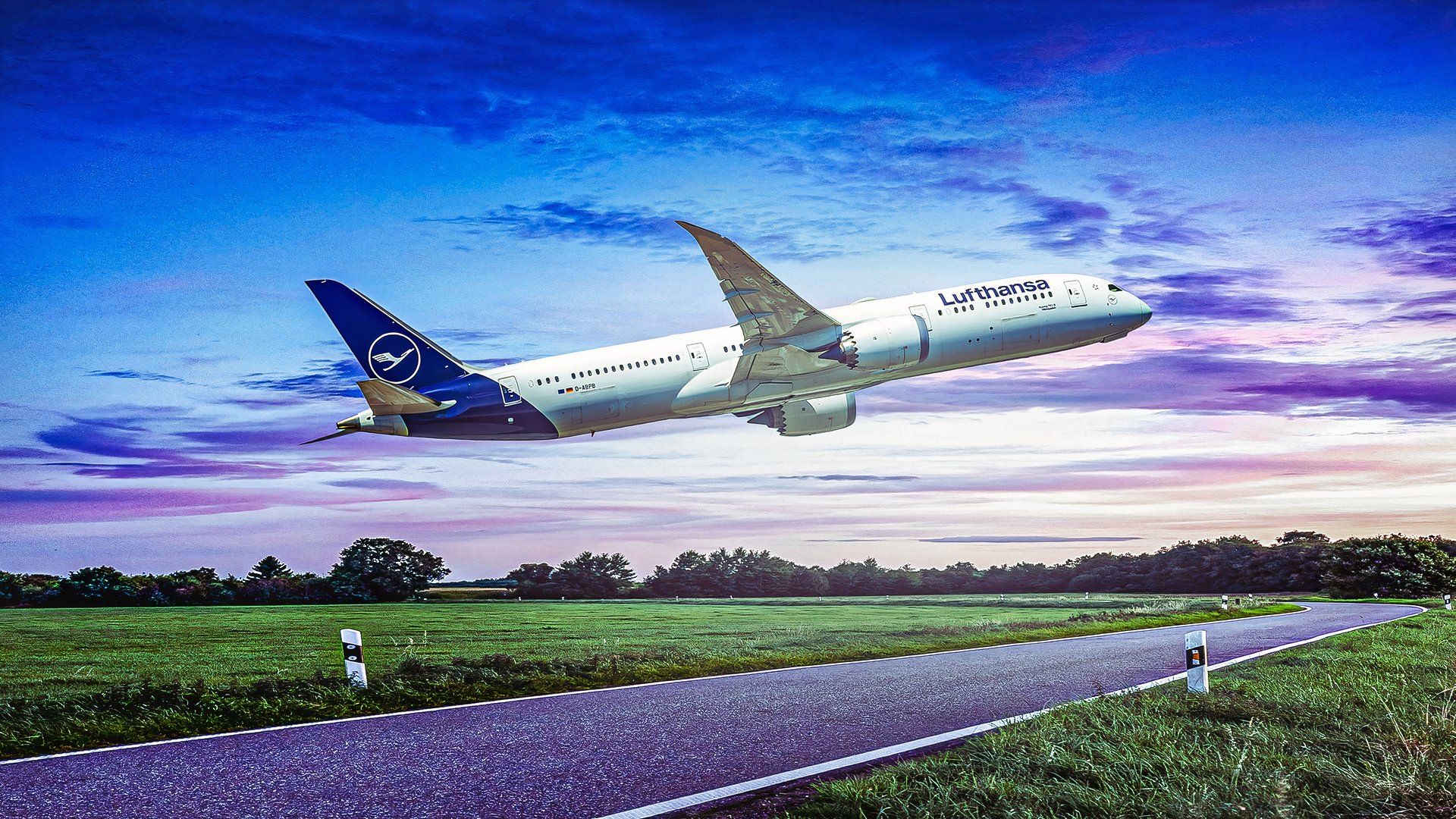
 Lufthansa is the fifth-largest operator between Europe and the United States by passengers. In the 12 months to July 2025, the Star Alliance member carried 5.4 million round-trip passengers. Only Delta Air Lines, United Airlines, American Airlines, and British Airways carried more people. These figures are from examining the latest US Department of Transportation data.
Compared to the 12 months to July 2024, Lufthansa’s US traffic rose by a healthy 6%. It benefited from the launch of Munich-Seattle and Frankfurt-Raleigh/Durham routes, but Frankfurt-Minneapolis has shifted to its leisure unit Discover Airlines. Despite Lufthansa being the fifth-largest carrier, it grew at double the rate of the Europe-US market generally. Given reports of sluggish US demand, this additional exposure could be problematic.
A Look At Lufthansa To The US: August 2024-July 2025

The figure above provides a monthly breakdown of Lufthansa’s US seats, passengers, and seat load factors. The German giant, which will undergo a big reorganization, carried 585,000 round-trip passengers in July 2025 against just 255,000 in February 2025. For many airlines, February is the worst-performing month of the year.
In the 12 months examined, the US DOT shows the Star member filled 83% of seats. Of the four larger airlines by traffic, only United had a lower result (81%). Of course, this is just one measure and should not be considered in isolation from other factors.
Lufthansa’s loads varied from just 71% in February 2025 to a high of 90% in July 2025. February’s poor result was despite a significant reduction in capacity. Imagine how bad it would have been if the available seats had not been reduced markedly. Yet, it was not enough. Still, it rose from 67% in February 2024, but the impact on yields is unknown.
Lufthansa’s Top 10 US Markets

Of Lufthansa’s 5.4 million US passengers, the US DOT shows that 3.3 million flew to/from  Frankfurt, while 2.1 million involved
  Munich. Some 30 routes existed: 18 from Frankfurt and 12 from its Bavarian hub. This includes Frankfurt-Minneapolis, which last saw Lufthansa’s frames in April 2025. Discover took over in May.
With 327,000 passengers, the Star link from Frankfurt to/from Chicago O’Hare was the most-trafficked route. Cirium Diio data shows that frequencies varied from daily to double daily. The A340-600 was the most-used equipment, followed by the A340-300, 747-8i, and 747-400.
Booking data shows that just 12% of Frankfurt-Chicago passengers were local; they only flew between the two cities. About 10% originated/ended in Frankfurt and connected to a United flight in the Illinois hub. Some 31% of people transferred to another service in both Chicago and Frankfurt. With 47%, most passengers started/ended in Chicago and transited in Frankfurt. Bengaluru, Berlin, Athens, Hamburg, and Hyderabad were the most popular cities.
|
Round-Trip Passengers: August 2024-July 2025* |
Route |
Seat Load Factor |
|---|---|---|
|
327,000 |
Frankfurt-Chicago O’Hare |
87% |
|
317,000 |
Frankfurt-New York JFK |
83% |
|
272,000 |
Munich-Los Angeles |
80% |
|
270,000 |
Frankfurt-Washington Dulles |
84% |
|
270,000 |
Frankfurt-Los Angeles |
89% |
|
237,000 |
Munich-New York JFK |
85% |
|
233,000 |
Frankfurt-Miami |
89% |
|
229,000 |
Munich-Chicago O’Hare |
87% |
|
227,000 |
Frankfurt-San Francisco |
88% |
|
225,000 |
Frankfurt-Newark |
86% |
|
* Rounded |
Shifting To The A380 Meant Munich-Denver’s Load Fell Significantly

Lufthansa first used the 509-seat superjumbo from Munich to Denver in April this year. It operated through October. It was the first time Colorado ever had scheduled A380 service. However, in November 2018, an Air France flight diverted there while en route from Los Angeles back to Paris CDG.
The double-decker quadjet replaced the 298-seat/318-seat A350-900. The equipment shift meant that available seats rose by 74%, which is a huge increase. Between May 2025 and July 2025, when the A380 operated exclusively, 69,200 passengers traveled, and just 74% of seats were filled. This only partly reflected the peak season.
While the total traffic rose by 40% year-on-year, the load fell by 15 points from a high of 89%. Although the extra capacity probably meant lower yields, it clearly meant higher total revenue. Given that the A380 will return to Denver in 2026, Lufthansa must have been sufficiently happy with the performance in the first season. However, the load factor must improve.
