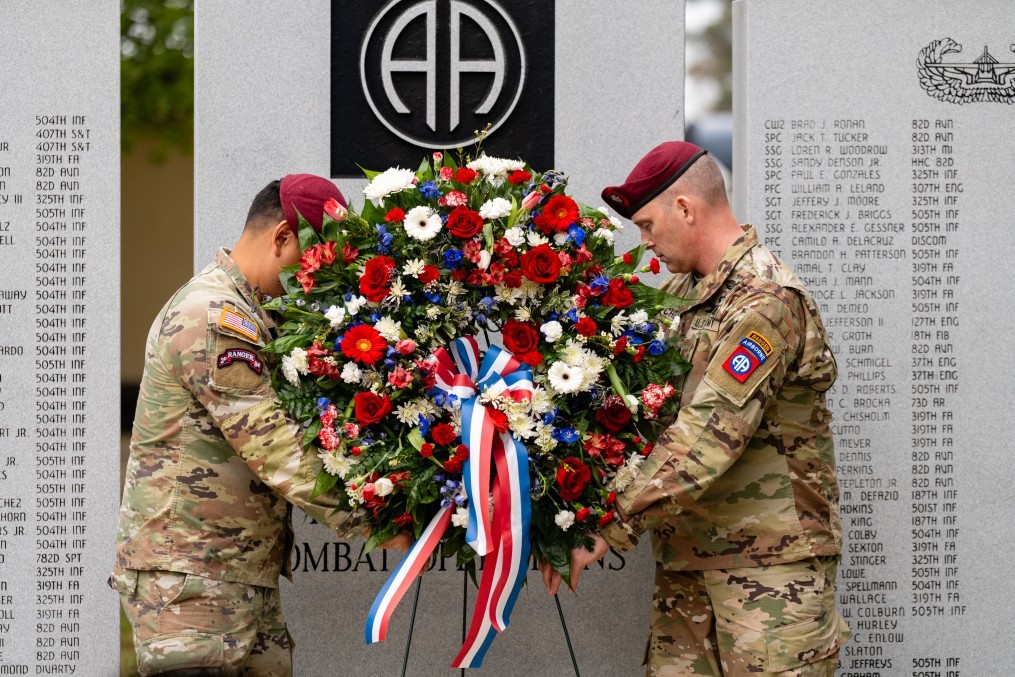



Tragedy struck on March 23, 1994, at Pope Air Force Base, North Carolina, on an aircraft parking ramp known as ‘Green Ramp.’
A number of paratroopers were lost and several injured after flames and debris rained down on their training and assembly area after a mid-air collision between a fighter jet and a cargo plane, the debris also igniting a large cargo plane parked on the ramp.
The Paratroopers
A force of over 500 paratroopers from the 504th and 505th Parachute Infantry Regiments, along with the 782nd Support Battalion of the 82nd Airborne Division of Fort Bragg, North Carolina, had assembled for training. Mar. 23, 1994, was a beautiful day weather-wise with temperatures in the mid 60’s on this bright, sunny, almost windless Wednesday — the perfect weather for jumping.
Along with members of the 525th Military Intelligence Brigade and the 59th Aviation Battalion, the paratroopers assembled in an area near what is known as the ‘Green Ramp’ at Pope Air Force Base, North Carolina. This area contained buildings and other facilities used by the 82nd Jumpmaster School.
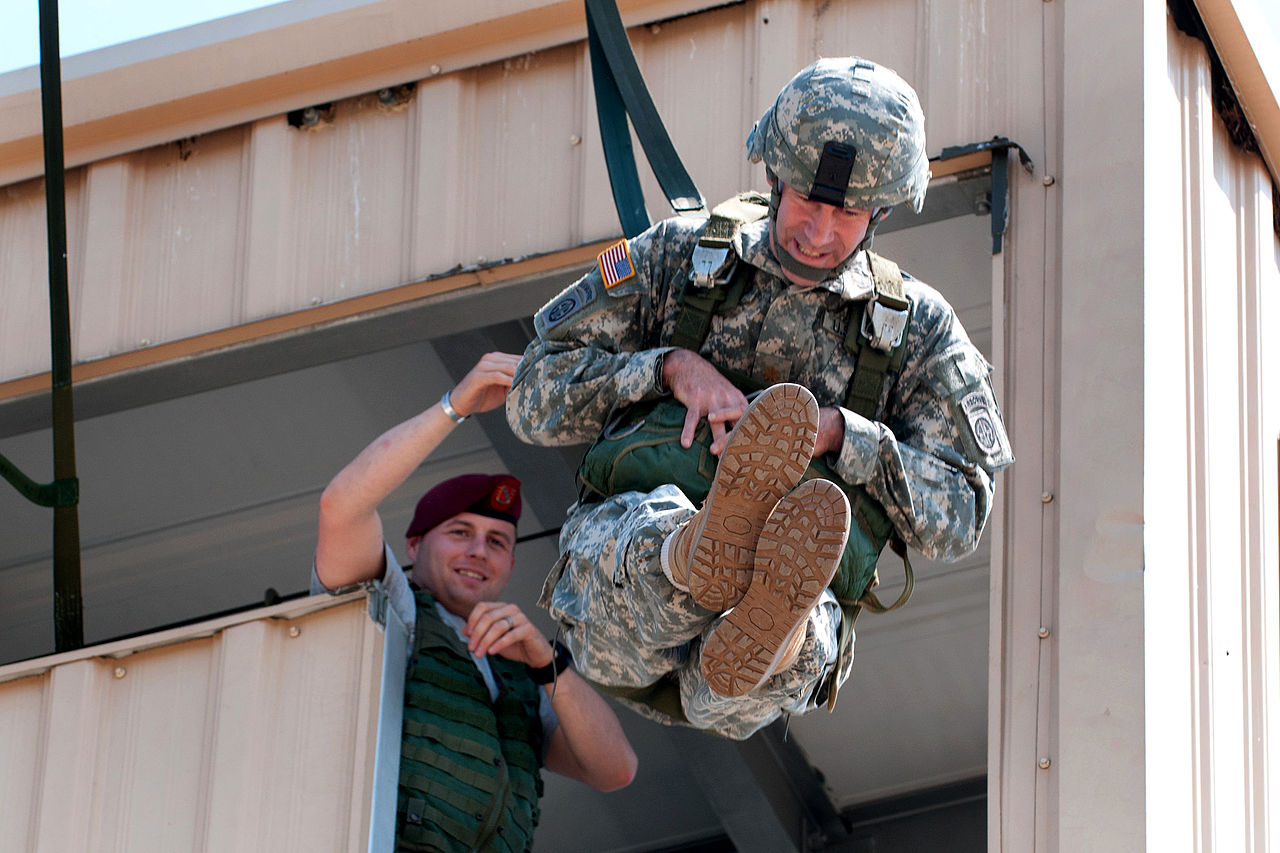
A pack shed, steel CONEX containers, a pair of Air Force buildings, trailers, and even a snack bar were included in the training area. C-130 and C-141 transport aircraft mockups were mounted on concrete platforms for practicing aircraft exits along with higher wooden platforms for rehearsing landings.
The Plan
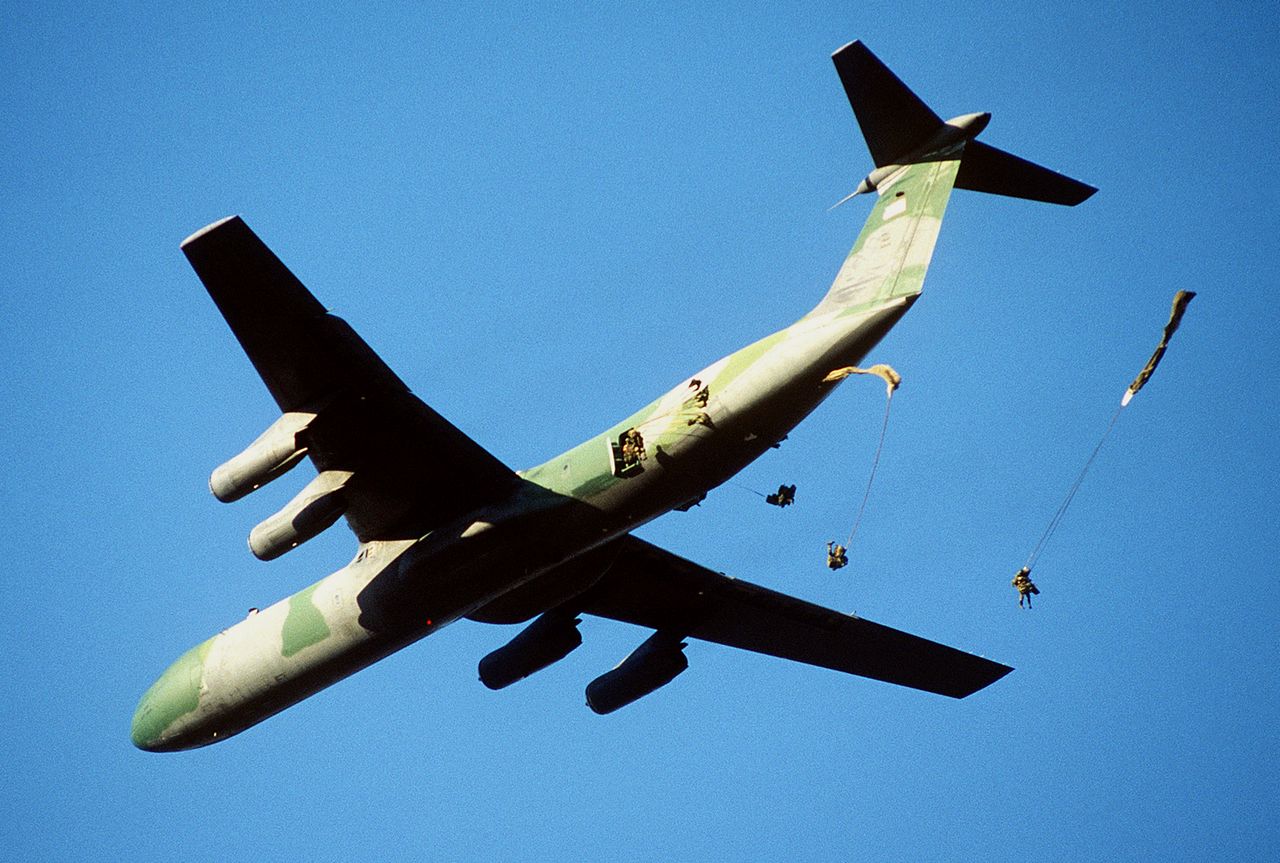
This day there were two Lockheed C-141 Starlifters parked on the runway, waiting to load the paratroopers. Several Lockheed C-130 Hercules aircraft were also parked in the area further away. F-16 Fighting Falcons and A-10 Warthogs conducted training in the skies overhead.
The paratroopers conducted training, rehearsed jump and safety drills along with attending briefings. The time was approximately 2:00 P.M. Some troops were gathered under shade trees, others, some already with parachutes on, lined with their backs to the runway listening to briefings.
Some troops were sitting, most without helmets on. Several were walking from the packing shed. Another briefing was scheduled at 2:30 before the C-141s were to be boarded.
The Spark
At 2:10 P.M. the high pitch of a jet aircraft at full throttle filled the air, followed shortly by reverberating massive explosion. Soon a torrent of flame filled the sky above the area and pieces of wreckage shot across the ground, through the air, and then rained down on the area occupied by the paratroopers.
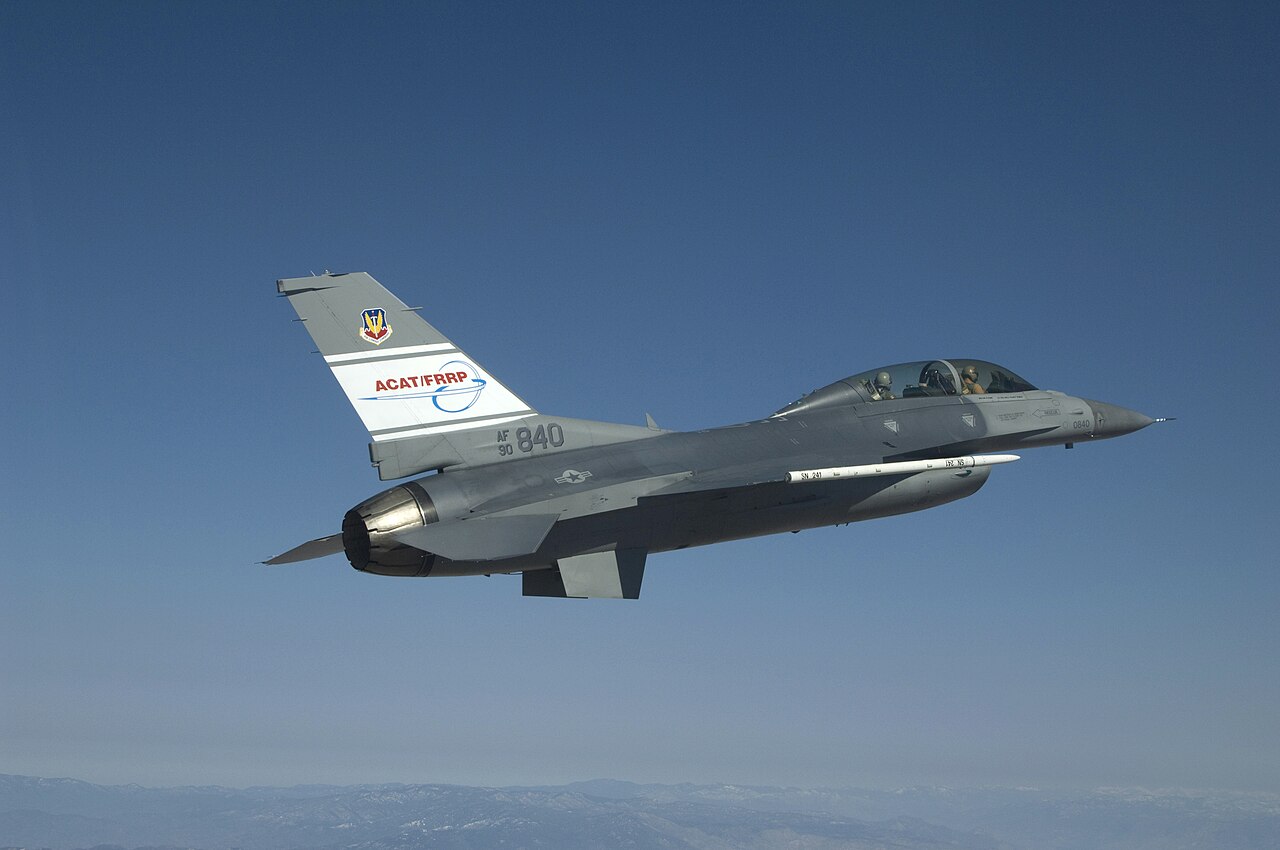
A United States Air Force (USAF) F-16D had attempted to land along with a C-130E on the same runway at the same exact time. The nose of the F-16 struck the C-130, severing the right elevator from the big cargo plane. The F-16 pilot then applied full afterburner in an attempt to recover, but the fighter began to break apart, causing the crew of two to bail out of the aircraft. The F-16, however, or what was left of it, continued on at full afterburner towards the Green Ramp.
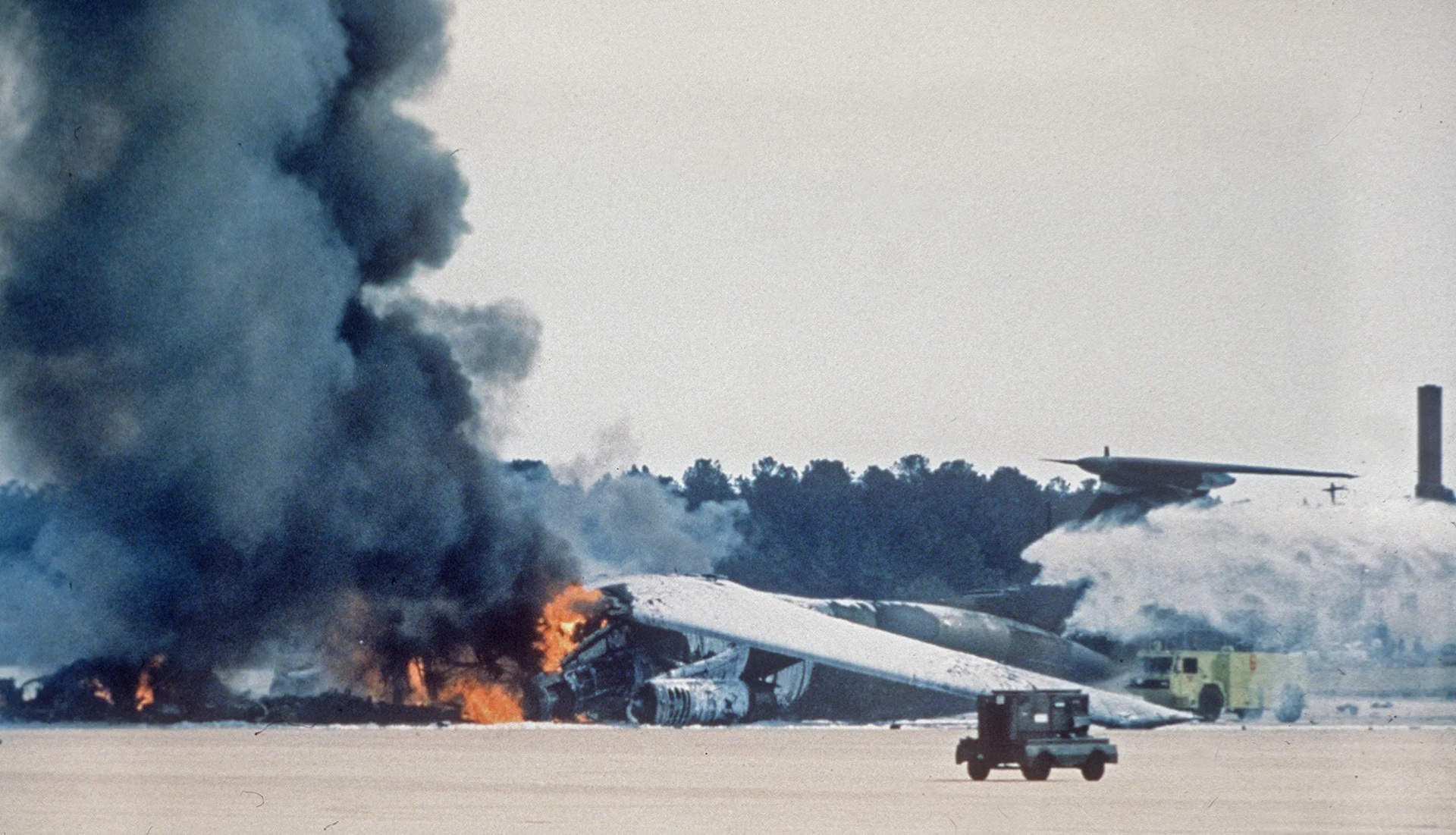
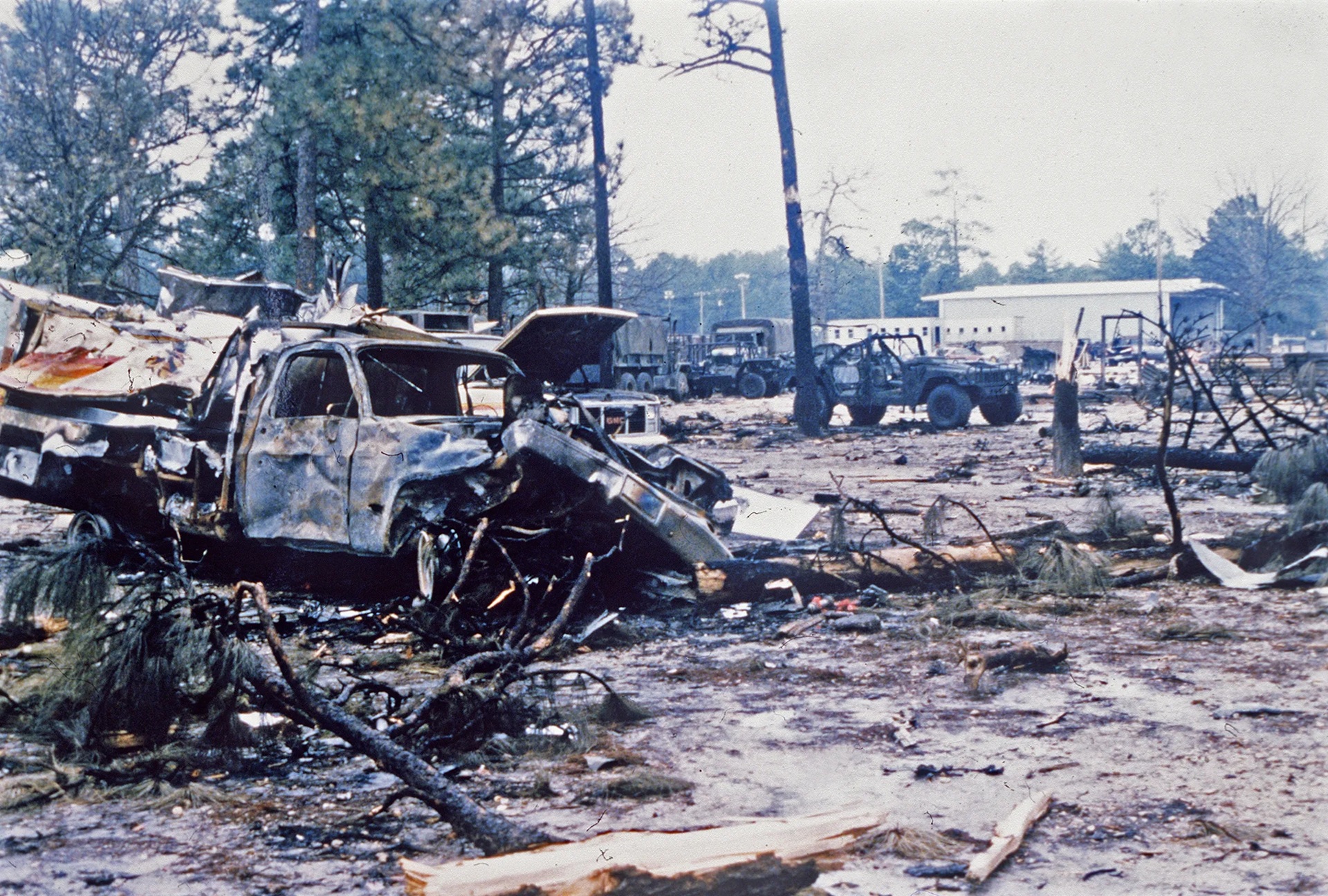
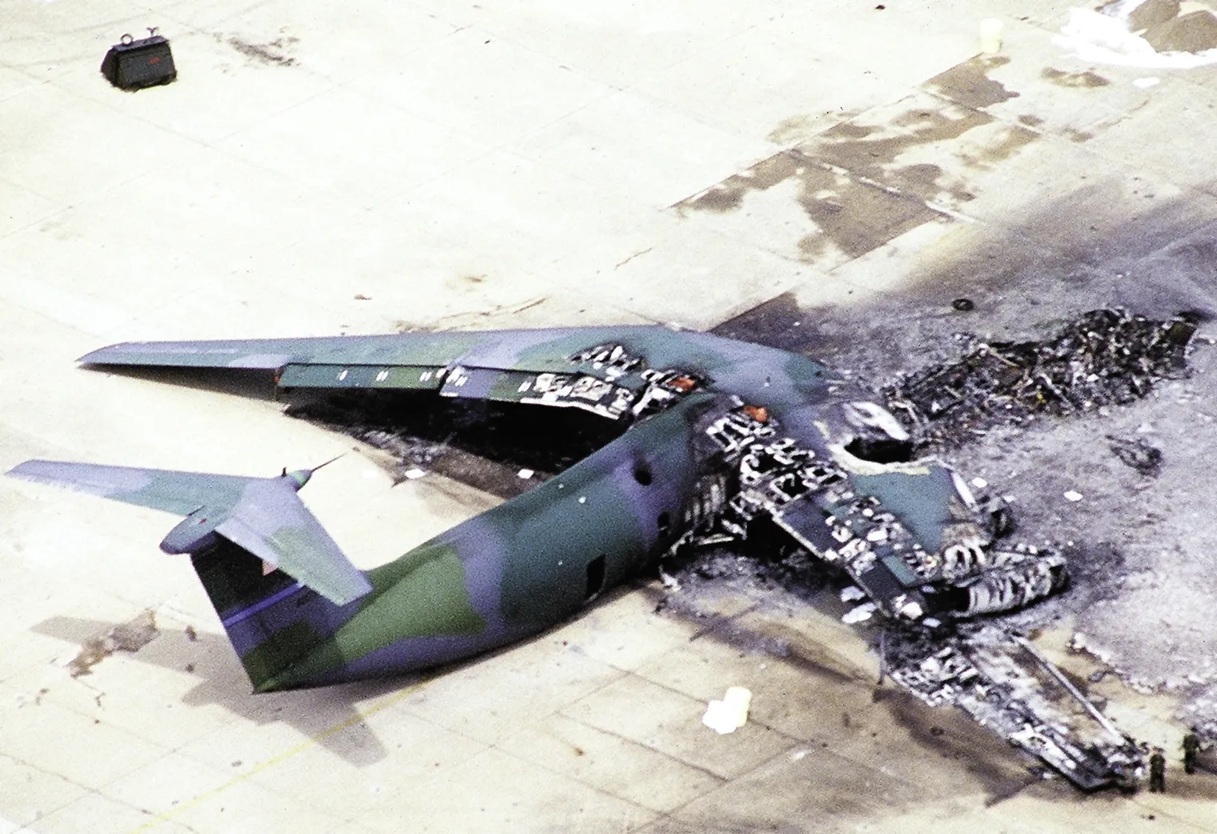
The F-16 struck the ground at full force between two parked C-130s and skidded into one of the parked C-141s. The fuel tanks of the C-141 were punctured and the resulting explosion created a huge fireball which hurled wreckage of the F-16 directly into the area were the paratroopers were assembled.
Troops dove for the ground or whatever cover they could find as the fireball and wreckage filled the air. The blowtorch sucked the air from lungs, some blacked out only to awaken to find themselves on fire. Debris struck buildings and personnel as they frantically rushed in a dazed and confused state to extinguish the flames on fellow soldier’s fuel-soaked clothing.
Everywhere they looked, people and things were ablaze, and the air had turned bright orange. Fuel impregnated in uniforms continued to reignite upon being extinguished, creating difficulties in tending to the massive amounts of casualties. Ammunition from the F-16’s M61A1 20 mm six-barrel cannon began cooking off, creating explosions and more chaos.
The Reaction
Ambulances and emergency vehicles and personnel responded, transporting wounded to Womack Army Medical Center on Fort Bragg. Vehicles of every sort were pressed into service transporting the injured, including Humvees and even privately owned vehicles (POVs). Pieces of plywood, blackboards, even doors were hurriedly put into service as make-shift litters to move the wounded.
Military Police (MPs) escorted vehicles transporting the victims insuring they arrived at the hospital as soon as possible. The Emergency Room was soon overwhelmed with a triage center sprouting up outside shrouded with sheets. Nearby medical personal rushed to assist with the mass influx of patients.
Specialized Burn Teams were flown in to treat the victims along with ventilators. Some burn victims had burns on 100 percent of their body. Several casualties were dispersed to specialty institutions, such as regional burn facilities.
President Bill Clinton visited the Green Ramp and the injured at Womack two days after the disaster. Clinton visited the paratroopers and spoke at a press conference. The Secretary of Defense, Chief of Staff of the Army, and Chief of Staff of the Air Force also visited the hospital.
The Aftermath
The struck C-130 circled around and landed safely with no casualties, and the two pilots of the F-16 survived the ordeal.
Despite the heroic and expedient response of both emergency and non-emergency personnel which saved many lives, there would be nine deaths on the scene, with two more passing away on the way to the hospital. Twelve more soldiers would pass away later. The last victim would die 10 months later, bringing the total to 24 lives lost.
There were 130 total casualties. The disaster remains one of the most tragic in United States Military History.