


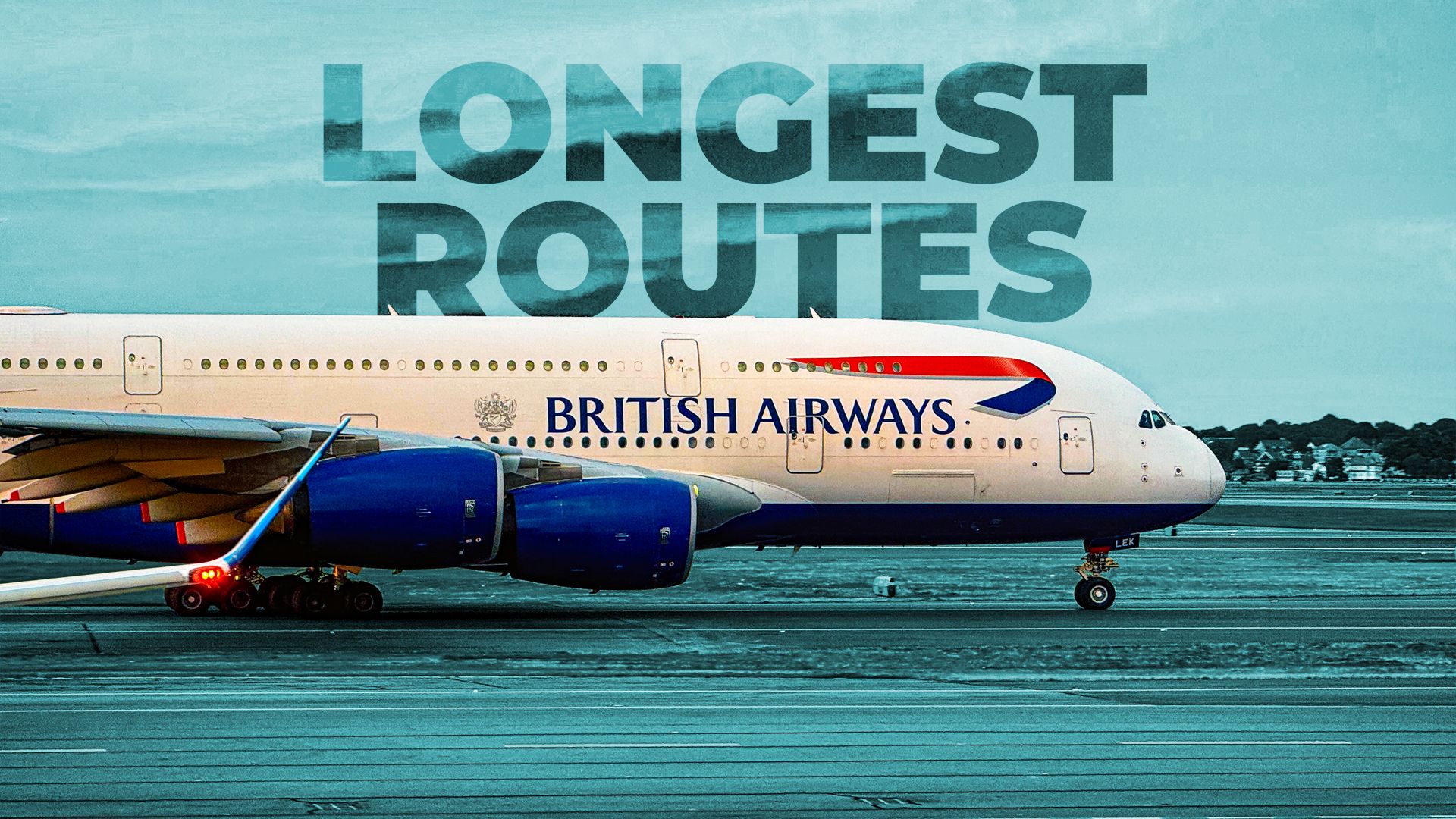
In 2025, the  British Airways Airbus A380 once again anchors the airline’s services on many of its heaviest, longest-stage markets. These are all places where, due to slot scarcity at Heathrow Airport (LHR), the aircraft’s ability to offer large amounts of premium capacity makes it exceptionally valuable, especially during winter and summer peak travel periods. A four-class superjumbo aircraft that gives British Airways a rare combination of true long-haul capabilities with exceptional capacity makes it an incredibly valuable tool.
The aircraft has enough premium cabins to monetize both corporate contracts and high-spending leisure travel demand, which combine with cargo lift to make an exceptional value proposition for the airline. Airport constraints also play a role in determining where, when, and how the airline chooses to deploy the aircraft.
In this article, we will also take a deeper look at the aircraft itself, how it offers an exceptional balance of capacity across multiple premium cabins, and the unique operational constraints it comes along with. The A380 is ultimately used to consolidate demand into fewer and fuller flights, which protects yields at the slot-constrained  London Heathrow Airport while continuing to monetize demand.
British Airways & The Airbus A380

British Airways operates a 12-unit Airbus A380 fleet as its highest-capacity aircraft, deploying the model mostly on long-haul corridors that see large amounts of demand. These are places where Heathrow’s slot scarcity and premium demand ultimately reward airlines for upgauging services. The double-deck A380 gives British Airways a rare mix of scale and overall comfort, with roughly 470 seats across First, Club World (business class), World Traveller Plus (premium economy), and World Traveller (economy).
The aircraft is powered by a set of four Rolls-Royce Trent 900 engines, and it offers long intercontinental range with excellent takeoff performance, especially for slot-constrained hubs. On board, the A380’s quiet cabin and wide aisles help BA deliver a calmer ride on 11-14 hour sectors, with multiple galley and lavatory zones that smooth overall service flows. Most feature the airline’s legacy Club World lie-flat configuration paired with large premium economy cabins, alongside a compact First cabin that is located on the main deck.
The aircraft is especially valuable on routes where upgrade take-rates are high, which means that passengers are willing to pay for upgrades. This makes the aircraft’s high premium gauge its principal moneymaker. WiFi, alongside a broad in-flight entertainment catalog and in-seat power, helps support the needs of business travelers and improve passenger comfort across the board.
From an operational perspective, the Airbus A380 allows British Airways to consolidate demand, protecting yields and bank flexibility, something especially valuable for a superconnector. In short, the airline uses the superjumbo as a precision tool that helps it maximize seats and premium revenues.
Route Lengths & Overall Network Shape

BA wields the A380 as a weapon on its densest city pair connections, with the airline’s nonstop service to  Singapore Changi Airport (SIN) clocking as the longest of these routes, with a stage length of 6,763 miles (10,886 km). Next up are Johannesburg’s OR Tambo International Airport (JNB) at 5,620 miles (9,044 km), and Los Angeles International Airport (LAX) at 5,456 miles (8,781 km). San Francisco also slots in comfortably at 5,368 miles (8,639 km).
These are all classic ultra-long sectors that benefit from heavy belly cargo and thick premium demand, according to Cirium, an aviation analytics company. The aircraft is also used for some medium-length long-haul routes, such as its nonstop service from London Heathrow to Dallas/Fort Worth International Airport (DFW) at 4,751 miles (7,646 km) and Miami International Airport (MIA) at 4,425 miles (7,121 km), both of which balance business and leisure travel peaks.
|
Category |
Specification |
|---|---|
|
British Airways A380 Fleet Size |
12 |
|
British Airways Number of Airbus A380 Destinations |
10 |
|
Total Yearly Airbus A380 Flights |
~5,400 |
Washington Dulles Airport (IAD) clocks in at 3,677 miles (5,918 km), and Dubai International Airport (DXB) is just 3,420 miles (5,504 km). Boston sits at 3,265 miles (5,254 km), making it the shortest of the airline’s Airbus A380 services. The table below details some additional statistics for the British Airways Airbus A380 network, according to the Cirium data.
This service pattern highlights how British Airways mostly uses the aircraft when it faces slot constraints, places where frequency growth is ultimately capped at Heathrow, and the carrier upgauges to this larger double-decker aircraft in order to consolidate its operations into fewer departures. The Airbus A380’s quiet cabin and large premium footprint help British Airways monetize corporate contracts on overnight flight waves while also capturing high-spending leisure traffic.
Capacity, Frequency & Commercial Logic

Of the routes that the airline flies with the Airbus A380, Johannesburg carries the most capacity over time, with well over a thousand annual Airbus A380 flights round-trip and around 470 seats per departure. The aircraft generates more available seat miles than pretty much any other aircraft on the market, pairing long stage lengths with robust frequencies. Miami posts the largest overall flight count among North American Airbus A380 markets, reflecting strong winter leisure demand and resilient corporate travel demand.
Los Angeles and San Francisco are also routes where the airline uses the Airbus A380 to generate incredible amounts of ASMs to fuel year-round demand. Singapore, despite being the longest of these sectors at 6,764 miles (10,886 km), is actually a market that sees relatively few frequencies, so its overall cumulative ASMs actually trail those of Johannesburg, illustrating how British Airways balances distance with schedule economics.
Shorter-haul Airbus A380 markets, such as Boston at 3,265 miles (5,254 km) and Washington Dulles at 3,677 miles (5,918 km), appear where bank timing, premium density, and slot value favor gauge over the addition of more frequencies.
Dallas/Fort Worth and Dubai are both routes that fulfill very specific needs of the carriers. Flights to Dallas enable extra connectivity through a oneworld hub, as they cut deeper into the US interior. Across the board, the Airbus A380 allows British Airways to defend market share in slot-constrained peaks, driving ancillary revenue growth through high cabin counts and enabling smoother operations through the operation of far fewer departures.
What Risks Are There Associated With Deploying The Airbus A380?

Deploying the Airbus A380 on a handful of very long, slot-banked trunk routes concentrates overall risk. Demand shocks can leave the aircraft, with all 450+ of its seats, difficult to fill, pushing down yields because breaking a single frequency into multiple smaller services is not feasible on such a short time frame. From an operational perspective, the Airbus A380 is at risk of creating operational complications.
If an Airbus A380 is stranded due to a technological issue, an outsized number of passengers will be left, and capacity is exceptionally hard to backfill, as few spare frames exist for the aircraft. Not every station is capable of handling the jet’s gates, tows, or spare parts, and diverting it requires an enormous runway and supportive facilities. Irregular operations can thus carry ripple effects, with longer turnarounds and limited stand availability thoroughly complicating aircraft recovery.
Seasonality also matters, as off-peak months can raise break-even risk while premium no-shows can hurt cabin mix economics. From a strategic standpoint, consolidating into fewer flights reduces schedule choice over flying multiple smaller departures, a move that dulls overall corporate appeal. Lastly, regulatory and environmental charges often scale with aircraft weight, and policy shifts could also erode the aircraft’s cost advantage in the long term.
What Is The Future Of British Airways’ Airbus A380 Fleet?

British Airways has yet to announce a firm retirement date for its Airbus A380 fleet. In fact, the airline has actually elected to invest in a full cabin retrofit, including new First Class cabins and Club Suites, an effort that is scheduled to begin in mid-2026 and run for several years across the airline’s 12-jet fleet.
This spending only makes sense if British Airways plans to keep the type flying well into the 2030s. The overall refit timeline and public guidance are that the Airbus A380s will remain in service well into the next decade, with both pointing to a service-life extension rather than an overall exit plan.
From a practical standpoint, the phase-out will hinge on the arrival of British Airways’ next wave of long-haul widebody aircraft, including the Boeing 777-9 and the Airbus A350-1000. Heathrow slot pressure continues to evolve, and it could lead the aircraft to stay in service far longer, especially if the airline continues to target ambitious capacity growth.
The Bottom Line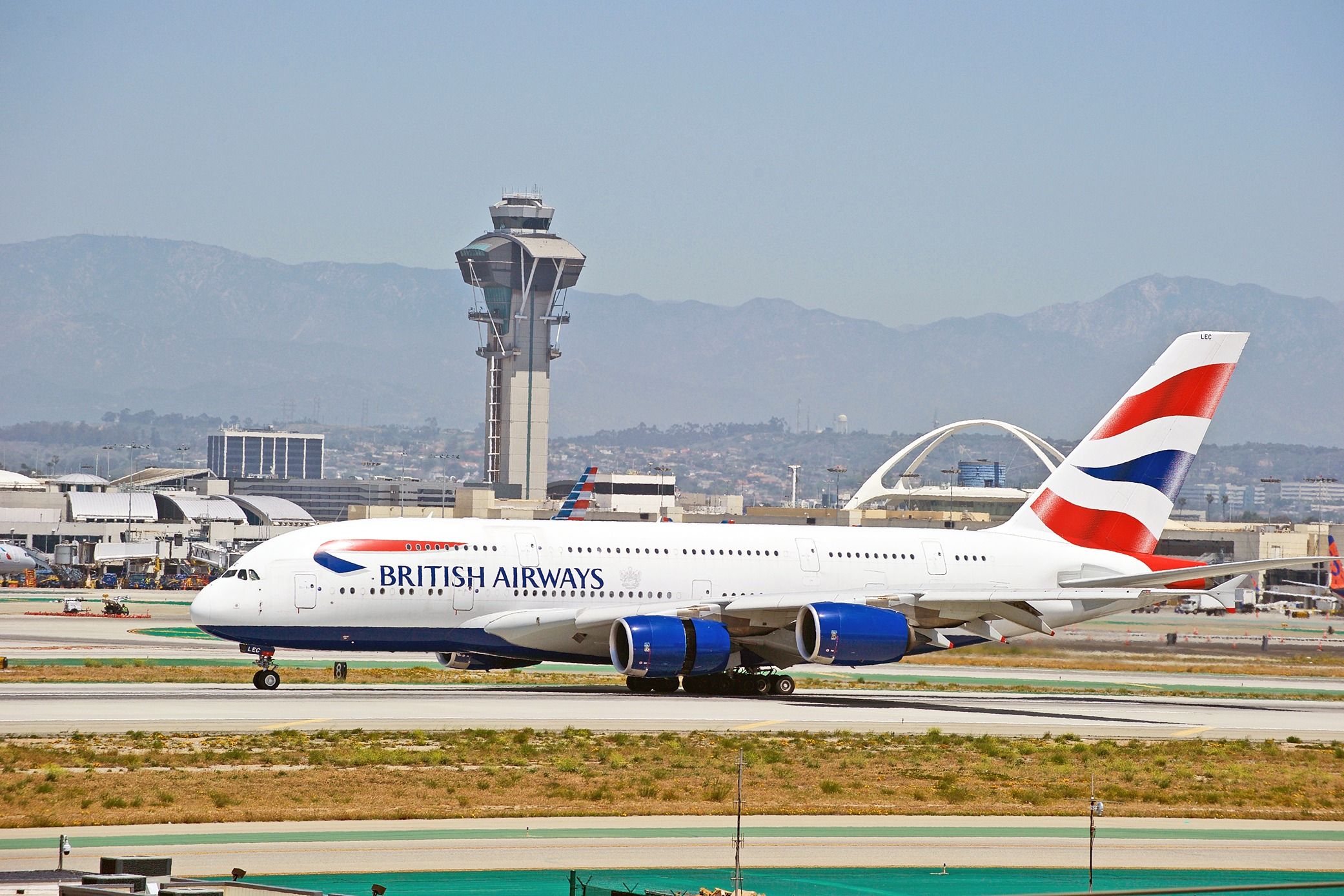
British Airways’ Airbus A380 deployments demonstrate a clear strategy. In a system with Heathrow Airport having slots that are scarce, the airline upgauges its densest, longest markets using this impressive aircraft.
London to Singapore is the aircraft’s longest individual route, with Johannesburg being the service that generates the most seat-miles through high-frequency operations. Los Angeles and San Francisco anchor year-round premium demand, with Miami being the largest North American Airbus A380 market by departures.
Shorter sectors often appear when bank timing requires it. Commercially, the superjumbo allows British Airways to consolidate demand, defend yields, and monetize large premium cabins, all while handling belly cargo on banked overnight routes.
