


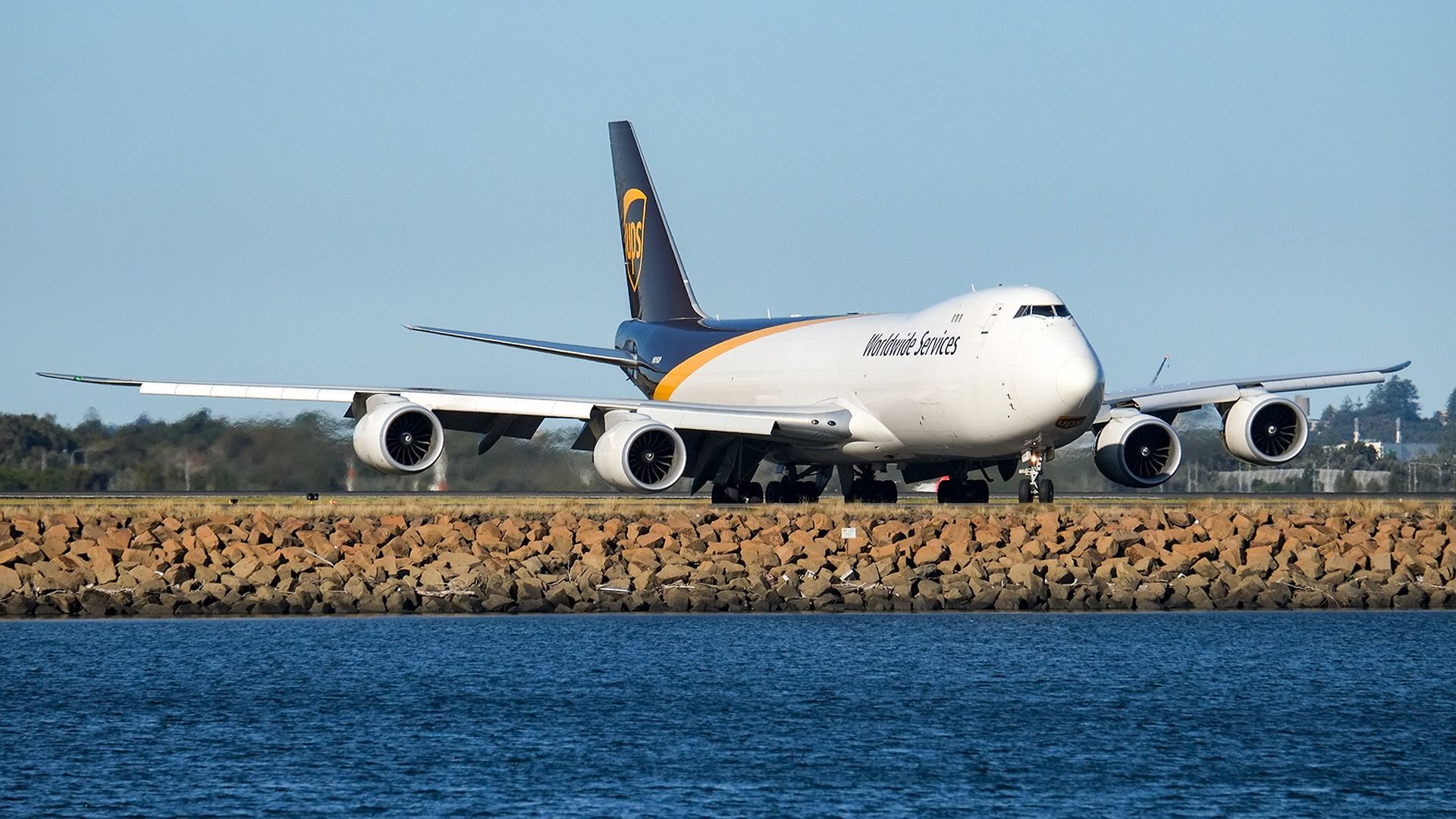
For decades, the Boeing 747 has been the aircraft of choice for crossing oceans and continents, first as a passenger icon and now as the backbone of global cargo networks. While passenger airlines have retired a large number of the passenger variants, the freighter versions continue to shoulder some of the longest and most demanding flights in commercial aviation, connecting major logistics hubs with nonstop routes that test the limits of range and endurance.

- Launch Customer(s)
-
Pan American World Airways
- First Delivery
-
January 22, 1970
Among these missions lies a route that stands apart for both its distance and regularity. Scheduled multiple times a week and lasting well over 13 hours, it stretches the 747 to its operational edge, a modern demonstration of how the “Queen of the Skies” still dominates ultra-long-haul flying. The question is: which route earns the title of the longest regularly scheduled 747 flight?
The Queen Of The Skies In Cargo Mode

When the Boeing 747 first entered service in 1970, it revolutionized global air travel. Its massive capacity and unprecedented range made it the aircraft of choice for airlines connecting distant continents. Over time, however, twin-engine aircraft like the Boeing 777 and Airbus A350 have begun to dominate long-haul passenger markets, leading to the retirement of many four-engine jumbos from their fleets.
Yet, in the world of cargo, the 747 is very much alive. The freighter variants, particularly the Boeing 747-400F and Boeing 747-8F, remain crucial to global logistics, carrying a wide range of goods, from e-commerce shipments to heavy machinery. With airlines like UPS, Cargolux, and Atlas Air still operating dozens of them, the aircraft has found a second life as a dedicated workhorse.
What sets these cargo routes apart is not just the sheer volume of freight they move, but the distances involved. Many flights span oceans and continents in a single nonstop hop, pushing the 747’s capabilities to the limit while demonstrating just how much endurance is left in this aircraft.
Fuel, Freight, And Physics

Every long-haul cargo flight is a delicate balancing act between the amount of freight that can be carried and the amount of fuel required to make the journey nonstop. The Boeing 747-8F can carry around 300,00lbs (140 metric tons) of payload, but that figure assumes a shorter stage length. On flights exceeding 12 or 13 hours, airlines often need to sacrifice some cargo capacity to make room for the extra fuel needed to cross oceans and continents without a stop.
Fuel burn itself adds another wrinkle. A fully loaded 747-8F consumes roughly 22,000lbs (10 metric tons) of fuel per hour, meaning that on a 13-hour mission, more than 140 tons of fuel may be onboard at departure. That fuel has weight, and the more of it you carry, the more fuel you burn transporting it, a physics problem known as the “fuel penalty.” Optimizing this trade-off is at the heart of scheduling flights like UPS76.
To make matters even more complex, winds and weather can swing the equation. A strong winter jet stream over the Atlantic might stretch a flight by nearly an hour, pushing the aircraft closer to its operational limits. Conversely, favorable tailwinds can save thousands of kilograms of fuel, allowing more freight to be loaded. Every nonstop 747 flight of this length is the result of detailed planning, where physics, economics, and customer demand intersect.
The Top 10 Boeing 747 Airline Customers In History
Passenger Legends vs Cargo Reality

When people think of the world’s longest flights, they often picture commercial passenger services, such as  Singapore Airlines nonstop runs from Singapore to New York or
  Qatar Airways marathon to Auckland. These flights receive plenty of attention for their comfort challenges and distance records, but they’re usually operated by modern twin-engine jets like the A350 or 777.
By contrast, cargo routes rarely make headlines, even though many are equally impressive, if not more so. The difference lies in who is on board; passengers care about the experience, while cargo simply needs to get there. This anonymity hides the fact that some 747 freighters are quietly flying schedules that rival or exceed those celebrated passenger flights.
What makes cargo flights fascinating is that they must balance different priorities. Instead of seats and meals, it’s about maximizing payload while staying within safety and fuel margins. That dynamic creates a different kind of endurance test, one measured in cargo capacity and hours, not just comfort and jet lag.
The Route That Stretches The Jumbo’s Wings

Among the many impressive missions still flown by the 747, one particular route has become a standout: UPS Flight 5X76. Operating between Louisville Muhammad Ali International Airport (SDF), the company’s global air hub, and Dubai World Central (DWC), this nonstop journey spans about 7,400 miles (11,917km). Scheduled block times are typically 13 hours to 13 hours 30 minutes, depending on winds, making it one of the very longest regular 747 routes in the world.
The aircraft tasked with this marathon is the Boeing 747-8F, UPS’s flagship freighter. With a maximum takeoff weight of around 990,000 pounds (450,000kg) and a range of up to 8,000 nautical miles (15,000km), the jet is capable of handling this punishing leg fully loaded with time-sensitive shipments. On favorable days, the flight departs Louisville around mid-morning UTC and lands in Dubai early the following calendar day, after cruising across the Atlantic, Europe, and into the Middle East.
Statistics for the Boeing 747-8F supplied by Cargolux.
|
Item |
Imperial |
Metric |
|---|---|---|
|
Maximum Takeoff Weight |
990,000 pounds |
450,000 kg |
|
Maximum Revenue Payload |
295,000 pounds |
134,000 kg |
|
Wingspan |
224 feet 7 inches |
68.45 m |
|
Height |
63 feet 0 inches |
19.40 m |
|
Overall Length |
250 feet 2 inches |
76.25 m |
|
Cabin (floor-level) Width |
19 feet 0 inches |
5.90 m |
|
Main Deck Volume Capacity |
24,462 cubic feet |
692.7 m³ |
|
Lower Compartments (bellies) |
5,330 cubic feet |
150.9 m³ |
|
Bulk Compartment |
520 cubic feet |
14.5 m³ |
What makes this flight remarkable is its consistency. Unlike rare one-off record runs, UPS76 operates five times a week and rarely needs to stop along the way. FlightAware data shows average durations of just over 13 hours, with the longest logged flights exceeding 14 hours in winter, when jet streams are stronger. For a freighter carrying tons of cargo, sustaining this schedule is a clear demonstration of the 747-8F’s endurance and UPS’s operational precision.
Why Cargo Airlines Push The Limits

Why schedule such a demanding flight in the first place? The answer lies in the economics of cargo. Time is money, and shippers pay a premium for direct, nonstop service that gets goods to market faster. For companies like UPS, operating an ultra-long nonstop can be more efficient than adding an intermediate stop, even if it means carrying slightly less cargo on certain days.
There’s also a strategic element. By offering a nonstop service between two key logistics hubs, airlines can streamline their networks, reduce handling costs, and improve reliability. This creates a competitive edge in the high-stakes world of international freight. For global giants like UPS, FedEx, and DHL, routes like this are not just about efficiency; they’re about market dominance.
UPS fleet matrix supplied by Planespotters.net
|
Aircraft Type |
In Service |
Parked |
Current Total |
Future |
Historic |
Avg. Age |
Grand Total |
|---|---|---|---|---|---|---|---|
|
Airbus A300 |
46 |
6 |
52 |
– |
1 |
22.7 years |
53 |
|
Boeing 747 |
40 |
3 |
43 |
– |
27 |
11.5 years |
70 |
|
Boeing 757 |
69 |
6 |
75 |
– |
– |
32.1 years |
75 |
|
Boeing 767 |
96 |
1 |
97 |
7 |
– |
16.5 years |
104 |
|
Douglas DC-8 |
– |
– |
– |
– |
53 |
– |
53 |
|
McDonnell Douglas MD-11 |
24 |
4 |
28 |
– |
15 |
30.9 years |
43 |
|
Total |
275 |
20 |
295 |
7 |
96 |
22.2 years |
398 |
Finally, such routes demonstrate the versatility of the 747-8F. Even as newer aircraft designs emerge, the jumbo continues to prove that it can deliver unique value where range, payload, and reliability intersect. That’s why cargo airlines are willing to push the aircraft to its limits, because in the end, the business case justifies the challenge.
The 747’s Enduring Long-Haul Legacy

The Boeing 747 may no longer dominate passenger skies, but its cargo story is still unfolding spectacularly. Ultra-long-haul freighter flights show that the aircraft is more than a relic of the past; it remains a cornerstone of modern commerce. The fact that such routes are scheduled and sustainable is a testament to both the aircraft’s design and the operational skill of the airlines that fly them.
In many ways, the 747’s role today mirrors its original promise: connecting far-flung corners of the globe with unmatched range and capacity. What has changed is the cargo inside, electrical products, industrial parts, and goods that fuel the modern economy instead of millions of passengers.
So while the question of the longest regularly scheduled 747 route may have a clear answer, the broader story is even more compelling. The Queen of the Skies is still stretching her wings, reminding the world that even in the age of twinjets, some records and some legends still belong to the jumbo.
