



The two testbeds, known by their callsigns SCAN 06 and VOODOO 1, carried out concurrent operations in Eglin’s highly instrumented airspace.
For three consecutive days, on Mar. 24, 25 and 26, two testbed aircraft, the Northrop Grumman CRJ-700 carrying the U.S. registration code N806X and typically operating using the radio callsign “SCAN 06”, and the Raytheon’s Boeing 727, with registration N289MT and radio callsign “VOODOO 1,” carried out concurrent missions over the Gulf of Mexico (Gulf of America).
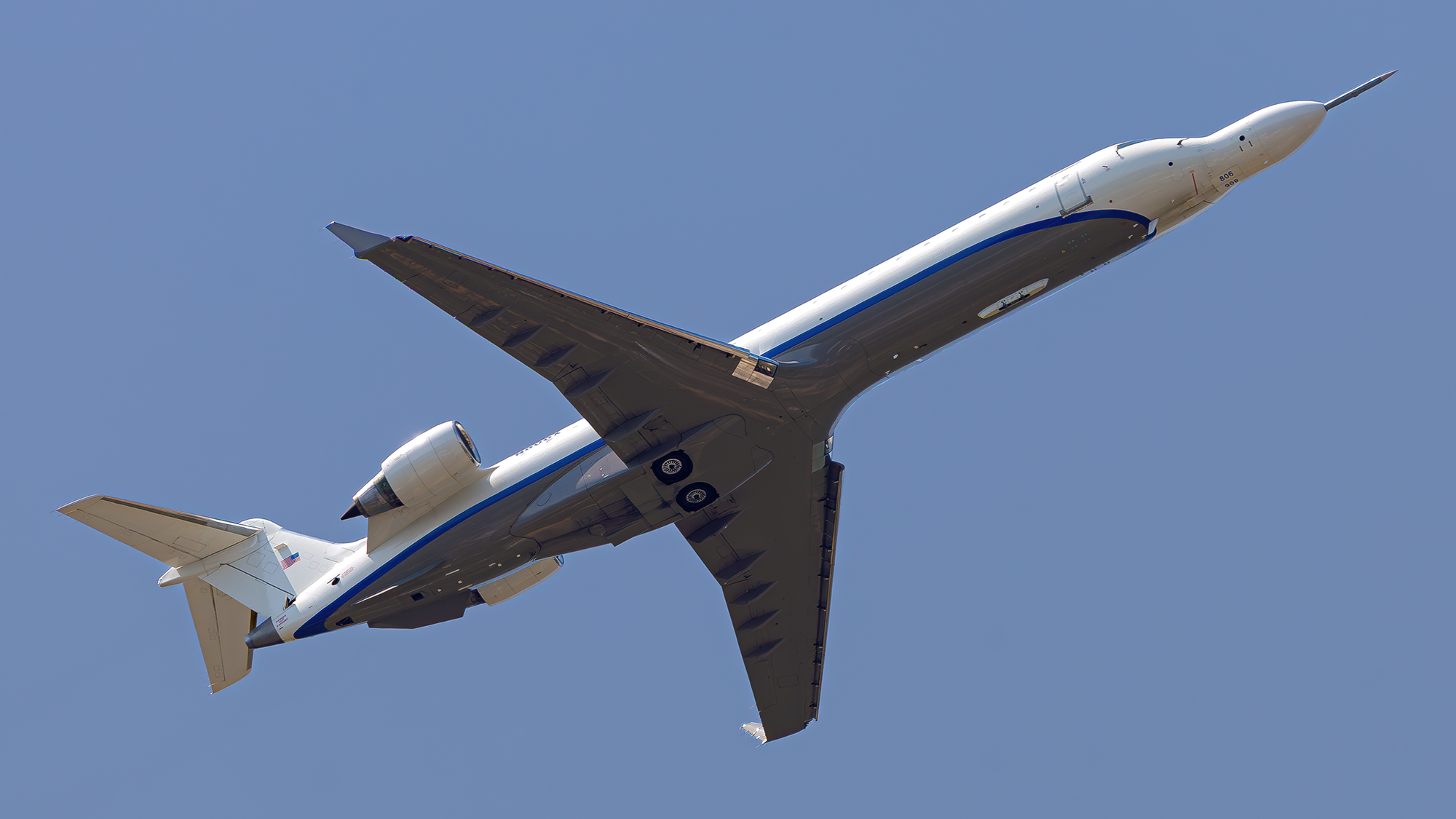
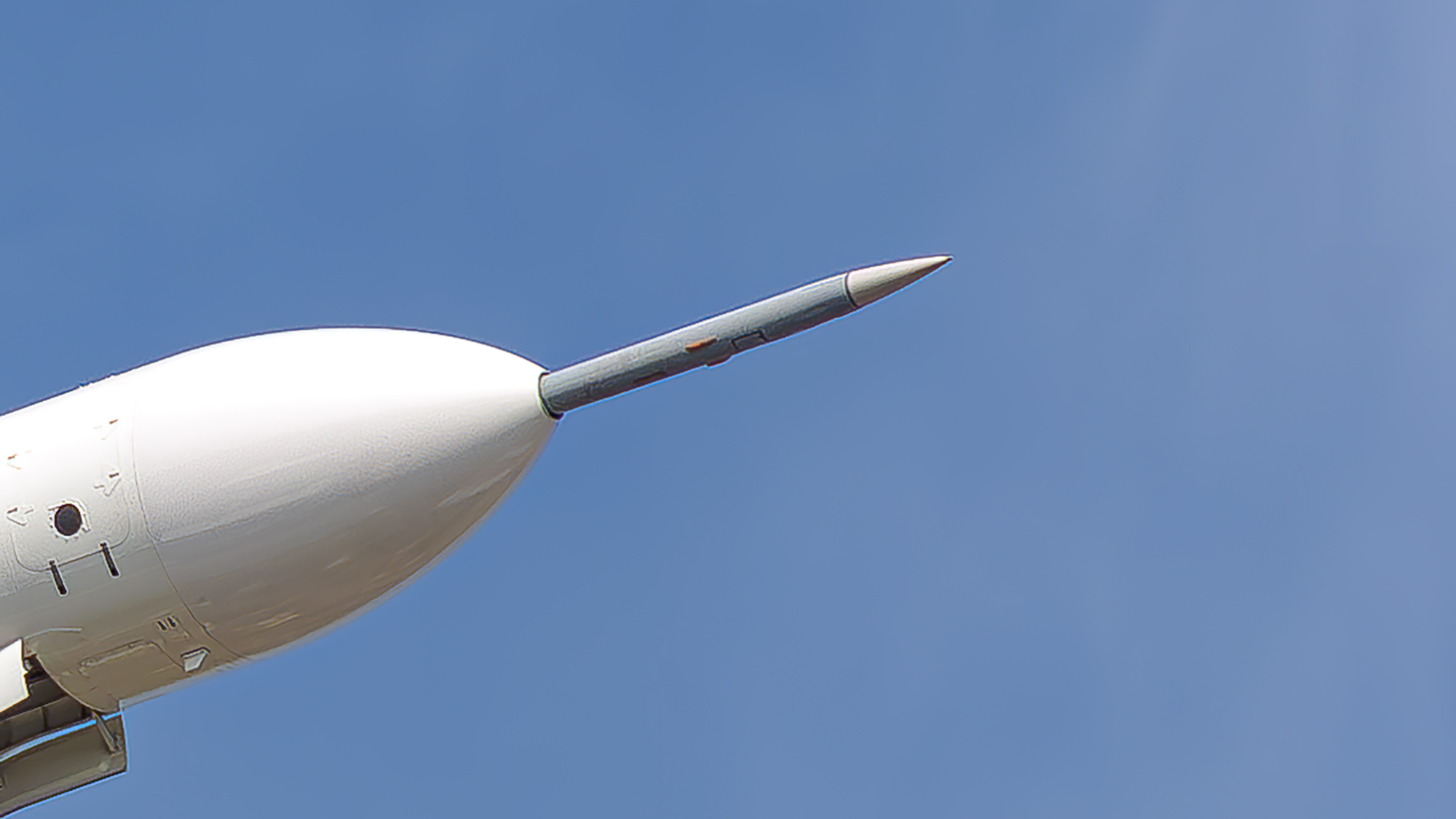
The two aircraft are extremely interesting. SCAN 06 is one of the three heavily modified CRJ700s owned by Northrop Grumman, the others being N804X and N805X, used to test sensors and communication systems before they are integrated into frontline combat aircraft. These jets can be reconfigured to support different developmental activities, including new radars, EW (Electronic Warfare) suites, targeting pods, missile seekers, and countermeasures. As we explained in detail here, N806X features a peculiar “pointy” nose bearing a striking resemblance to the AIM-260 Joint Advanced Tactical Missile (JATM) seen in renderings of the BVRAAM (Beyond Visual Range Air-to-Air Missile). For this reason, the aircraft is believed to be involved in the development of the AIM-260, a missile slated to replace the AIM-120 AMRAAM, which has been under development since 2017, with flight testing already underway for some time now.
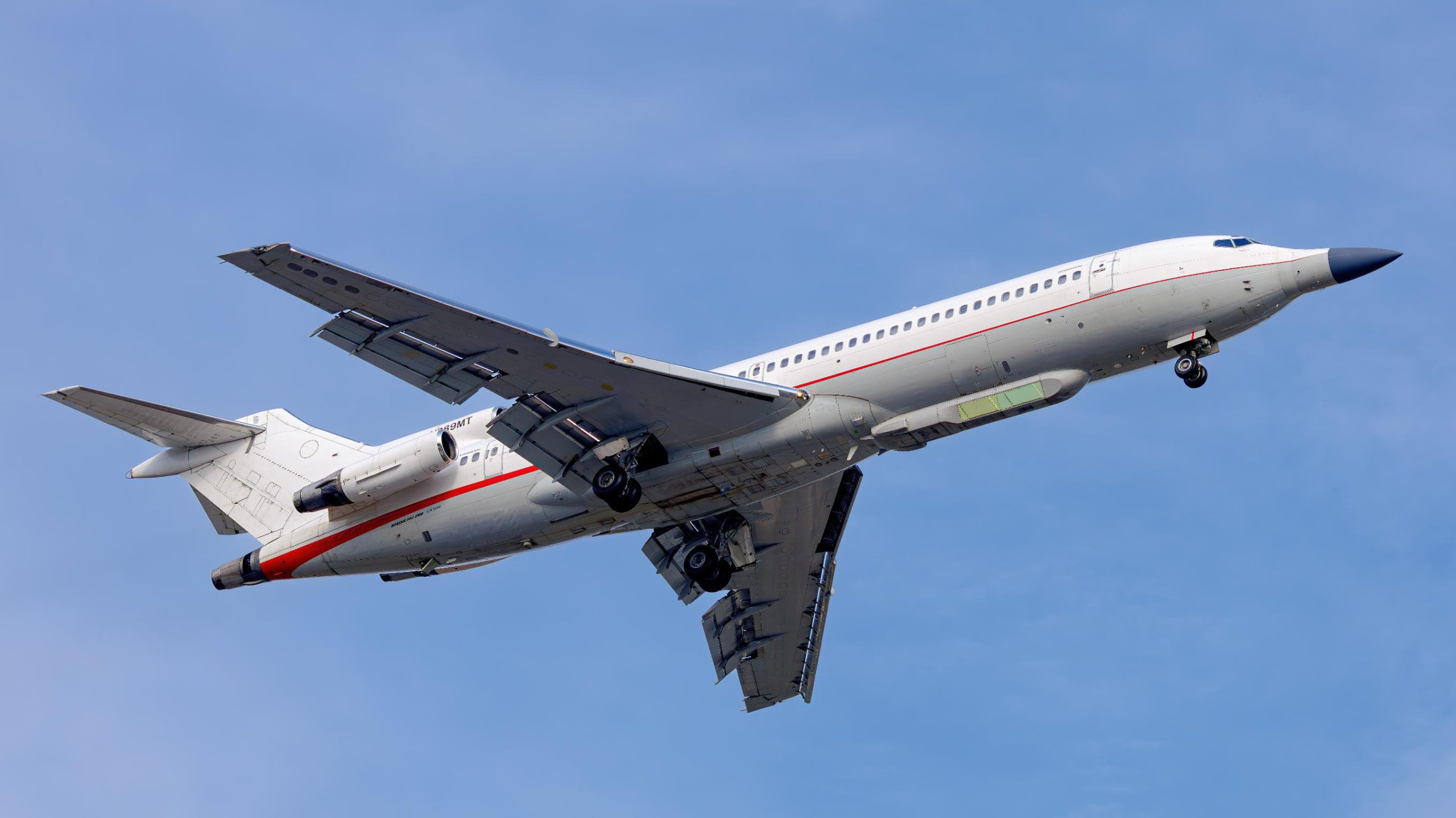
Similarly, the famous Boeing 727 VOODOO 1, or RMT (Raytheon Multi-program Testbed) sports an F-15 nose radome and was used to test the AN/APG-82 Active Electronically Scanned Array – AESA recently. As TWZ reported when the aircraft took part in exercise Valiant Shield in June 2022: “Voodoo 1 is a key test asset for Raytheon. It has historically been mostly associated with the development of advanced radars, which it can carry on flight tests in its distinctly modified nose, which is basically that of an F-15 Eagle. This includes work on the AN/APG-63 series of Eagle radars, and more recently, the AN/APG-82 Active Electronically Scanned Array (AESA) type, versions of which are used on the Air Force’s new F-15EX Eagle II fighters and are being integrated onto existing F-15E Strike Eagle combat jets. Air Force B-52H bombers are also set to receive a variant of the AN/APG-82 as part of a radar upgrade program.”
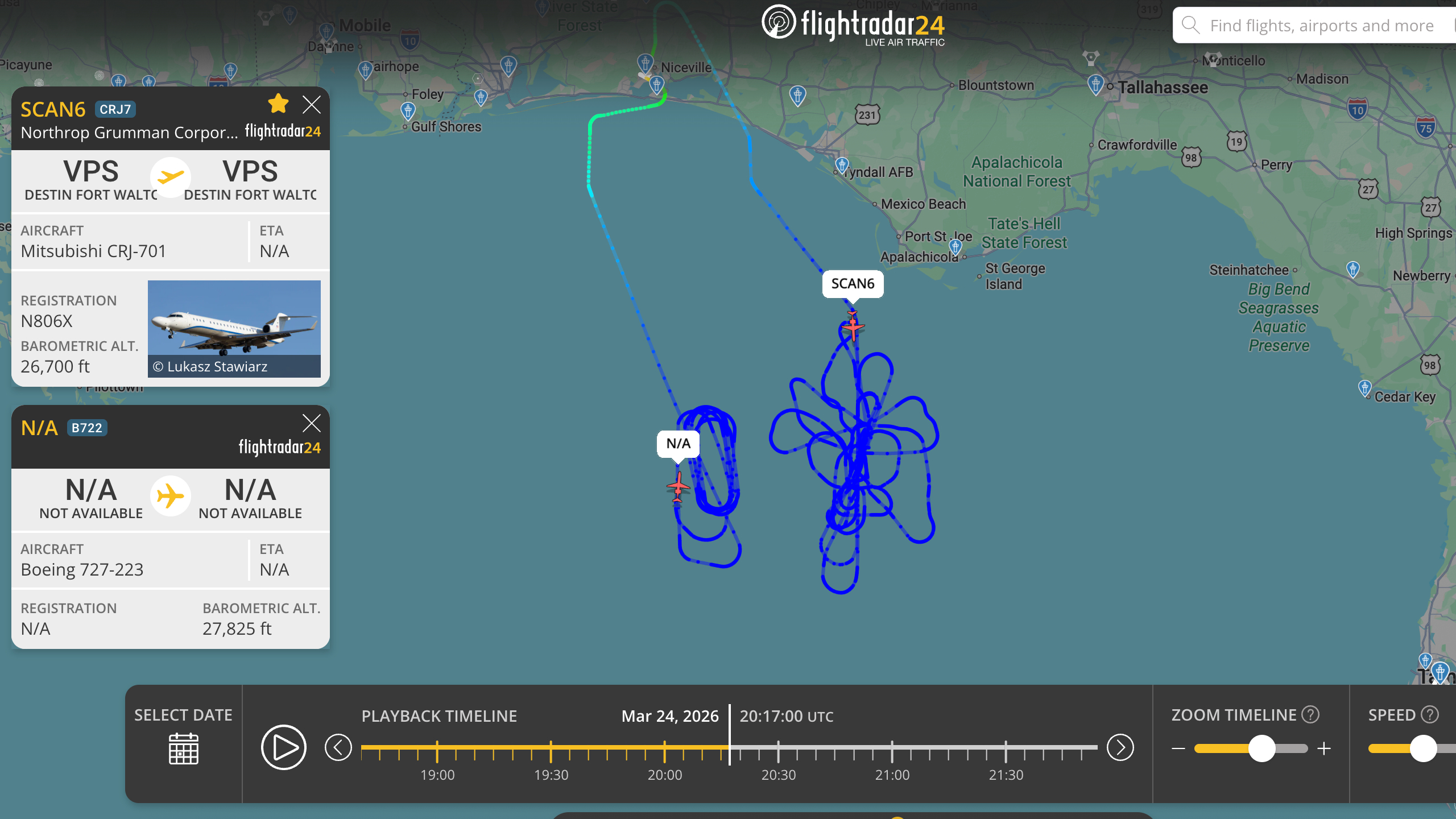
Data collected by Flightradar24 provide an interesting “picture” of the activities carried out by the two aircraft last week.
VOODOO 1 carried out a mission from Eglin AFB, Florida, on Mar. 23, 2026. While flight-tracking websites do not show any other aircraft operating alongside the Raytheon testbed that day, it is worth remembering that not all aircraft, particularly military ones, are visible on these platforms. Therefore, N289MT may still have flown a test mission involving other airborne assets that were not trackable, or in coordination with ground stations or vessels.
The Raytheon radar testbed 727 N289MT, aka Voodoo-1, was active out over the gulf about an hour ago.
📷 credit Stephen Stein pic.twitter.com/zrQO4DmZ4A
— MeNMyRC (@MeNMyRC1) March 23, 2026
SCAN 06 flew from its base at Baltimore/Washington International Thurgood Marshall Airport (BWI) in Maryland to Eglin AFB on Mar. 23, 2026. The first mission, on Mar. 24, saw the CRJ depart from Eglin at 12.35LT and land after 3 hours and 21 minutes. SCAN 06 operated at around 27,000 feet inside a restricted airspace (W-151) while VOODOO 1 remained slightly higher at roughly 27,850 feet, with the Northrop Grumman testbed flying what looked like a flower-shaped pattern reminiscent of certain calibration-style tracks. Noteworthy, the barometric altitude shown by Flightradar24 is essentially a pressure-derived value and may differ slightly from the aircraft’s actual assigned Flight Level when converted into feet. For example, a displayed altitude of 27,850 feet would very likely correspond in practice to FL280. The discrepancy was probably caused by the difference between standard pressure (1013.2 hPa/29.92 inHg) and the real atmospheric pressure in the area, as well as by the way barometric data are transmitted, rounded, and displayed by the tracking platform. Above the transition altitude, aircraft no longer use the local altimeter setting (QNH), but switch to the standard pressure setting and are then assigned flight levels rather than true altitudes above mean sea level.
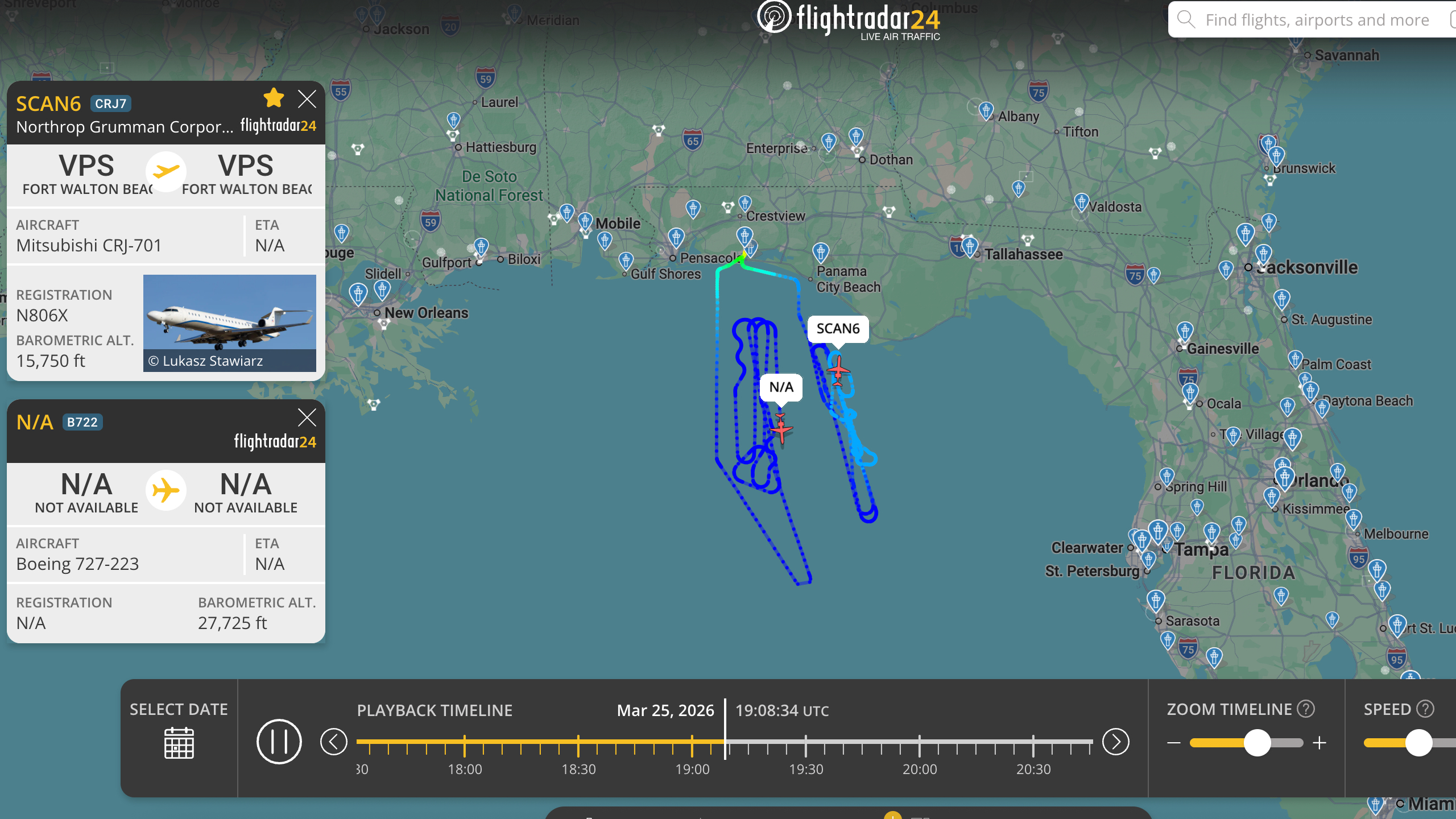
On Mar. 25, the mission lasted 2 hours and 52 minutes with departure at 11.52LT. VOODOO 1 again stayed higher, at around 27,000 feet, while SCAN 06 flew lower and more variable profiles between roughly 25,000 and 15,000-16,000 feet, with the two aircraft appearing to follow parallel tracks.
On Mar. 26 (2h 54m with take off at 12.56LT), the geometry changed as shown in the image below, with SCAN 06 at about 15,825 feet and Voodoo 1 lower at roughly 12,575 feet.
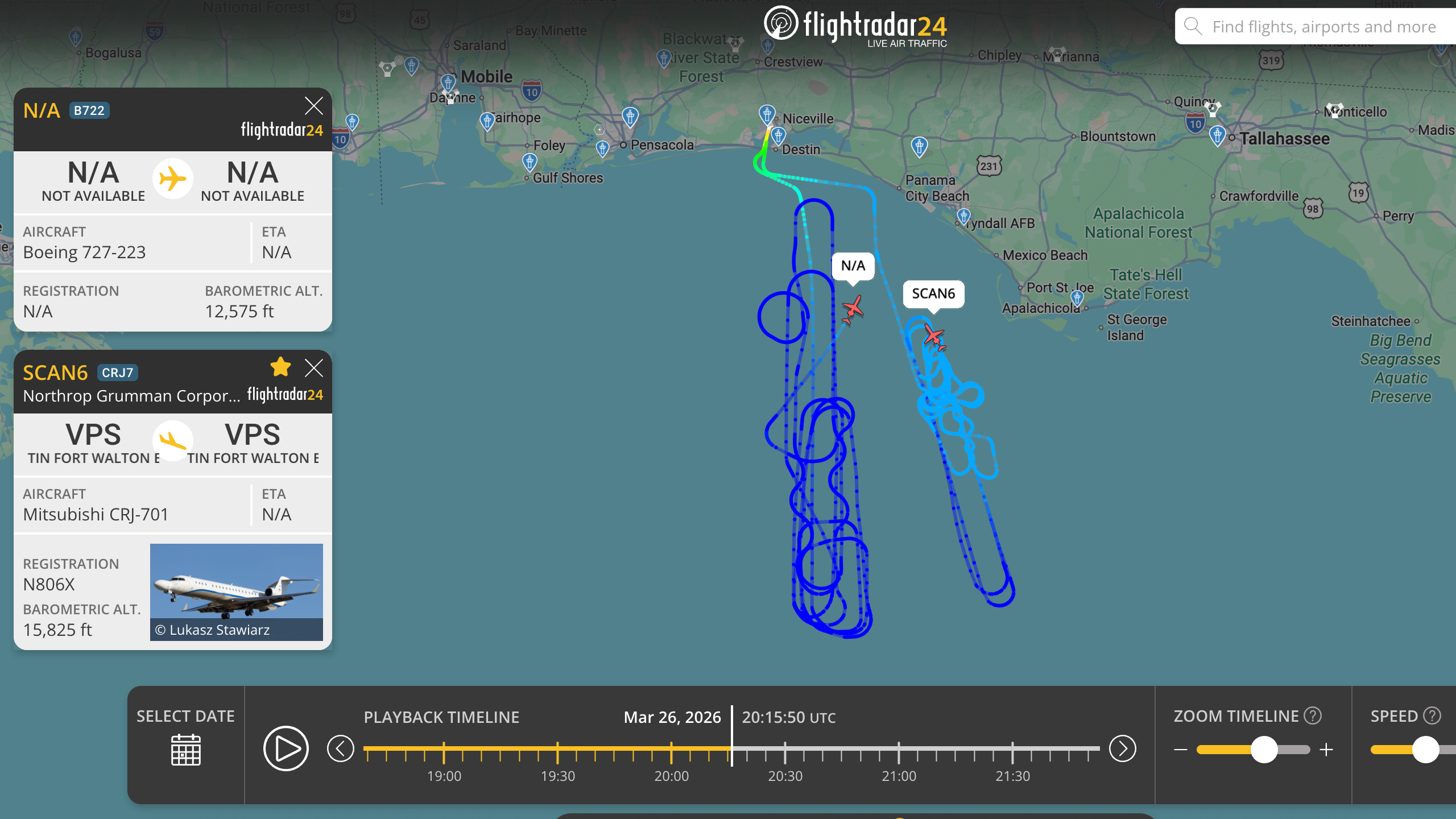
Interestingly, as the screenshots show, during the testing campaign on Mar. 24, 25 and 26, SCAN 06 has always operated to the East of VOODOO 1.
Taken together, these mission profiles that can be observed with altitude relationships and flight patterns seem to point to a series of test setups involving different relative positions, geometries and sensor or data-collection conditions, although, of course, the available evidence does not allow the precise purpose of the sorties to be determined.
Nonetheless, the fact that the Northrop Grumman testbed was flying in company with Raytheon’s VOODOO 1 for three consecutive days at Eglin is particularly interesting, as it suggests the activity may have involved some degree of integration between the sensors carried by the two platforms. As explained, VOODOO 1 is Raytheon’s airborne radar and mission-systems testbed, a platform that has already been used both to evaluate advanced radar capabilities in flight and to support demonstrations or exercises involving the collection, fusion and dissemination of targeting data across a wider network. We can only speculate here, but we can outline a number of tests the two testbeds may have been involved in, including telemetry-rich sensor, radar, communications or data-link testing tied to a distributed kill chain, the generation and sharing of targeting-quality tracks, broader battle-network experimentation, or other forms of mid-course support relevant to a modern BVRAAM.
Eglin Test & Training Complex
The activity took place within W-151 airspace over one of the most important test environments in the United States. Indeed, the Eastern Gulf Test and Training Range, or Eglin Gulf Test and Training Range, is the largest military range in the continental U.S., offering the capacity, instrumentation and safety footprint required for both real-life and simulated warfighting scenarios. Stretching from Key West to Northwest Florida and covering some 180,000 square miles of DoW-controlled airspace, the range supports everything from missile and aircraft testing to high-altitude supersonic air combat training, air-to-air missile trials, drone testing and hypersonic weapons evaluations. It is therefore an ideal setting for the testing of next-generation air armaments in realistic combat-surrogate conditions.
Interestingly, Aaron Perlupo, who took the photos of the two testbeds you can find in this post, mentioned that another quite famous testbed, the secretive RAT (or RATT) 55, a highly modified B737 fitted with advanced radar technology, and thought to be used almost exclusively to evaluate the radar signatures of stealthy aircraft, was also deployed to Florida operating out of Macdill at least 4 days prior to VOODOO and SCAN operating out of Eglin.
“I was visiting the region with a friend, and I saw VOODOO1 on Flightradar24 land at Eglin AFB,” Aaron told us in an email. “I also heard a report that RATT55 was in Florida, so I convinced my friend to drive to Eglin to try and see them. While planning the drive to Eglin, I noticed SCAN06 arrive and start flying circles with VOODOO. We drove to a public area north of the airport in the mid afternoon, where I was able to spot SCAN with the missile attached to its nose. As soon as I saw the missile I knew something was up, but I had no idea what type of missile or mission it was until someone else pointed it out to me after the fact.”
AIM-260 JATM
Dealing with the missile, here’s what we wrote in a previous post about the AIM-260:
Intended to serve as the primary long-range air-to-air weapon of both the U.S. Air Force and U.S. Navy in the coming years, the AIM-260 is seen as America’s counter to increasingly advanced missile technologies under development by the People’s Republic of China. Compared to the AIM-120 AMRAAM it is intended to replace, the AIM-260 will feature a more capable rocket motor providing speeds up to Mach 5 and a range of over 200 kilometers.
The current AIM-120D-3 AMRAAM variant is said to offer around 160 kilometers of range. The AMRAAM will continue to be developed, with new variants intended to complement, rather than compete with, the JATM. Additionally, it’s likely many overseas customers would opt for newer models of the AMRAAM which would be more economical to purchase and familiar to operate.
Along with manned tactical fighter aircraft like the F-22 Raptor and F-35 Lightning II, the AIM-260 is expected to be integrated on the U.S. Air Force’s upcoming unmanned Collaborative Combat Aircraft (CCA). CCAs will operate in tandem with manned fighters, offering the capability to carry a greater payload into combat as well as providing a platform able to be sent into high threat environments without placing pilots at increased risk.
Previous statements have claimed AIM-260 production will overtake AIM-120 production by 2026. It is unknown whether this milestone is still on schedule, though it is likely that a significant number of AIM-260 units have been produced and will be fielded in the near future.
H/T to Aaron Perlupo for sending us the images of SCAN 06 and VOODOO 1. You can follow him on Instagram here.
