



Just over a year after the first inert drop of the new Stand-in Attack Weapon, or SiAW, Northrop Grumman announced on Dec. 11 that another separation test had been completed from an F-16 Fighting Falcon.
The inert weapon was dropped as part of ongoing testing to validate the SiAW’s flight safety and aerodynamic performance ahead of its entry into operational service. Though the exact date of the test was not announced, the news comes almost exactly one year after the Dec. 3, 2024 announcement about the first ever SiAW separation test on Nov. 7, 2024. No new imagery was released alongside the test announcement, instead the release re-used an image from last year.
SiAW is scheduled to reach initial operating capability (IOC) in 2026, though it is unclear whether the test program remains on schedule for this deadline. The weapon has been developed using F-16s, with a roll out to F-35As – which will be able to carry the weapon internally – scheduled in the near future. Then, further down the line, it is planned to be integrated with the F-15E Strike Eagle, F-15EX Eagle II, and B-21 Raider.
We completed a separation test of the Stand-In Attack Weapon from an F-16 with the @usairforce ! This milestone highlights SiAW’s flight safety, aerodynamic performance and progress toward integrating with fifth-generation platforms like the F-35. Read more:… pic.twitter.com/jtwWgBwsY3
— Northrop Grumman (@NGCNews) December 11, 2025
Few exact specifications are known about the missile’s performance, but it has been developed using technology from the AGM-88G Advanced Anti-Radiation Guided Missile (AARGM-ER). Presumably, then, the SiAW will offer equal or, more likely, better performance in terms of range, speed, and guidance capability. In addition to the AARGM-ER’s SEAD role, targeting hostile radar sites, the SiAW is designed to be used against a wider range of anti-aircraft or area denial systems including missile launchers, command and control sites, GPS jamming or other electronic warfare installations, and more.
For those new here, the Stand-in Attack Weapon #SiAW is USAF’s #HARM replacement. SiAW is required to have a capability to strike rapidly re-locatable targets that “create the Anti-Access/Area Denial (A2/AD) environment for 5th Generation and Future Advanced Aircraft”. Targets… pic.twitter.com/hOxTTXhNjM
— AirPower | MIL-STD (@AirPowerNEW1) October 26, 2025
Northrop Grumman was awarded the $705 million contract to develop the missile in 2023, promising the completion of development, integration, and testing within 36 months – which leads to the plan for a 2026 declaration of IOC.
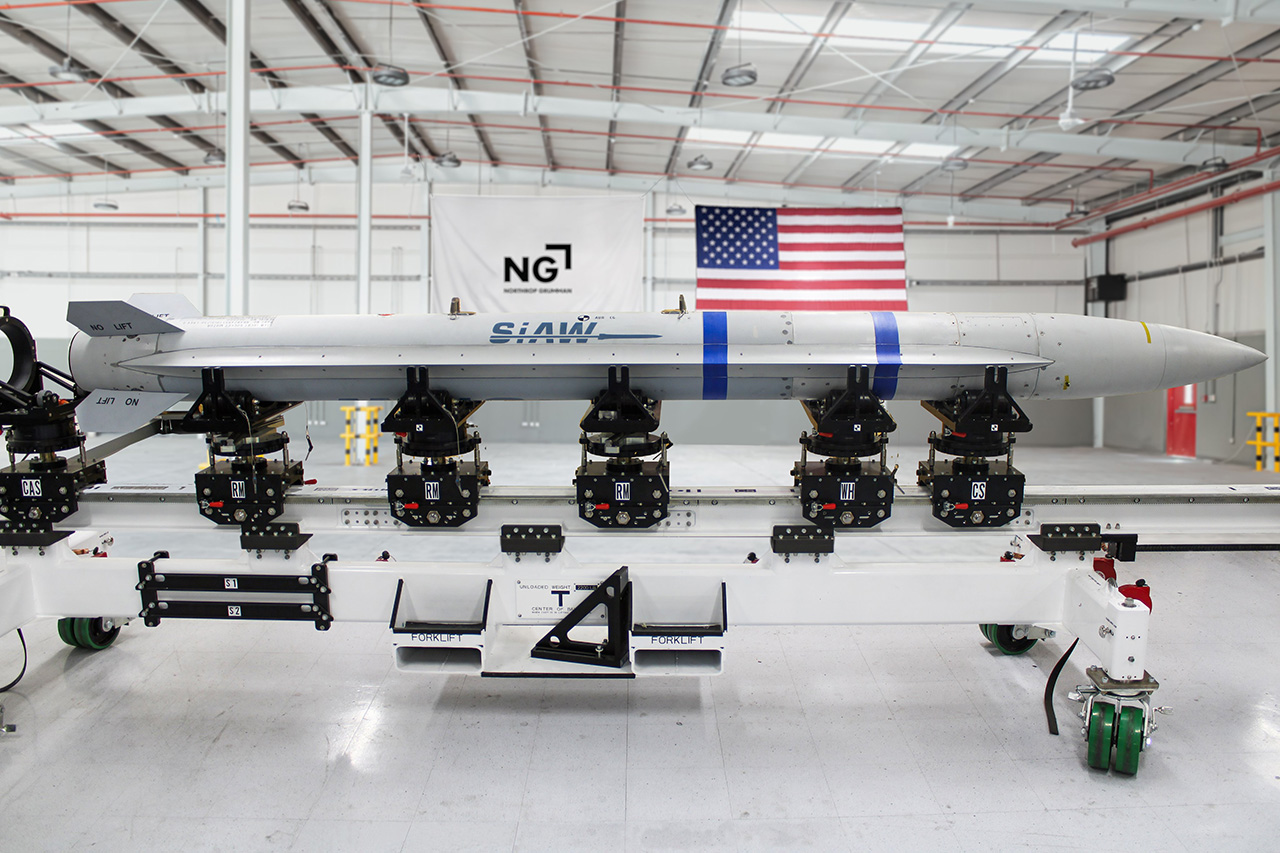
Colonel Gary E. Roos, senior materiel leader at the Adaptive Weapons Division, Air Force Life Cycle Management Center, said: “The separation test of SiAW from the F-16 is intended to provide the United States Air Force validation of the weapon’s safe separation characteristics and also generate invaluable data for optimizing its performance. The results can reinforce SiAW’s ability to provide a critical advantage to warfighters in the face of evolving threats.”
Vice President of Advanced Weapons at Northrop Grumman, Chuck Johnson, added: “This milestone is a key step forward for the SiAW program. With the insights from the separation test, we will continue missile development and ultimately, deliver a critical capability to the warfighter. Our work ensures the U.S. Air Force will have a highly survivable precision strike weapon that will meet current and future mission needs.”
SiAW is intended to reinforce the U.S. Air Force’s ability to reliably attack and destroy heavily defended, time-sensitive targets within contested airspace. Internal carriage on the F-35 is a big component of this capability, allowing the fighter to maintain its highest levels of stealth. Two SiAWs could be carried internally by each F-35A aircraft.
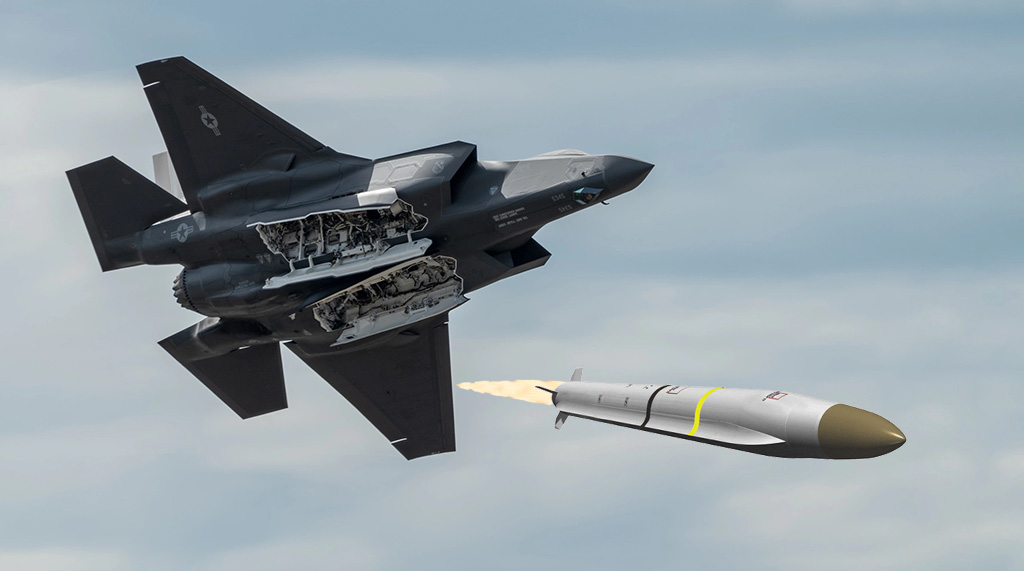
Modern design practices, including digital engineering and the use of open architectures, is intended to allow the SiAW to receive more frequent and less costly capability enhancements compared to legacy weapons, many of which are simply dismantled and replaced by newer models rather than undergoing upgrades.
Lockheed Martin developed its own proposal for the SiAW program, with an internal name of Mako, though the company elected not to proceed further with that specific contract. While Mako missed out on SiAW, Lockheed Martin has continued its development and markets it as a mass-producible, cost-effective, and high performance weapon suitable for deployment from the F-35 and F-22 internally, and externally on the F-35B and a wide range of fourth generation fighters.
