


 John F. Kennedy International Airport (JFK) and
  Newark Liberty International Airport (EWR) are the two primary international hubs serving the Big Apple. Given that New York is such an economically important city (rivaled only by London), it can support two large international airports, especially since both are heavily constrained. There’s also
  LaGuardia Airport, but it lacks customs facilities and can only receive international flights from pre-clearance airports within the 1,500-mile perimeter rule.
New York-JFK is an extremely competitive airport, serving as a hub for Delta Air Lines, JetBlue, and American Airlines, as well as offering substantial service from SkyTeam and oneworld partner airlines. Newark, on the other hand, is dominated by United Airlines with a heavier mix of Star Alliance partners and less service from other carriers. Looking at data from Cirium, an aviation analytics company, which airport sees more international service overall? Let’s find out!
An Overview Of New York’s Busiest Airports

EWR is the oldest of the three major New York hubs, having first opened in 1928 as Newark Metropolitan Airport. It was the first commercial airport in the US with a paved runway. Newark lost significant air service after World War II to LaGuardia and JFK, but it gained a resurgence in the 1980s after People Express turned the underutilized field into a major hub. People Express was acquired by Continental Airlines, which merged with United Airlines in 2010.
Elsewhere, what was then known as the North Beach Airport was made into a commercial hub at the request of New York mayor Fiorello LaGuardia in the 1930s. He subsequently developed North Beach and Floyd Bennett Field into commercial airports. Floyd Bennett was transformed into a naval airbase during the Second World War, and never received commercial flights afterward, while North Beach was renamed New York Municipal Airport, and later to LaGuardia Airport in 1947.
New York International Airport, then known as Idlewild, opened in 1948. It was built to relieve overcrowding at LaGuardia Airport and to create a large, efficient airport that could more easily handle international traffic, while LaGuardia would be for domestic flights. It was renamed roughly one month after the assassination of President Kennedy in 1963, and it is the busiest airport serving the New York metropolitan area.
How Many International Flights Does Newark Receive?

Cirium data shows that, for the month of October, Newark is set to receive 4,300 international flights. It has service from other North American countries, as well as South America, Europe, Africa, and Asia. Its busiest international route is to Toronto, while its busiest European route is to London-Heathrow. Newark’s busiest route to Asia is to Tel Aviv, and its busiest route to South America is to Sao Paulo, while its busiest African route is to Johannesburg.
Most of these services are flown by  United Airlines. The size of United’s Newark hub means that the company can remain competitive with Delta Air Lines, despite having a minimal presence at LaGuardia and no service to JFK (although the latter will soon be added). United’s Newark hub may be even more effective, as it consolidates flights at one hub and provides more connections. Contrastingly, Delta splits its New York operations between JFK and LaGuardia, as detailed below.
Because of the size and scale of United’s hub, most foreign airlines flying into Newark are Star Alliance members or United partner airlines (like Emirates). However, the airport also sees service from British Airways, Air France, Aer Lingus, La Compagnie, French Bee, Icelandair, and SAS from Europe, along with flights from Air Premia and El Al. In addition, Newark receives service from several Latin American carriers such as Aeromexico and Arajet.
International Service To JFK

New York-JFK wins by a long shot in terms of international flights. Cirium data shows that, in October 2025, JFK is scheduled to receive 7,183 international flights. In part, this is because while United is the major carrier at Newark, JFK is home to three major airlines.  Delta Air Lines and
  American Airlines both have a sizeable international presence heavily focused on Europe and the Caribbean, while JetBlue also has a major Caribbean operation.
Because of the Delta and American hub, JFK is the preferred airport for SkyTeam and oneworld alliance members. Only a handful of airlines in these alliances serve Newark, with most flocking to JFK. Additionally, practically every Star Alliance carrier that serves Newark also serves JFK, and this is where nearly every non-aligned airline concentrates its New York services. This includes large airlines like Etihad Airways, along with smaller flag carriers like Air Serbia or Kuwait Airways.
The busiest international route from JFK isn’t to Toronto like Newark, but rather to London Heathrow. This is to be expected given that American and Delta both have joint-venture partners based in the UK. JFK’s busiest route to a foreign North American city is to Santiago in the Dominican Republic, while its busiest Asian route is to Tokyo Haneda Airport. JFK’s busiest route to South America is to Georgetown, and its busiest African route is to Casablanca, while also supporting nonstop service to Auckland.
Why Do Foreign Airlines Favor JFK Over Newark?

Name recognition plays a big role here, as EWRs ultimately in New Jersey, and JFK is one of the most famous airports in the world. For a foreign airline seeking to launch service to New York, it’ll often find that its customers are more familiar with JFK than Newark. Some carriers, like Air Premia and La Compagnie, do still choose to serve Newark exclusively over JFK, but they are overwhelmingly in the minority.
However, Newark’s location isn’t just a hindrance in terms of name recognition or prestige. Indeed, while Newark is arguably more convenient for passengers traveling to Midtown Manhattan (home to most of the city’s economic activity), New York also consists of Brooklyn, Queens, and the Bronx, where most people live. For those traveling to an area of the city that isn’t Manhattan, JFK is more convenient than Newark.
|
Airport |
Location |
|---|---|
|
John F. Kennedy International Airport (JFK) |
Jamaica (Queens), New York |
|
LaGuardia Airport (LGA) |
East Elmhurst (Queens), New York |
|
Newark Liberty International Airport (EWR) |
Newark, New Jersey |
In addition, due to the region’s unique geography, JFK is the only major international airport that is convenient for Long Islanders, of whom there are nearly eight million. This isn’t to say that Newark’s catchment area is small, but it doesn’t compare to the sheer size of JFK’s catchment area. With a larger catchment area and better name recognition, JFK is generally the preferred airport for foreign airlines looking to serve New York.
The Competitive Dynamics Of New York

JFK is the preferred airport for international carriers, but for domestic flights, it’s LaGuardia Airport that airlines favor. It’s closer to Manhattan than JFK, while still being located in Queens, which gives LaGuardia largely the same large catchment area as JFK. As such, there’s high demand, and airlines can generally generate higher yields than those flying to JFK or Newark. However, LaGuardia has no customs facilities, and routes have to be under 1,500 miles (2,414 km) long.
At LaGuardia, it’s Delta and American Airlines that have the largest presence, along with Southwest Airlines. JFK, meanwhile, is dominated by Delta, JetBlue, and then American. United’s dominance in Newark means that it’s far harder to compete than flying to LaGuardia or JFK, especially because Delta and American have to split their operations. JetBlue, for instance, established an operating base in Newark following the COVID-19 pandemic, but later pulled back due to competitive pressures.
|
More Distant Airports Serving New York |
Location |
|---|---|
|
Long Island MacArthur Airport |
Islip, New York |
|
Stewart International Airport |
New Windsor, New York |
|
Westchester County Airport |
White Plains, New York |
Elsewhere, Islip and White Plains are two secondary airports serving communities near New York City (Long Island and upstate New York, respectively). Islip only receives service from low-cost carriers, while White Plains also receives service from American and Delta. Stewart International Airport has also attempted to attract airline service by advertising itself as a New York airport, but it currently only sees flights from Breeze and Allegiant.
The Bottom Line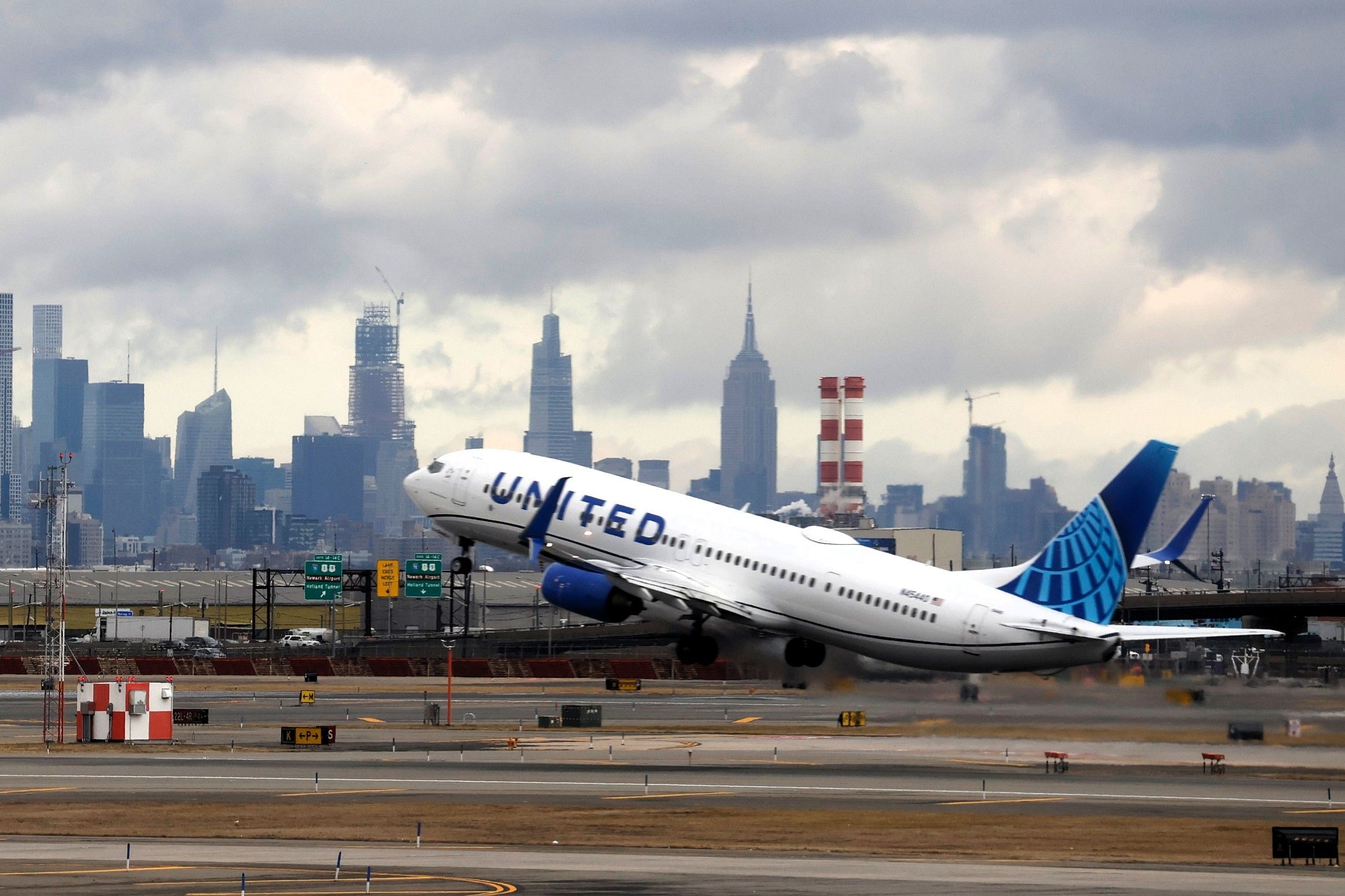
Newark was the first of the city’s three largest airports to open, and it remains an important component of the dynamics of airline service to New York. Without it, the two other airports would be overrun with traffic, and United Airlines has effectively utilized it to become one of the top airlines in the New York market, despite having minimal flight service to New York itself. However, its location in New Jersey has prevented it from reaching the size of JFK.
Because of the prestige that comes from its name and location, which makes it convenient for more residents, JFK receives roughly 67% more international flights than Newark. Most foreign carriers focus on JFK, while some also serve Newark. Of course, for United, this reduces competitive pressure, and although it can’t currently serve JFK due to slot restrictions, it likely wouldn’t trade its position for that of Delta or American, which have to split their operations between two airports.
