


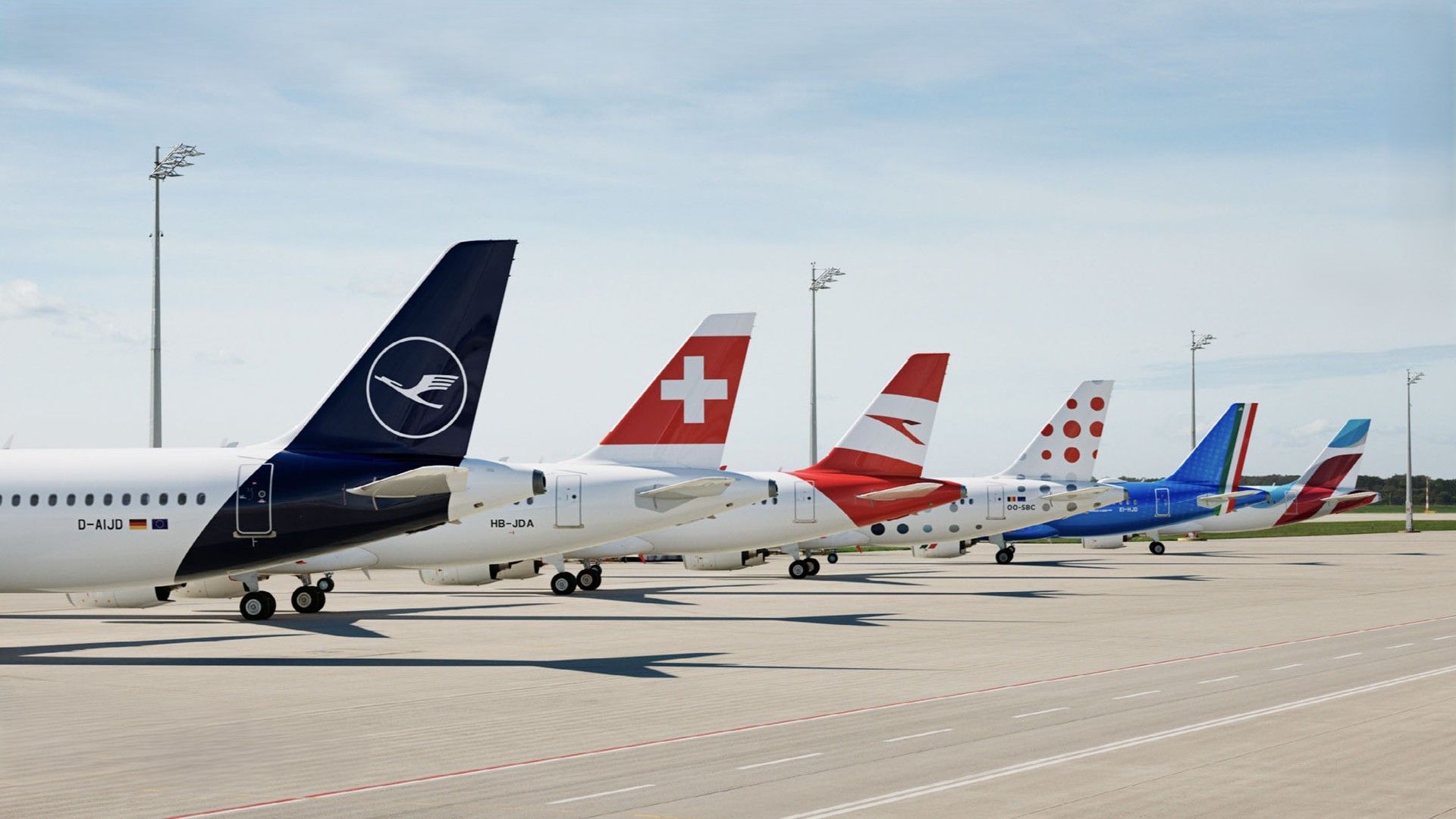
 Lufthansa has announced plans to expand to more secondary US cities as a “strategic growth pathway” to achieving its ambitious profit targets by the end of the decade. The German flag carrier currently has nonstop flights to 19 US destinations from its hubs at
  Frankfurt Airport and
  Munich Airport. While the majority are to major US hubs, the carrier has launched routes to four secondary cities in recent years.
The news came as part of Lufthansa’s Capital Markets Day presentation in Munich earlier today, during which the Group presented its strategic planning and published new medium-term financial targets. The major headline from the presentation is that the Group plans to cut 4,000 jobs by 2030, primarily on the administrative side of its business. But the presentation also included details on how it plans to double down on its transatlantic routes, as well as updates on its fleet transformation.
Secondary US Cities To Drive Profit Growth

The key message from the Capital Markets Day was that the Lufthansa Group aims to deliver adjusted margins of 8–10% in the period 2028-2030. Reuters reports that the airline group has struggled to cut costs and pursue growth in recent years as it has dealt with operational inefficiencies and labor challenges. Last year, it issued two profit warnings and backed away from its target adjusted margin of 8%, ultimately only delivering 4.4%.
As the Group looks to double those margins, North America and the US in particular are going to be vital to its success. After Europe, North America is Lufthansa’s largest market, making up about a quarter of its total revenue. But more importantly, it is the region with the highest revenue growth (at 7%) and highest profitability, with Lufthansa making double the margins per seat mile flown on US routes compared to its European routes.
Carsten Spohr, CEO of the Lufthansa Group, had the following to share about the North American market on the Group’s recent Q2 2025 earnings call:
“Commercially, the North Atlantic remains our, by far, most important traffic area. We have significantly grown across the North Atlantic, more than our competitors, and we also get much better yields there. We are seeing stronger growth from the US than even out of our home markets. The strong demand continues to be driven primarily by the premium classes.”
What Secondary Cities Could Lufthansa Target?

Lufthansa has a robust US network, flying to 19 different cities from its two hubs in Frankfurt and Munich. Its transatlantic financial success is driven by very strong average load factors of nearly 85% across all US flights, so it is not surprising that the carrier sees the addition of more secondary US cities as a pathway to higher margins. Lufthansa currently flies to four US secondary cities, defined as airports with fewer than 100 non-stop destinations:
|
Lufthansa Routes To Secondary US Cities |
|||
|
Lufthansa Hub |
Destination |
Peak Frequency |
Aircraft Used |
|
Frankfurt |
Austin |
5x weekly |
A330-300, A340-300, 787-9 |
|
Frankfurt |
Raleigh-Durham |
5x weekly |
A330-300, 787-9 |
|
Frankfurt |
St. Louis |
3x weekly |
A330-300 |
|
Munich |
San Diego |
Daily |
A350-900 |
As Lufthansa considers new US routes to secondary cities, it is most likely to schedule them from Frankfurt, its largest hub. Currently, the top five unserved US cities from Frankfurt are as follows:
- San Diego: Lufthansa already operates a nonstop service from Munich to San Diego, which initially began in 2022 as a five-times weekly service, but has since increased to daily with an A350. This growth suggests that there is additional opportunity for a route from Frankfurt.
-
Nashville: Music City is one of the fastest-growing metros in the US, and already has nonstop flights to Dublin (Aer Lingus, A321XLR) and London (British Airways, 777-200). It will surely rank highly with the Lufthansa Group as it looks to take the transatlantic battle to
IAG
. -
Salt Lake City: Although not a secondary city, as it’s a large hub for
 Delta Air Lines
, SLC ranks high in pent-up demand from Frankfurt. Delta currently only flies transatlantic routes to London, Amsterdam (along with KLM), and Paris from SLC, so Lufthansa wouldn’t face any direct competition. - Indianapolis: Aer Lingus currently operates Indy’s only transatlantic route to Dublin using its A321XLRs. The city offered numerous incentives and assistance to launch the route, and is reportedly actively looking to lure other international carriers, so Lufthansa could expect a similar warm welcome.
- Cincinnati: Delta Air Lines used to operate the CVG-FRA route, but discontinued it in 2012 as it pulled back from Cincinnati. It currently only offers a single transatlantic service, a nonstop route to Paris, while British Airways flies five-times weekly to London, so Lufthansa would also not face direct competition on this route.
Lufthansa could also consider routes to secondary US cities from its Munich hub. Given that its existing routes from Frankfurt to the secondary cities of Austin, Raleigh-Durham, and St. Louis are performing well with an average load factor of 82%. These might well be the first cities it considers. Less likely, but not impossible, is that it might even consider routes with its other Group airlines, such as Austrian Airlines, SWISS, and Brussels Airlines, although these carriers have far less extensive US networks and have larger city opportunities to add to their networks first.
Other Notable Highlights From The Capital Markets Day

Lufthansa also gave some insights into its fleet transformation over the next few years. The Group expects to add more than 230 new aircraft by 2030, including 100 long-haul aircraft. Net of retirements, this will result in a 20% increase in the number of widebody aircraft with the number of narrowbodies expected to remain steady, reinforcing the airline’s intent to focus on long-haul international markets and the US in particular to drive margin growth.
The Group also aims to simplify its fleet from the 13 types that it operates today down to eight or nine types by 2030. It shared the following planned schedule for retirements over the next three years:
- 2026: A330-200 (5 with ITA Airways, 3 with Discover Airlines); A340-600 (6 with Lufthansa); 767-300 (3 with Austrian Airlines).
- 2027: A340-300 (16 with Lufthansa, 5 with Edelweiss Air, 4 with SWISS); 747-400 (8 with Lufthansa)
- 2028: 777-200 (6 with Austrian Airlines)
While all of these types “will be phased out by 2028 at the latest”, Lufthansa’s presentation was careful to note that a decision regarding the future of its Airbus A380s has not yet been made. Lufthansa has eight active examples in its fleet, with six having been retired during the pandemic. It currently flies its premium-heavy A380s on eight different routes, six of which are in the US.
