



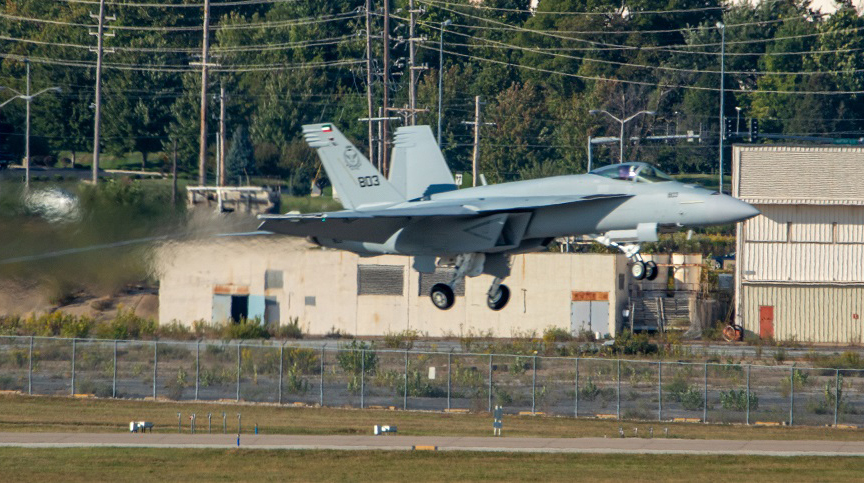
A Wall Street Journal’s report, quoting people familiar with the friendly fire incident, says a Kuwaiti F/A-18 might be responsible for the loss of three U.S. F-15Es.
As we previously reported, three U.S. Air Force F-15E Strike Eagle aircraft have been shot down in a friendly fire incident over Kuwait, with the crews ejecting safely. Now, a report from the Wall Street Journal attributes the responsibility to a Kuwait Air Force F/A-18.
The report quotes “three people familiar with initial reports of the incident.” In a similar report, Air & Space Forces Magazine also quoted people familiar with the matter which spoke to the outlet.
SCOOP: A Kuwaiti F/A-18 fighter jet was the cause of the accidental shootdown of three American F-15s on Sunday, according to three people familiar with initial reports of the incident. https://t.co/5xKB9jxwQs
— Lara Seligman (@laraseligman) March 4, 2026
Friendly Fire Incident
The first indications about the incident emerged when, on Mar. 2, 2026, videos on social media showed an F-15 hit by an explosion, immediately catching fire and spinning out of control. The crew was then seen ejecting, before the aircraft continued to spin towards the ground and crashed.
In a first acknowledgement of the incident, the official X profile of the Kuwaiti Army published a post saying that “the official spokesperson for the Ministry of Defense stated that several US warplanes crashed this morning, confirming that all crew members survived.” Later, CENTCOM confirmed that “three U.S. F-15E Strike Eagles flying in support of Operation Epic Fury went down over Kuwait due to an apparent friendly fire incident.”
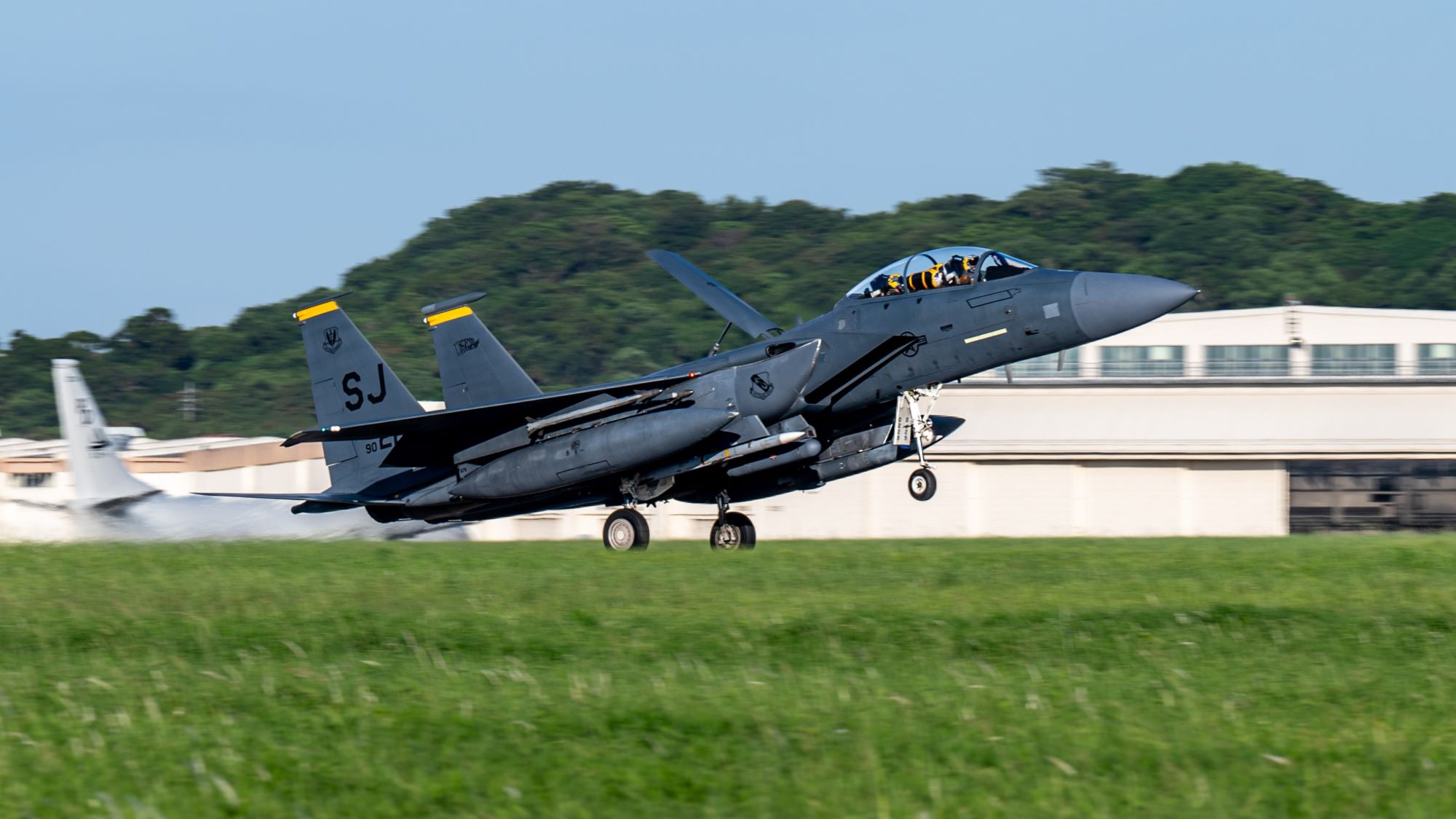
Initially, Kuwaiti surface-to-air defense systems were blamed for the incident. CENTCOM statement mentioned “During active combat – that included attacks from Iranian aircraft, ballistic missiles, and drones – the U.S. Air Force fighter jets were mistakenly shot down by Kuwaiti air defenses.”
The Wall Street Journal’s report, however, paints a completely different picture. According to the report, which quoted an unnamed U.S. official, “one F/A-18 pilot launched three missiles against the U.S. aircraft.”
A Kuwaiti F/A-18 Hornet was the cause of the accidental shootdown of 3 F-15E Strike Eagles in a “friendly fire” incident over the country on Sunday, not a Kuwaiti “Patriot” Surface-to-Air Missile Battery like had initially been believed, three people familiar with initial reports… pic.twitter.com/cm9r0lsdo7
— OSINTdefender (@sentdefender) March 4, 2026
A second official mentioned that this happened soon after multiple Iranian drones entered Kuwaiti airspace. This would somewhat echo CENTCOM’s statement about the aircraft being involved in active combat.
CENTCOM did not provide statements in response to these reports. A spokesperson told Air & Space Forces Magazine that “it would be inappropriate to comment given the incident is under investigation.”
Missing Pieces
While the new reports might identify the responsible for the incident, there are still many missing pieces to this story. The first, and most important one, is why the F-15Es were not identified by the Kuwaiti pilot before firing.
Both the F/A-18 and F-15E are equipped with Identification Friend or Foe (IFF) systems, which allow for combat identification of targets. The IFF, when the radar detects a target, automatically interrogates the track to assess the identity.
The IFF interrogation works similarly to the transponder, sending out a signal which is received by the targeted aircraft, and answered with another signal. Western IFF systems employ codes which are changed on a time basis and allow to identify an aircraft as friendly.
This could be a first cause for a misidentification, which might be attributed to either wrong IFF codes or even an IFF malfunction. However, that alone, which would not immediately allow to identify an aircraft, is not a sufficient reason to prompt an aircraft to open fire.
In fact, standard procedures across western militaries require visual identification (VID) to be conducted if identity can’t be assessed by other means. Moreover, with the F-15Es seemingly being part of the defensive effort of Kuwait, the F/A-18 pilot was presumably aware that allied aircraft were also operating in the area.
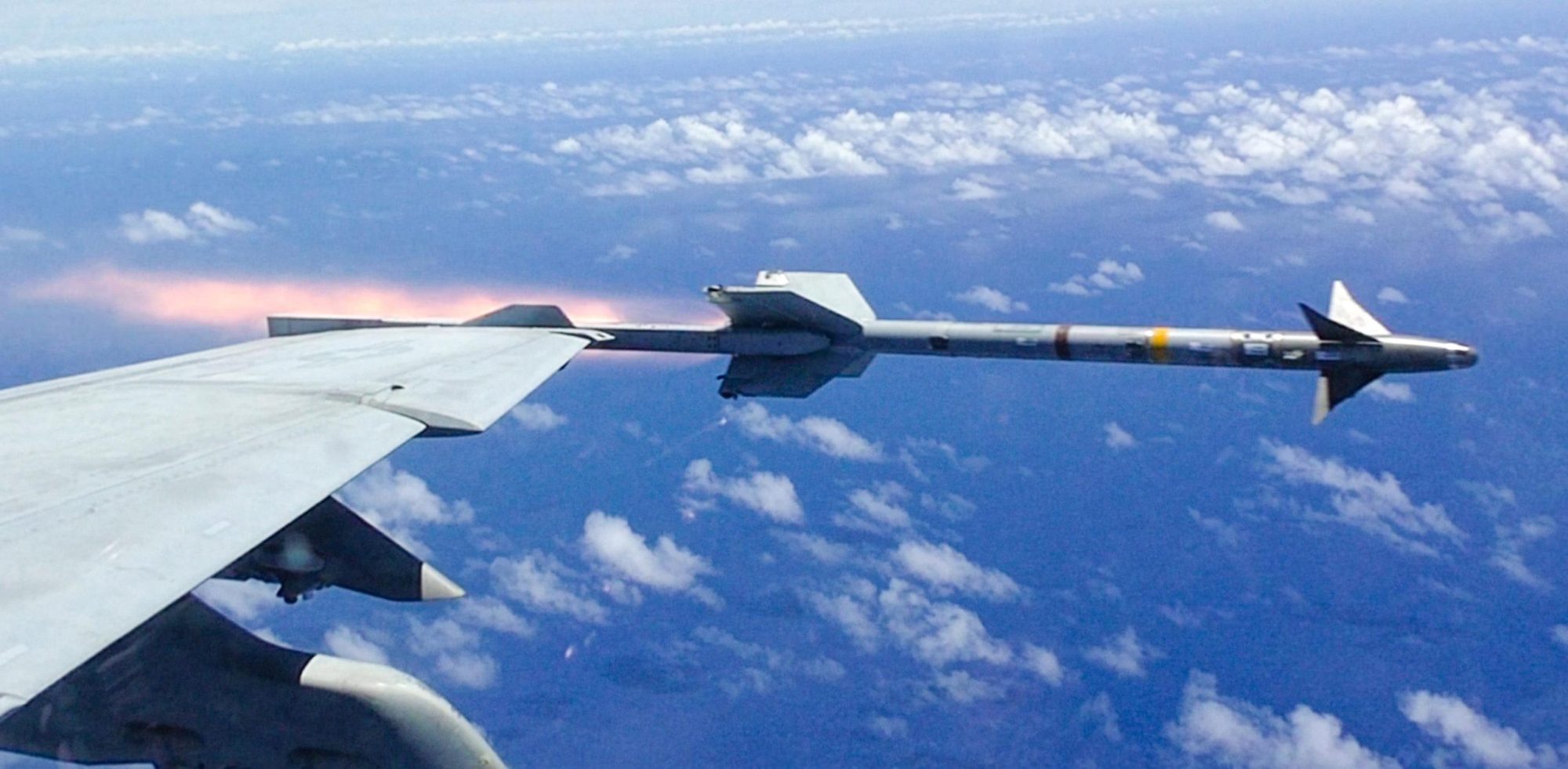
Another missing piece is the weapon employed. In the videos emerged online, one F-15E can be seen flying straight and level, before an explosion takes place, possibly pointing out to infrared-guided air-to-air missiles, such as the AIM-9 Sidewinder which the F/A-18 can employ.
The F-15E is not equipped with Missile Warning Sensors (MWS) for infrared-guided missiles, thus the crew would not get a warning if one was flying towards them. That could eventually explain the straight and level flight as if the crew was not aware of the missile in flight.
A radar-guided missile such as the AIM-7 Sparrow or the AIM-120 AMRAAM, on the other hand, would have been picked up by the Radar Warning Receiver (RWR). This would have alerted the crew, which would then fly defensive maneuvers and employ countermeasures to defeat the missile.
Another element which would possibly point towards IR-guided missiles is the size of the explosion, which appears to be rather small. The AIM-9 has an annular blast-fragmentation 20.8 lb (9.4 kg) warhead, the AIM-7 has a high explosive blast-fragmentation 65 lb (29 kg) or 88 lb (40 kg) warhead (depending on the variant), while the AIM-120 has a high explosive blast-fragmentation 44 lb (20 kg) warhead.
