


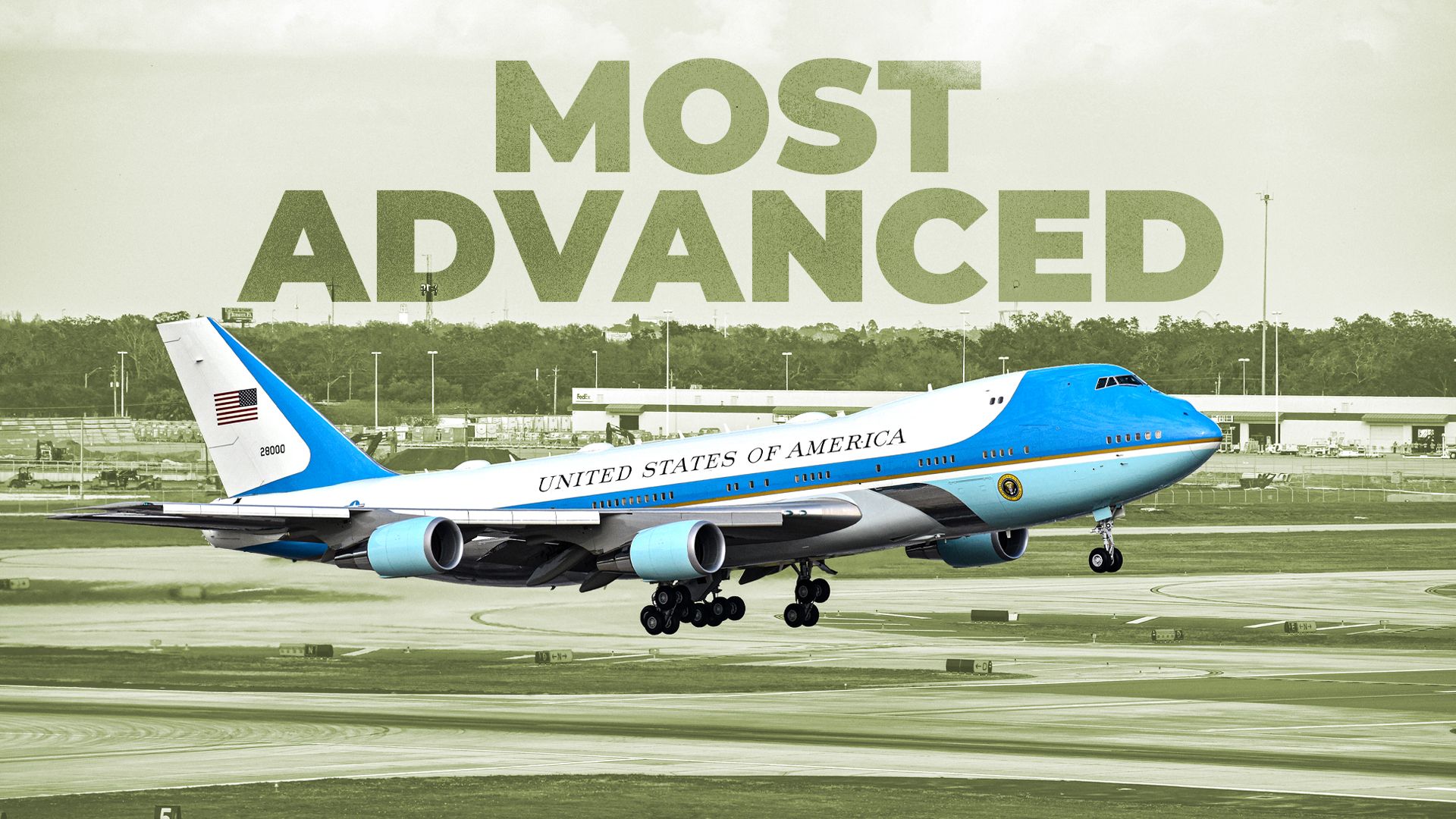
Air Force One may be the most famous aircraft in the entire world. It’s the way that the president of the United States travels for long-distance trips, and its iconic Raymond Loewry-designed livery that dates back to the early 1960s ensures that it stands out, as it serves to be the definitive representation of the United States in the skies. While nearly all heads of state travel on aircraft designated for that specific purpose, Air Force One is uniquely well-known, in part because of the global importance of the US president.
Air Force One is not a specific aircraft, but rather, the callsign for any United States Air Force aircraft carrying the US president. Similarly, Marine One, Navy One, Army One, and Coast Guard One are the callsigns used by an aircraft in these divisions carrying the president. The aircraft that most commonly serve as Air Force One are two Boeing VC-25As that have been in service since the 1990s, and these aircraft are synonymous with the Air Force One callsign, even if the president sometimes flies on other aircraft.
An Overview Of Presidential Flying

Theodore Roosevelt became the first US president to fly when he flew aboard a Wright Flyer in 1910 (over a year after leaving office), while his fifth cousin, Franklin Delano Roosevelt, became the first sitting President to fly aboard an aircraft. Starting in the 1930s, the US began to order aircraft specifically for the purpose of transporting the president. The callsign ‘Air Force One’ was first implemented after a 1954 incident where Columbine II flying as Air Force 8610 crossed paths with an Eastern Airlines flight carrying the same callsign.
The VC-25As first arrived in 1990, and they have been in service ever since. They’re registered as 28000 and 29000, and they’re based on the Boeing 747-200B, some of the last 747-200s to ever be produced. The VC-25As feature General Electric CF6-80 high-bypass turbofans, and require a flight crew of four pilots as the planes feature a flight engineer and a navigator station. Additionally, the VC-25As are certified to carry a maximum of 76 passengers, and typically require a full crew of 26.
The VC-25As are not intended to be luxurious means of travel for the president, but rather, to serve as a mobile command center. The nose of the plane contains a living quarters for the first family, while directly behind is an office for the president. The aircraft also features a conference room, fully equipped office rooms, as well as a medical station. The VC-25As also feature separate quarters for staff and guests, while the upper deck houses the cockpit as well as communications equipment.
How Advanced Is Air Force One?

If you go by the metrics that most people use to measure the technological innovations of a large transport aircraft, such as materials, flight systems, and fuel efficiency, then Air Force One is far from the most advanced aircraft in the world. Indeed, if anything, it’s one of the most outdated aircraft in service. The Boeing VC-25As are based on the Boeing 747-200B, and while they were delivered in 1990, the 747-200B first entered service in the early 1970s. These were some of the last 747-200s to ever be produced.
The 747-200B features conventional flight controls, and while images from its flight deck show that the VC-25A has upgraded instrumentation, they still require a flight engineer. As a 1970s-era airliner, the 747-200B is primarily made of metal, and while its unrefueled range of 6,800 NM (12,600 km) is excellent, it’s far from ground-breaking either. Hanging under the wings of the VC-25A are four General Electric CF6-80s, a dependable engine, but ultimately outdated.
|
General Electric CF6 Variants |
Applications |
|---|---|
|
CF6-6 |
McDonnell Douglas DC-10-10 |
|
CF6-50 |
Airbus A300, Boeing 747, McDonnell Douglas DC-10-30 |
|
CF6-80 |
Airbus A300-600, Airbus A310, Airbus A330, Boeing 747, Boeing 767. McDonnell Douglas MD-11 |
This isn’t to say that these metrics worsen the VC-25A or that these are even important to the aircraft’s mission. The more advanced and efficient Boeing 747-400 was already being offered to airlines when the VC-25As were first being procured, but the USAF does not require fuel efficiency or a two-person cockpit.
Rather, it requires reliability and capability, which the 747-200B provided. Additionally, basing the VC-25As on the 747-200B was undoubtedly cheaper than going for the 747-400. It was a sound move, but it does mean that the VC-25As aren’t as advanced as you might believe.
The Interior Features Of Air Force One

When security concerns make the use of airstairs impractical, the president boards Air Force One through integrated airstairs that fold out from the lower deck. The conference room includes a 50-inch (127-centimeter) plasma screen for teleconferencing, and there are nearly 20 screens and almost 90 telephones located throughout the aircraft. The aircraft’s ‘Oval Office’ for the president can not only be used for work, but can also be used by the president to address the nation.
The president’s suite features couches that fold out into beds, along with a full lavatory that includes a shower and double sink. The medical annex of the VC-25A features a fold-out operating table, emergency medical supplies, as well as a stocked pharmacy area. Every flight features a doctor and nurse as part of its crew roster, and each flight is fully stocked with enough food for up to 100 passengers. Of course, the President receives a personalized menu, and the aircraft is fully self-sufficient.
|
Air Force One Compartments (Nose To Tail) |
|---|
|
President’s suite |
|
President’s office |
|
Medical office |
|
Main gallery |
|
Senior staff room |
|
Conference/dining room |
|
Office staff seating |
|
Guest seating |
|
Security seating |
|
Press seating |
|
Support crew seating |
Scattered throughout the aircraft are fax machines and data communications facilities. The VC-25As also feature both secure and non-secure voice communications, while the flight deck features electronic flight instrument displays not present on the 747-200B. As a whole, the VC-25As may have an area nicknamed the ‘Oval Office,’ but the plane itself is the White House in the skies.
Air Force One’s Military Technologies

The Boeing VC-25A is ultimately a military aircraft, and as such, the true innovations come with its defensive and stealth capabilities. For security reasons, many of the VC-25A’s features are classified, but several details of the aircraft’s military technologies are public information. For one, the VC-25A is capable of aerial refueling, allowing it to stay airborne until food runs out or if a maintenance issue comes up. Inside, the VC-25A can be operated as a mobile command center, including during nuclear warfare.
The aircraft is equipped with flares for protection against missiles, along with chaff to confuse radar-guided missiles. Not only that, but the VC-25As are also equipped with directional infrared countermeasures and electronic countermeasures to further confuse anti-aircraft missiles and enemy radar. The wiring, roughly twice as long as that on a commercial 747, is shielded for protection against nuclear EMPs, and the interior features locked cabinets for security personnel to store additional weapons.
The Boeing VC-25As are some of the most well-protected aircraft in the skies, but none of these technologies are necessarily groundbreaking in 2025. Additionally, while many of the aircraft’s security and defensive measures are classified, it’s difficult to imagine that the aircraft features technology that would be considered groundbreaking today, on account of its age. As such, while Air Force One is likely the safest aircraft in the world, it’s hardly the world’s most advanced plane.
The Replacement For The Boeing VC-25A

The two VC-25As are over 35 years old, and they’re based on an aircraft variant that’s becoming increasingly rare. This means that the planes are breaking down more often, and parts are becoming increasingly difficult to source. This is why, in 2015, the United States Air Force selected the Boeing 747-8 as the platform for the replacement of the VC-25A: the Boeing VC-25B. There are two Boeing 747-8s that are currently being modified, and they’re intended as one-for-one replacements for the VC-25As.
Boeing anticipates delivering the first VC-25B in 2027, although there has been controversy regarding whether Boeing can meet the deadline, as the planes are three years behind schedule with a high possibility of further delays. Many details about the plane’s reported features and defensive measures are classified, although it’s expected that the VC-25Bs will retain nearly all of the VC-25A’s current capabilities.
|
Specifications |
VC-25A |
VC-25B |
|---|---|---|
|
Order |
1985 |
2015 |
|
Delivery |
1990 |
2027 or later |
|
Base aircraft |
Boeing 747-200B |
Boeing 747-8 |
|
Engines |
General Electric CF6-80 |
General Electric Genx |
|
Crew |
Three (747-200B), four (VC-25A) |
Two (747-8), TBD (VC-25B) |
|
Line numbers |
679, 685 |
1519, 1523 |
One notable omission, however, is that these aircraft will not come with aerial refueling, as this was reportedly never used on the VC-25A, and the 747-8 has a significantly longer range than the 747-200. Unlike the VC-25As, the VC-25Bs are retrofits of pre-built aircraft. However, while this was meant to be a cost-saving effort, it may have led to further delays.
Specifically, much of the VC-25B’s capabilities come from its wiring, meaning that the existing wiring in the aircraft needs to be ripped out and replaced.  Boeing has had difficulty with designing and installing the new wiring, and the company has also been struggling with quality control as well as staffing, and the program is billions over budget.
The Bottom Line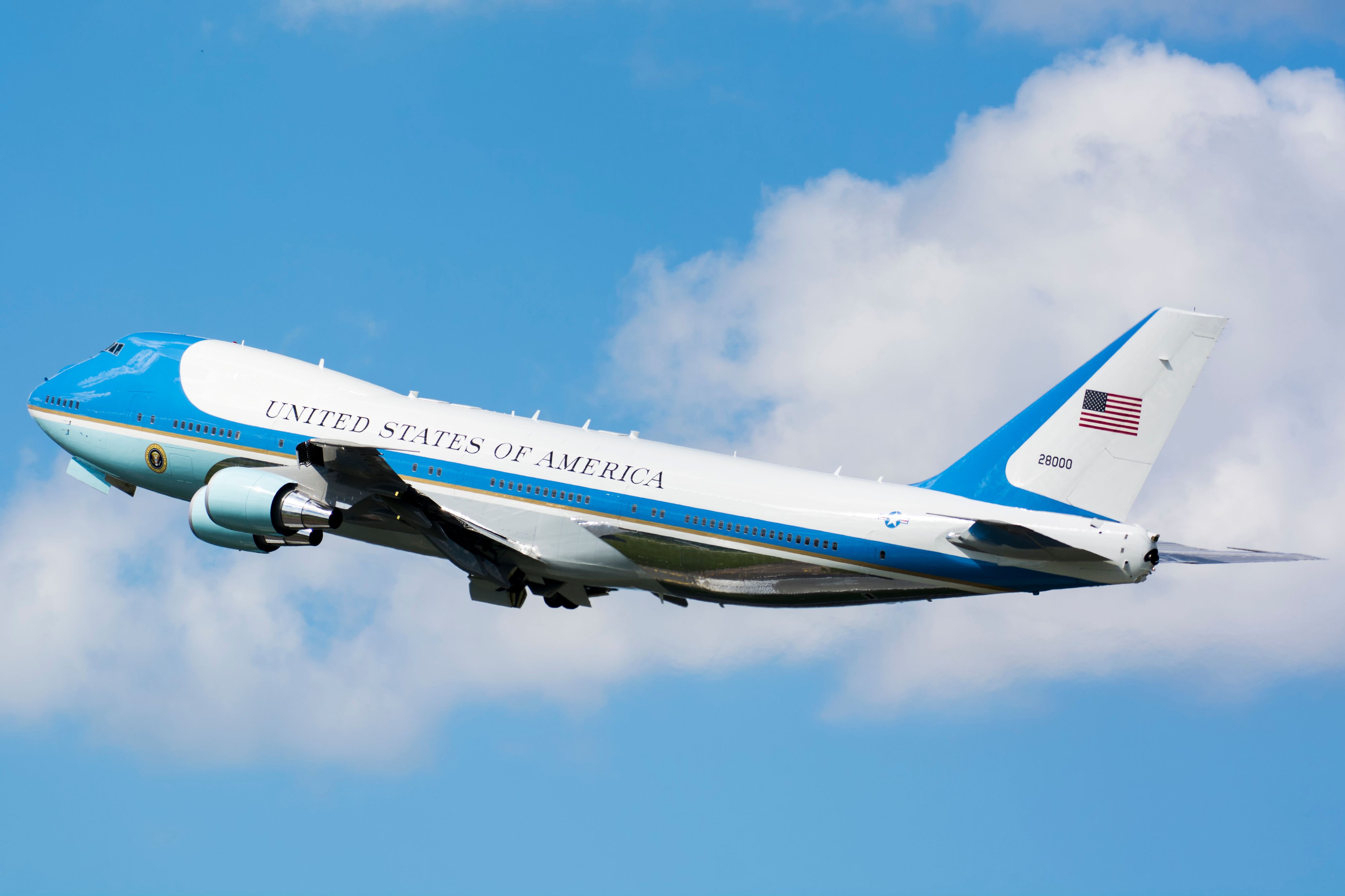
The Boeing VC-25A, the aircraft most used as Air Force One, is not the most advanced aircraft in the world. It’s based on an aircraft variant that first entered service over 50 years ago, and the VC-25As themselves have been around for decades. While the planes were ground-breaking when they entered service, they’re ultimately familiar technology today.
However, the two Boeing 747-8s that are in the process of being retrofitted will undoubtedly be the world’s most secure, versatile, and advanced transport aircraft in the world. Much of the technology on the VC-25A is classified, and while nearly every publicly known feature on these planes will be carried over to their successors, what’s certain is that the classified features are sure to be more effective and innovative than anything present on any transport aircraft in the world.
