

Close Menu
FlyMarshallFlyMarshall
  • Aviation
    • AeroTime
    • Airways Magazine
    • Simple Flying
  • Corporate
    • AINonline
    • Corporate Jet Investor
  • Cargo
    • Air Cargo News
    • Cargo Facts
  • Military
    • The Aviationist
  • Defense
  • OEMs
    • Airbus RSS Directory
  • Regulators
    • EASA
    • USAF RSS Directory
What's Hot

Hong Kong Criminalizes Not Sharing Passwords With Police, Even At Airport

March 28, 2026

Singapore delays SAF rollout levy amid Middle East conflict

March 28, 2026

Iranian Attack on Prince Sultan Air Base Reportedly Struck U.S. KC-135s – Reports

March 27, 2026
Facebook X (Twitter) Instagram
Demo
  • Aviation
    • AeroTime
    • Airways Magazine
    • Simple Flying
  • Corporate
    • AINonline
    • Corporate Jet Investor
  • Cargo
    • Air Cargo News
    • Cargo Facts
  • Military
    • The Aviationist
  • Defense
  • OEMs
    • Airbus RSS Directory
  • Regulators
    • EASA
    • USAF RSS Directory
Facebook X (Twitter) Instagram
Demo
Home » Hong Kong Criminalizes Not Sharing Passwords With Police, Even At Airport
Airways Magazine

Hong Kong Criminalizes Not Sharing Passwords With Police, Even At Airport

FlyMarshall NewsroomBy FlyMarshall NewsroomMarch 28, 2026No Comments3 Mins Read
Share
Facebook Twitter LinkedIn Pinterest Email

If you’re traveling to or even through Hong Kong, this is at least something to be aware of (thanks to @istrakhov for flagging this)…

Hong Kong implements strict new electronics search law

The United States Department of State has warned Americans about new rules that have just been implemented in Hong Kong, related to the National Security Law. Specifically, it’s now a criminal offense to refuse to give Hong Kong police the passwords or decryption assistance to access all personal electronic devices, including mobile phones and laptops.

This legal change applies to everyone in Hong Kong, including those arriving at or even just transiting Hong Kong International Airport (HKG). Furthermore, the Hong Kong government also has more authority to take and keep any personal devices, as evidence, that they claim are linked to national security offenses.

China has increasingly restricted freedom of speech in Hong Kong in recent years, with things really changing in 2019. Odds are that this would only be used in very targeted ways, and only for those that the government of China may view as problematic. But still, it’s something to be aware of, especially in the context of a global airline hub.

I think the wildest aspect of this policy is that it even applies to those in transit. So that means even if you don’t actually enter Hong Kong, you could still be forced to share the passwords of your devices, or face legal consequences.
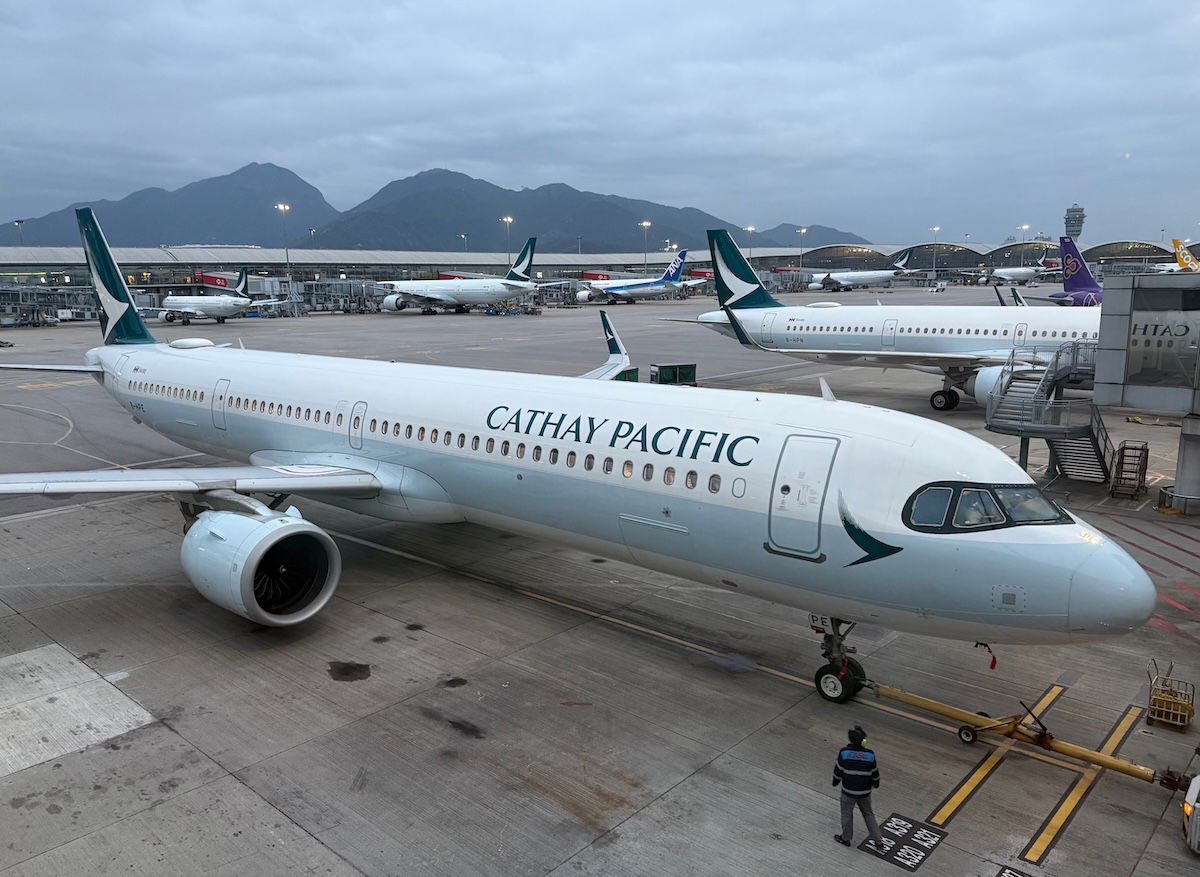
Even transit passengers could be subject to this new law

How does this compare to the law in the United States?

Many people are pointing out that there’s a certain irony to the Department of State under the current administration warning of the possibility of invasive searches of electronics, given what we’ve seen at our own borders, and beyond.

However, there’s a bit more nuance to this in the United States. Yes, we’ve seen an increase in the number of electronics being searched at the border, and United States Customs and Border Protection (CBP) can request passwords for electronics from arriving passengers.

If you refuse to cooperate, though, you’re not going to potentially go to jail for that:

  • If you’re a foreigner, you can be denied entry to the United States for refusing to share log-in details for your electronics
  • If you’re a United States citizen, you won’t be denied entry to the United States based on CBP’s inability to search your devices, though the devices may be subject to exclusion or detention

So that’s still a bit different than potentially facing prosecution for not providing the passwords for your electronics.

This is still quite different than the law in the United States

Bottom line

Hong Kong’s National Security Law has been updated, and it’s now a legal requirement to provide police with access to all electronics, including passwords. This includes transit passengers at Hong Kong Airport, and refusing to do so could result in prosecution.

This is one of the more extreme policies you’ll find out there, and I imagine this will only be used in a very targeted way.

Would this new rule impact your willingness to travel to or through Hong Kong?

source

FlyMarshall Newsroom
  • Website

Related Posts

Onboard Chefs: Which Airlines Have Them, What Do They Actually Do?

March 27, 2026

Is The IHG Premier Business Credit Card Worth It? 7 Reasons To Apply…

March 27, 2026

American Considers Bringing Back Seat Back TVs On Narrow Body Planes

March 27, 2026

Homes & Hideaways By World Of Hyatt 2x Points Promotion: Worth It?

March 27, 2026
Add A Comment
Leave A Reply Cancel Reply

Latest Posts

Hong Kong Criminalizes Not Sharing Passwords With Police, Even At Airport

March 28, 2026

Singapore delays SAF rollout levy amid Middle East conflict

March 28, 2026

Iranian Attack on Prince Sultan Air Base Reportedly Struck U.S. KC-135s – Reports

March 27, 2026

Aero-News: Quote of the Day (03.24.26)

March 27, 2026

Subscribe to Updates

Please enable JavaScript in your browser to complete this form.
Loading
About Us

Welcome to FlyMarshall — where information meets altitude. We believe aviation isn’t just about aircraft and routes; it’s about stories in flight, innovations that propel us forward, and the people who make the skies safer, smarter, and more connected.


Useful Links
  • Business / Corporate Aviation
  • Cargo
  • Commercial Aviation
  • Defense News (Air)
  • Military / Defense Aviation
Quick Links
  • About Us
  • Contact Us
  • Disclaimer
  • Privacy Policy
  • Terms and Conditions

Subscribe to Updates

Please enable JavaScript in your browser to complete this form.
Loading
Copyright © 2026 Flymarshall.All Right Reserved
  • About Us
  • Contact Us
  • Disclaimer
  • Privacy Policy
  • Terms and Conditions

Type above and press Enter to search. Press Esc to cancel.

Go to mobile version