


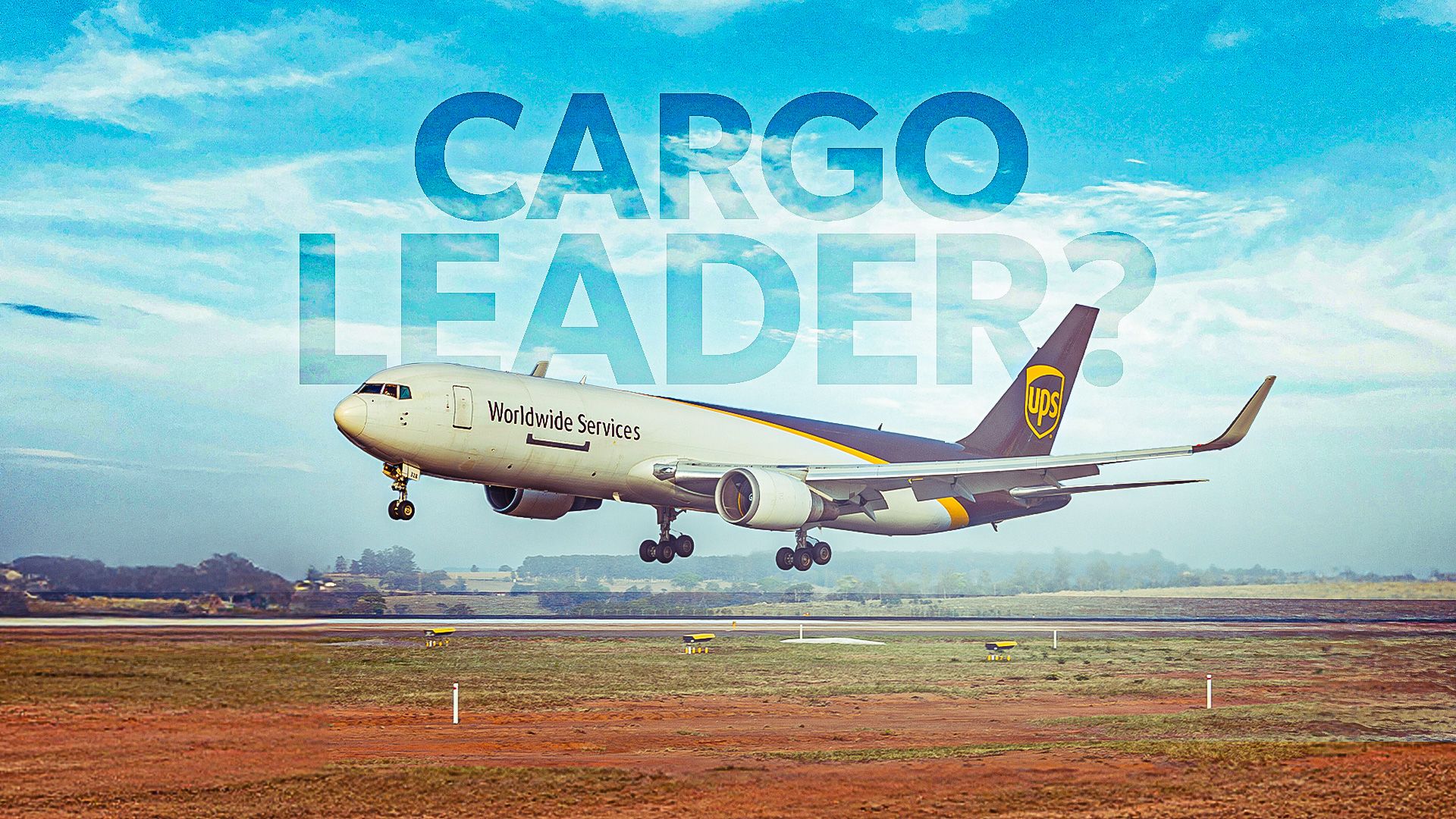
While it is common practice in the Aviation Industry for freighter jets to remain operational much longer than passenger jets, and for passenger jets to occasionally have their lives extended by being converted to freighter jets, it is rather uncommon for a much older generation of aircraft to remain in production. The case in point,  Boeing still produces the 767F aircraft at its facility in Everett, north of Seattle.
While the aircraft proved popular in passenger and cargo variants, Boeing ceased production of the passenger version over a decade ago. The 767F has been superseded by newer-generation aircraft, and even more efficient freighter jets are due to enter the market. So why is Boeing still producing brand-new 767Fs?
Recap: History Of The Boeing 767

Launched by Boeing in 1978, the Boeing 767 program was OEM’s solution to fill the market gap decades ago, which needed a twin-engine, wide-body aircraft, that could serve transcontinental and intercontinental routes.
Because the 767 program overlapped considerably with the smaller Boeing 757, the two aircraft shared commonalities in various aspects, which proved popular with customers. The type entered commercial service four years later in 1982, with  United Airlines, with other US carriers such as American Airlines and Delta Air Lines introducing the 767s into their fleet shortly thereafter.
As part of the 767 program, Boeing has built five passenger variants over the years, with the final passenger variant delivered in 2014, and a single freighter variant, which is still in production. Additionally, the aircraft type has a military variant, the 767-2C.
The aircraft type gained traction across the aviation markets around the world, which prompted European manufacturer, Airbus, to try and gain some market share with the Airbus A330 program, which would be introduced almost a decade later. Airbus is still producing passenger variants of the A330, including the A330-800neo and -900neo.
One Aircraft, Seven Different Variants

When the type first entered commercial service, the variant was named Boeing 767-200. While the manufacturer originally considered a 767-100, the proposed specification for the smaller variant was too close to that of the Boeing 757, which was also under design at the time. Ultimately, this led to the 767-100 being scrapped.
Following the entry into service of the 767-200 in 1982, Boeing was quick to introduce upgrades and design variants over the years, which increased operational range compared to its predecessor and increased the aircraft’s capacity. While specifications vary according to airline configurations.
|
Aircraft Variant |
Passenger Capacity |
Operational Range |
Year Of Entry Into Service |
Launch Customer |
|---|---|---|---|---|
|
767-200 |
214 |
3,900 NM |
1982 |
United Airlines |
|
767-200ER |
214 |
6,590 NM |
1984 |
El Al |
|
767-300 |
261 |
3,900 NM |
1986 |
Japan Airlines |
|
767-300ER |
261 |
5,980 NM |
1988 |
American Airlines |
|
767-300F |
N/A |
3,225 NM |
1995 |
UPS |
|
767-400ER |
296 |
5,625 NM |
2000 |
Continental |
|
767-2C |
N/A |
2014 |
Military |
With continual upgrades introduced over the two decades, the final passenger variant—the Boeing 767-400ER — was certified to carry a maximum of 375 passengers, according to Airways Magazine.
The 767-300F, Still Under Production

When it comes to the commercial variants of the 767, the only type still under production is the Boeing 767-300F, which was first introduced three decades ago. Therefore, it is not really surprising that data from ch-aviation shows there are 248 examples of the type currently marked as active by operators worldwide.
It is worth noting that there are another 242 Boeing 767 Freighters currently marked as active; however, these jets are converted freighters that originally started their lives as passenger jets. These include variants such as the -200s, -200ERs, and the -300ERs. Analyzing the data, it shows that there are 14 operators currently flying the original -300F variant.
These are the following operators of the Boeing 767-300Fs:
|
Air Tanzani |
AirZeta |
Amerijet International |
ANA |
Cargojet Airways |
DHL |
Ethiopian Airlines |
|
FedEx |
LATAM Cargo Brazil |
LATAM Cargo Chile |
LATAM Cargo Colombia |
Maersk Air Cargo |
Tasman Cargo Airlines |
UPS |
Records show that 10 brand new 767-300Fs were delivered in the past 12 months, which were equally split in terms of number of deliveries to Fedex Express and UPS Airlines. Additionally, the data shows that the oldest Boeing 767-300F, which is currently active, is an example operated by UPS with a recorded age of 30.38 years (possibly the first-ever 767-300F off the production line).
However, when looking at the operators of the converted 767 freighter aircraft, this number quickly doubles to 28 carriers, some of which are listed above, including operators of the original 767-300Fs and converted 767 aircraft.
Unparalleled Operational Versatility

While the aircraft’s fundamental design is over four decades old, the 767 remains reliable for operators and suitable for most cargo markets worldwide. The aircraft type is right-sized, enabling it to serve markets where the likes of the larger Boeing 777Fs and Boeing 747Fs might be inefficient and too big. With a payload capacity of over 112,000 lbs (over 50,000 kgs), and an operational range of over 3,000 NM, the aircraft is well-suited for most cargo missions.
This indicates why the 767 was also popular for passenger operations and why multiple variants of the type are still operated today, by the likes of United Airlines and Delta Air Lines. The former has even stated that its 767-400ERs will remain operational into the next decade.
The aircraft’s operational reliability is also a factor, which led various airlines and cargo operators to pick up second-hand 767s that were retired from passenger service and converted for cargo operations, extending the aircraft’s life by well over a decade.
Additionally, the aircraft’s ability to capture a unique market share may stem from the fact that 767-300F operators continued ordering more of the type, despite Boeing introducing the 777F and the 747-8F. This further proves that the 767 freighters (even the converted variants) were capable of delivering profitable economics to their operators.
25 767-300Fs Yet To Be Delivered

Looking at the number of unfilled orders for the aircraft type, the latest data from Boeing shows that as of September 30, the manufacturer still has 25 examples of the type in its backlog, split across three customers. With the backlog continuously decreasing, in late 2024, Herald Net reported that Boeing will cease production of the 767 aircraft in 2027.
According to aircraft backlog data, of the 25 aircraft yet to be delivered, 12 are bound for UPS, five for FedEx, and the remaining eight are bound for an unidentified customer. FedEx and UPS are thus far the largest operators of 767 Freighters.
Though it was reported in 2024 that the production rate for the 767 was three per month, data based on the age of the newest example indicated 10 aircraft were produced in the past year, which suggests that for the past year, Boeing has been taking more than a month to produce each of these 767s.
Therefore, given the 25 aircraft yet to be delivered and Boeing’s target to end 767 production sometime in 2027, the current production rate is expected to continue for the next two or so years. This might also be attributed to factors such as delays in the supply chain and the fact that Boeing is prioritizing the production ramp-up of its more popular jets, such as the Boeing 737 MAX, while also working on certifying the Boeing 737 MAX 7, MAX8, and the Boeing 777-9 aircraft types.
Two New-Generation Freighter Jets To Enter The Market

While Boeing has dominated the cargo market within the aviation industry for decades, in the coming years, two new freighter jets are set to enter the market, one being the freighter variant of Boeing’s next-generation 777 series, named the Boeing 777-8F, and the second being the freighter version of Airbus’ most popular widebody aircraft, the Airbus A350F.
While Airbus’ freighter products never had the same level of popularity as Boeing’s, a key factor the European manufacturer can bet on is that its A350 aircraft have proven to be extremely popular, efficient, and capable in the passenger segment. This factor alone can potentially pull current A350-900 and A350-1000 operators looking for freighter jets towards the A350F.
While Boeing’s next-generation freighter, the 777-8F, is undoubtedly popular, a key issue the manufacturer is facing about this aircraft is that Boeing has yet to have the first aircraft type within the 777X family to be certified, the Boeing 777-9, which was meant to enter commercial service in 2020.
The manufacturer has already stated that it will be prioritizing the certification of 777-9, before Boeing can start working on the freighter aircraft. Latest data indicates that Boeing has received orders for 59 examples of the 777-8F, split across seven operators, of which four airlines have additional options that they can exercise if they wish. Qatar Airways has the largest number of 777-8Fs on order, with 34 aircraft marked as firm and 16 as options.
