


When passengers board an aircraft, the flight crew is already at work—flight crew, cabin crew, and maintenance engineers all perform essential roles to move the aircraft safely to its destination. Although they share the same flight time from departure to arrival, their responsibilities, and therefore their compensation, differ considerably.
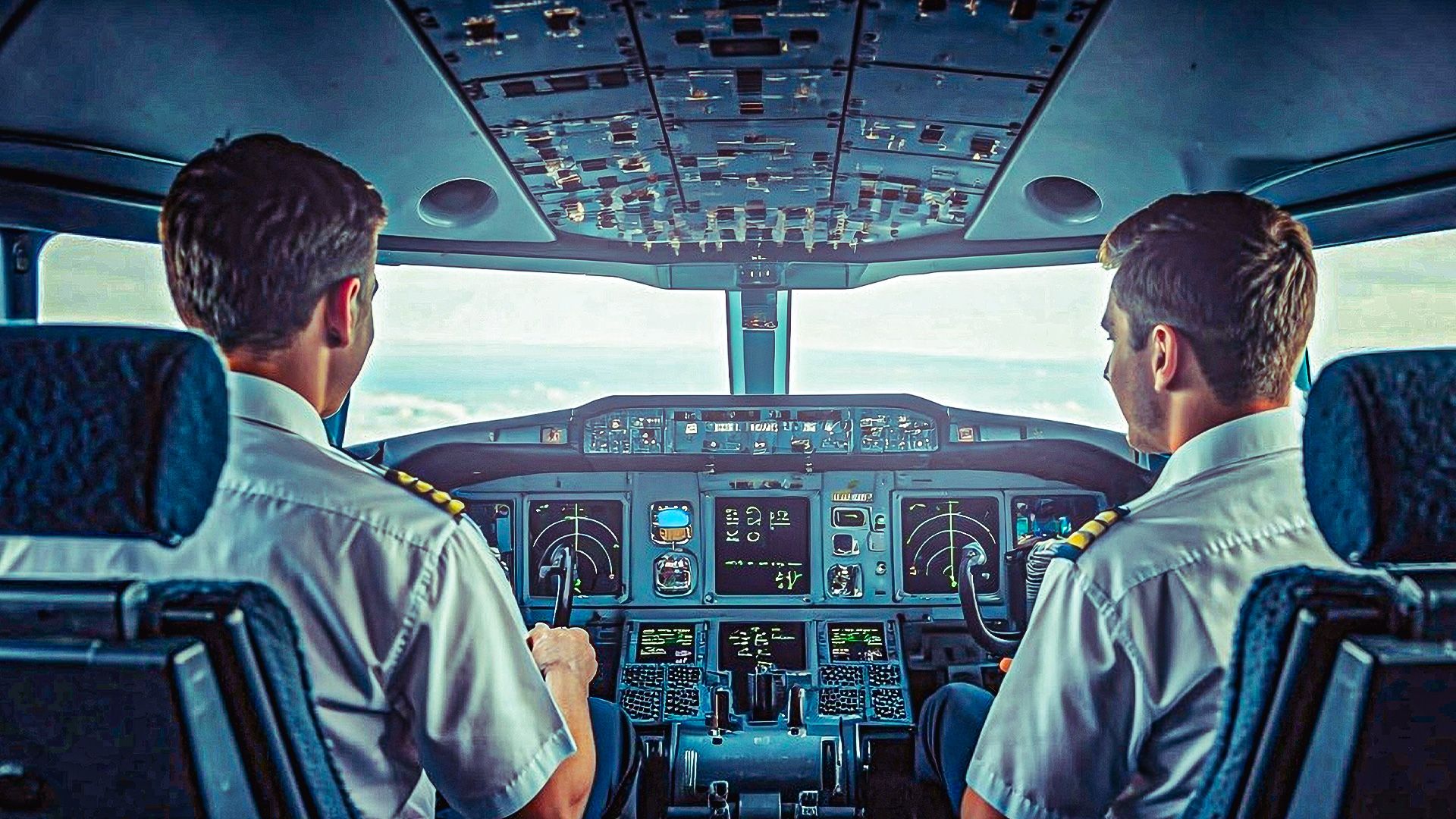
Among them, two pilots sit side by side in the cockpit, alternating as pilot flying and pilot monitoring. They share control and teamwork, yet their paychecks can differ by hundreds of thousands of dollars. Why does such a large gap exist between captains and first officers who appear to do the same job? And will that gap ever narrow?
In an industry defined by a global pilot shortage, these questions have never been more relevant. Airlines worldwide are raising salaries to retain talent, but structural differences remain deeply rooted in training costs, rank responsibilities, and market dynamics. This article explores six factors that shape the captain–first officer pay gap—from education investment and command authority to regional economics, aircraft type, and future outlooks. Compensation across the industry.
How Much Do Pilots Earn Worldwide?

Pilot salaries rank among the top ten professional incomes in most developed economies. Historically, pilots have been seen as highly skilled specialists entrusted with advanced technology and human safety. According to the US Bureau of Labor Statistics, the median annual wage for airline and commercial pilots in 2024 was $226,600, placing them near the top of the nation’s income scale.
At major US carriers such as Delta, United, and American, captains typically earn $300,000–$450,000 per year, while first officers average $90,000–$150,000. Regional airlines display similar ratios, where the captain’s salary is often 1.5 to 2.5 times higher than the first officer’s.
|
Airline |
First officer(1yr) |
Captain(6yr) |
Captain(12yr) |
|---|---|---|---|
|
$113,476 |
$323,039 |
$338,095 |
|
|
$113,476 |
$321,594 |
$336,365 |
|
|
|
$115,621 |
$327,922 |
$342,997 |
|
$119,245 |
$323,143 |
$338,212 |
|
|
$125,731 |
$315,883 |
$330,595 |
 American Airlines
 Delta Air Lines
 United Airlines
 Alaska Airlines
 Southwest Airlines
Pilot pay is calculated primarily by block hours, the time from when the aircraft first moves until it stops after landing, rather than total duty time. Most pilots fly 70 to 80 block hours per month, and many airlines provide per diem allowances for layovers and performance bonuses tied to on-time reliability.
Globally, this pattern remains consistent. Korean Air and Asiana Airlines captains earn ₩108–125 million ($80,000–$92,000), while first officers earn ₩50–88 million ($36,000–$65,000). In Europe, top captains reach £225,000 ($280,000), and Middle Eastern carriers offer tax-free packages above $300,000. Ultimately, the captain’s role is recognized as both a status and a scarce leadership asset.
Why Initial Training Costs Matter

The path to the cockpit is one of the most capital-intensive career routes in the labor market. According to ATP Flight School, the Airline Career Pilot Program costs $116,995 for students starting from zero time and $86,995 for those with a private pilot certificate. The program takes nine to twelve months to complete, covering licenses through certified flight instructor ratings. Beyond tuition, students must fund college education, medical certifications, and hours built through flight instruction or regional flying to qualify for a major airline. Most rely on loan programs to enter training, creating a financial burden that can take years to repay. This economic reality means that loan repayments and living costs absorb a pilot’s early career income.
In the United States, this cost is shouldered entirely by the student. In contrast, cadet programs in Europe, the Middle East, and parts of Asia allow airlines to cover initial training expenses in exchange for several years of service. These schemes lower entry barriers but restrict flexibility—pilots often begin with lower pay until their training debt to the airline is “worked off.”
This contrast defines two career philosophies: self-funded independence versus airline-sponsored obligation. Either way, the captain’s higher salary is not merely a reward for experience but also a return on the substantial financial and temporal investment made at the beginning of a pilot’s career.
How Rank And Responsibility Define Pay

The captain and first officer titles represent not just seniority but command authority and legal accountability. In flight operations, roles alternate between pilot flying (PF) and pilot monitoring (PM) to reduce hierarchical pressure and enhance crew coordination. However, ultimate authority always rests with the captain, the pilot in command.
Sitting in the left seat with four stripes, the captain holds final responsibility for flight planning, fuel management, weather decisions, crew supervision, and emergency actions. The first officer, seated on the right with three stripes, supports these tasks, handling radio communication and system monitoring.
Each stripe on a pilot’s epaulet symbolizes the weight of responsibility. Airlines compensate captains for their command liability—the legal and operational burden that comes with being the final decision-maker. Even when two pilots fly the same aircraft, their roles are fundamentally different in risk and accountability.
How Region and Airline Business Models Shape Salaries

Pilot pay is shaped by a combination of geography, business model, and labor dynamics.
In the United States, major airlines such as Delta, United, and American offer some of the world’s highest compensation—captains typically earn $320,000–$380,000, while regional affiliates like SkyWest Airlines or Envoy Air range from $100,000 to $150,000.
Across Europe, captains earn between £110,000 and £225,000, though low-cost carriers such as Ryanair and Wizz Air often pay roughly half that amount. In the Middle East, airlines including  Emirates and
  Qatar Airways combine tax-free salaries above $320,000 with housing and family benefits, reflecting their large-aircraft operations and global networks. Meanwhile, Asian carriers are catching up rapidly, with average captain salaries still below $100,000 but rising sharply amid regional pilot shortages.
These contrasts reflect the economics of each airline’s business model as much as geography.
Legacy carriers like  British Airways,
  Lufthansa, and Delta maintain structured, seniority-based pay scales backed by strong unions and long-haul operations. Low-cost carriers (LCCs) such as Southwest, AirAsia, and easyJet rely on leaner models that emphasize productivity and scheduling flexibility, often trading lower base pay for higher flight-hour efficiency.
Cargo operators including FedEx and UPS offer some of the industry’s most lucrative packages—often exceeding $350,000 for captains—to compensate for overnight operations and extended duty cycles. Charter and fractional ownership airlines like NetJets occupy a middle ground, blending predictable schedules with premium-service clientele.
|
Airline |
First officer(1yr) |
Captain(6yr) |
Captain(12yr) |
|---|---|---|---|
|
$82,690 |
$287,566 |
$300,859 |
|
|
$65,275 |
$332,233 |
$387,550 |
 UPS Airlines
Taxation further affects pilot compensation. Middle Eastern carriers draw global talent through tax-free contracts, while Asian airlines—especially in China and Vietnam—entice expatriate pilots with housing, education, and travel allowances.
Taken together, these variations illustrate how market maturity, fleet size, and collective bargaining power create distinct compensation structures across the aviation world.
How Experience And Aircraft Type Affect Income

Aircraft type and mission length directly influence pilot pay. Thrust Flight data shows that an American Airlines 737 First Officer earns $161 per hour, while a 777 First Officer earns $198 per hour—a 23% difference. At Delta Air Lines, a wide-body A350 Captain earns $383,400 annually, compared to $307,800 for an A320 Captain, a 25% increase.
|
Career stage |
Avg. salary |
Flight hours |
|---|---|---|
|
Flight Instructor(CFI) |
$35K~$60K |
250~1,500 |
|
Regional First Officer |
$55K~$80K |
1,500~2,500 |
|
Regional Captain |
$85K~$120K |
2,500~3,500 |
|
Major Airline First Officer |
$120K~$160K |
3,500~4,500 |
|
Major Airline Captain |
$200K~$239K+ |
5,000+ |
Widebody operations often include augmented crews, adding a relief pilot for flights exceeding eight hours. These long-haul missions involve greater fatigue management, system complexity, and exposure to diverse weather and regulatory environments.
Duty time is governed by FAA Part 117 limits, meaning longer trips require additional rest and extended layovers. This lifestyle component—days away from home and irregular sleep cycles—further justifies premium pay for long-haul pilots.
Regional pilots, operating short-haul aircraft, may perform more takeoffs and landings per day but face less operational complexity and shorter duty periods, earning roughly half the salary of their long-haul peers.
Will The Pay Gap Narrow In The Future?

Following the post-pandemic recovery, aviation faced an unprecedented pilot shortage. This imbalance between supply and demand has driven wages up across the board. Since 2023, entry-level first officer pay at regional carriers has risen by more than 40%, and major airlines have introduced record-setting sign-on bonuses and hourly guarantees. Looking ahead, as airlines compete for talent, entry-level salaries may continue to rise, though captain premiums are likely to persist.
Yet the captain’s premium remains. Promotion to command requires 3,000–5,000 flight hours, additional evaluations, and leadership training. The gap reflects not only experience but also the greater accountability that comes with command authority, making it unlikely to disappear soon.
Meanwhile, the industry is experimenting with automation. Airbus has tested single-pilot cruise operations, and several manufacturers are investing in AI-assisted flight management systems. Most experts, however, agree that human pilots—especially captains—will remain indispensable in complex, high-stress situations.
The Bigger Picture Behind The Pay Gap

The pilot pay gap is not a sign of inequality but a reflection of aviation’s hierarchy of safety and command. Captains bear ultimate legal responsibility, while first officers serve as essential partners in the decision-making loop. This balance of authority and collaboration underpins the reliability of modern air transport.
Beyond salary, captains embody mentorship and leadership, guiding future aviators who will one day take their seat on the left. The four stripes on a captain’s shoulder represent more than authority—they stand for trust, discipline, and the unspoken duty to bring everyone home safely.
As airlines modernize fleets and expand global networks, compensation structures will continue to evolve. However, one principle will endure: pay follows responsibility. In every cockpit, those stripes still carry the weight of command.
