



Former Airbus and EADS chief Tom Enders, now a member of the board of the Munich-based drone and AI developer Helsing, has publicly warned Germany against launching a national fighter program, arguing that Berlin would spend hundreds of billions on a prestige project that would arrive too late to strengthen the Luftwaffe in the medium term.
In a guest commentary published by RND on February 23, 2026, Enders said Germany should prioritize uncrewed combat aircraft instead of pursuing “its own fighter aircraft,” as the Future Combat Air System (FCAS) faces growing political and industrial strain.
Enders was Airbus’ Chief Executive Officer in 2017, when FCAS was launched as a Franco-German project, later joined by Spain.
“A national prestige project that would contribute nothing to combat power”
Enders claims Germany has the technological capability to develop a fighter jet but warns the cost and timeline are prohibitive. Using the F-35 as a benchmark, he estimates development and program costs exceed $400 billion. Even a conservative German effort would require hundreds of billions for development alone, with operational readiness unlikely before the late 2040s.
“We would have a national prestige project that would drain defense budgets for decades and contribute nothing to the combat power of the air force, even in the medium term,” Faury stated.
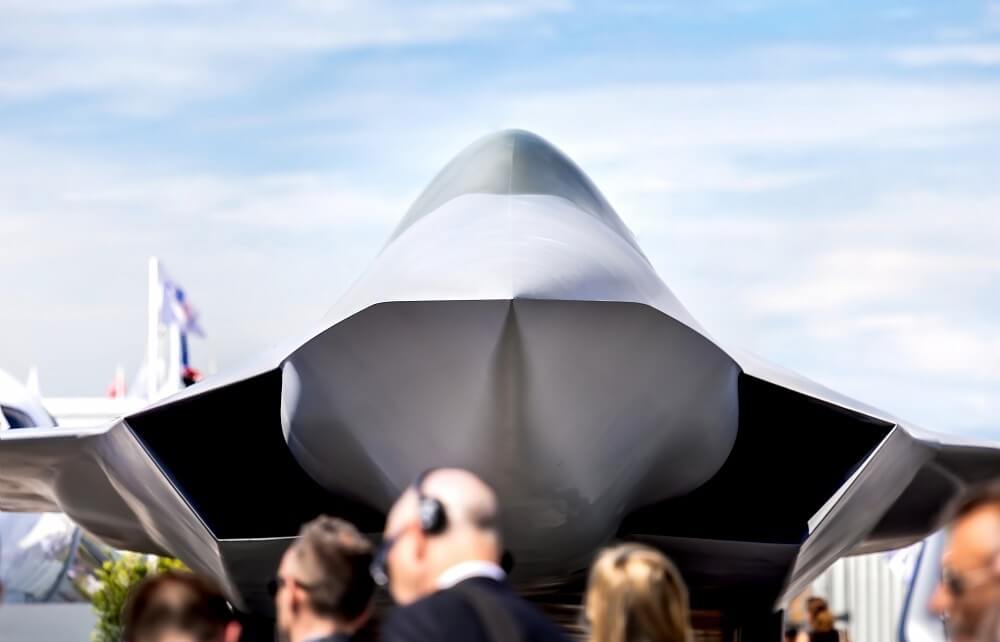
Enders open to GCAP and Saab while prioritizing drones
Enders does not dismiss German involvement in future manned fighter projects. He highlights the UK-led Global Combat Air Programme (GCAP), or Sweden’s Saab as potential partners for the next “and possibly last” generation of crewed combat aircraft.
However, Enders emphasizes that Berlin should prioritize investment in drones, autonomy, software, AI, and scalable production, citing Saab-Helsing’s recent autonomous flight tests. These capabilities, he argues, are needed well before the 2040 timeline for next-generation fighters.
Luftwaffe force-planning uncertainty now shapes FCAS dispute
Enders’ comments come days after German Chancellor Friedrich Merz publicly cast doubt on the relevance of FCAS’s fighter subprogram, the New Generation Fighter (NGF). While Merz had earlier floated the possibility of German aircraft carrying French or British nuclear weapons under a future European deterrence arrangement, he underscored diverging French and German requirements, including France’s need for a nuclear-capable, carrier-operable aircraft. He went further still, questioning whether the Luftwaffe needs a crewed sixth-generation fighter at all.
Amid the ongoing debate, current Airbus CEO Guillaume Faury has signaled openness to a “two-fighter solution” if governments request it, arguing that a deadlock on the fighter pillar should not necessarily sink the rest of FCAS. At the same time, Faury has cautioned against betting too early on a purely uncrewed solution, warning that an accelerated shift could create a capability gap for Europe.
