


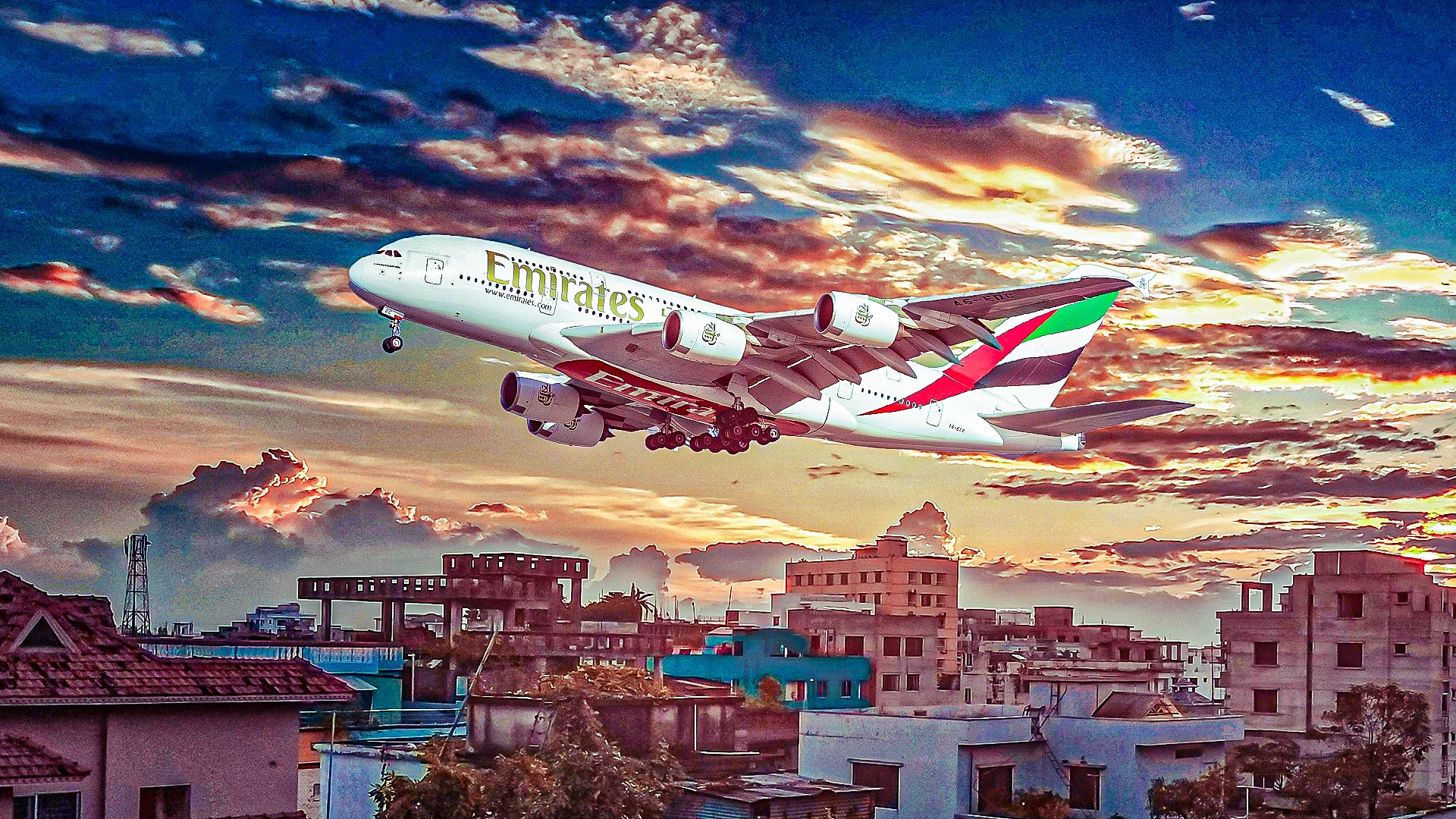
Middle-Eastern airline bohemouth,  Emirates, is planning to expand its Airbus A380 fleet from 95 aircraft today to up to 110 by the end of next year. As reported by AviationWeek, the Dubai-based carrier is already retrofitting a number of its double-deckers with upgraded premium cabins, including the introduction of Premium Economy (which already features on a number of its other aircraft).
While Airbus has stopped manufacturing the Airbus A380, Emirates remains the largest operator of the aircraft. The airline had hoped to retire a number of the A380 already; however, due to the ongoing delays for the 777X, Emirates has had to rethink its growth strategy, and now is investing heavily in keeping this iconic double-decker aircraft flying.
Emirates’ Love Affair With The A380

Tim Clark, Emirates Airline President shared that the airline plans to expand its current active A380s from 95 to 110 before the end of next year. Data from ch-aviation identifies that the airline already has 116 of these aircraft on hand; however, a number remain grounded as almost two dozen are either parked or being retrofitted with enhanced onboard cabins.
Clark didn’t shy away from the issues that some of its A380 planes will ned to have fixed, howeve,r in the absence of a suitable long-haul replacement (i.e., the 777X), the carrier has had to opt for purchasing many of its A380s from aircraft lessors, with investment made into their operational efficiency to ensure they can last for another decade, at least.
Most aircraft have a suitable lifespan, with the Airbus A380 specified for around 100,000 flight hours, or 20 years of service. Already, the carrier has had these airplanes since 2008, and will see the airline push some of these birds to at least 24 or 25 years of service.
‘Flush’ With Parts

Despite Airbus axing the A380 programme, Emirates remains ‘flush’ with parts for the A380 through teardowns from other older A380s, according to the airline’s president. The airline has been wise in ensuring that it has built up a considerable inventory of parts to ensure the continuance of the A380 remaining one of the airline’s flagship aircraft for years to come.
To keep these birds in the sky, Emirates has also polished its retrofit programme, having initially seen aircraft grounded for up to six weeks, just to be stripped on the inside, the airline has been able to push the envelope and enabled its full strip down in just 16 days. This will allow the full refurbishment of each aircraft to be completed in around 18 months from start to finish.
Due to the delays of the 777X, the airline had to veto its current new cabin design and rethink what this would do to extend the A380 lifecycle. While this has seen existing A380s be retrofitted, these will once again need to come back for an additional retrofit once new cabin designs are finalised.

Emirates is synonymous with the Airbus A380, being the world’s largest operator of the type by far. This aircraft, alongside the Boeing 777, has revolutionized the carrier’s global footprint and enabled the Dubai-based airline to connect travelers from all corners of the globe. The airline’s base, at  Dubai International Airport (DXB), is a perfect stopover for many when traveling between the likes of North America and Africa, Australia and Europe, and Asia to South America. This has seen DXB become one of the busiest airports globally for international travelers.
The capacity offered by Emirates A380 caters to all ends of the passenger spectrum. First and Business class passengers enjoy the luxury amenities, dedicated services such as chauffeur drive to onboard shower spas, whereas the latest Premium Economy class passengers can kick back with wider seats when compared to economy, complimentary amenities, plus elevated meals and drinks service. Economy class travelers can enjoy excellent in-flight service and generous legroom, on what has been described as one of the quietest aircraft in the sky.
Emirates currently operates to 143 destinations worldwide across its network, with the A380 deployed on more than 30 routes. Its most popular route with the double-decker is between Dubai and London (with Heathrow receiving six daily A380 services, while neighbouring Gatwick sees three daily double-decker flights. Additional services are also added to London Stansted, with a double daily 777-300ER service.
