

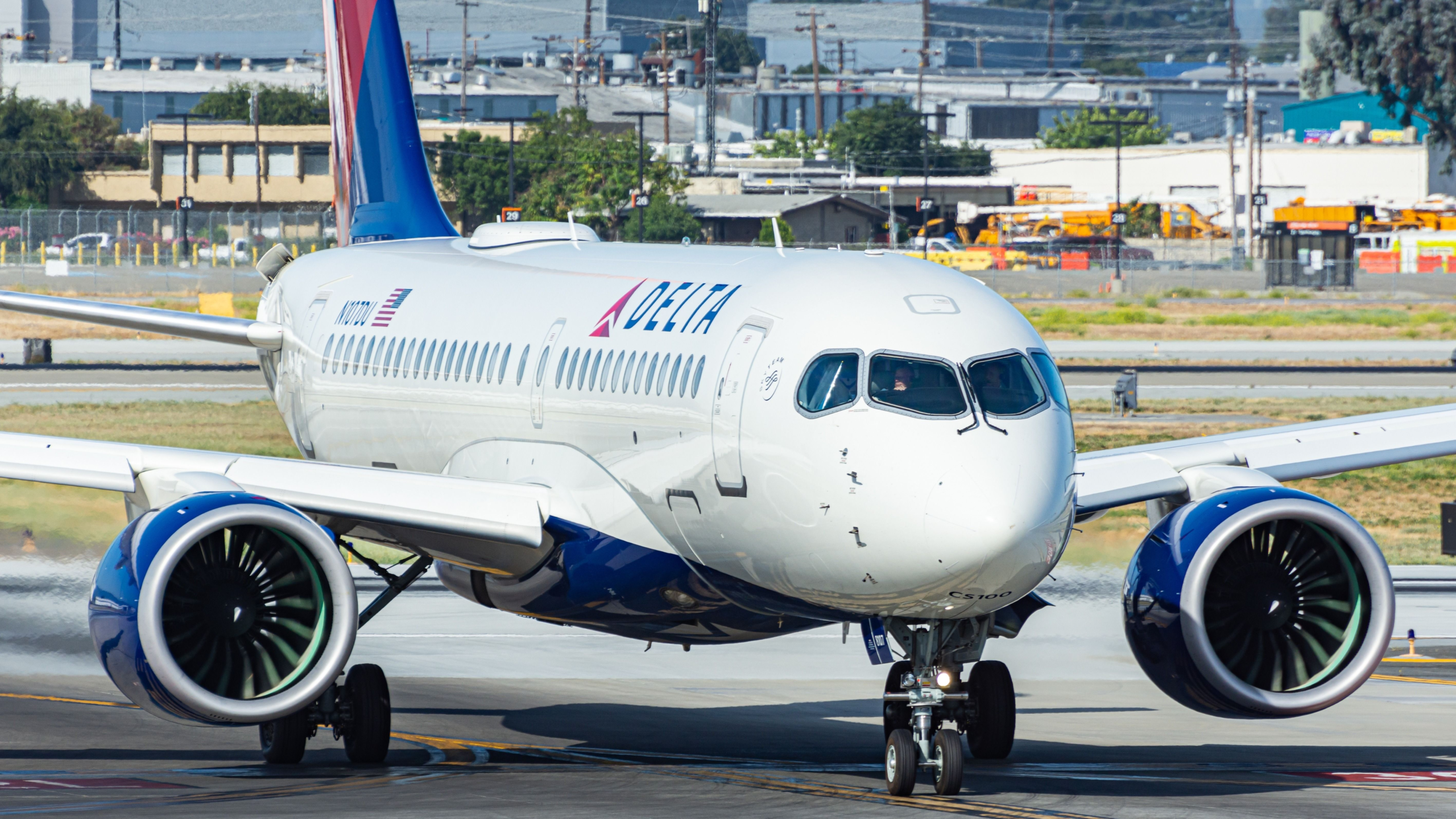
Delta Air Lines has achieved a key milestone on the sustainability front by taking delivery of Sustainable Aviation Fuel (SAF) at Portland International Airport (PDX) in the Pacific Northwest state of Oregon. The Atlanta-based US legacy carrier and  SkyTeam founding member teamed up with Shell to make this possible.
The move saw hundreds of thousands of gallons of US-made SAF delivered to Portland International, with this particular milestone marking the first commercial-scale uplift of Sustainable Aviation Fuel at the airport. Going forward, it will boost both Delta’s sustainability credentials and PDX’s ability to capitalize on SAF growth.
Portland’s First Commercial-Scale SAF Uplift

As announced in a statement released yesterday by Delta Air Lines, the carrier has teamed up with Shell to take delivery of more than 400,000 gallons of SAF into the fuel system at Portland International Airport. Made in the US from waste-derived feedstock, the SAF was subjected to complex logistical procedures.
Indeed, Delta explains that, after the neat SAF was shipped by Shell to Portland’s Zenith Terminal, it had to be “blended with traditional jet fuel to meet regulatory requirements, then delivered to PDX via barge, truck, and pipeline.” Having been blended, the SAF was then able to enter the airport’s fuel system. Charlotte Lollar, who serves as Delta Air Lines’ SAF Director, welcomed the milestone, explaining:
“Every SAF delivery is a powerful example of how industry collaboration can unlock markets for sustainable aviation fuel. By working with Shell and the Port of Portland to tap into existing infrastructure, we’re able to access SAF at more airports and continue to prove its viability and ultimately scale it in a way the industry needs.”
Delta Air Lines Is Hoping To Be Able To Grow The SAF Market In Portland

While Sustainable Aviation Fuel has widely been touted as an ideal shorter-term solution as airlines and airports around the world race to get their carbon emissions down to net-zero by 2050, one of its main shortcomings thus far has been its scalability. As such, deals such as this one between Delta Air Lines and Shell in Portland are playing an important role in ensuring that SAF is more widely available.
Indeed, the carrier explains that, as well as growing its own footprint as far as Sustainable Aviation Fuel is concerned, it will also enable Portland International Airport to “capitalize on the continued growth of SAF across the US.” On a local level, Port of Portland Chief Aviation Officer Dan Pippenger explains that the rollout of SAF will “improve local air quality and cut down on greenhouse gas emissions.”
As previously noted, Delta’s recent 400,000-gallon delivery of Sustainable Aviation Fuel in partnership with Shell marked the first commercial-scale uplift at Portland International Airport. However, the carrier doesn’t want this to be a one-off, and explains that it “is working with the Port of Portland and other key stakeholders to enable a sustained market and delivery structure for SAF at the Port of Portland.“
The Carrier Has Made Several Other Major Investments In SAF Over The Years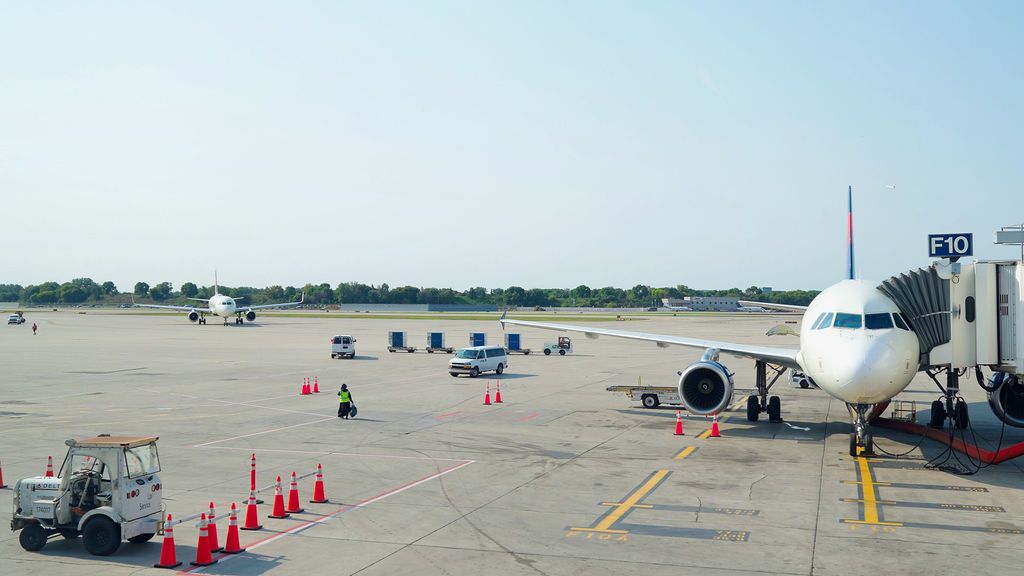
According to the International Air Transport Association ( IATA), SAF currently accounts for almost two-thirds of the overall strategy when it comes to getting the commercial aviation industry down to net-zero carbon emissions. With this in mind, key players like Delta have long been front and center with this initiative.
|
IATA’s Net Zero Strategy Breakdown |
|
|---|---|
|
Concept |
Proportion |
|
SAF |
65% |
|
Offsets and carbon capture |
19% |
|
New technology (electric and hydrogen) |
13% |
|
Infrastructure and operational efficiencies |
3% |
Indeed, as Simple Flying reported at the time, the carrier pledged to buy some 385 million gallons of SAF from DG Fuels back in September of 2022, with deliveries from this shipment expected to begin at the end of 2027. This partnership will see the airline supplied with 55 million gallons annually over a seven-year period.

More recently, Delta Air Lines has entered into partnerships with several other major US airports away from Portland in order to increase SAF supply across the nation. For instance, it signed an agreement with Los Angeles International Airport (LAX) in May of 2023, followed by Minneapolis St Paul (MSP) in September 2024.
