


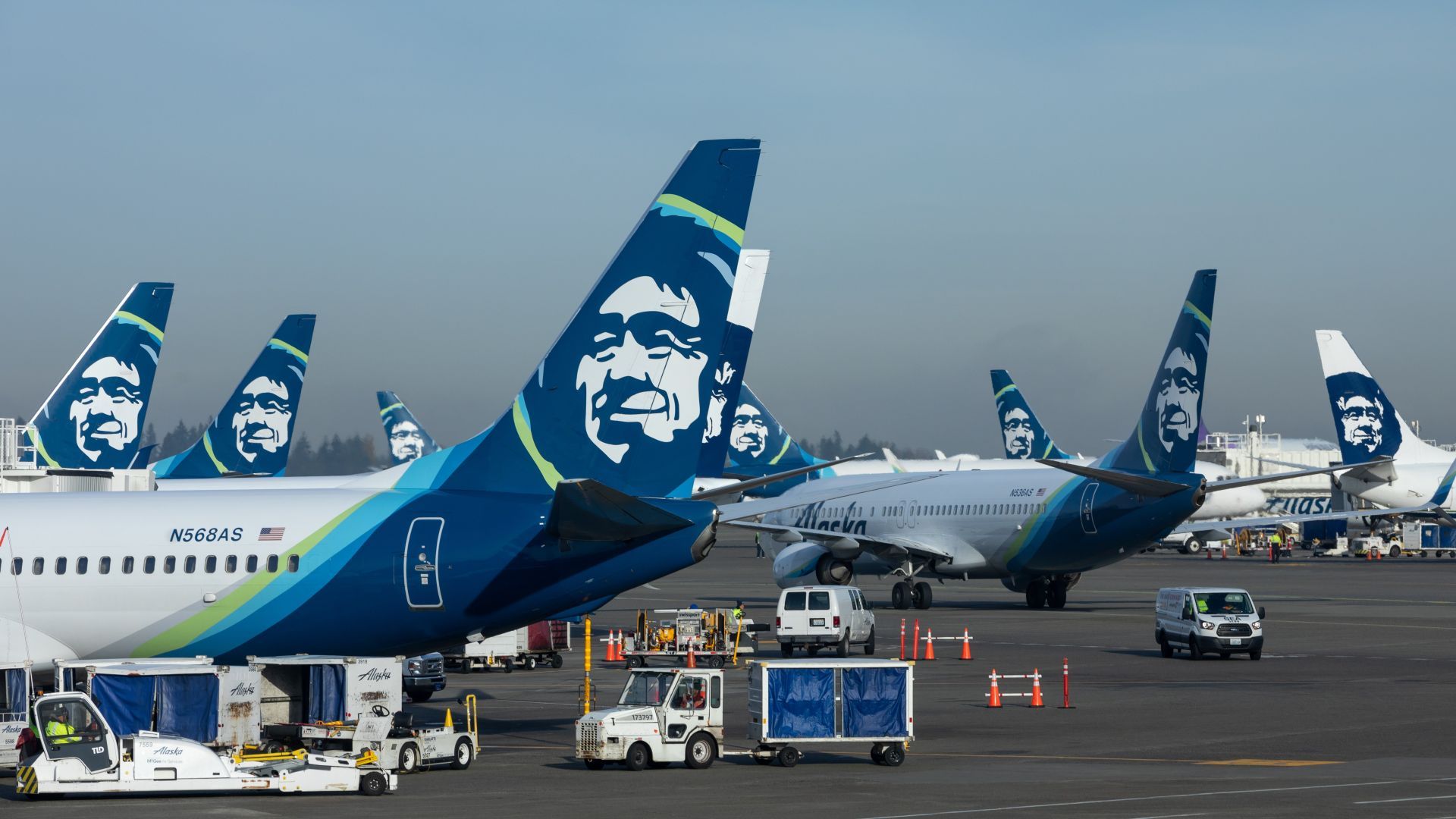
 Alaska Air Group has released a white paper calling for urgent modernization of the US air traffic control system. The paper argues that the national airspace system (NAS) is strained by decades-old hardware, disjointed technology, staff shortages, and procedural constraints. Without major investment, Alaska warns that airlines, travelers, and national competitiveness will suffer.
According to Alaska, many components of ATC are “well past their useful life,” and modernization efforts over the past several decades have not kept up with industry needs. Aircraft technology, route structures, and navigation capabilities have advanced far more rapidly than control towers, radar systems, and automation software. The airline group frames this not as a competitive issue, but as a national infrastructure imperative.
The State Of The US Air Traffic Control System

Alaska describes the US ATC system as “a marvel” in scope, safety, and scale, but one under severe stress. It argues that aviation has outpaced the system’s technological capabilities. Many radar, communications, automation, and procedural systems are outdated, lack interoperability, or are incompatible with newer navigation systems.
The paper points to persistent inefficiencies in the NAS, such as delays, long taxi times, route deviations, and suboptimal use of airspace. Alaska argues that these problems are symptoms of a system that cannot fully exploit aircraft performance, new navigation methods, or trajectory-based operations. In some cases, flight times between US cities are longer now than they were decades ago, despite improved aircraft capabilities.
Aalska believes that improvements must be made in multiple fields to avoid bottlenecks. Otherwise, the source of the delays and challenges will simply originate from another area, and there will be minimal meaningful changes. Alaska is calling on the FAA to invest significantly to improve airspace infrastructure.
Current Challenges With The US Airspace System

One of the central issues is obsolescence. Alaska notes that many ATC systems remain in service well past their design life, often relying on legacy hardware, proprietary software, or even physical media (such as paper strips). Because these systems were not designed for modern traffic volume, they’re often overstressed and unable to accommodate more flights.
Workforce shortages compound the problem. The white paper points out that staffing gaps create erratic traffic flows, forced holds, and delays. Controllers often face high loads, outdated tools, and aging human–machine interfaces. Without more trained personnel and better tools, new automation or system upgrades cannot succeed at scale.
Much of the US ATC system was designed before the era of GPS or modern jet-powered airliners. Some of the physical components, such as wires connecting radars to air traffic control facilities, can be decades old, as was the case at  Newark Liberty International Airport until recently. As a whole, it’s about airspace design, technology, and staffing, all contributing to a system that is falling apart.
The Impact Of This Inefficiency

From an airline perspective, the costs of ATC inefficiency compound rapidly. Delays, fuel burn from holding or unnecessary detours, and penalties from schedule disruptions all erode margin. Alaska argues that modernization would allow more predictable operations and more efficient routings. Alaska is not the only airline pointing out flaws with US airspace infrastructure either, as  Delta Air LinesCEO Ed Bastian claimed that flights today take longer than they did 75 years ago in the summer.
Passengers currently experience the pain points directly: longer gate waits, holding patterns, late arrivals, missed connections, and uncertainty. As airlines optimize load factors and schedules more tightly, the margin for ATC-driven delay shrinks. The white paper frames modernization as a win for traveler reliability, predictability, and cost.
|
ATC Tower Positions |
ATC Center Positions |
|---|---|
|
Clearance Delivery |
Departure |
|
Ground |
Center |
|
Tower |
Approach |
Not only does this lead to efficiency issues, but this can also be dangerous. Aging wiring connecting approach controllers for Newark Airport to their radar feed led to numerous “blackouts” for controllers. Furthermore, it is believed that airspace design and an understaffed control tower contributed to the January midair collision between an American Eagle CRJ700 and a US Army Blackhawk at Washington-National.
