


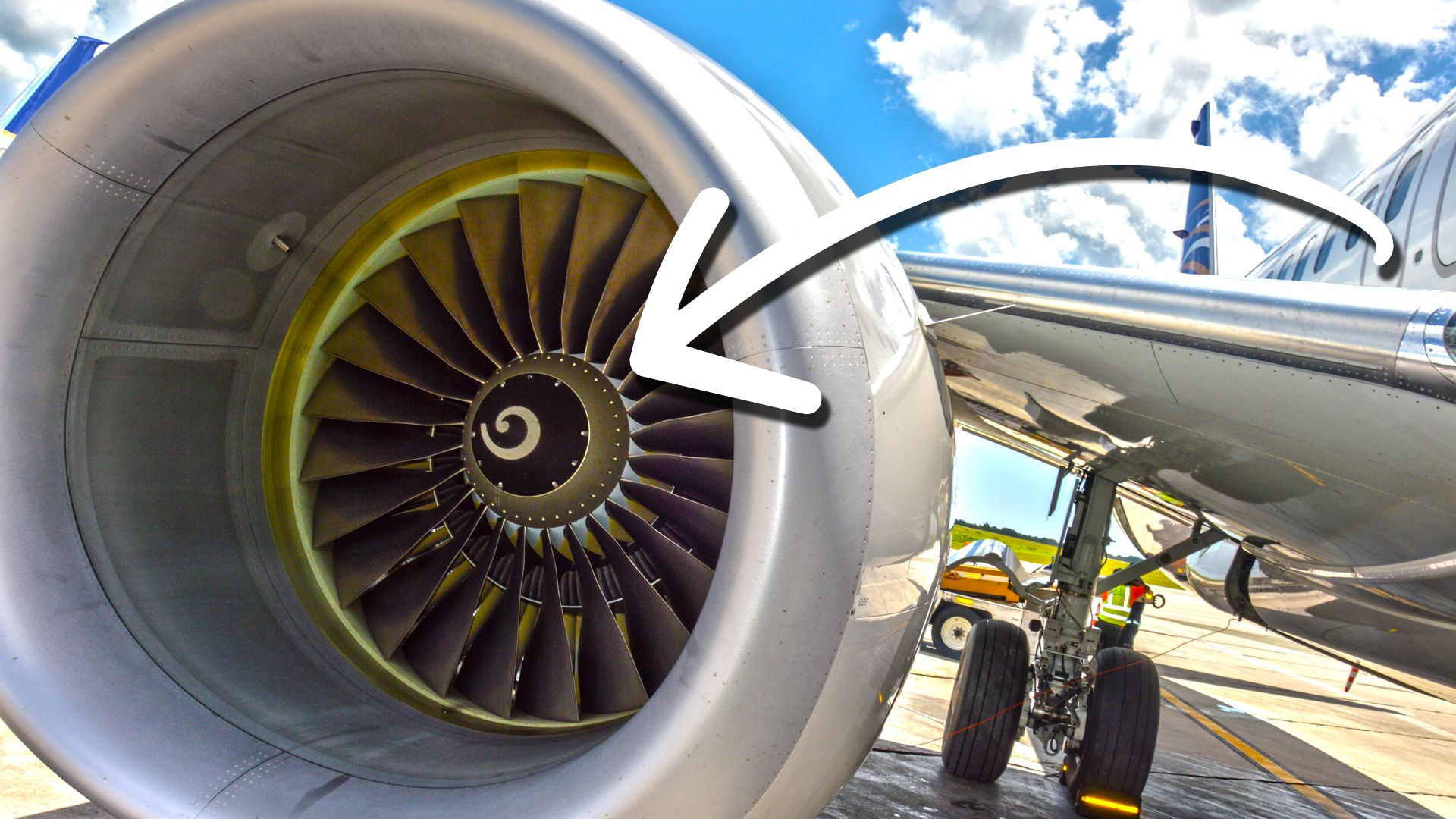
CFM International is one of the largest aircraft manufacturers in the world. This company was developed as a joint venture between General Electric Aerospace and Safran Aircraft Engines, formerly known as Snecma. The joint venture is currently headquartered in Cincinnati, Ohio. Since it was founded in 1974, CFM International has delivered more than 37,500 engines to more than 570 operators around the world. Currently, it owns a nearly 40% market share in the industry, making it the world’s largest commercial aircraft engine manufacturer.
The most important engine that CFM International has produced is called the CFM56. This aircraft has shaped modern aviation and is currently the most produced commercial jet engine of all time. This engine was initially developed by Scecma in the 1960s. However, it lacked the experience to develop high-pressure turbines. Because of this, the company entered into a joint venture with General Electric, which helped to finalize the development of the powerful CFM56. Let’s take a closer look at the history and design features of this engine, as well as how it has changed the commercial aviation industry over the years.
The Origins Of The CFM International CFM56

In the late 1960s, the next generation of commercial jet engines was being developed. Scecma, now known as Safran, had previously built military engines. However, the company aimed to join the commercial aviation industry, specifically by developing a new engine to power these advanced aircraft in development.
By the mid-1960s, Snecma had already begun development on the M56 engine, conducting various studies to determine the main characteristics of the new engine. However, at the time, the company lacked experience in the development of high-pressure turbines. Because of this, the company began seeking partnerships with various manufacturers around the world, considering Pratt & Whitney, Rolls-Royce, and GE Aviation.
Snecma already had previous experience working with GE, collaborating on the production of the CF6-50 for the Airbus A300. Additionally, Pratt & Whitney was already considering upgrading the JT8D to compete in the same class as the M56 as a sole venture, and Rolls-Royce was dealing with financial issues. Because of this, GE Aviation was the obvious choice, and Snecma and GE entered into a joint venture in 1974.
The Early Years Of The CFM International CFM56

The development of the CFM56 began long before the formation of CFM International. However, after the joint venture was formed, the development of the engine was split evenly between the two companies. GE was responsible for developing the high-pressure compressor, the combustor, and the high-pressure turbine. Snecma, on the other hand, was responsible for developing the fan, the low-pressure compressor, and the low-pressure turbine. Snecma also conducted most of the airframe integration, including the development of the nacelles.
The first built CFM56 engine conducted its first test run in June 1974. By the end of the year, CFM International had developed a second test engine. However, the first engine to fly on an aircraft occurred in February 1977 when the CFM56 replaced one of the four Pratt & Whitney JT8D engines on a McDonnell Douglas YC-15. Another engine was mounted on a Sud Aviation Caravelle to conduct flight tests at the Snecma facility in France.
The aircraft was originally built as an entry into the US Air Force’s Advanced Medium STOL Transport (AMST) competition. However, in the late 1970s, CFM International began searching for other customers, targeting re-engining contracts for the Douglas DC-8 and the Boeing 707, along with the KC-135 Stratotanker. Boeing eventually signed the CFM56 to a re-engine contract with the KC-135, a major boost to the program.
The Recent Developments Of The CFM International CFM56

Securing this contract with Boeing helped CFM International become globally recognized. The KC-135 re-engine project was successful, decreasing takeoff distance by 3,500 feet and decreasing overall fuel usage by 25%. Because of this, the US Navy selected the CFM56 to power the E-6 Mercury, and the Royal Saudi Air Force selected the CFM56 to power the E-3 Sentry.
Additionally, in the 1970s,  United Airlines chose the CFM56 as a replacement engine on 30 of its Douglas DC-8 aircraft.
  Delta Air Lines and Flying Tiger Line also followed suit. However, in the early 1980s, the CFM56 officially broke into the commercial aviation industry. Boeing selected the CFM56 to exclusively power the Boeing 737-300. In total, over 5,000 Boeing 737s have been delivered with CFM56 turbofan engines.
The CFM56 has evolved over the years, with CFM International introducing several upgrades to ensure it stayed relevant in modern commercial aviation. Later CFM56 variants powered the Airbus A320 family and also the Boeing 737 Next Generation (NG) family in the late 1990s. Overall, the following commercial aircraft have utilized the CFM56:
|
Aircraft Type |
CFM56 Variant |
|---|---|
|
Boeing 737 Classic |
CFM56-3 series |
|
Boeing 737 NG |
CFM56-7B |
|
Airbus A318 |
CFM56-5 series |
|
Airbus A319/A320/A321 |
CFM56-5 series |
|
Airbus A340 |
CFM56-5C |
|
McDonnell Douglas DC-8 |
CFM56-2 |
The CFM56 has played a critical role in the development of the single-aisle commercial market. Overall, over 30,000 units have been delivered, powering a wide variety of aircraft. Even after the introduction of its successor, the CFM International LEAP, the CFM56 remained in high demand. Many global airlines operate large fleets of Boeing 737 NGs and Airbus A320ceos that utilize the CFM56. Additionally, its reliability and availability of spare parts have made it attractive on the used market, especially in emerging regions and cargo operations.
The Design Features And Performance Specifications Of The CFM International CFM56

Overall, the CFI International CFM56 is a high-bypass turbofan engine. This engine is critical to the short and medium-haul commercial markets, specifically due to its fuel efficiency, performance, and reliability. The engine uses two separate rotating assemblies: a low-pressure spool and a high-pressure spool, each of which is driven by its own turbine stage.
The fan of the engine, which has a diameter of 60–68 inches, is located at the front of the engine. This enables a bypass ratio, the ratio of air that bypasses the engine compared to the air that goes through the engine, of around 5:1 or 6:1. This allows for quieter operations and improved fuel burn without compromising on size.
One of the revolutionary design features of the CFM56 is its modular construction. This allows the various modules, the fan, low-pressure compressor, high-pressure compressor, combustor, high-pressure turbine, and low-pressure turbine, to be easily replaced. In general, the CFM56 was not the most powerful engine of its era, but its unique design enabled the aircraft to be one of the most reliable and widely adopted engines in aviation history.
Airbus Aircraft That Utilize The CFM International CFM56

Airbus was an early adopter of utilizing the CFM56 engine. In the late 1980s, Airbus chose the CFM56, alongside the IAE V2500 engine, to power the A320. This series is now referred to as the A320ceo (Current Engine Option), as Airbus has since offered different engines on newer variants of the family.
Originally, Airbus selected the CFM56-5A to power the Airbus A320. However, it later upgraded this option to the CFM56-5B, which offered a higher thrust and improved fuel efficiency. This engine was later certified on all four members of the A320ceo family, the A318, A319, A320, and A321. This helps the aircraft achieve the following performance specifications:
|
Specification |
A318 |
A319 |
A320 |
A321 |
|---|---|---|---|---|
|
MTOW |
150,000 pounds |
166,000 pounds |
172,000 pounds |
206,000 pounds |
|
Fuel Capacity |
6,400 gallons |
7,980 gallons |
7,200 gallons |
7,930 gallons |
|
Cruise Speed |
447 knots (515 miles per hour) |
447 knots (515 miles per hour) |
447 knots (515 miles per hour) |
447 knots (515 miles per hour) |
|
Maximum speed |
470 knots (541 miles per hour) |
470 knots (541 miles per hour) |
470 knots (541 miles per hour) |
470 knots (541 miles per hour) |
|
Range |
3,100 nautical miles |
4,320 nautical miles |
3,860 nautical miles |
3,200 nautical miles |
Additionally, Airbus chose the CFM56 to power one of its widebody aircraft, the Airbus A340. These aircraft are powered by four CFM56-5Cs, each of which provides the aircraft with up to 34,000 pounds of thrust. The A340 was later phased out in favor of twin-engine airliners, gaining ETOPS certification and rising fuel prices. Even so, the A340 program demonstrated the versatility of the CFM56.
Boeing Aircraft That Utilize The CFM International CFM56

 Boeing was the first commercial manufacturer to adopt the CFM56. Boeing’s decision to adopt the CFM56-3 for its 737 Classic family in the early 1980s marked a crucial turning point. CFM International redesigned the fan and flattened the nacelle’s lower section to accommodate the 737’s lower fuselage.
The CFM56 continued to power Boeing 737 aircraft in the late 1990s with the introduction of the Boeing 737 NG series. All of these aircraft were powered by the CFM56-7B, which offered improved cooling and more advanced digital engine controls (FADEC). The 737NG became a massive commercial success, and the CFM56-7B went on to become the most widely produced engine variant in the CFM56 family. This engine helped the aircraft achieve the following performance specifications:
|
Specification |
737-600 |
737-700 |
737-800 |
737-900 |
|---|---|---|---|---|
|
MTOW |
144,500 pounds |
154,500 pounds |
174,200 pounds |
187,700 pounds |
|
Fuel Capacity |
6,875 gallons |
7,837 gallons |
6,875 gallons |
7,837 gallons |
|
Cruise Speed |
450 knots (517 miles per hour) |
447 knots (514 miles per hour) |
454 knots (522 miles per hour) |
453 knots (521 miles per hour) |
|
Maximum speed |
470 knots (541 miles per hour) |
470 knots (541 miles per hour) |
470 knots (541 miles per hour) |
470 knots (541 miles per hour) |
|
Range |
3,050 nautical miles |
3,365 nautical miles |
3,115 nautical miles |
3,200 nautical miles |
The CFM56 was also utilized on several military variants of Boeing aircraft. This includes the KC-135 Stratotanker, the E-3 Sentry, the RC-135 reconnaissance aircraft, the E-6 Mercury, and the P-8 Poseidon. The CFM56’s integration into Boeing platforms helped both companies achieve historic levels of production and global reach. As new engines slowly begin to replace the CFM56 engine across multiple platforms, the legacy of the CFM56 remains, as it is the most-produced commercial jet engine of all time.

- Business Type
-
Engine Maker
- Date Founded
-
September 24, 1974
- CEO
-
Gaël Méheust
- Headquarters Location
-
Cincinnati, United States
