


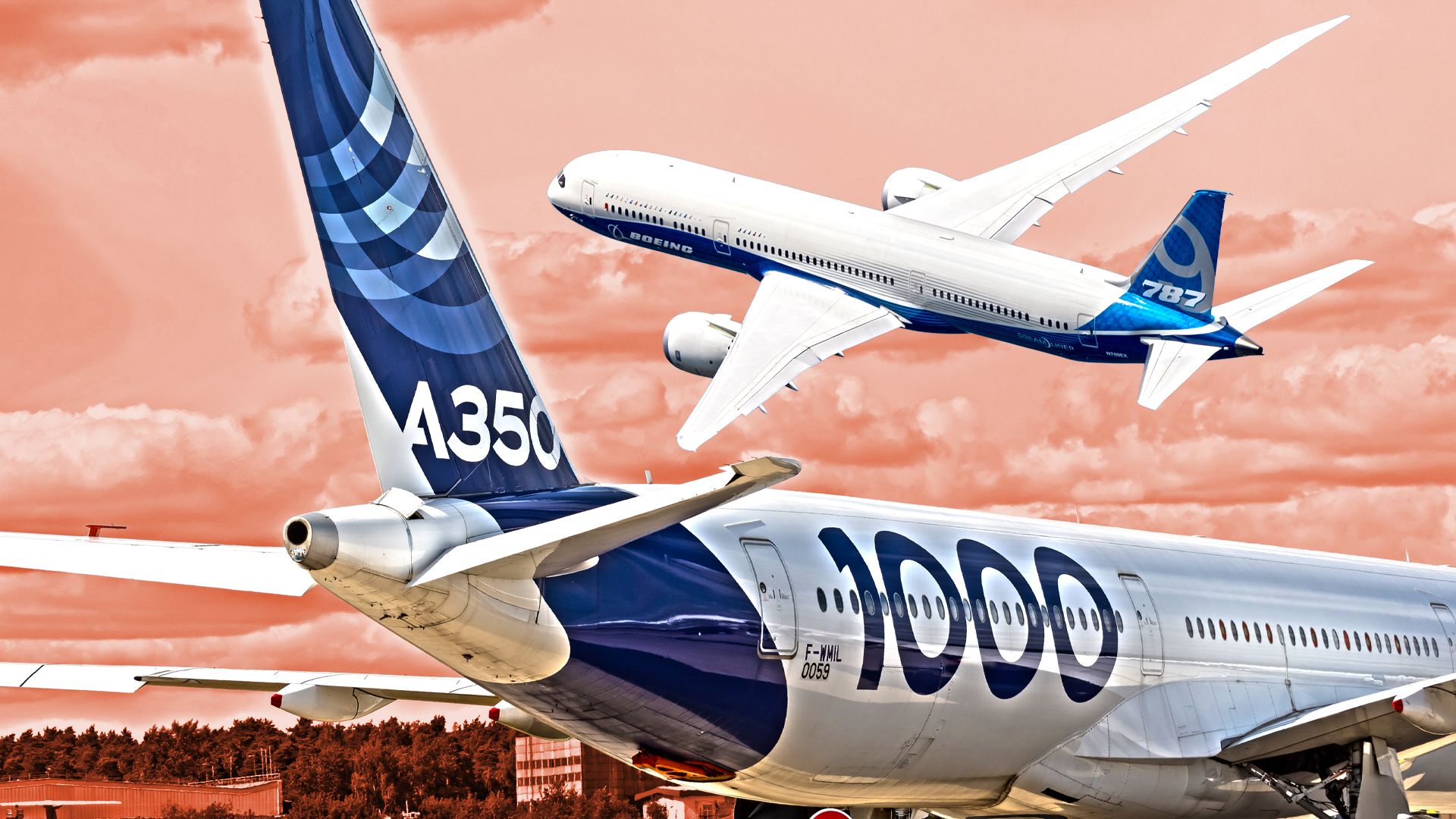
The age of iconic jumbo jets may be over. Boeing 747s are getting retired all the time, and A380s appear headed in the same direction, other than the efforts of Middle Eastern airlines. Yet, there is still plenty for avgeeks to get their teeth into regarding the current and next generations of widebody aircraft. For Boeing, this includes the 787 Dreamliner and 777X. Airbus fans look to the A330neo and A350. Both jets have their own strengths and weaknesses. Airbus offers extremely long-range products that are perfect for niche markets, while the Dreamliner is an ideal workhorse for high-capacity routes under seven hours in length.
In this article, we weigh in on the debate about which manufacturer has enjoyed 2025 more in terms of their widebody fleets. Alongside comparing their flagships, we also look at issues with the 777X, the last gasp of the jumbos and their comparative safety records. However, the metric that the manufacturers will be most concerned with is how commercially successful their widebody jets have been. Boeing appears to lead the way, surpassing Airbus in both widebody orders and deliveries. How much of these successes will be offset by mounting 777X costs remains to be seen.
A350-1000 vs 787-10

The first major point of comparison is between the flagship widebodies currently in production for both manufacturers: the Boeing 787 and Airbus A350. The A350 is notable for its substantially larger size, with a five-foot wider fuselage and 18 feet longer fuselage when comparing the A350-1000 and 787-10. The size means that the A350 is certified for ten abreast seating. However, most carriers operating the aircraft opt for a more spacious nine abreast seating.
The table below breaks down the specification differences between these flagship widebody airliners’ comparable variants, the 787-10 and A350-1000:
|
Characteristics |
Airbus A350-1000 |
Boeing 787-10 |
|---|---|---|
|
Seating, 2-class |
400+ in 3-class |
336+ in 2-class |
|
Wingspan |
64.75 m / 212 ft 5 in |
60.12 m / 197 ft 3 in |
|
Fuel capacity |
43,325 US gal 164,000 liters) |
36,384 US gal (126,372 liters) |
|
Cargo capacity |
44 LD3 or 14 pallets |
40 LD3 or 13 (96×125) pallets |
|
Range |
Up to 8,700 NM |
Up to 6,330 NM |
|
MTOW |
351.6 tons (319 tonnes) |
280 tons (254 tonnes) |
|
Service ceiling |
41,450 ft (12,630 m) |
43,000 ft (13,100 m) |
|
Engines (2×) |
Rolls-Royce Trent XWB |
General Electric GEnx-1B / Rolls-Royce Trent 1000 |
|
Maximum thrust |
431.5 kN / 97,000 lbf |
76,000 lbf (340 kN) |
The A350 also dominates with a range more than 2,000 miles longer than the 787. The gap is even broader for when we look at the A350-900ULR flown by Singapore Airlines, which currently operates the world’s longest routes. However, such an extreme range covers niche requirements. Many airlines flying routes shorter than seven hours, where the A350’s superior efficiency doesn’t have time to take effect, enjoy better economics flying the 787.
777X Delays Are A Serious Threat To Boeing’s Widebody Competitiveness

In terms of reputation, Airbus’ widebody aircraft are doing substantially better. That is because of the omnishambles that have faced the much-delayed 777X. Originally planned to enter into service in 2020, the enormous twin-jet widebody is yet to be delivered. Further delays this year, an announcement that the first delivery will now be in 2027, have cost an estimated $5 billion, raising the charges incurred by Boeing to $15 billion.
The table below details the state of the Boeing 777X order sheet, detailing the three variants currently marketed to customers:
|
777X Variant |
Order Backlog |
|---|---|
|
-8 |
43 |
|
-9 |
463 |
|
-8F |
59 |
The delays are causing disgruntlement among Boeing’s customers for this aircraft, including Emirates, who have ordered over 200. Emirates President Tim Clark was said to be “miffed” in an Aviation Week article. He said: “I was with them recently, in New York, and before that in Seattle. There was never any hint that they would make an official pronouncement that 2027 was to be the delivery year.”
If Boeing can pull off the vast number of deliveries, they are set for an enormous payday. The collapse of the 777X will make the program one of the most spectacular and costly failures in aviation history.
Battle Of The Jumbos Still In Service

The A380 is a more modern airliner, quieter, more efficient and with a longer range than the 747. It also has a wider cabin with a higher ceiling, elevating passenger comfort. It has been suggested by some crew members that the A380 is too quiet to get proper sleep.
A mark against the Boeing 747 is that they have gone out of passenger service at a significantly faster rate than the A380, mostly owing to the fact that all variants other than the 747-8i are older. Only four passenger 747 operators remain: Air China, Korean Air, Lufthansa and Rossiya Airlines. Meanwhile, there are ten A380 operators. The final A380s will likely be those owned by Emirates, 116 jets, which are set to continue flying until 2040. Meanwhile, the largest 747 fleet, Lufthansa, will fly until at least 2030, but is highly unlikely to make it to 2040.
The debate rages on among avgeeks. Simple Flying’s Jake Hardiman asked our readers which they prefer in a thread earlier this year. The conclusion to take from that conversation is that it is all down to personal preference, as shown by Paul_Hartley’s reply. He said: “I’ll take the 747 simply because it brings back so many memories with so many airlines to so many destinations when I was younger. I’d probably pick the A340 over the A380 for the same reason, especially the -600.”
Airbus And Boeing Widebody Safety Incidents In 2025

Boeing’s widebody fleet has sadly come off the worst in terms of safety incidents in 2025. Meanwhile, Airbus has not had any major safety incidents across its widebody fleet. It has suffered two widebody hull losses in 2025. The first was Air India Flight 171, which crashed on June 12, killing 241 onboard and 19 on the ground. However, this incident appears to have been caused by factors other than problems with the Boeing 787 itself, although only a preliminary report is available at this time. The report suggested that Air India had not performed inspections on the fuel switches that caused the problem, as they were not mandatory.
The second Boeing widebody hull loss was Emirates SkyCargo Flight 9788. This cargo flight, involving a Boeing 747-400, came off the runway at Hong Kong International Airport. It then collided with a ground vehicle, killing two airport staff members. The aircraft’s four occupants survived. However, the 747, eventually coming to rest in the sea, was written off.
A non-hull loss Dreamliner incident also stands out. A United Airlines aircraft dropped rapidly while flying from Lagos to Washington Dulles on January 24. During the drop, the aircraft had a vertical speed of -1600 ft per minute and 38 of those onboard were injured. This incident was caused by problems with the aircraft. The NTSB’s preliminary report found that there was “a left inertial reference unit (IRU) failure.” The aircraft had to be grounded for a week while the problem was dealt with.
Boeing Has Secured More Orders And Achieved More Deliveries

Most of the factors discussed in this article point towards Airbus as having had the stronger year. However, it cannot keep up with Boeing’s orders received and its recovery deliveries achieved. At the end of August, the carrier had 725 gross orders for the year. It had delivered 64 widebody aircraft from the start of 2025 to July. Most of the new orders were for the Boeing 737 MAX and 787 Dreamliner, and the deliveries were of the Dreamliner, 767-300F and 777F. Meanwhile, Airbus delivered 32 widebody aircraft from the start of 2025 to July. The carrier also had 434 gross orders up to August 2025.
Airbus received firm orders for 71 A330neo and 94 A350 up to July 2025. Boeing’s widebody order sheet is substantially more impressive, primarily due to the 242 firm orders for Boeing 787 Dreamliners it had received by the end of July 2025. The manufacturer also boasted firm orders for 70 Boeing 777X and 13 Boeing 777F by this point in the year.
The reduced production of Airbus aircraft indicates a focus on narrowbody aircraft, as the manufacturer delivered 300 aircraft in total during the first six months of 2025. It has also indicated that it is facing supply chain issues that could last three years. The numbers appear to show that Boeing is turning a corner from extensive production issues in recent years, and hopes it can carry this moment into the 777X program once that aircraft is certified.
