




By Bjorn Fehrm
April 10, 2026, ©. Leeham News: We have started a series of articles on the Blended Wing Body (BWB) as a potentially more efficient design for passenger-carrying airliners than the classical Tube-And-Wing (TAW) configuration.
In last week’s article, we discussed how the wingspan is an important factor in an airliner’s takeoff performance. The induced drag is about 85-90% of the drag at the critical V2 point after rotation, where regulations require that a twin-engined airliner be able to fly on one engine with a climb rate of 2.4%.
We now go through the entire mission for a BWB airliner and compare its drag characteristics with those of a classical Tube-And-Wing (TAW) design.
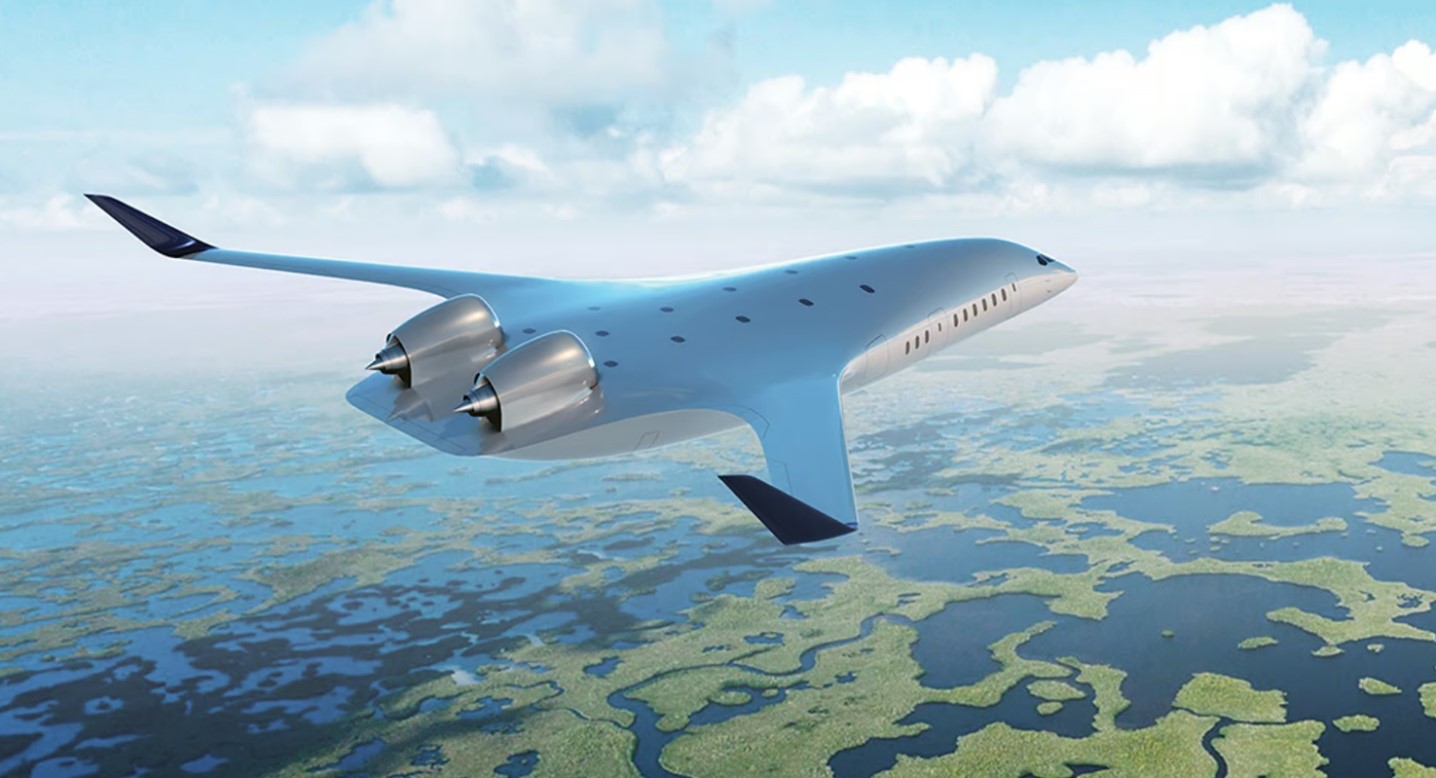
Figure 1. The JetZero Z4 BWB. Source: JetZero.
Flying a Mission with a BWB versus a TAW airliner
JetZero uses the Boeing 767-200ER as a comparison to their Z4 BWB airliner. This is an apples-and-oranges comparison as we compare a 45-year-old design with a future one. JetZero uses this because the 767-200ER and the Z4 are about the same weight. However, the -200ER’s passenger count is well below the 250-seat proposal by JetZero. Even using the more popular 767-300ER is apples-and-oranges. They are also not the same size (the 767-300ER is a 365-seater at the Z4 comfort standard, with a useful LD2 container capacity) or range (6,000nm versus 5,000nm).
We will instead compare a 250-seat BWB with an equally modern 250-seat TAW, both with a range of 5,000nm. We also assume composite primary structures for both and up-to-date aerodynamics. For the BWB, we use the Z4, but now we compare it to an NMA (Figure 2), a type that LNA has analyzed with its Aircraft Performance and Cost Model (APCM) several times over the years.
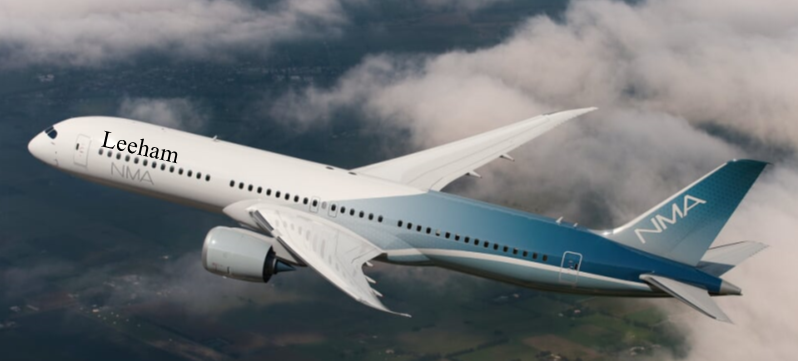 Figure 2. The NMA conceptual 250-seat airliner. Source: Leeham Co.
The NMA, when worked on by Boeing, had a shorter model at 225 seats and a range of 5,000nm, and a larger model at 265 seats with a range of 4,500nm. We now use the APCM to adapt the larger NMA to a 250-seater with a 5,000nm range. The NMA was a seven-abreast economy design, like the 767, but skipped the large cargo hold with LD2s in favor of one row of LD3-45 containers.
With a fuselage with less surface area than the 767’s, and modern structure and aerodynamics, the NMA and the Z4 have about the same passenger capacity and range, and about the same empty weight. Both require an engine with over 40,000 lbf of static thrust. It’s the thrust class that JetZero says the Z4 needs, but it needs an engine with special characteristics. We now look at why.
The Drag Characteristics of a BWB versus a TAW
We will limit the discussion to the drag characteristics of the two airframe types, as these differences will have consequences for the design of a BWB.
When an airframer designs an airliner, the design adapts the airframe characteristics and the engine characteristics to each other. The link between the airframe drag and the engine’s thrust characteristics is stronger than is apparent from the base data.
Let’s examine the typical drag characteristics of our airframes and then match engines to them:
Takeoff
We looked into the takeoff last week. Both airframes have a dominant induced drag component, with other drag components at around 10-15%. The BWB has a greater wingspan, at 55m, than the NMA’s 46 m (to enable 5m folding wingtips to fit in a 36m gate).
Both require engines of 40,000lbf based on OEI (One Engine Inoperative) at the V2 point. The BWB has a rotation problem due to its low nose-up capability from the elevons and the trim elevator (short moment arms), but we don’t delve into that here.
Climb to Top Of Climb (TOC)
The desired TOC point differs between the designs. The TAW has a cruise optimum between 30,000 ft and 40,000 ft, with the TOC and thus the first cruise part in the low 30,000 ft range. The BWB needs to reach 40,000ft TOC or higher to cruise at optimal efficiency (see below).
Cruise
The cruise shall be made at the lowest possible total drag. We learned last week that parasitic drag (which is primarily air-friction drag) shall be at the same level as induced drag (Figure 3).

Figure 3. The drag of aircraft. Source: Wikipedia.
The NMA TWA reaches this between 33,000ft and 39,000ft, depending on mission range, fuel, and payload (the lighter the aircraft, the higher the cruise altitude). The cruise starts at the Top Of Climb (TOC) point, then steps up 2,000ft once fuel has been burned off to achieve an optimal higher cruise level. For a full 5,000nm flight, we talk four to five step-ups to a final Flight Level of 39,000ft.
The BWB, due to its very dominant parasitic drag, about 2/3 of total drag between 30,000ft and 40,000ft, needs to initiate the cruise above 40,000ft, where the parasitic drag has declined below 60% of total drag. If the cruise is done below 40,000ft, the BWB has a higher total drag, which means it consumes more fuel than the NMA.
Descent from Top Of Descent (TOD)
This is ideally done at flight idle and at cruise Mach. It’s not a significant phase in terms of efficiency, as fuel consumption compared to mission fuel consumption is very low.
Approach and Landing
Both designs have about the same total drag, with the BWB’s drag more skewed toward parasitic drag. You want high drag in the approach and landing, which the TAW achieves with deployed flaps; the BWB might need to deploy spoilers/air brakes to achieve the same effect.
Conclusion
The present airliners and their engines are adapted to each other’s characteristics. The BWB’s different drag characteristics mean it can only achieve efficiency gains if it flies around 10,000ft higher than a TAW design. This requires a different engine design. We detail how in the next Corner.
Related
