


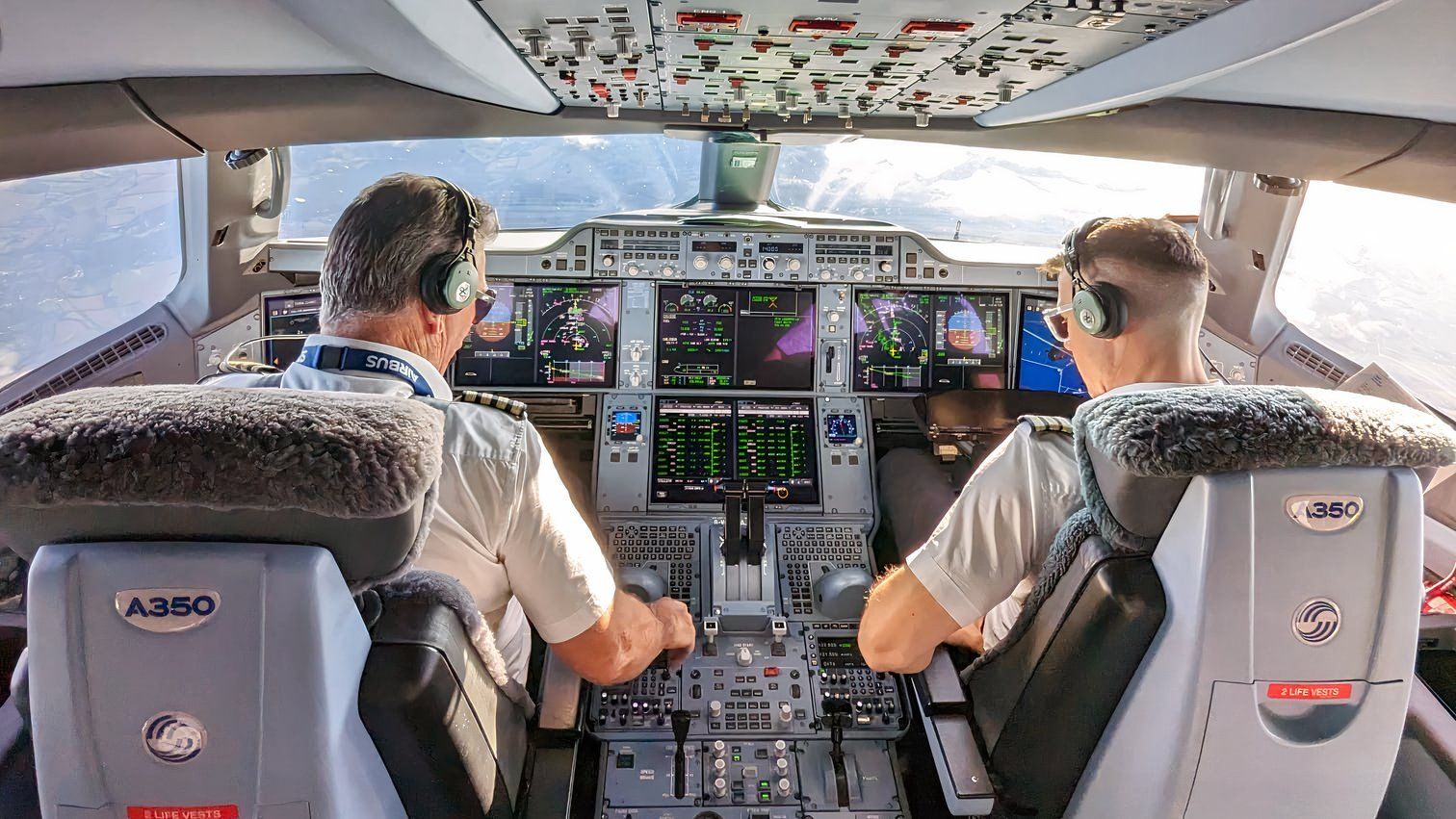
“How do I become a Pilot?” If I had a dollar for every time someone said that to me, I’d have enough money to buy my own plane. That sentence is almost always followed by a “but”, and the “buts” are usually financial, family-related, or simply circumstantial. People see me on social media, sitting in the cockpit of a multimillion-dollar airliner, wearing the uniform, and living what they imagine to be a glamorous, jet-set lifestyle. They assume “He must come from a rich family” or “He was just lucky.”
The truth? I don’t come from a wealthy background. Earning my licenses and building a career as a pilot required enormous sacrifice, years of persistence, and unwavering determination. As for luck, I live by the quote: “The more I practice, the luckier I get.”
The harder I’ve worked, the more opportunities have come my way. So, if you’ve ever said, “I always wanted to become a pilot,” or you’re seriously considering it, here’s your guide.
The Two Main Routes to Becoming a Commercial Pilot
There are two primary routes to becoming a commercial pilot: the Integrated and Modular routes. Both lead to the same commercial pilot license and qualifications. The difference lies in how you get there, speed, flexibility, cost management, and how well each fits your life.
Integrated Training

This is a full-time, all-in-one program offered by an Approved Training Organization (ATO or FTO). It takes you from zero flight hours through ground school, flight training, instrument, and multi-engine ratings, all under one structured syllabus.
Courses typically run between 9 months (in the U.S.) to 18 months elsewhere. I like to call these the “Zero to Hero” programs. Integrated courses require a substantial upfront payment or secured financing, either as a lump sum or through installments.
Modular Training

The modular route is more of a pay-as-you-go approach. You complete your training in separate modules — for example: PPL → Hour Building → Instrument Rating → CPL → Multi-Engine. You can mix providers, take breaks, and spread your studies across time, designing your own schedule around work, family, or other commitments.
This route typically takes 18 to 24 months, though it can be completed faster if done in concentrated phases. Modular training can cost up to 50% less than Integrated programs because you can select cost-effective providers, complete home study, and manage your own progression. However, it demands a high degree of self-discipline and motivation.
Other Routes: Cadet Schemes & Military Training
There are two other ways to become an airline pilot, though both are more limited and competitive.
Cadet Schemes

Cadet schemes are airline-sponsored programs. Although places are limited, I strongly recommend that all aspiring pilots apply to every available cadet scheme and scholarship. You might be exactly what an airline is looking for. The application and interview process alone give you valuable insight into the profession. Don’t restrict yourself to one favorite airline. Apply for everything.
The good news is that many airlines, facing a global shortage of qualified pilots, are launching or reviving cadet schemes across the UK, Europe, and beyond. The cadet syllabus is similar to Integrated training, although you’re tied to the sponsoring airline via a contract or a financial bond.
When British Airways opened its Cadet Program last summer, over 30,000 people applied for just 200 places.
Military Training

In many countries, the military has long been a pathway to professional flying. After serving, military pilots often transition to civilian aviation by completing the necessary exams and conversions. In the 1990s, across the UK and Europe, roughly 50% of UK airline pilots were ex-military ( RAF, Navy, or Army), and in the U.S., that number was closer to 75%.
Today, the percentage is much lower and falling, due to military downsizing, longer service obligations, and less transferable experience. Some airlines are also hesitant to hire ex-military pilots because of the high cost of base training.
“I’m Too Old to Start”

If you’re thinking, “I’ve left it too late to become a pilot,” think again. In my opinion, your 30s are actually an ideal time to start, because you bring maturity and life experience. Your 40s can be even better if you’re financially stable or ready for a career change.
A friend of mine is currently completing his commercial license at 54, giving him a potential 10-year flying career before the mandatory retirement age of 65. Another friend, a former dentist, started training at 37 and by 53 was a senior Airbus A380 Training Captain.
“I’m Not Clever Enough”

Another common excuse I hear is, “I’m rubbish at maths.” I got a D in Maths and struggled with Physics at school, yet I went on to average 97% across all my CPL and ATPL subjects, including four perfect scores.
School results don’t define your potential. Passion and determination will drive you to understand and master even the most challenging subjects. The exams aren’t easy, but when you’re truly motivated and if you love flying, you’ll develop an aptitude for the training and exams.
The Pros And Cons Of Modular And Integrated Training

Given how different the modular and integrated training routes are, there are pros and cons to both. This table stacks the two up against each other:
|
Factor |
Integrated Program |
Modular Program |
|---|---|---|
|
Cost |
Requires substantial upfront financing. |
Offers flexibility and phased payments. |
|
Time & Lifestyle |
Faster but requires full-time commitment. |
Takes longer but allows training around job and family. |
|
Momentum |
Consistent full-time commitment. |
It can lose momentum if stretched too far. |
|
Risk |
Tied to specific providers and/or airlines. |
Offers more independence. |
|
Perception |
Graduates from reputable schools are often well recognized by airlines. |
Strong results and experience can make modular students equally competitive |
|
Regulations |
Training requirements vary by country (FAA, EASA, etc.), and license conversion may be needed if you plan to work abroad. |
|
|
Career Flexibility |
It may offer less flexibility depending on the provider. |
Offers great freedom across aviation sectors, including cargo, charter, instructing, or regional airlines. |
Final Thoughts

If you really want to become a commercial pilot, and not just because you think you look cool in aviator sunglasses, I can tell you from experience: it’s an incredibly rewarding and fulfilling career.
It’s not easy. The financial and personal sacrifices are significant. But if you stay committed and weather the challenges, it’s absolutely worth it. Within 5 to 10 years, many pilots can earn several times the cost of their training annually.
Getting Started
There are two things I recommend you do before you embark on a flying career:
Step One: Find out if you actually enjoy flying. Book an Introductory or Discovery Flight at a local flying school and take the controls of a light aircraft. There’s nothing quite like that first time in the cockpit, the view, the feeling of control, and the sense of freedom. But it’s also a good reality check. You’ll spend hundreds of hours training in aircraft just like this, so ask yourself: Can I see myself doing this for real? Does it feel exciting, comfortable, natural?
Step Two: Get your aviation medical done early on. You’ll need to see an Approved Aviation Medical Examiner (AME). You can find one through your country’s aviation authority (like the UK CAA, EASA, or FAA) or just ask your local flying school or instructor for a recommendation. It’s really important to make sure you’re medically fit to fly before committing to the time and cost of training. The last thing you want is to find out later that you don’t meet the requirements for a Commercial Pilot License (CPL).
Taking these two important steps early can save you a lot of time, money, and uncertainty, and they’ll help you confirm that this amazing career is truly the right fit for you.
If you’ve ever said, “I always wanted to become a pilot,” maybe it’s time to stop saying it and start doing it.
