


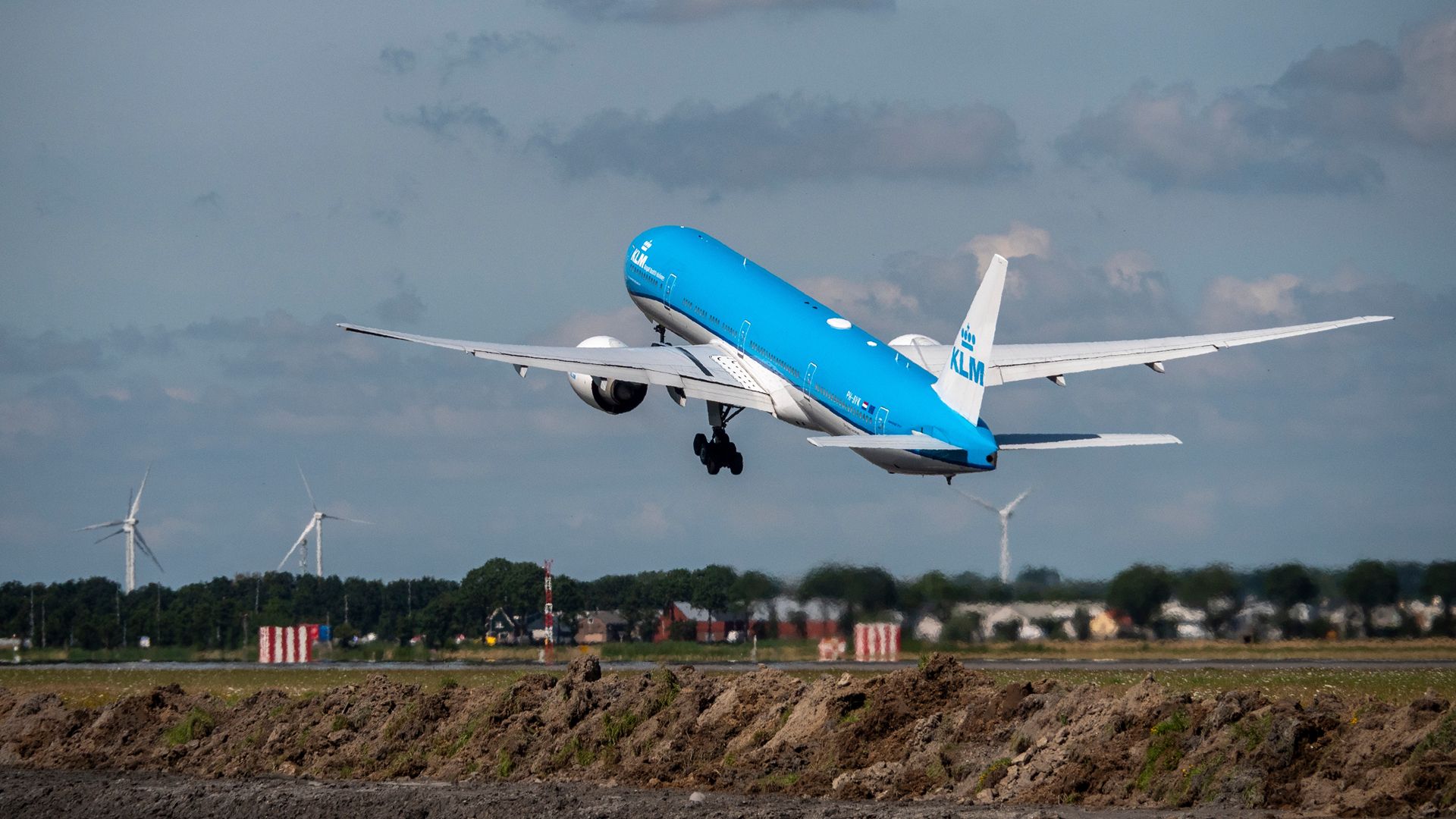
 Amsterdam Schiphol Airport (AMS) has announced it is investing €10 billion ($11.5 billion) into expansion and infrastructure improvements over the next decade, including plans for a new terminal and various other enhancements, such as underground baggage systems and more automation.
Additionally, owner and operator Royal Schiphol Group plans to invest hundreds of millions into smaller regional airports abroad, such as in the Netherlands Antilles region, to diversify the company’s revenue stream. With massive transformation works planned for the next quarter-century, Schiphol is aiming to return to the top three busiest European airports.
Schiphol Airport Earmarks Major Investments In Next Decade

The Dutch airport has announced a series of investments within the next decade as part of its new 2050 Master Plan. The most notable project will be the development of a New Terminal South, described as having “plenty of light, space, peace and quiet.” The new terminal facility will maintain Schiphol’s one-terminal concept under one roof, helping the congested airport expand its yearly flight capacity in the coming years. While the new terminal won’t be completed within the next decade, it is likely to open in phases, with Schiphol currently consulting with airlines and other stakeholders on phasing and costs.
After opening Pier A in 2027, the airport will also renovate several other piers — namely Piers B, C, D and H/M — to bring them in line with Schiphol’s sustainability and modernization targets. It highlighted the need for additional gates to accommodate larger aircraft, as well as widespread renovation work across its passenger areas and lounges. Additionally, the airport will invest in improving landside and public transport links, including a possible Schiphol–Hoofddorp metro line and better roads surrounding the airport.
Royal Schiphol Group CEO, Pieter van Oord, commented,
“With our plans for the future, we want to maintain and strengthen that position and contribute to the progress of the Netherlands. Our future can be summed up in two words: quality and balance. This is how we keep the Netherlands moving and make a small country great. With a high-quality airport that serves the Netherlands.”
Sustainability At Core Of Master Plan

Under the Schiphol Center Master Plan, the airport has laid out its main ambitions for the next quarter-century. Sustainability will be one of the airport’s core initiatives and an area where it is already an industry leader. One of its goals is to reduce ground emissions by 90% in 2030 compared to 2019, with the airport already investing heavily in electric ground vehicles and phasing out gas use.
It also wants to reduce aircraft emissions to its 2005 level by 2030, earmarking sustainable aviation fuel (SAF) as a key method of achieving this. However, there is still much work to be done to meet net-zero targets. The airport has attracted its fair share of critics in recent years due to its efforts to impose operational restrictions, cutting annual flight movements as a means of reducing noise and aircraft emissions.
The airport also wants to make work safer and less physically taxing, looking to automation and robotics — such as baggage robots and underground high-speed baggage transfer systems — to achieve this.

The airport wants to cut flights from 500,000 down to 478,000.
Top Three European Airports Return

As per OAG’s latest data for seating capacity over 2024, Amsterdam remains the fourth-busiest airport in Europe, trailing London Heathrow, Istanbul and Paris Charles de Gaulle. AMS had just over 40 million scheduled departure seats last year, ultimately handling a total of 66.8 million passengers in 2024.
According to CEO van Oord, reclaiming its position in the European top three is a key goal of its transformation plan. The airport has laid out six strategic pillars to guide it over the next decade, which can be seen in the table below:
|
1 |
Returning to the top three European hub airports in terms of quality |
|
2 |
Balance with the local environment and society |
|
3 |
Better working conditions |
|
4 |
Development of regional airports |
|
5 |
International cooperation |
|
6 |
A financially robust Schiphol |
Schiphol’s complete 2050 plan is likely to reach several billion more than the amount earmarked over the next decade. The airport says approximately two-thirds of the cost will be procured from airport fees, which are set to rise by 37% over the next three years.
