


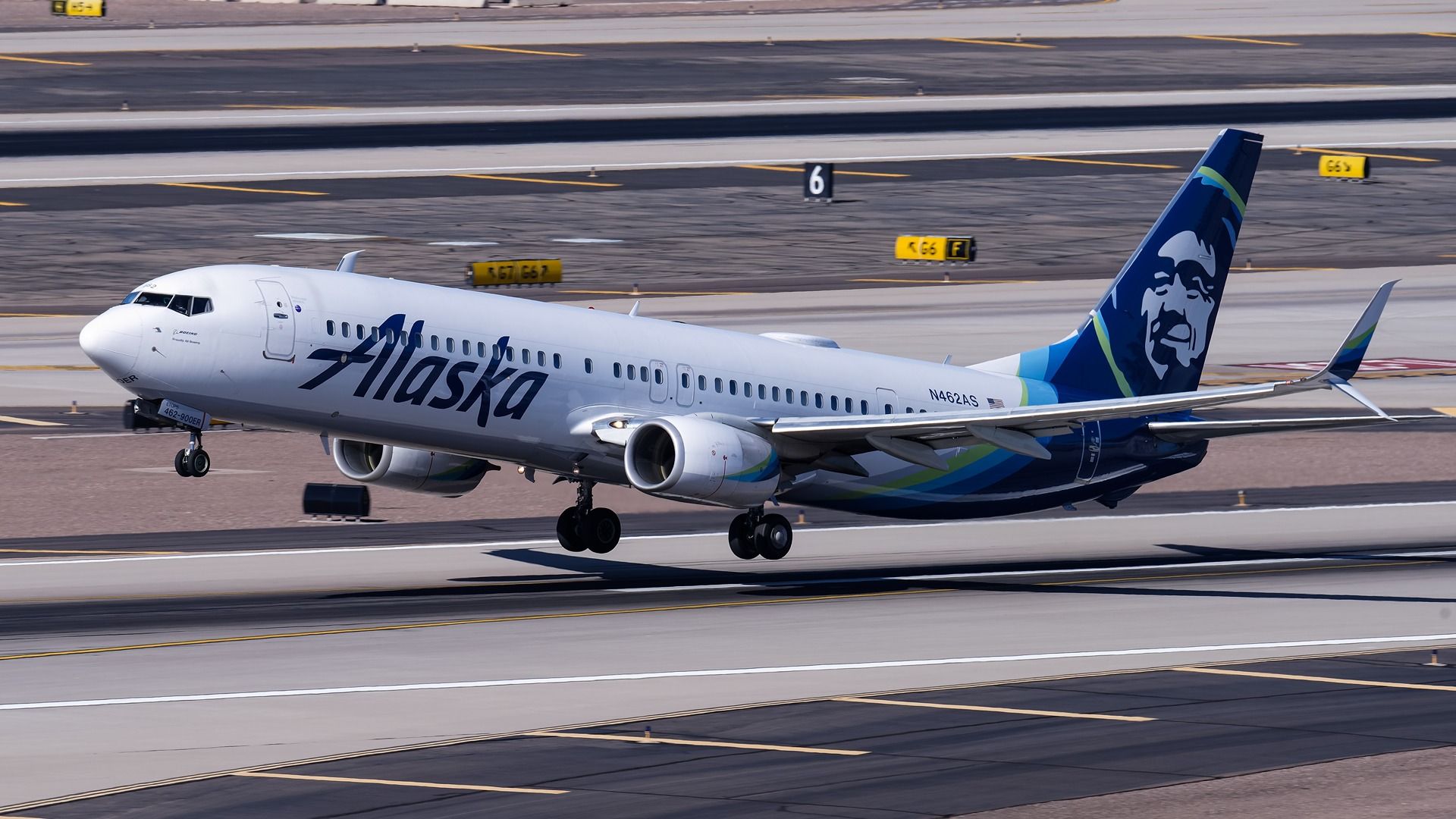
An  Alaska Airlines passenger expressed gratitude to the cabin crew after reportedly suffering a seizure on a four-hour flight from Austin to Seattle. The flight landed safely without needing to divert to a nearby airport, and the passenger regained consciousness during the journey.
According to a report by local outlet KIRO 7, the passenger from Seattle, Liana Ruppert, regained consciousness to find herself surrounded by flight attendants and holding an oxygen tank. She has experienced seizures before, coming from an injury sustained while serving on active duty with the United States Navy. However, Ruppert explained that this seizure struck without warning.
Medical Emergency Onboard

Alaska Airlines flight AS 503 was operating from Austin Bergstrom International Airport (AUS) to  Seattle-Tacoma International Airport (SEA) on a Boeing 737 MAX 9, when Ruppert suddenly experienced a seizure. According to KIRO 7, Ruppert had been reportedly heading to the lavatory to splash her face with water after feeling unwell. However, she began vomiting and soon after lost consciousness.
That was the moment when the cabin crew and a fellow passenger stepped in to assist. They positioned Ruppert to prevent muscle injury or choking. Speaking about the medical emergency, Ruppert told KIRO 7:
“I feel like if they weren’t there, I don’t think I would still be here. Just thank you. I didn’t feel disgusting, I didn’t feel like I was a burden. There’s medical care and then there’s actually caring.”
Responding To A Seizure During A Flight

Seizures are most common among people with epilepsy, but experiencing one during a flight is relatively rare. However, as the story above shows, such medical emergencies can occur. Cabin crew members are trained to provide first aid in these situations. According to the Epilepsy Foundation, if a seizure occurs on board, the most important step is to ensure the passenger has enough space.
The person should be laid down across the seats with their head and body turned to one side. It is also crucial to keep their airway clear and make sure their breathing is not obstructed. When the seizure stops, it is important to help the person into a comfortable resting position, ideally in a single reclining seat. However, if the seizure lasts longer than about five minutes or is immediately followed by another, the person may be experiencing a medical emergency and could require urgent care. In such cases, a flight diversion may be necessary.
Additionally, several studies have examined whether air travel is linked to an increased risk of seizures in people with epilepsy. In a study published by the National Institutes of Health (NIH), 37 participants tracked their seizure frequency for one week before flying and one week after. The results showed that, overall, seizures occurred significantly more often after flying. During the study, no seizures were reported during flights. However, participants who experienced more seizures after flying tended to have a higher baseline seizure frequency, have a history of increased seizures after previous flights, express greater anxiety about having a seizure while flying, and be more likely to avoid air travel.
How Often Do Medical Emergencies Happen?

Generally, medical emergencies are not particularly common. According to a 2015 study in the New England Journal of Medicine, only around one in every 600 commercial flights will have some sort of medical encounter during the journey.
Even so, that does mount up to some 44,000 flights per year worldwide, which means airlines need to be prepared for them to happen. According to the study, the most common types of emergencies were nausea, fainting, and respiratory problems.
The study concluded that among all passengers who had experienced a medical emergency in flight, less than 1% proved to be fatal. Broadly speaking, medical emergencies that occur during a flight can be placed into one of two categories – health-related or injury-related. Health issues can range from anxiety about the flight or feeling dizzy and faint to significant incidents like a heart attack or severe allergic reaction.
