

Close Menu
FlyMarshallFlyMarshall
  • Aviation
    • AeroTime
    • Airways Magazine
    • Simple Flying
  • Corporate
    • AINonline
    • Corporate Jet Investor
  • Cargo
    • Air Cargo News
    • Cargo Facts
  • Military
    • The Aviationist
  • Defense
  • OEMs
    • Airbus RSS Directory
  • Regulators
    • EASA
    • USAF RSS Directory
What's Hot

Lufthansa Trials Reduced Cabin Cleaning Between Flights, But Only In Economy

March 21, 2026

Italian Eurofighters Intercept Russian Su-30 That Violated Estonian Airspace Over the Baltic Sea

March 20, 2026

Artemis II rocket rolls back to launch pad ahead of crewed Moon mission

March 20, 2026
Facebook X (Twitter) Instagram
Demo
  • Aviation
    • AeroTime
    • Airways Magazine
    • Simple Flying
  • Corporate
    • AINonline
    • Corporate Jet Investor
  • Cargo
    • Air Cargo News
    • Cargo Facts
  • Military
    • The Aviationist
  • Defense
  • OEMs
    • Airbus RSS Directory
  • Regulators
    • EASA
    • USAF RSS Directory
Facebook X (Twitter) Instagram
Demo
Home » Aircraft Superchargers vs Turbochargers: What’s the Difference?
Airbus RSS Directory

Aircraft Superchargers vs Turbochargers: What’s the Difference?

FlyMarshall NewsroomBy FlyMarshall NewsroomNovember 4, 2025No Comments3 Mins Read
Share
Facebook Twitter LinkedIn Pinterest Email

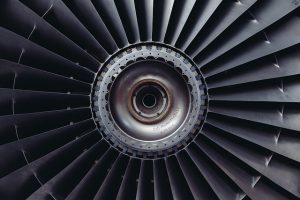
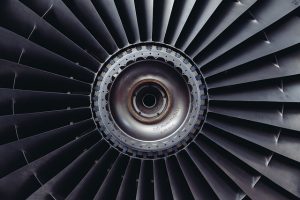
Aircraft engine

Airbreathing engines are common in the aviation industry. With the exception of electric and hybrid models, most aircraft engines use air for combustion. They mix and fuel in an enclosed space known as a combustion chamber, after which they ignite it. While some airbreathing engines are naturally aspirated, however, others leverage a supercharger or turbocharger.

What Is a Supercharger?

A supercharger is a type of mechanically driven compressor that forces air into a piston engine. It’s designed to compress the air before it enters the engine’s combustion chamber. By doing so, superchargers can squeeze more air into the combustion chamber, resulting in a more powerful ignition.

Most superchargers are connected to the crankshaft via a belt or gear. Therefore, their speed is directly related to the engine’s RPMs. The higher the RPMs, the faster the supercharger’s impeller will turn. And the faster the impeller turns, the more air will enter the combustion chamber.

What Is a Turbocharger?

A turbocharger is a type of exhaust-driven compressor that forces air into a piston engine. Like a supercharger, it compresses the air so that more air molecules enter the combustion chamber.

Both superchargers and turbochargers are forced induction devices. Piston engines can be classified as naturally aspirated or forced induction. Naturally aspirated piston engines rely on atmospheric pressure to suck air into the combustion chamber. Forced induction piston engines, on the other hand, use a supercharger or turbocharger.

Differences Between Superchargers and Turbochargers

While they are both forced induction devices, superchargers and turbochargers aren’t the same. One of the key differences between them is their drive type. Superchargers are mechanically driven, whereas turbochargers are exhaust driven.

Because they are mechanically driven, superchargers offer instant response. The speed of the impeller will change in real time as the engine’s RPMs change. Turbochargers, in comparison, have a slight delay.

Turbochargers are typically more fuel efficient. Turbochargers are driven by the engine’s exhaust gases, which is considered a type of waste energy. Rather than allowing this energy to go to waste, it’s used to turn the turbocharger and boost the engine’s power and performance.

Turbochargers can also handle higher altitudes. Superchargers have a somewhat limited ceiling. At high altitudes, they become very inefficient. Turbochargers, though, can handle high altitudes while maintaining their efficient properties.

Finally, superchargers are typically easier to service. They are often mounted to the engine chassis, which makes them easier to access and service, whereas turbochargers are integrated into exhaust systems.

source

FlyMarshall Newsroom
  • Website

Related Posts

The Beginner’s Guide to Air Valves

March 20, 2026

What Are Total Air Temperature Probe and Why Do Airplanes Use Them?

March 18, 2026

Zinc vs Cadmium-Plated Aerospace Fasteners

March 16, 2026

What Are Breather Vents and Why Do Airplanes Use Them?

March 13, 2026
Add A Comment
Leave A Reply Cancel Reply

Latest Posts

Lufthansa Trials Reduced Cabin Cleaning Between Flights, But Only In Economy

March 21, 2026

Italian Eurofighters Intercept Russian Su-30 That Violated Estonian Airspace Over the Baltic Sea

March 20, 2026

Artemis II rocket rolls back to launch pad ahead of crewed Moon mission

March 20, 2026

B-52s Launch from RAF Fairford with Impressive Cruise Missile Payload

March 20, 2026

Subscribe to Updates

Please enable JavaScript in your browser to complete this form.
Loading
About Us

Welcome to FlyMarshall — where information meets altitude. We believe aviation isn’t just about aircraft and routes; it’s about stories in flight, innovations that propel us forward, and the people who make the skies safer, smarter, and more connected.


Useful Links
  • Business / Corporate Aviation
  • Cargo
  • Commercial Aviation
  • Defense News (Air)
  • Military / Defense Aviation
Quick Links
  • About Us
  • Contact Us
  • Disclaimer
  • Privacy Policy
  • Terms and Conditions

Subscribe to Updates

Please enable JavaScript in your browser to complete this form.
Loading
Copyright © 2026 Flymarshall.All Right Reserved
  • About Us
  • Contact Us
  • Disclaimer
  • Privacy Policy
  • Terms and Conditions

Type above and press Enter to search. Press Esc to cancel.

Go to mobile version