


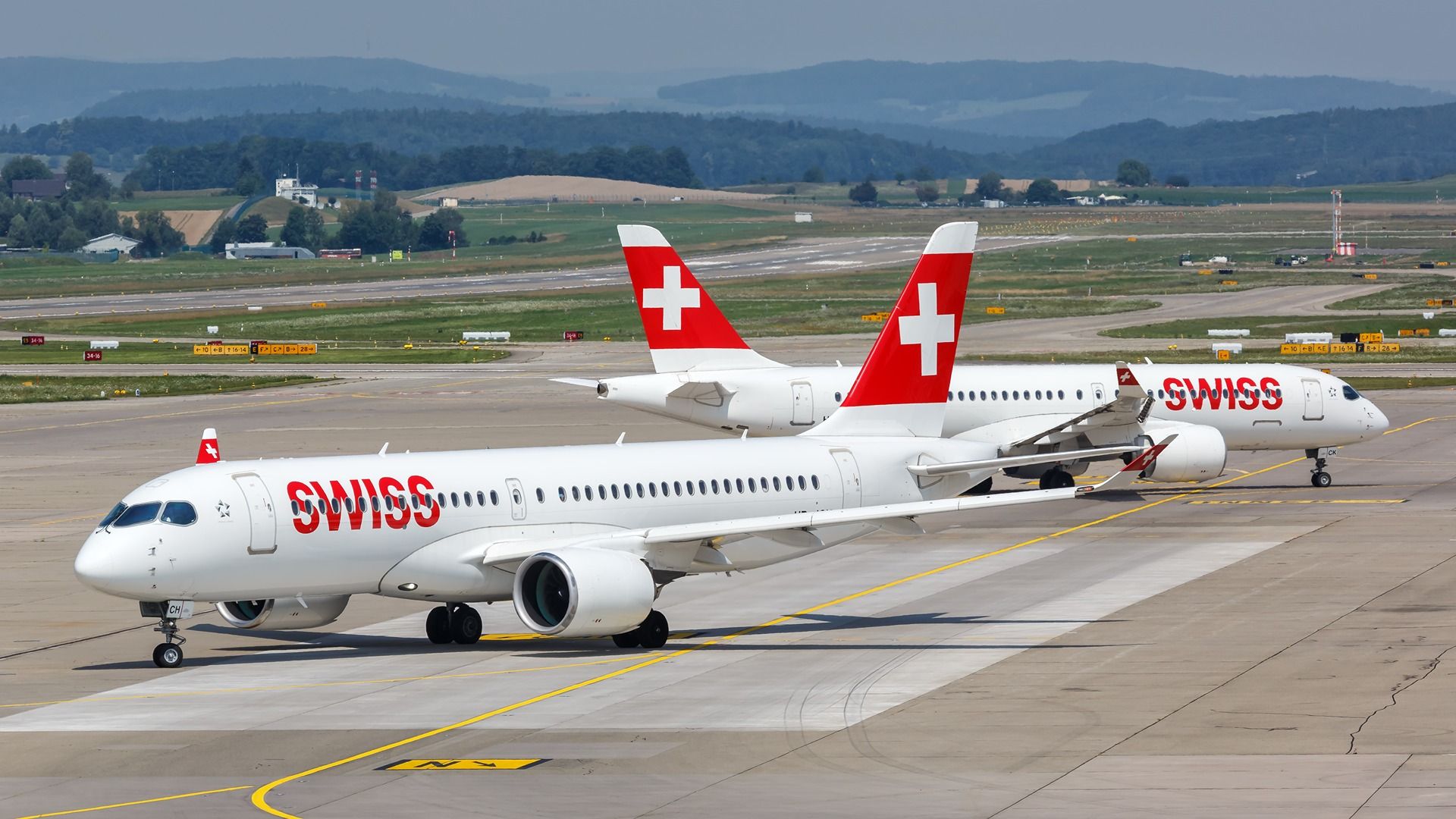
In Airbus’ pursuit of increased production output, the European planemaker’s small A220 is continuing to struggle. Supply chain challenges and issues with assembly line efficiency have the monthly output at just seven or eight planes, or half of the company’s goal.
The original goal was to increase monthly deliveries to 14 jets by mid-2026, but that target has now slid to the end of the year. The factories in Canada and the United States have reported recurring delays with engine and wing assemblies, among other issues.
Rough Start For The Littlest Airbus

Of the 500+ commercial airplanes delivered by the company this year, the A220 accounts for just over 10% with 62 delivered by the end of September. Airbus has originally set the company-wide delivery goal for 2025 at 820 aircraft, but that number has slid to the high 700s due to similar supply chain issues affecting the output of other assembly lines.
Reuters reported that, earlier this year, Airbus airlifted wings from the former Spirit Aerosystems plant in Belfast, Northern Ireland, to help speed up performance. The company is striving to reach 100 deliveries by the end of 2025 despite the impact that political tensions over trade and supply chain fragility have had.
Airbus bought the A220 from Bombardier and took over in 2018. In that time, the aircraft and its support base has steadily developed. Airbus plans to begin installing the “Airspace” cabin architecture as standard equipment next year. Christian Scherer, Airbus Chief Commercial Officer and Head of International, gave these comments after another airBaltic order (the type’s top customer) was confirmed in 2023:
“The A220 offers a unique capability in terms of range, performance, and not to forget, passenger appeal. It is a gamechanger for our customers … with less fuel-burn, lower emissions and noise…”
The Troubled A220 Fleet

The global fleet of A220’s that have entered service has unfortunately experienced a high rate of grounding with issues steaming from the Pratt & Whitney GTF (Geared Turbofan) engines. The new powerplants are fuel efficient, quiet, and lower emission than previous designs, but teething issues have been problematic.
Aviation Source News reports that 22% of the worldwide A220 aircraft in service are grounded as of just a couple of days ago. The primary cause is a recall for safety issues that affects a range of P&W GTF engines, including the PW1500G used exclusively by the A220. The overhauls can take nearly a year to complete and output problems at P&W means that substitutes are not readily available.
SWISS and airBaltic have been the hardest hit as the largest customers with 35 and 50 aircraft respectively. The two airlines report 10-15 planes grounded each, with flight hours reduced by 25% since 2019. The same issues with the wider engines series has also effected A320neo production and maintenance. Orders for the A220 are still coming in despite problems, pushing airbus to find solutions as quickly as possible.
The Pratt & Whitney Connection

The A220 is critical to the company’s overall performance, in addition to the urgency of getting the new model established on the market. Airbus is currently losing money on each jet that rolls out of the factory, according to Reuters. Achieving the monthly production goal of 14 planes is the key to getting the books back in the black. Meanwhile, the issues with in-service jets has not helped.
The P&W GTF’s chronic issues have plagued the A220 and A320neo series for the last two years. Around one-third of the total number of planes equipped with the new powerplants have been grounded since the first announcement of safety recalls, and that figure has remained relatively constant until today. The recall’s concern does not represent an urgent safety issues in most cases, but the durability of some turbine disks was found to be defective.
Flight Plan reported that P&W determined that contaminated alloy had been used in production and resulted in defective components that will force early major maintenance intervals to replace the weaker parts. The need for increased quality scrutiny and material supply bottlenecks has both slowed production and made it lengthy to overhaul engines for in-service jets.
