


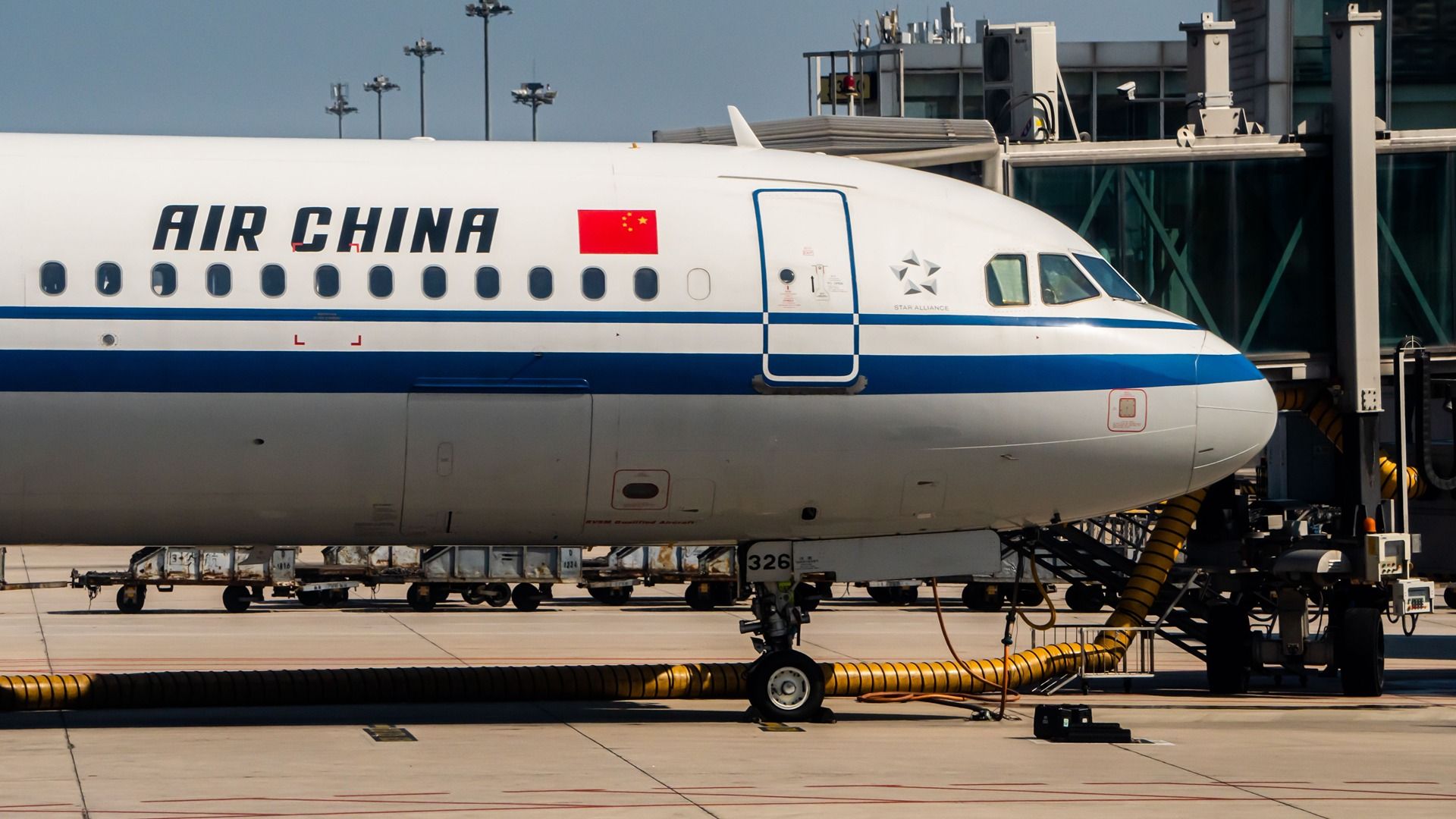
An Air China Airbus A321-200 was forced to make an emergency landing at Shanghai Pudong International Airport (PVG) after a lithium battery caught fire in the cabin. The aircraft landed safely with no injuries reported.
The lithium battery caught fire inside one of the passenger’s carry-on luggage, which was stowed in the overhead cabin, according to the airline. It is worth noting that Air China’s Airbus A321 was operating a scheduled flight from Hangzhou to Seoul, South Korea, when the incident forced the aircraft to divert.
A Closer Look Into The Fire Incident

On October 18, 2025, the  Air China Airbus A321-200, registered B-8583, was operating flight CA 139 from Hangzhou Xiaoshan International Airport (HGH) to Seoul Incheon International Airport (ICN) when, approximately 20 minutes into the flight, a lithium battery stored in the overhead bin overheated and caught fire.
The cabin crew reportedly contained the fire and managed the device, while the flight crew decided to make an emergency landing at the nearest airport, Shanghai Pudong International Airport (PVG). The aircraft landed safely approximately 40 minutes after departure, and no injuries were reported. In a statement on the Chinese social media platform Weibo, Air China said:
“On October 18, on flight CA139 from Hangzhou to Incheon, a lithium battery in a passenger’s carry-on luggage stored in the overhead compartment spontaneously ignited.”
Air China’s A321 Remains Grounded After The Incident

Air China’s Airbus A321 remains grounded at Shanghai Pudong International Airport airport following the onboard fire incident, approximately six hours after the emergency landing. The aircraft in question is the carrier’s 8.3-year-old narrowbody, capable of carrying a total of 185 passengers in a two-class cabin layout: 12 in business class and 173 in economy class, as per ch-aviation fleet data.
As of July 31, 2025, the Airbus A321 had logged a total of 20,504 flight hours and 9,482 flight cycles. Typically, this aircraft operates international routes between Hangzhou and Seoul (ICN), Osaka (KIX), Hong Kong (HKG), and Tokyo Narita (NRT), as well as some domestic flights to Beijing (PEK) and Chengdu (CTU, TFU), among other corridors.
According to flight tracker data from Flightradar24.com, Air China provided passengers with an alternative flight to Seoul. The replacement aircraft was also an Airbus A321-200, registered B-6883. This narrowbody aircraft has already landed at its intended destination. The flight took approximately an hour and a half, arriving at 17:34 local Seoul time instead of the originally scheduled 12:20.
Stricter Lithium Battery Regulations

Many airlines in the Asia-Pacific region have updated their policies on lithium batteries, introducing new rules that prohibit the use of power banks and spare batteries in the cabin due to fire risks. This change was prompted by a fire incident on an Air Busan Airbus A321 aircraft at Gimhae International Airport (PUS) in early 2025. For example, in light of this incident, South Korea strengthened regulations for all its airlines. From March 1, 2025, passengers must keep power banks and e-cigarettes on their person rather than in overhead bins above, and charging devices onboard are now prohibited.
Following these findings, many airlines across the Asia-Pacific have introduced revised policies. For example, Thai Airways has announced a ban on using power banks during flights due to the fire risk associated with lithium batteries. Effective March 15, 2025, passengers will not be allowed to charge power banks onboard aircraft, the airline stated. However, travelers can still carry them in their hand luggage and can still store them in overhead bins.
AirAsia implemented the same policy on March 15, 2025. From April 1, 2025, Singapore Airlines prohibited passengers from charging portable power banks using onboard USB ports or using power banks to charge their personal devices at any time during the flight.
