


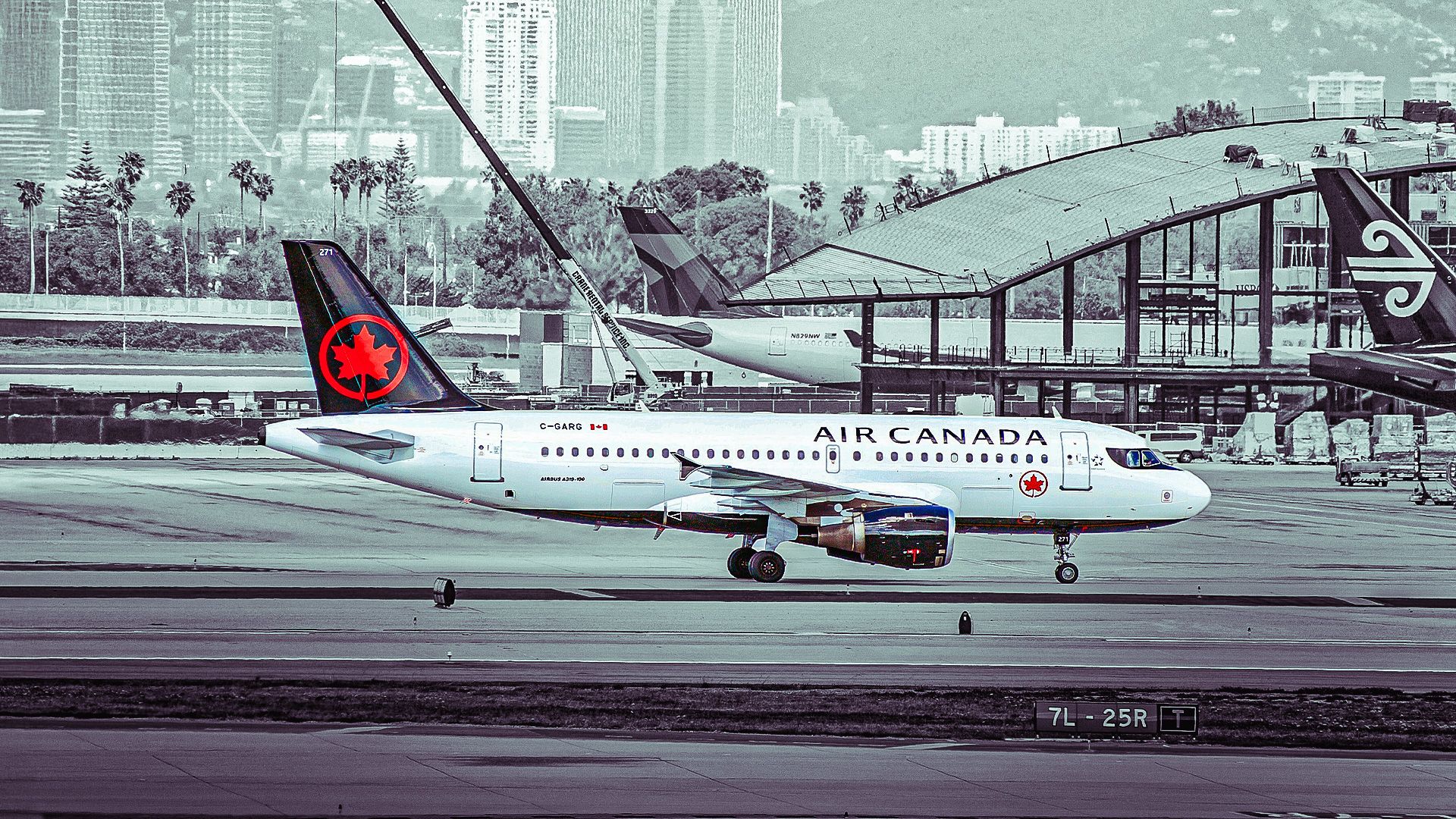
 Air Canada has announced the unfortunate elimination of around 400 management positions, roughly 1% of its workforce, as part of a broader cost-reduction and restructuring plan. As reported by Yahoo News, the airline emphasises that the cuts are unrelated to the recent strike by its flight attendants, which significantly disrupted operations and increased operating costs in August.
The timing of this workforce reduction has drawn attention because it follows a labor dispute in which over 10,000 flight attendants walked out, triggering massive cancellations and a financial hit estimated at $270 million USD. But as per Air Canada, the job cuts were part of a pre-existing efficiency plan rather than being a response to the strike.
Job Cuts At Air Canada

Air Canada says the 400 positions represent non-unionized management roles across corporate functions rather than front-line or crew-related positions. The company framed the decision as part of a renewed focus on digitalization, automation, and flattening organizational layers to improve decision-making and reduce overhead costs.
Reducing management headcount allows the airline to free up funds that can be used elsewhere. The goal is to create a headquarters workforce that is both more streamlined and more cost-effective. The airline industry is famous for low margins, and although much of this is viewed from an operating perspective, these high costs come from the corporate level as well.
Importantly, Air Canada was already facing financial struggles prior to the flight attendant strike. It’s been facing rising operating costs while experiencing a significant decline in US-bound bookings, a major chunk of its business. It stated that the management cuts were part of a broader cost-cutting plan that was developed earlier in the year.
The Impact Of The Flight Attendant Strike

While Air Canada officially stated that this decision was not made due to the strike, it still had a severe impact on the company. Negotiations had been ongoing for months by the time cabin crews stopped coming to work on August 16. 99.7% of flight attendants represented by the Canadian Union of Public Employees (CUPE) voted to strike, and it lasted for three days until union leadership and Air Canada reached a tentative agreement.
Well over 100,000 passengers were impacted by the strike as a result of flight cancellations and delays. Additionally, Air Canada faced monumental costs in compensating, rebooking, and providing accommodations for impacted passengers. This task was especially difficult in Calgary, where an ongoing music festival severely limited hotel room supply and available airline capacity.
|
Air Canada Brands |
Flight Attendant Employer |
|---|---|
|
Air Canada |
Air Canada |
|
Air Canada Rouge |
Air Canada |
|
Air Canada Express |
Jazz Aviation (Did not strike), PAL Airlines (Did not strike) |
Air Canada flight attendants had been working on a 10-year-old contract that expired in March, and negotiations are still ongoing. In total, it’s estimated that the strike cost the carrier roughly $270 million. While this wasn’t what drove the airline to start cutting management positions, it is the most recent financial blow to the carrier and may have made the headcount reductions even more necessary, financially speaking.
Danger Ahead For Corporate Airline Workers

The airline industry has always been risky. Carrier performance is heavily tied to economic conditions, and high operating costs mean that profit margins are razor-thin compared to other industries. As such, while the news is devastating to those impacted, these cuts are far from unusual in the industry. This is simply a standard procedure for any struggling airline.
However, perhaps the more concerning news came last week from United Airlines. The carrier stated that, due to increased deployment of artificial intelligence in its headquarters, it eliminated 4% of its corporate workforce. Unlike Air Canada, United has been recording record profits, and it cut the jobs simply because it saw these workers as being unnecessary.
United has been notably vocal about its use of AI in its headquarters. It’s experimenting with the technology more than other airlines, and the results of this daring move into the future could influence other airlines to follow suit. The airline industry has always been a case of “hiring until layoffs/furloughs”; an increased reliance on AI could lead to headquarters workforces permanently shrinking. More than perhaps ever before, the jobs that were cut are at risk of never coming back.
