


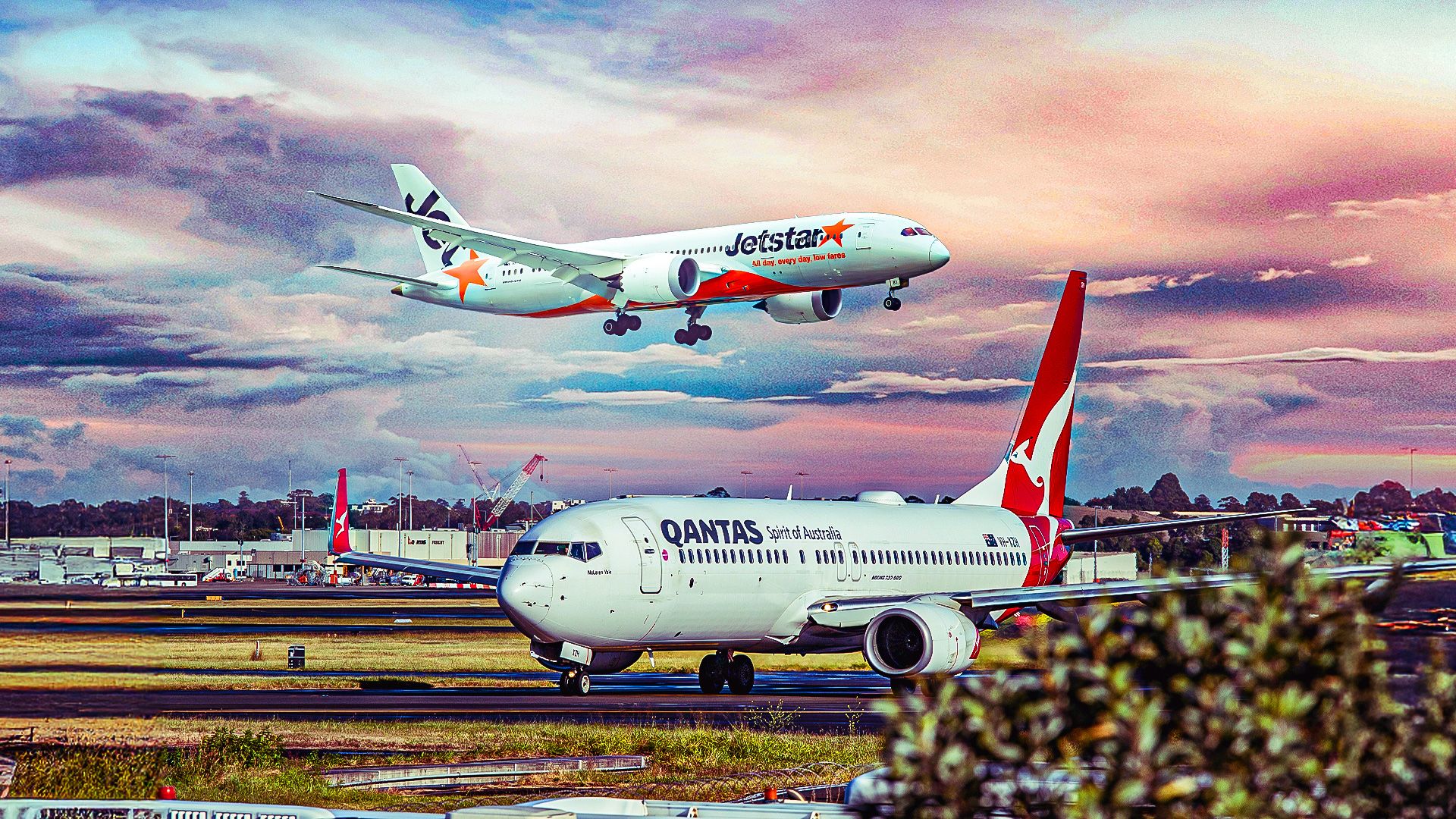
Jetstar Airways is a household name in Australia, one of the country’s major low-cost carriers. Headquartered in Melbourne, in the state of Victoria, it is a subsidiary of Australia’s flag carrier Qantas. Currently, Jetstar has seven bases scattered across Australia, with two abroad (  Auckland Airport and Denpasar). With a fleet of nearly 100 aircraft and flying to more than 40 domestic and international destinations, the airline has a mix of narrow and widebody airplanes, and is under the close eye of its Chief Executive Officer Stephanie Tully.
The airline was first introduced in 2001 as a low-cost domestic subsidiary to compete against the new Australian airline, Virgin Blue (now Virgin Australia). Domestic services first commenced in 2004, and quickly expanded, including trans-Tasman operations to New Zealand. Today, the airline flies to all Australian states, flies trans-Tasman services to more New Zealand gateways than any other international airline, and has even been claimed to have helped save Qantas. This article will explore how this iconic low-cost carrier has reshaped aviation for both Australia and New Zealand.
A Bright Orange Tail

Qantas purchased Impulse Airlines in November 2001, which briefly operated under the QantasLink brand; however, with the commencement of services by Virgin Group’s Australian subsidiary Virgin Blue, Qantas decided to rebrand Impulse as a low-cost carrier, and then Jetstar was born. While Jetstar is owned by Qantas, it operates predominantly as a completely independent airline.
Jetstar has remained a force to be reckoned with in the Australian aviation market and directly competed with Virgin’s low-cost airline fare structure. The airline remains part of Qantas’ two-brand strategy, ensuring the airline group as a whole remains competitive for all price points. The carrier has bases in Australia at most major centres, including Adelaide, Brisbane, Cairns, Gold Coast, Melbourne, Perth, and Sydney, while abroad its hubs include Auckland (AKL) and Denpasar (DPS).
Qantas has attempted to replicate the Jetstar success through investment partners around Asia; however, all but one have ceased trading. Jetstar Japan is an offshoot of the popular carrier, through a partnership between Qantas, Japan Airlines, and the Tokyo Century Corporation, and remains active. However, Jetstar Asia, Jetstar Pacific remain all but a distant memory, and Jetstar Hong Kong never even got off the ground.
Saving Qantas’ Bacon

In a report by the Sydney Morning Herald back in 2019, the then Jetstar Chief Executive, Gareth Evans, reminded readers about how far Jetstar had come. It is estimated that more than two-thirds of all passengers would pay less than AU$100 ($65) for their airplane ticket. When Virgin entered the market in Australia, it was poaching many loyal travelers on Qantas’ bread and butter routes, and not to mention the country was reeling after the collapse of Ansett Australia. Qantas had to think quickly and looked for inspiration from other low-cost carriers, such as Ryanair and WestJet.
Jetstar has soared to become one of the largest airlines in Australia, and you could argue now competes head-to-head with Qantas for its own passengers. Its FY25 financial results recorded the airline carrying more than 16 million passengers domestically alone. This number alone is set to increase following the closure of Jetstar Asia and the redeployment of 13 A320 aircraft across its Australia and New Zealand network.
Qantas executives could never have imagined that this small airline, which was brought into battle against the newcomer, would grow to become one of the most iconic airlines in Oceania and remain a popular choice for leisure travelers, which has become the airline’s bread and butter.
The Jetstar Fleet

The airline has a mixed fleet of Airbus A320 narrowbody aircraft and Boeing 787 widebody airplanes. The larger aircraft are deployed on international services on popular tourist routes, such as Melbourne to Bali, or Sydney to Incheon. The carrier is also set to introduce two new international routes, thanks to the delivery of the Airbus A321LR, between Perth and Manila, and Brisbane and Cebu.
Using data from ch-aviation, the airline currently operates 99 aircraft, with another 32 on order. As already mentioned, the Airbus narrowbody fleet is made up of 55 active A320-200 (four of which have recently arrived from Jetstar Asia, and another nine en route), five A320neo, six A321-200, and 21 A321LR. Four additional A321LRs are still to be delivered. All of these airplanes are set out in a single cabin configuration, aligning with the low-cost model. Seat selection is available for a fee. Opening up the door for long-haul narrowbody travel will be the 12 Airbus A321XLR, which are set to be introduced in 2027 in a two-class configuration.
For widebody operations, the carrier operates solely the Boeing 787-8 Dreamliner. Its 11 active aircraft are configured to transport up to 225 passengers across two classes, which include 21 in Business, and 314 in economy class. Jetstar was the first airline in Australia to operate the Dreamliner, and all of its 11 widebodies are set to be retrofitted from 2026.
Working Together

Qantas has its own aggressive growth plan, and this can be seen through the airline’s continued investment in the Qantas Project Sunrise initiative, which will see the airline attempt to fly non-stop from Sydney to New York and London. This, alongside a range of other new and resumed routes, has seen the carrier cement itself as the largest airline in Oceania. While Jetstar is owned by Qantas, you may have expected the airlines to operate collaboratively through interline and codeshare agreements.
Travel agents in Australia, New Zealand, Singapore, the Philippines, Indonesia, Malaysia, Vietnam, and Thailand are able to book Jetstar Airways and Jetstar Japan flights through the GDSon Qantas stock. These routes allow travelers to combine domestic Jetstar and Qantas airfares, and combine on a half-return basis for international flights. This has been hugely beneficial to capture markets that may only be served by the low-cost airline, such as travelers looking to depart from Hamilton (HLZ) to Sydney (on Jetstar), and connect into a long-haul Qantas-operated flight.
Not all Jetstar services are available to book in the GDS; however, those that are have a mix of fare options, including Starter, Flex, and Starter Max. These vary from having no baggage included to both onboard meals, frequent flier status, points, and added flexibility.
Connecting Australia To New Zealand With More Gateways Than Any Other Airline

If you’re looking for the most choices when flying to New Zealand, Jetstar operates to more NZ gateways from Australia than any other carrier. Jetstar has been a long-time tenant at Auckland Airport (AKL), and is the largest NZ base for the airline. It maintains year-round services from AKL to Melbourne, Sydney, Gold Coast, Brisbane, and Sunshine Coast, while additional year-round services are added from Wellington to the Gold Coast, and Christchurch to Cairns, Melbourne, and the Gold Coast. From Queenstown, flights operate to Gold Coast, Melbourne, and Sydney year-round, with seasonal services added across the Southern Hemisphere winter to Brisbane (launching June 2026).
This year also saw Jetstar add two new international gateways in New Zealand, with the introduction of trans-Tasman services from Hamilton to Sydney and the Gold Coast, being the first international services at the airport since Virgin’s exit in 2013. A direct link from the Gold Coast to Dunedin also took off, becoming the first time the southern airport had seen international services since before the COVID-19 Pandemic. Domestically, Jetstar also operates some domestic routes with the A320 between major centres.
It’s worth noting that Air New Zealand holds the crown for operating to the most Australian Trans-Tasman gateways than any other carrier from Auckland, serving Brisbane, Gold Coast, Sydney, Melbourne, Perth, and Adelaide year-round, with additional seasonal services to Hobart, Sunshine Coast, and Cairns. Additional trans-Tasman services from Air NZ also depart from Wellington, Christchurch, and Queenstown. Other carriers active between Australia and New Zealand include Qantas, China Eastern, China Airlines, Emirates, and Solomon Airlines.
What You Can Expect Onboard

As expected with any low-cost carrier, many amenities are pay-as-you-go. When booking, the initial fare is for a seat only; however, through the reservation process, you are able to add additional baggage and onboard services. Meals are charged at a fee, but can be pre-ordered before your flight. Tea, coffee, soft drinks, and alcoholic beverages are also on offer for the quick swipe of your credit card.
Newer aircraft, such as the 787, offer seatback entertainment; however, again, this can be accessed only after paying the fee. This includes classic movies, television shows, music, and other content. If traveling business class, onboard entertainment is complimentary. Onboard WiFi is not available on all flights, but Jetstar is planning on a rollout of connectivity across select aircraft from 2026. Jetstar Streaming is an app available to download on your personal device, where you can connect to the network onboard the aircraft to stream television shows, music, and movies.
The seating is designed for a low-cost carrier, so for those traveling on longer flights, it is recommended to bring your own neck pillow and blanket, and given that not all aircraft have in-seat charging, you may want to bring a personal power bank to keep your devices charged. The best advice is to book early, so you can pre-book your preferred seat, and pack your own snacks and water to keep you content throughout the flight.
