


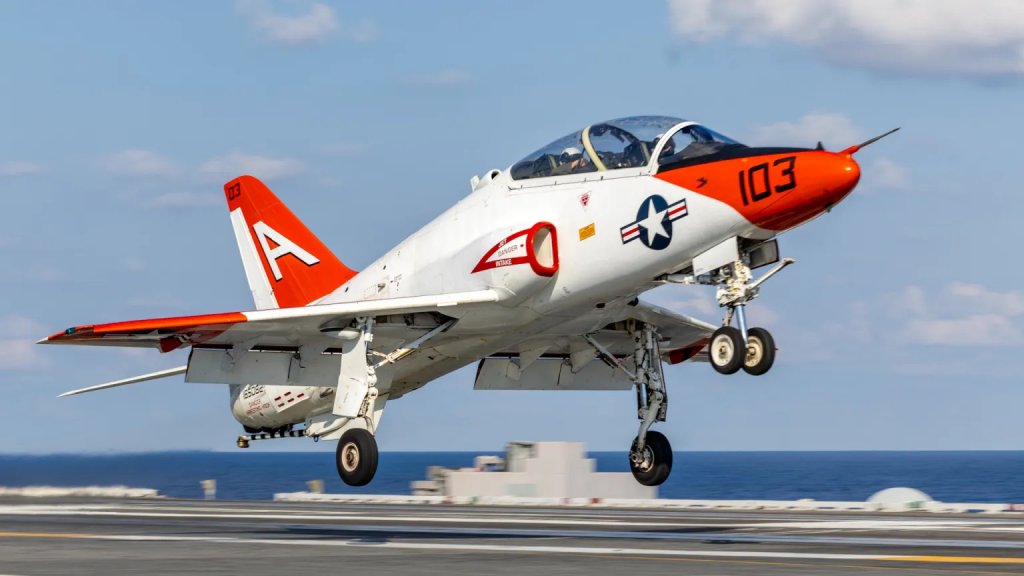
Boeing has decided not to pursue a bid for the U.S. Navy’s Undergraduate Jet Training System (UJTS) competition. The company had previously planned to submit a version of the T-7A Red Hawk being built now for the U.S. Air Force. The winning UJTS design will replace the Navy’s T-45 Goshawk jet trainers. The new trainers will become part of a future naval aviation training curriculum for prospective tactical jet pilots that no longer requires carrier qualifications or even simulated touch-and-go carrier landings at bases on land.
The Navy issued a formal request for proposals for UJTS in March. The service currently plans to acquire 216 new jet trainers to replace the just under 200 T-45s that are in its inventory today. With Boeing now out of the running, the Sierra Nevada Corporation (which has now partnered with Northrop Grumman and General Atomics) and a team led by Leonardo and Textron are the only known remaining competitors. Lockheed Martin, which had teamed with Korea Aerospace Industries (KAI), also dropped out back in April. Aviation Week and Breaking Defense were among the first to report on Boeing’s decision regarding UJTS.
“Boeing is focused on meeting our commitments, and we bid for programs where we believe we can provide the right solution tailored to our customers’ needs and requirements,” a Boeing spokesperson told TWZ. “After careful evaluation, we have determined the T-7A does not meet the U.S. Navy’s Undergraduate Jet Training System requirements.”
“We have therefore informed the Navy that we will not bid on the current RFP. We remain committed to delivering the T-7A as a modern, growth-oriented training solution for 4th, 5th and 6th generation pilots as requirements evolve,” they added. “We look forward to providing and sustaining both current and future capabilities for the Navy.”
Boeing says its decision on UJTS is tied to the General Electric F404 turbofan. The company has stressed that the F404 is a proven design with millions of flight hours on multiple platforms, including the T-7A, and is a clear example of a ready-to-field design. Still, Boeing’s view is that the UJTS engine qualification requirements would require additional long-cycle development work, and potentially limit its ability to meet the Navy’s initial operational capability target for the new jet trainers.
All this being said, it is still not entirely clear what the specific issues might be, given that the F404 is such a well-established design that has been and continues to be used on a variety of military aircraft. This includes several other land-based jet trainer designs beyond the T-7, like the Scaled Composites Model 400, which competed against the Red Hawk in the Air Force’s T-X competition, and the Turkish Aerospace Industries Hürjet.
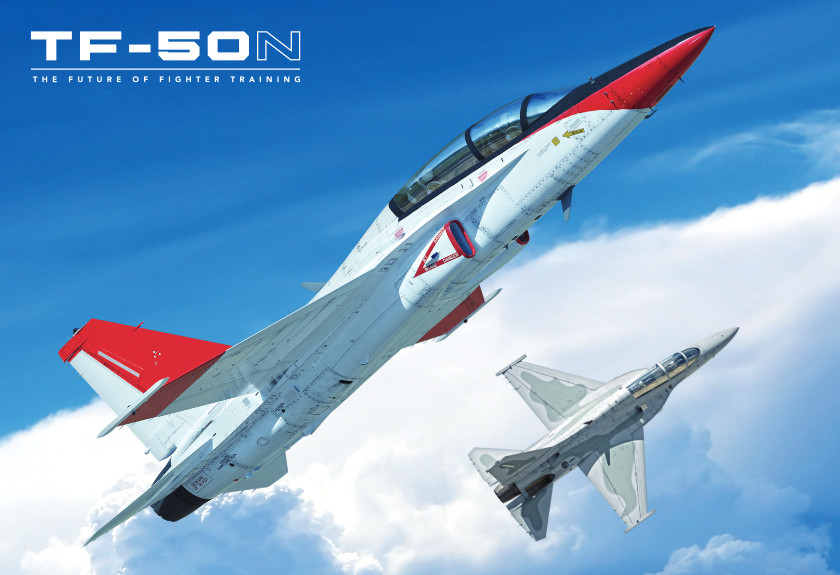
Most notably, the F404 also powers the TF-50N that Lockheed Martin and KAI had put forward for UJTS. At the time of writing, neither Lockheed Martin nor KAI looks to have offered a detailed explanation for the decision to withdraw from the Navy jet trainer competition.
The T-7A has also suffered from various technical and other issues over the course of its development, which has led to significant delays in its entry into Air Force service. The service is now hoping to reach initial operational capability with the Red Hawk next year. Any potential for direct synergies in terms of support and sustainment between the Air Force and Navy jet trainer fleets is now off the table.
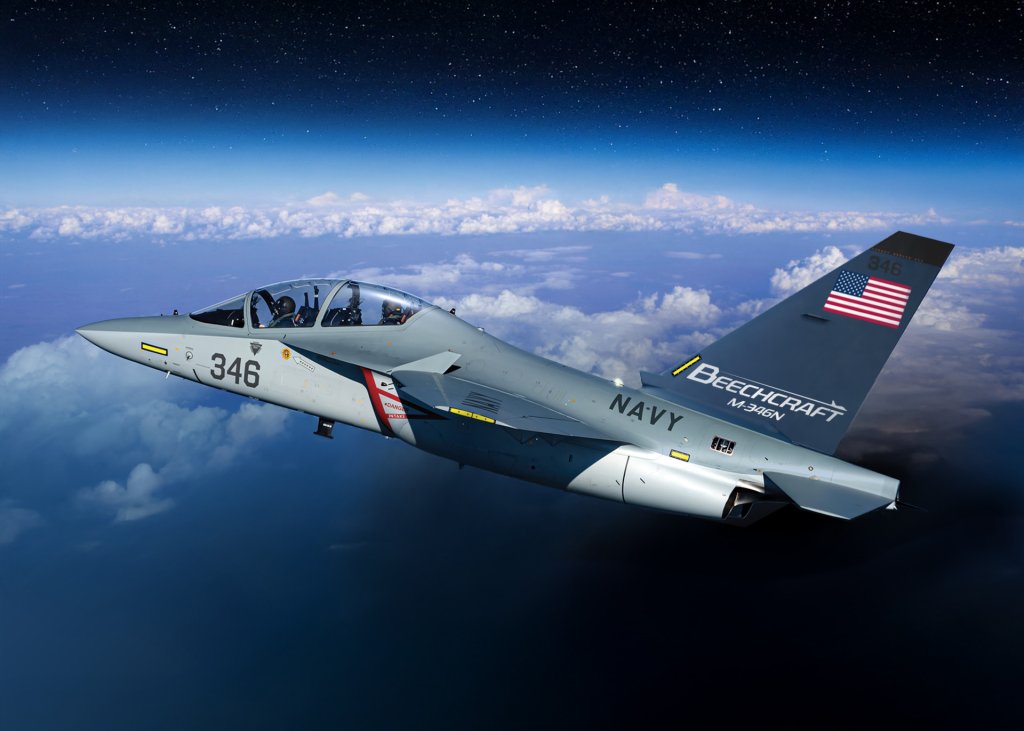
It is worth pointing out that the TF-50N and the T-7 are also both single-engine designs. The Beechcraft M-346N that Leonardo and Textron have put forward is powered by a pair of Honeywell F124 turbofans. Two Williams FJ44-4M turbofans power SNC’s Freedom Jet, which is also the only clean-sheet design in the running for UJTS. This may point to a general view of the UJTS requirements that make single-engine designs less attractive.
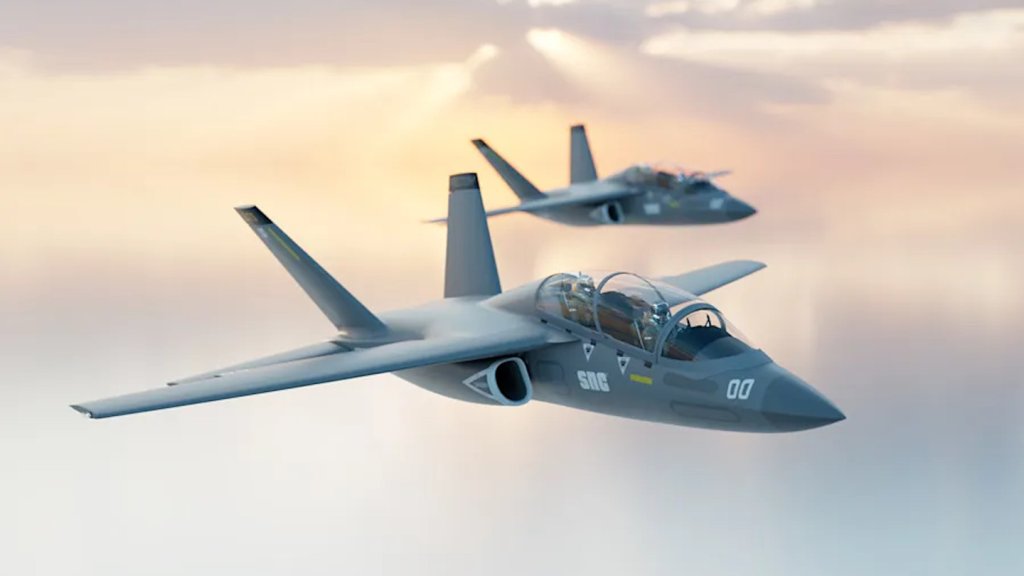
The Freedom Jet design is also tailored to meet now-axed requirements for UJTS to be able to perform carrier qualifications and simulated carrier touch-and-goes at base on land. The requirements for so-called Field Carrier Landing Practice (FCLP) training at facilities ashore have historically been structured specifically in a way that “simulates, as near as practicable, the conditions encountered during carrier landing operations,” according to the Navy.

F-18 Field Carrier Landing Practice (FCLP). Touch-and-Go Landing.
SNC says its choice to build an aircraft that can still perform these tasks is deliberate, and offers the Navy what could still be important capability and flexibility in the future, as you can read more about here.
The Navy’s decision to remove carrier qualifications and otherwise alter key aspects of the tactical jet aviator training pipeline has been and continues to be controversial. The service has argued that substantial investments in virtualized training and assisted carrier landing capabilities, such as Magic Carpet and its successors, have fundamentally changed the landscape when it comes to training future pilots for carrier-based operations.
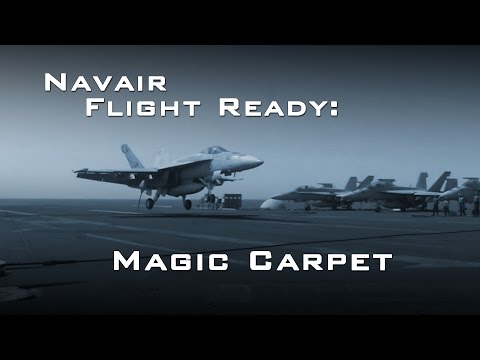
Flight Ready: Magic Carpet

Flight Ready: Live, Virtual, Constructive
Earlier this month, the Navy also confirmed that it had raised the total cost ceiling for the prospective UJTS contract from approximately $1.8 billion to $2.7 billion.
“The Government updated the price cap to reflect a change in the program cost estimate due to new information received,” Naval Air Systems Command (NAVAIR) subsequently explained, according to Breaking Defense.
The substantial increase in the projected cost has raised its own questions about the outlook for the competition and the development program that is expected to follow. The Navy’s decisions to scale back its training requirements had previously been seen as opening the door to existing land-based jet trainer designs, or derivatives thereof, like the T-7 and the TF-50N. That, in turn, was viewed as a potential way for the service to help keep costs and risk low.
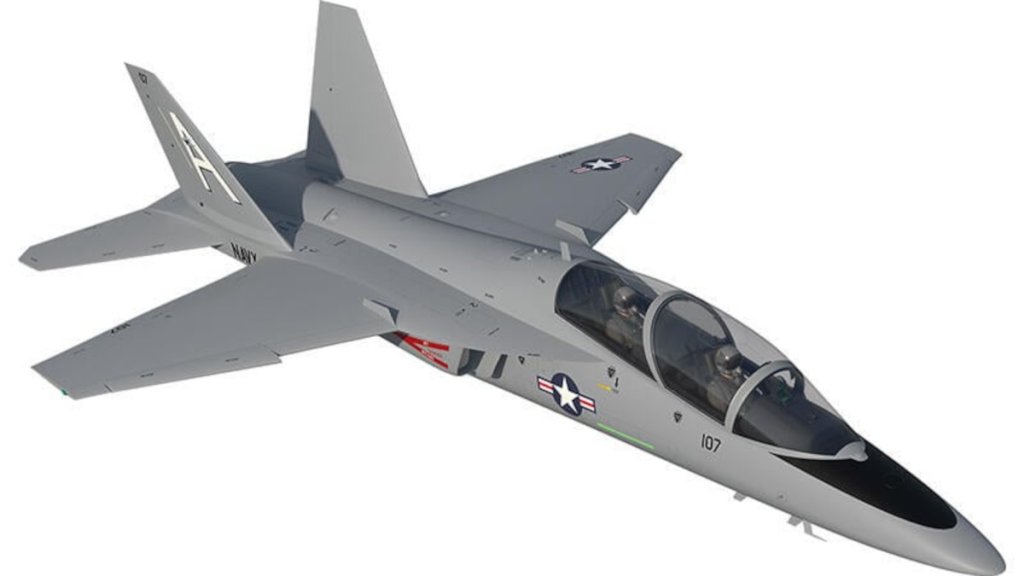
The Navy’s T-45 replacement plans have already been delayed multiple times, with the service originally planning to pick a winning design this year and to have the first example enter operational service in 2028. The goal now is to award a contract in the middle of next year.
The aging T-45 fleet has faced its own struggles, including a spate of reported hypoxia-like physiological episodes among pilots that led to the development of a new oxygen system. There have been several Goshawk crashes in recent years due to a variety of factors, with the most recent coming just last month. The pilots in that case thankfully survived.
For Boeing, the decision to drop out of the running for UJTS could also allow it to refocus resources to other priorities. The company is also notably one of two remaining competitors vying to build the sixth-generation F/A-XX carrier-based fighter for the Navy. Boeing is already heavily engaged now on work for the F-47 sixth-generation fighter for the Air Force.
When it comes to the UJTS competition, with Boeing having bowed out, the SNC-led and Leonardo/Textron teams are now facing off head-to-head.
Contact the author: joe@twz.com
source
