


Saab reported first-quarter 2026 results on April 23, 2026, showing organic sales growth of 23.6% and an operating margin of 10%, with Chief Executive Micael Johansson pointing to a production ramp-up that he said should lift Gripen deliveries from about 15 a year today to between 20 and 30 annually in the coming years.
The Swedish group took in SEK 18.2 billion ($2.0 billion) in orders over the quarter, leaving its backlog at SEK 274.1 billion ($29.8 billion), broadly unchanged from year-end 2025 but up 45% from a year earlier.
Sales reached SEK 19.2 billion ($2.1 billion), up 21.4% reported and 23.6% organically. Operating income rose 32% to SEK 1.9 billion ($206 million). All four business areas and the Combitech subsidiary posted double-digit sales growth, with the Surveillance division standing out at 32% sales growth and 52% operating income growth.
Aeronautics profitability squeezed by T-7A and Gripen ramp-up
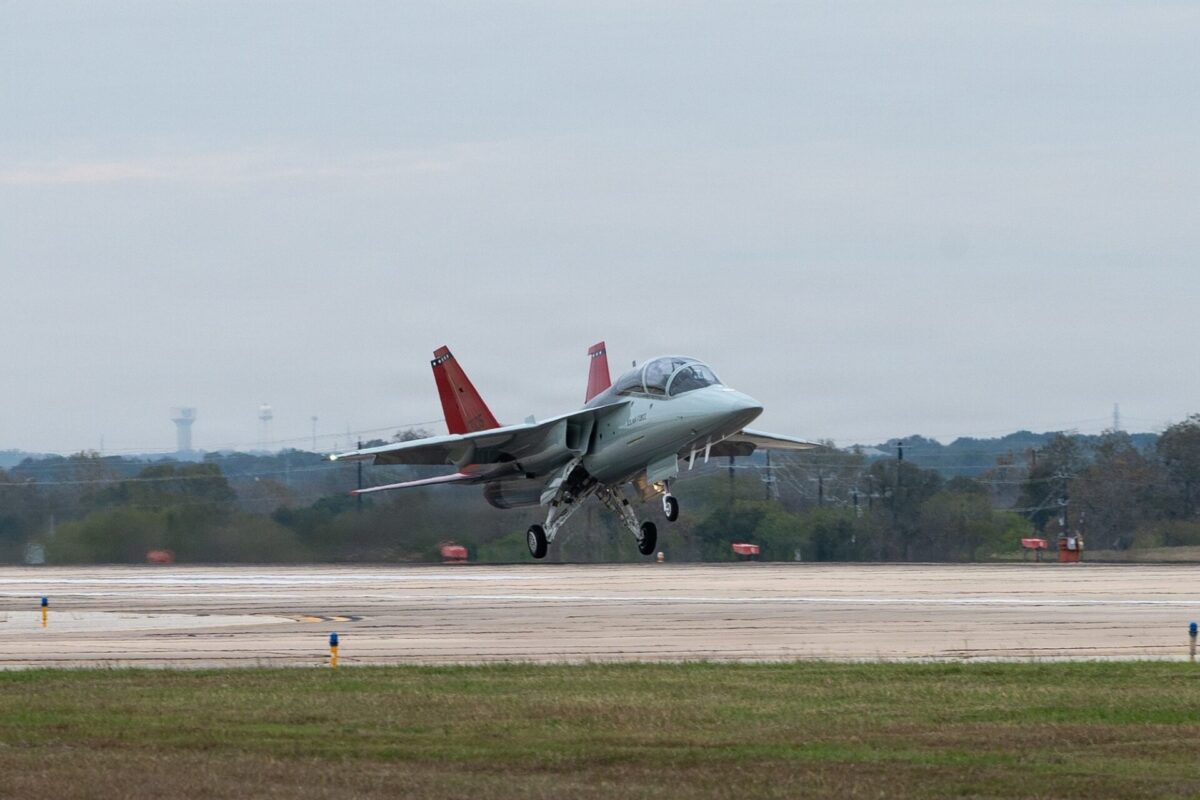
Aeronautics, which covers the Gripen and Saab’s share of the Boeing T-7A Red Hawk advanced trainer, posted sales of SEK 5.2 billion ($565 million) in the first quarter, up 15% year on year. Operating income nonetheless fell 11% to SEK 328 million ($36 million) and the margin dropped to 6.3%, from 8.1% a year earlier. Saab attributed the decline to higher research and development amortization, adverse currency effects, and continued start-up costs for the T-7A program. Order intake in the division was up 32%, driven in part by new T-7A orders covering Lots 3 and 4.
The first T-7A Red Hawk was delivered to the US Air Force’s Air Education and Training Command at Joint Base San Antonio in December 2025, and Saab, Boeing, and BAE Systems have since signed a letter of intent to offer a UK-assembled variant to the Royal Air Force. Johansson told analysts on April 23 that T-7A production volumes remain below the level needed to absorb the program’s fixed costs and that it would take several years for the line to reach target output. He added that the program’s long-term demand could run into thousands of airframes over its lifetime.
On the Gripen side, production is now running at roughly 15 aircraft per year, Johansson said during the earnings call. Saab is working to reach an output of 20 to 30 aircraft annually, with a timeline that depends on the order mix but puts around 20 per year within reach in approximately a year. A second assembly hub is now operational in Brazil, where the first locally produced Gripen E was rolled out at Embraer’s Gavião Peixoto facility on March 25, 2026. Brazil’s line is expected to produce 15 of the 36 aircraft ordered under the 2014 contract.
Gripen campaign pipeline: Canada, Ukraine, Colombia, Thailand
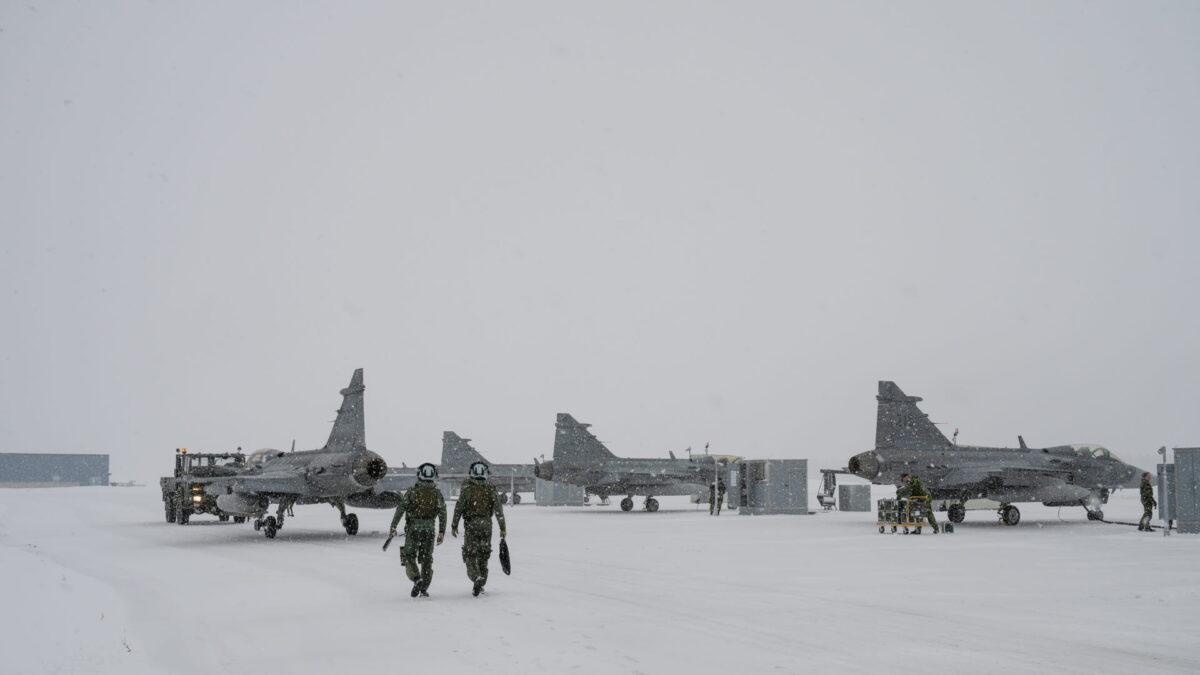
Johansson described the commercial pipeline as active across several ongoing campaigns. The largest near-term prospect remains Ukraine, which signed a letter of intent on October 22, 2025, covering between 100 and 150 Gripen E fighters.
The Swedish CEO said Saab is in negotiations with Kyiv on a proposal to phase fighter deliveries over several years, with a ramp-up of Ukrainian orders potentially beginning around 2029. He tied the discussions to the broader European Union effort to unlock financing for Ukraine, noting that a share of any dedicated military funding package would need to be allocated to fighter procurement, alongside contributions from supporting nations.
The second major campaign concerns Canada, where Ottawa is reviewing its 2023 order for 88 Lockheed Martin F-35A fighters. Johansson confirmed discussions remain active and said delivering a Canadian-built Gripen within five years of a contract is achievable, with Bombardier identified as the likely industrial partner. He acknowledged the outcome depends on a political decision in Ottawa that Saab cannot predict.
Smaller campaigns remain active in Portugal and other unnamed markets. Deliveries to Colombia, which contracted 17 Gripen E/F aircraft in November 2025 for €3.1 billion, are scheduled to begin this year and run through 2032. Thailand is also due to receive new-build aircraft, and Sweden is absorbing its first domestically received Gripen E after the initial handover at Såtenäs on October 20, 2025.
The US Department of Justice subpoena, first disclosed in October 2024, regarding Brazil’s 2014 Gripen procurement remains open. Saab reiterated that it is cooperating with US authorities and that earlier Brazilian and Swedish investigations into the same procurement were closed without findings of wrongdoing.
Surveillance growth driven by Giraffe 1X and GlobalEye pipeline
The Surveillance business area posted the strongest growth in the quarter. Sales rose 32% to SEK 6.9 billion ($749 million) and operating income rose 52% to SEK 664 million ($72 million), at an operating margin of 9.6%.
Saab attributed the performance to increased deliveries of Giraffe 1X ground-based radars, which Johansson said are now being built partly on speculation rather than against firm contracts to meet urgent demand from Middle Eastern operators seeking drone and missile detection capability. Saab is targeting an eventual annual output of more than 300 Giraffe 1X systems.
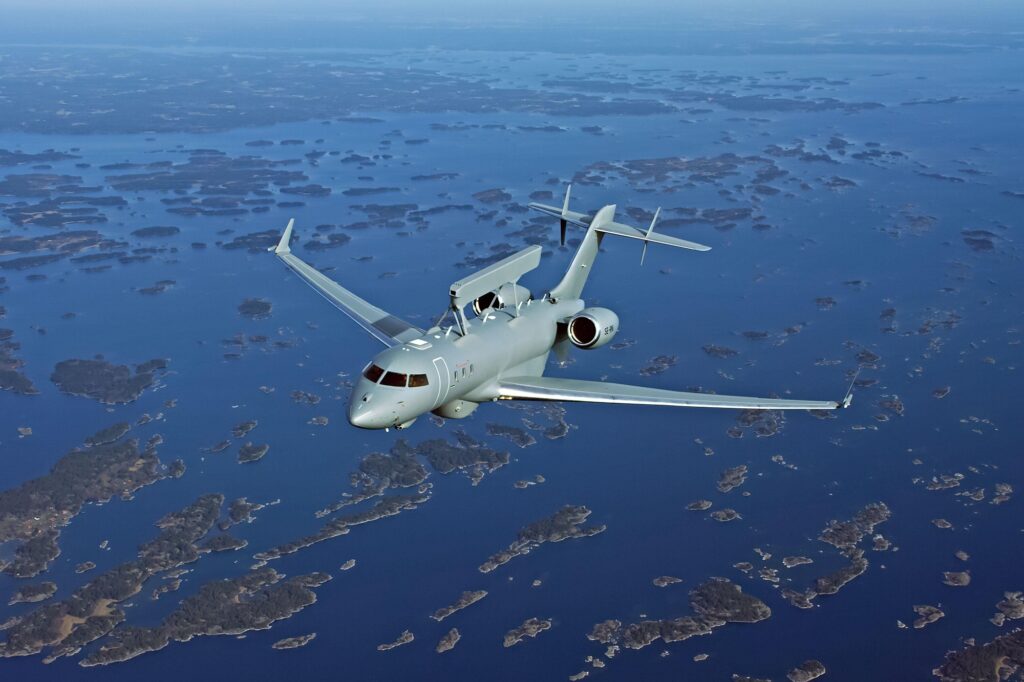
The GlobalEye airborne early warning pipeline also expanded. France signed a $1.3 billion contract on December 31, 2025, for two aircraft, with an option for two more, and Johansson said discussions to exercise the option are underway.
He also cited interest from Germany and Poland, and said Saab has provided information to NATO as part of the alliance’s surveillance planning. Earlier that day, French defense outlet La Lettre reported that NATO’s Support and Procurement Agency (NSPA) had selected GlobalEye to replace the alliance’s aging Boeing E-3A Sentry AWACS fleet.
“It is up to NATO to comment on where they are in their procurement process,” Mattias Rådström, Head of Media Relations at Saab, told AeroTime in an emailed statement. “I can confirm that we have provided information to them but we have not signed a contract or received an order from NATO for GlobalEye.”
Sweden’s C-UAS order anchors quarter
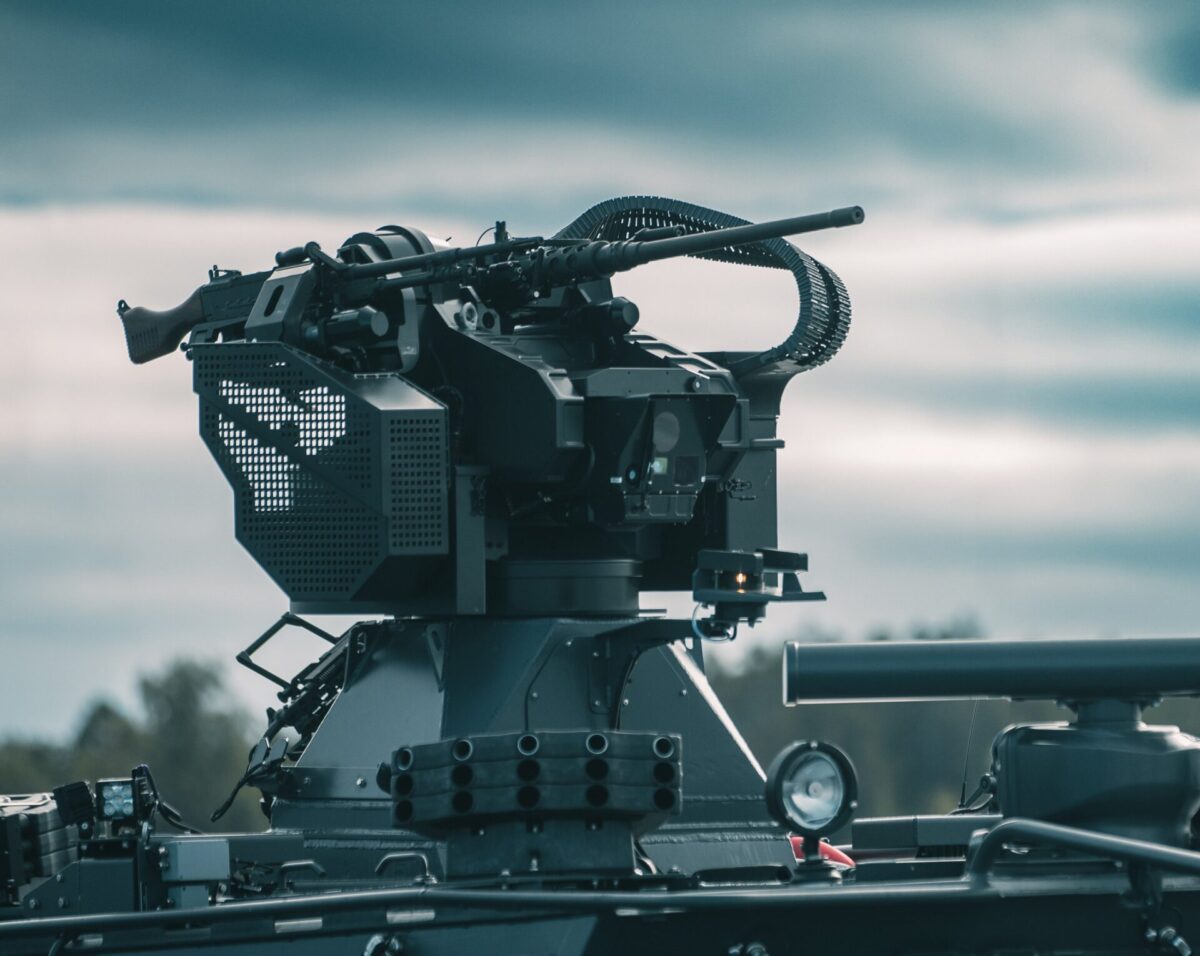
The largest single order booked during the first quarter was a SEK 2.6 billion ($282 million) counter-unmanned aerial system contract from Sweden’s Defence Materiel Administration (FMV), formally announced by Saab on April 2, 2026. The system forms part of Sweden’s GUTE II anti-drone package, which also draws on BAE Systems Bofors’ Tridon Mk2 40mm gun system and Nammo ammunition. Saab’s contribution bundles Giraffe 1X radar, Trackfire remote weapon stations with a 30mm cannon, and electronic warfare components. Deliveries are scheduled between 2027 and 2028.
Johansson said the architecture is deliberately agnostic on the effector side, allowing integration with a range of guns and missiles, including BAE Systems’ 40mm Tridon, Saab’s own 30mm Trackfire, or the short-range Nimbrix drone-interceptor missile the company unveiled at DSEI UK in September 2025. He suggested Saab sees the counter-drone line of business expanding beyond dedicated military applications toward critical infrastructure protection.
Naval reorganization takes effect with Polish submarine talks pending
Saab also confirmed on April 23 that its new Naval business area took effect on April 1, 2026, consolidating the former Kockums shipbuilding division with the Naval Combat Systems unit previously reported under Surveillance. The restructured division is led by Mats Wicksell, who previously headed Kockums. Saab said the combined organization will present an integrated offering across submarines, surface combatants, naval combat systems integration, and unmanned underwater and surface vessels. The most immediate commercial focus for the new business area is Poland’s Orka submarine program, for which Saab was named preferred supplier.
Investment and supply chain strain continue
Operational cash flow turned positive at SEK 1.0 billion ($109 million), against a small loss in the comparable 2025 quarter. Free cash flow remained slightly negative at minus SEK 301 million ($33 million), reflecting higher investments and a supplementary tax payment tied to fiscal year 2025. Capital expenditure on tangible assets reached SEK 1.8 billion ($195 million) in the quarter, up from SEK 1.2 billion ($130 million) a year earlier.
Saab said it is continuing to stockpile certain components selectively and to work with suppliers on capacity increases, citing supply chain constraints that include availability of rare earth elements, tariffs, and defense-specific bottlenecks. The company also flagged that deliveries from a small number of Israeli suppliers are being monitored in connection with regional instability, though Saab has no direct defense-related sales to Israel.
Internally funded research and development expenditure rose sharply in the quarter to SEK 1.15 billion ($125 million), from SEK 820 million ($89 million) a year earlier. Saab said the increase reflected investment across all business areas and is expected to support future capability development, including work on Sweden’s Koncept för Framtida Stridsflyg future combat aviation program.
source
