


Ukraine is exchanging its counter-drone expertise and air defense systems for crude oil, diesel fuel and interceptor missiles from Gulf states under a series of ten-year defense cooperation agreements, President Volodymyr Zelenskyy has confirmed.
Speaking to journalists, Zelenskyy said Ukrainian companies will work directly with the armed forces of partner countries to protect specific facilities, describing the arrangements as far more than financial transactions. In return, Ukraine is receiving energy supplies it urgently needs for both military operations and agriculture, as well as air defense components for its own infrastructure protection.
“In some cases, it involves interceptors to protect our energy infrastructure. […] In some cases, we receive crude oil that will be delivered to refineries in Europe for processing. In others, we are talking about finished products, diesel,” Zelenskyy said. “We are helping strengthen their security in exchange for contributions to our country’s resilience, and this is far more than simply receiving money.”
The ten-year agreements have been signed with Saudi Arabia, Qatar and the UAE. Security talks are underway with Oman, Kuwait and Bahrain, Zelenskyy added, with National Security and Defense Council Secretary Rustem Umerov continuing negotiations in the region. The deals cover not only interceptor drones but also electronic warfare systems, software and maritime drones, according to earlier statements from the presidential office.
Zelenskyy’s comments follow an earlier offer to share Ukraine’s Shahed interceptor drone expertise with Gulf states, made in early March 2026, and a brief diplomatic exchange in which the Ukrainian president said he had received no formal request from the UK or other partners despite public statements about deploying Ukrainian specialists.
Shahed drones destroyed in multiple countries
Zelenskyy confirmed that Ukrainian specialists have directly participated in shooting down Iranian Shahed drones in the region, describing the deployments not as training exercises but as active defense support.
“Did we destroy Iranian Shaheds? Yes, we did. Did we do it in just one country? No, in several,” Zelenskyy said.
Ukraine has deployed more than 200 counter-drone specialists across the Gulf, with personnel confirmed in the UAE, Saudi Arabia, Qatar, Kuwait, and Jordan. The deployments followed a surge in Iranian drone and missile attacks against Gulf states and US military assets since the start of Operation Epic Fury in late February 2026.
Kyiv’s interceptor drone industry, which grew out of years of defending against Russian Shahed and Geran strikes, has become one of the most sought-after defense capabilities in the world. Ukrainian manufacturers produce several models, including the Sting, the P1-SUN and the Octopus, at unit costs of roughly $1,000 to $3,000, a fraction of what a Patriot interceptor missile costs. The high-speed interceptor drone sector has expanded rapidly, with multiple Ukrainian manufacturers competing for both domestic and export contracts.
Jet-powered drone interception
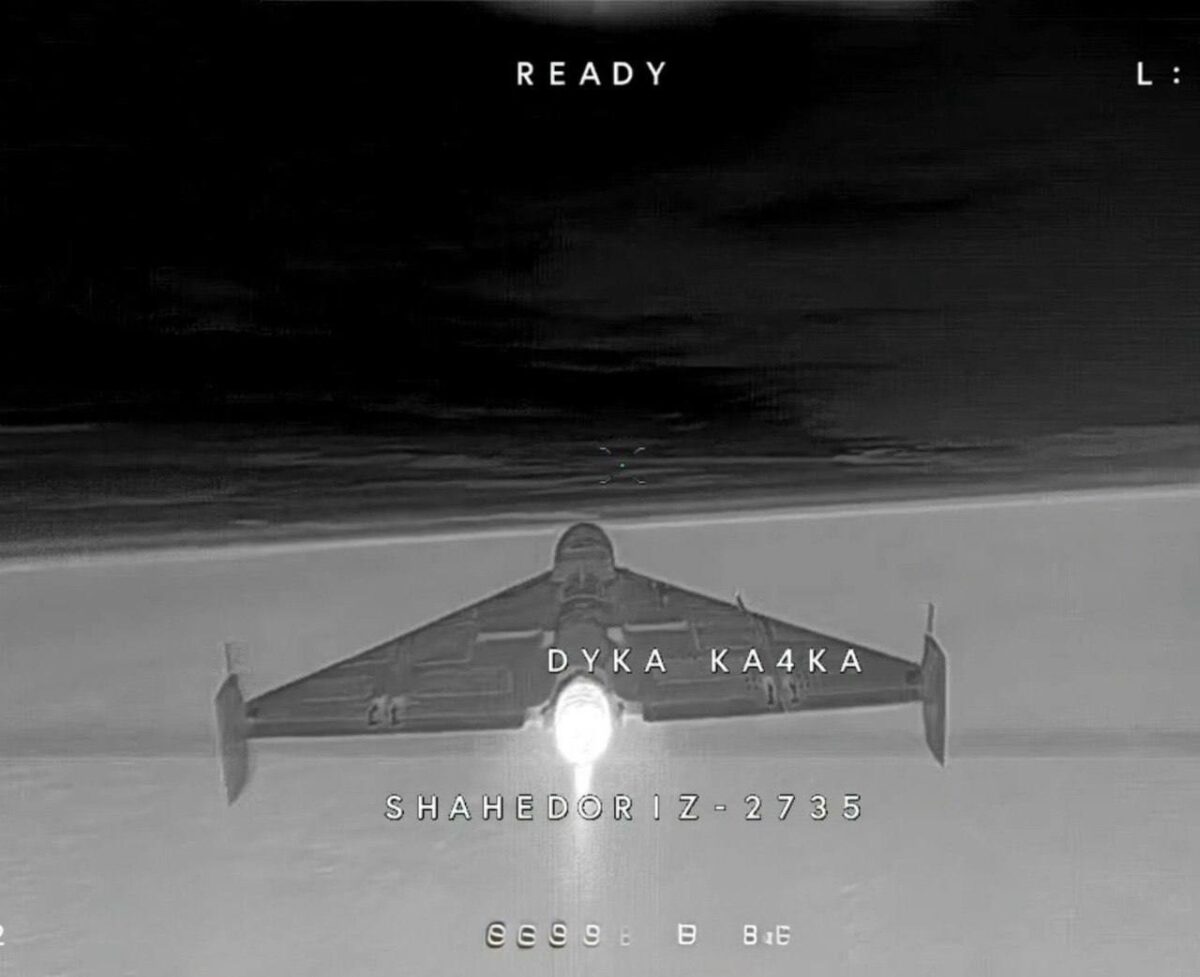
Zelenskyy also highlighted what he described as a milestone in intercepting jet-powered drones, a reference to faster variants such as the Shahed-238 and its Russian-produced derivatives.
“We showed that this works. Now it is only a matter of time before we begin mass production of interceptors that will destroy drones with jet engines,” he said.
Ukrainian Sting interceptors first downed jet-powered Shaheds in late November 2025. The jet-powered Shahed-238, designated Geran-3 by Russia, can reach cruising speeds of 300 to 350 kilometers per hour (185 to 215 miles per hour), accelerating beyond 500 kilometers per hour (310 miles per hour) on terminal approach.
That speed differential has driven Ukrainian manufacturers and government-backed programs to pursue interceptors exceeding 450 kilometers per hour (280 miles per hour), with the EU-funded Brave1 cluster recently awarding grants for high-speed interceptor development.
PAC-3 trade-off and the US relationship
The agreements position Ukraine as what the presidential office has described as a “security donor,” a role that builds on Kyiv’s battlefield experience against nearly 60,000 Shahed-type drones launched by Russia since 2022. Ukrainian interceptor drones accounted for roughly 70% of Shaheds destroyed in January 2026, according to industry figures, with more than 33,000 Russian drones downed by interceptors in March 2026.
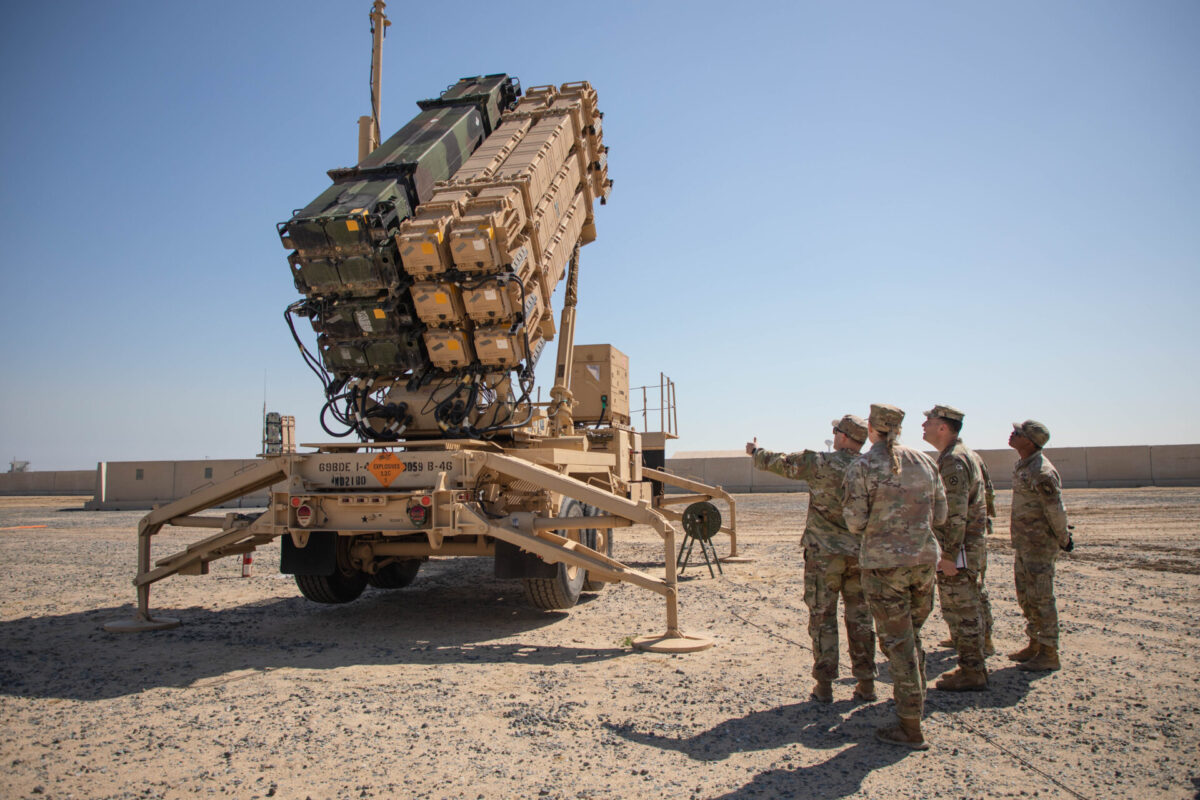
Zelenskyy has previously framed the Gulf deployments in explicitly transactional terms, offering to trade Ukrainian interceptor drones for PAC-3 missiles, the high-end interceptors Ukraine needs to counter Russian ballistic missile attacks but cannot obtain in sufficient quantities.
The US requested Ukrainian expert support for its personnel in two areas of the region, but President Donald Trump publicly rejected the notion that Washington needed Kyiv’s help, telling Fox News Radio in March 2026 that “we don’t need their help on drone defense.”
source
