


France has confirmed the cancellation of two major drone programs, the Safran Patroller tactical drone and the multinational Eurodrone MALE system, as part of an updated military programming law presented to the Council of Ministers on April 8, 2026.
The updated law, which adds 36 billion euros to France’s existing 413-billion-euro defense blueprint for 2024–2030, reflects a broader reassessment of drone requirements shaped by the wars in Ukraine and the Middle East. According to the bill, the need for MALE-class drone capability “has been reoriented to take advantage of the emergence of lower-cost sovereign theater drones,” with the Eurodrone now considered “less suited for high-intensity conflict.”
Eurodrone: a strategic pivot
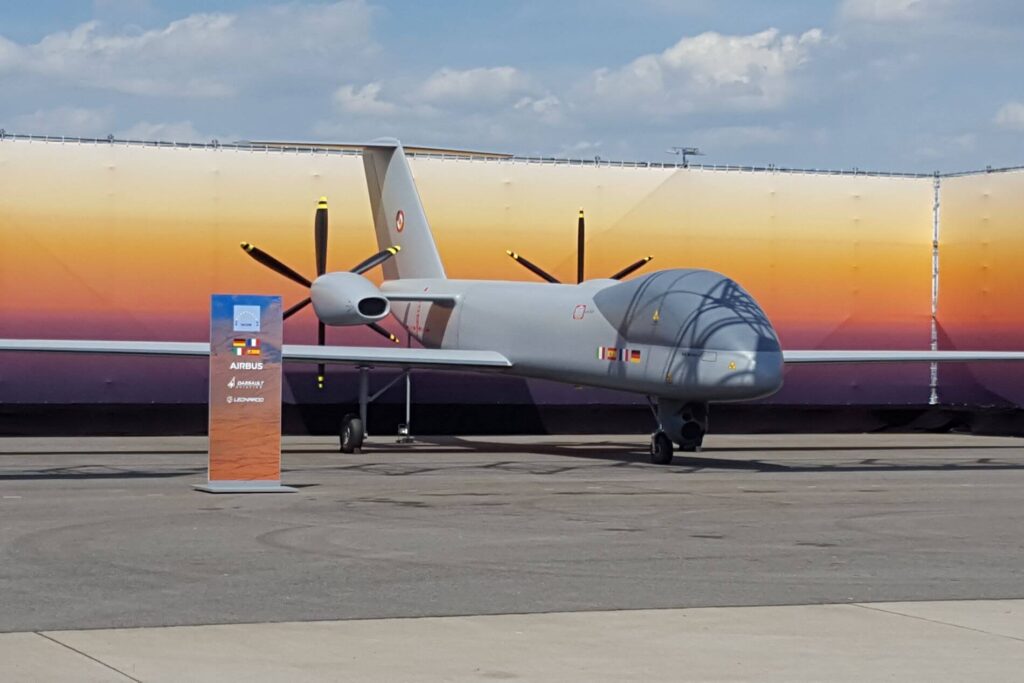
According to the bill, the need for MALE-class capability “has been reoriented to take advantage of the emergence of lower-cost sovereign theater drones,” with the Eurodrone now considered “less suited for high-intensity conflict.” The decision is not a departure from MALE-class drones as such, but a rejection of this specific program in favor of emerging French alternatives.
Reports had emerged in February 2026 that French authorities had been negotiating exit conditions with the three remaining partner nations, Germany, Italy, and Spain, which intend to continue the program. A French withdrawal was expected to increase the program’s cost for the remaining partners by more than 700 million euros.
France’s Air and Space Force chief of staff had publicly questioned the system’s operational relevance, describing it as “yesterday’s drone” that would require “enormous infrastructure” to operate.
The Eurodrone, developed by Airbus Defence and Space alongside Dassault Aviation and Leonardo, had completed its Critical Design Review in October 2025. Its first flight had been scheduled for January 2027, with first delivery targeted for 2030.
Patroller: six years of delays, then cancellation
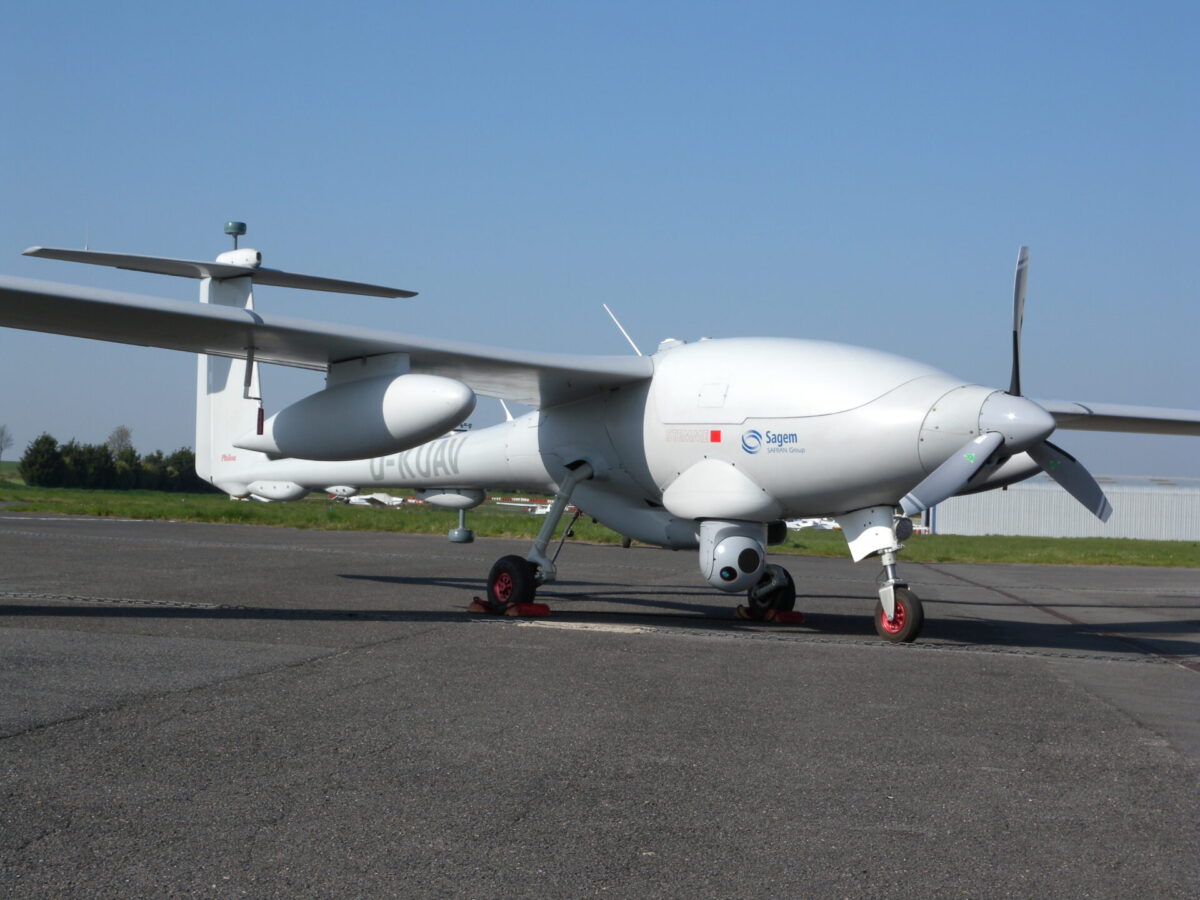
The Patroller cancellation closes a program that had become a symbol of French defense procurement difficulties. Contracted to Safran Electronics & Defense in 2016 for approximately 330 million euros, the tactical drone was originally scheduled for delivery in 2018. The first aircraft was only handed over to the French Army’s 61st Artillery Regiment in May 2024, after a 2019 crash caused by a faulty US-made flight control computer delayed certification by years.
The updated law had already been anticipated: the 2026 defense budget had quietly halved the original order from 28 to 14 aircraft, with the ministry citing “a reassessment of needs.” As of late 2025, the army acknowledged ongoing technical issues, with only a single aircraft having completed test flights. The updated law now closes the program entirely.
French military commanders had not hidden their doubts. In high-intensity scenarios, the 1.5-tonne drone was considered too slow, too large, and too easily detectable by the electronic warfare systems now saturating modern battlefields. The French Army’s Combat Future Command (CCF) had acknowledged it was watching alternative programs and reserved the right to “switch to something else.”
What comes next
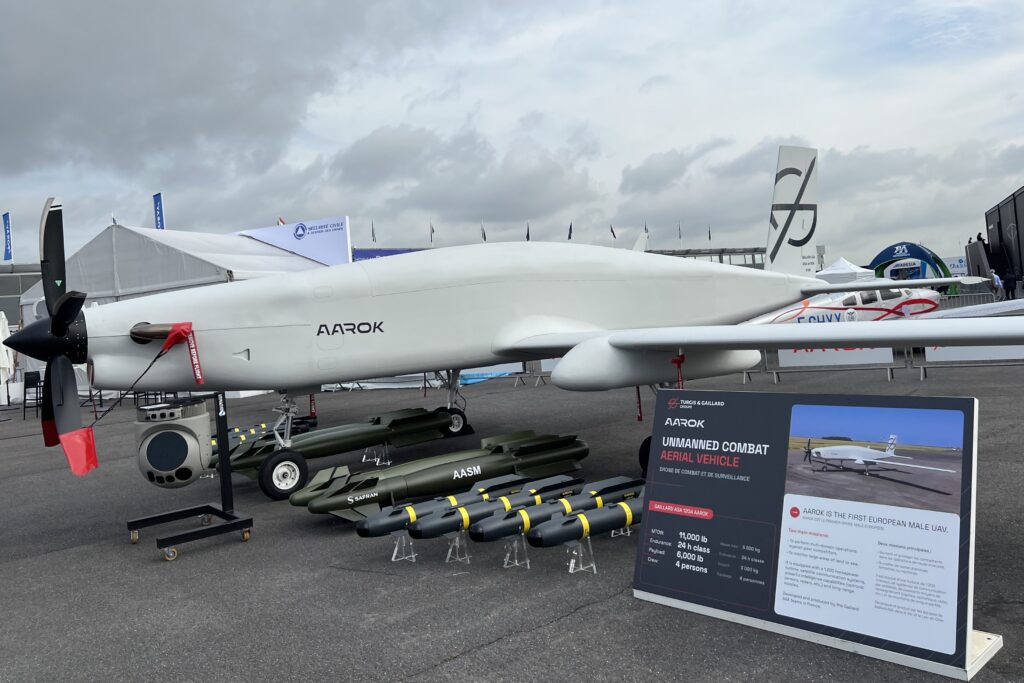
Rather than abandoning the MALE category, France is backing a new generation of lighter, lower-cost national alternatives. Five competing French programs are currently in development with ministry support.
Turgis & Gaillard’s Aarok completed its maiden flight in September 2025 after progressing from taxi trials earlier that year, having received formal DGA backing at the Paris Air Show in June 2025. With a 5.5-tonne maximum takeoff weight and a 1.5-tonne payload, it is positioned as a heavier, strike-capable platform directly comparable to the MQ-9 Reaper.
Toulouse-based Aura Aéro’s Enbata, developed at DGA’s request, targets a lower cost point, its developers describe it as offering half the performance of a Reaper for one-fifth the price. The company announced a €50 million funding round on April 8, 2026, led by Safran Corporate Ventures, bringing total available funding to €340 million, including public subsidies and US support for a Florida facility. A first flight is expected before the end of 2026.
Daher’s EyePulse, adapted from the TBM turboprop platform and developed with Thales in under six months, completed its first automated flight in December 2025.
On the tactical side, the Système de drones tactiques légers competition was already underway as of late 2024, with 40 systems expected to be ordered in 2026 to partially fill the gap left by the Patroller.
The updated military programming law targets a defense budget of 76.3 billion euros by 2030, representing 2.5% of GDP, up from 57.1 billion in 2026.
source
