


Not all flights go as planned, and sometimes issues arise, necessitating a diversion. Once in a while we’ll see a “flight to nowhere,” whereby a plane has to return to its origin. However, this has to be one of the most extreme versions of this that I’ve seen.
ANA 787 ends up where it started after 14 hours
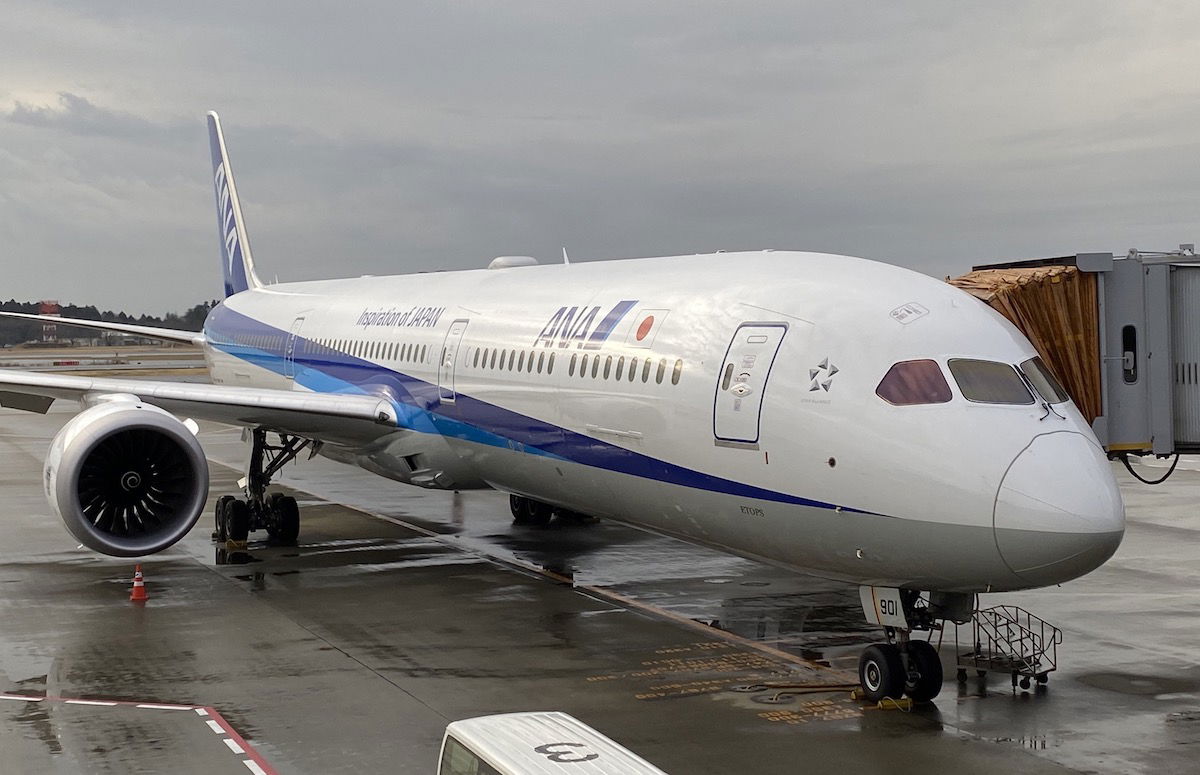
This incident happened on Tuesday, February 17, 2026, and involves All Nippon Airways flight NH223, scheduled to complete the journey from Tokyo Haneda (HND) to Frankfurt (FRA). The flight was operated by a 10-year-old Boeing 787-9 with the registration code JA875A, and there were 151 passengers and 13 crew members onboard.
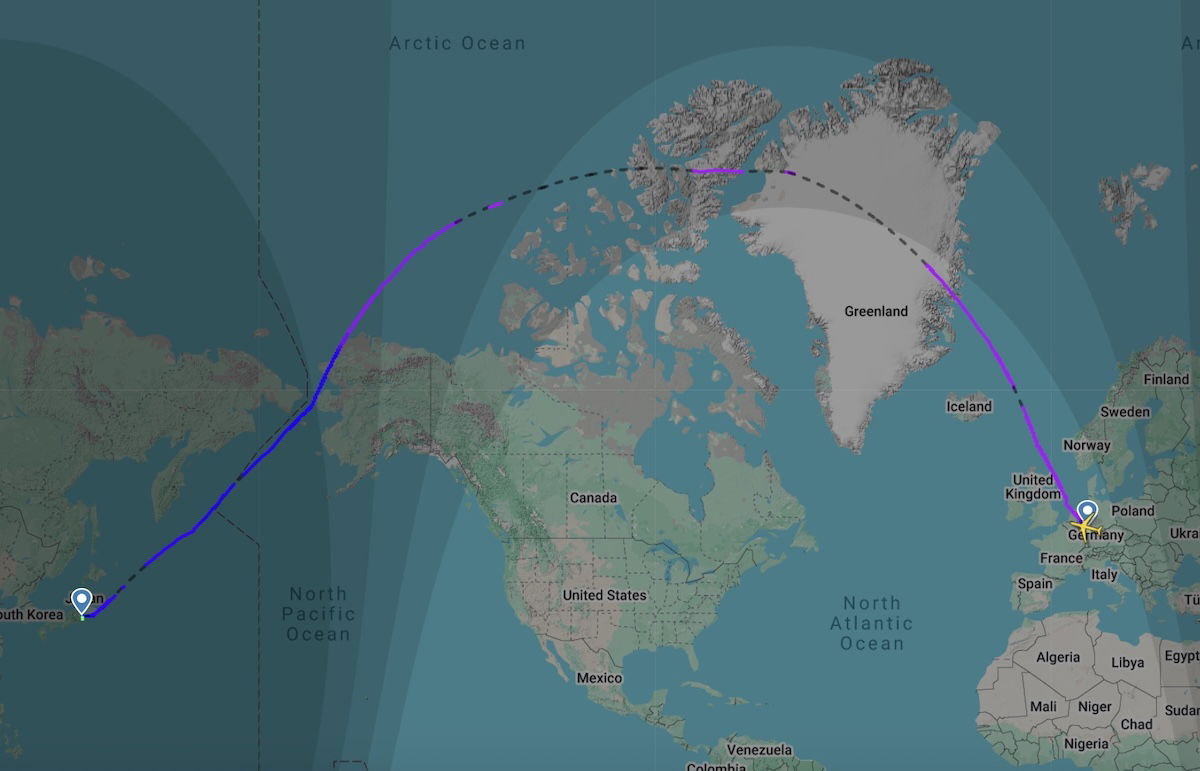
This flight ordinarily takes around 13-14 hours, and it doesn’t necessarily take the route that you’d expect. Since ANA doesn’t use Russian airspace, instead of operating westbound, this flight actually operates eastbound.
For example, below is what the typical flight path looks like for this ANA service from Tokyo to Frankfurt, which goes out over the Pacific, and then flies over Alaska, the Arctic Ocean, and Greenland, prior to reaching continental Europe.
On this particular day, the plane took off from Tokyo at 10:55AM local time, just 15 minutes after the scheduled departure time. The plane flew as expected for a little over six hours, having passed over Alaska, and then flying out over the Beaufort Sea (an extension of the Arctic Ocean).
However, at that point the crew made the decision to return to Tokyo due to a mechanical issue (more on that in a bit). In the opposite direction of travel, the winds were much stronger, so the journey back took around eight hours. In the end, the plane touched down back in Tokyo at 12:59AM this morning (Wednesday, February 18, 2026), 14hr4min after it departed.
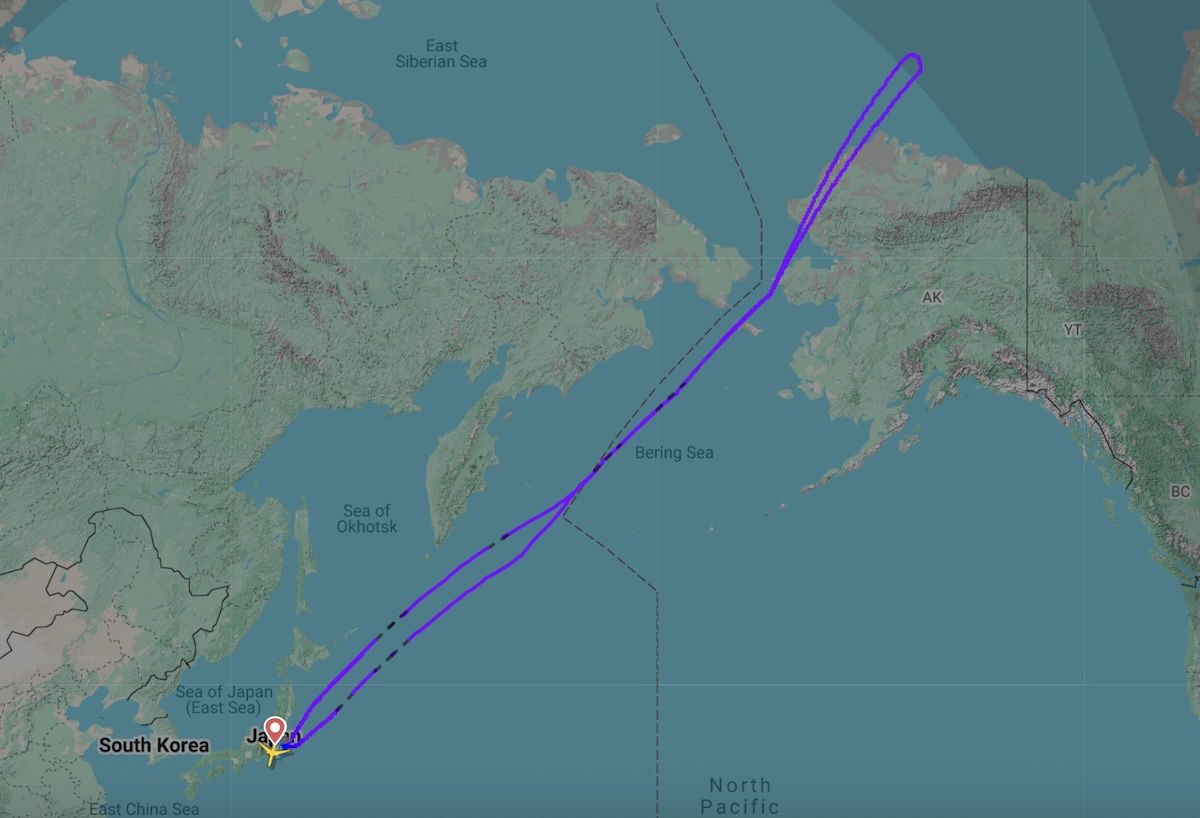
So that means the flight actually ended up taking longer than usual, but rather than passengers ending up at their destination, they ended up exactly where they started.
What was the reason for this unusual ANA 787 diversion?
The reason that the ANA Boeing 787 diverted was reportedly due to low oil levels in one of the engines. Now, you might be thinking to yourself “wait a minute, if there’s an issue with oil in the engine, how does it make sense to fly for an extra eight hours, rather than diverting more immediately?”
After all, it was a shorter flight time to Frankfurt than to Tokyo at the time the plane turned around. I suspect this comes down to one of two reasons (or a combination of both).
First, right around the point that the plane turned around, it was entering a really remote region, with very few diversion points. So while this was an ETOPS equipped plane that is authorized to fly this kind of a route, that doesn’t mean pilots necessarily want to continue the journey if there’s a known issue.
Then again, clearly they didn’t view this as an emergency, or else they could’ve easily diverted to Alaska. The logistics would’ve been complicated, but my point is to say that if it was needed, it could’ve been done. Beyond that, the only other option would’ve been to divert to Russia, and that would’ve also been less than ideal.
Second, often when airlines have maintenance issues, they heavily prioritize flying the plane back to their base. After all, that way the plane can most easily be fixed, passengers can most easily be accommodated on other flights, etc.
While this was of course a massive inconvenience for passengers, it’s hardly unusual to see this kind of a response.
Bottom line
An All Nippon Airways Boeing 787 flying from Tokyo to Frankfurt turned around at roughly the halfway point, after a low oil level issue with one of the engines. In the end, the plane landed back in Tokyo over 14 hours after it first departed, which is longer than the typical flight time to Frankfurt. Talk about quite a journey to “nowhere!”
What do you make of this ANA Boeing 787 return to Tokyo Haneda?
source
