

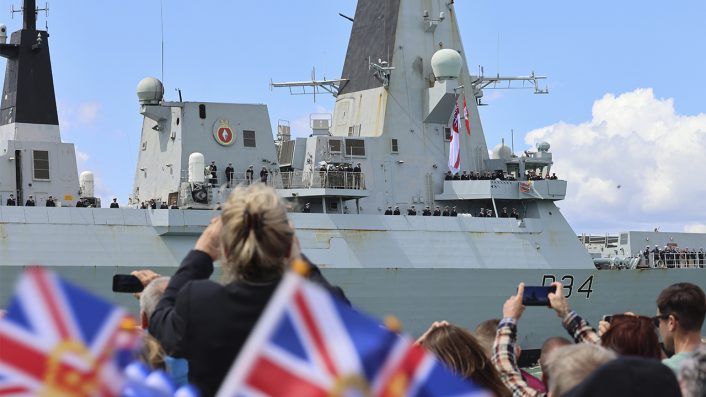
The DragonFire system successfully shot down drones travelling at up to 650km/h at a range in Scotland, just as a £316m contract for its deployment on a Type 45 destroyer by 2027 was awarded.
The DragonFire laser directed energy weapon (LDEW) has been in development by a consortium of companies and agencies since at least 2017, when it was first unveiled at the Defence & Security Equipment International (DSEI) exhibition in London. Initial testing was pushed back by technical challenges, as well as the COVID-19 pandemic, but the onset of the full-scale Russian invasion of Ukraine gave the requirement for new air defence technologies a renewed sense of urgency.
A static fire test was completed in 2022, with further testing against airborne targets conducted in 2024. At this point, the goal to see DragonFire equip Royal Navy vessels from 2027 was announced. On Nov. 20, 2025, this was reiterated, adding the expected detail that the first ship to employ the new laser weapon will be an air defence-focused Type 45 destroyer. MBDA UK has been given the £316 million contract to deliver these first systems, and this is expected to sustain almost 600 high-skilled jobs across the country.
DragonFire is a laser directed energy weapon designed and built entirely in the UK.
It can hit a target the size of a £1 coin from a kilometre away, costs only £10 a shot, and just successfully took down a high-speed drone during testing.
Read more ➡️ https://t.co/Am3bp03VYq pic.twitter.com/Edc0lFnCKG
— Ministry of Defence 🇬🇧 (@DefenceHQ) November 20, 2025
Previous press releases have pegged the DragonFire laser at a power rating of 50 kilowatts. It is primarily intended as a defence measure against small drones or missiles, costing as low as £10 for a single 10 second shot with effectively unlimited ammunition as long as electricity can continue to be generated. The Type 45 is an excellent platform to accommodate such a system, boasting two Rolls-Royce WR-21 gas turbines with a combined power output of over 40 megawatts.
The events in the Red Sea during 2023 and 2024, where Type 45 destroyer HMS Diamond shot down a number of Houthi attack drones and one ballistic missile, are a good example of where laser weaponry offers an important new capability. Each drone shot down with HMS Diamond’s Aster missiles, though potentially stopping damage costing even more, represented the total loss of a weapon valued between £1 million and £2 million. Additionally, with a total of 48 missiles, a large coordinated attack could have significantly or completely depleted Diamond’s ammunition in a short amount of time.
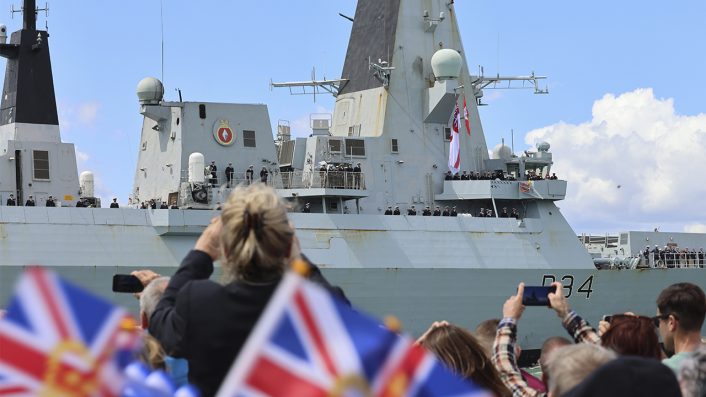
Defence minister and Member of Parliament Luke Pollard said: “This high-power laser will see our Royal Navy at the leading edge of innovation in NATO, delivering a cutting-edge capability to help defend the UK and our allies in this new era of threat,” while the managing director of MBDA UK, Chris Allam, added: “This latest contract for DragonFire is another significant milestone. It allows us to continue with the next phase of the programme and re-affirms the UK’s intent to be at the forefront of laser directed energy weapons. The success of recent DragonFire trials are a testament to our MoD and Industry team delivering a truly game-changing weapon system into the hands of the Royal Navy.”
As well as MBDA UK, other parties involved in the DragonFire consortium include Leonardo UK, Qinetiq, and the state-owned Defence Science and Technology Laboratory (DSTL).
DragonFire is creating good jobs for our skilled workers. 🇬🇧
It represents a fundamentally different approach to defence procurement, and is enabling Britain to deliver one of @NATO‘s most advanced directed energy weapon programmes.
Here’s what Dragonfire will sustain 👇 pic.twitter.com/zS9YvXsoO5
— Ministry of Defence 🇬🇧 (@DefenceHQ) November 22, 2025
Group CEO of Qinetiq Steve Wadey said “The DragonFire programme is delivering the ambition of the Strategic Defence Review, with industry experts working in collaboration with government to get disruptive, next generation technology into the hands of our warfighters at pace. QinetiQ is proud to have played a unique role in developing and testing this critical military capability of the future. We welcome the government’s latest commitment, which will enable us to accelerate the production of the world-leading technology that is fundamental to the DragonFire system.”
DragonFire is one of a number of new systems under development in the UK to defend against the threat from small, easy to produce drones and other weapons. As well as laser weaponry, radio frequency directed energy weapons are also being tested.
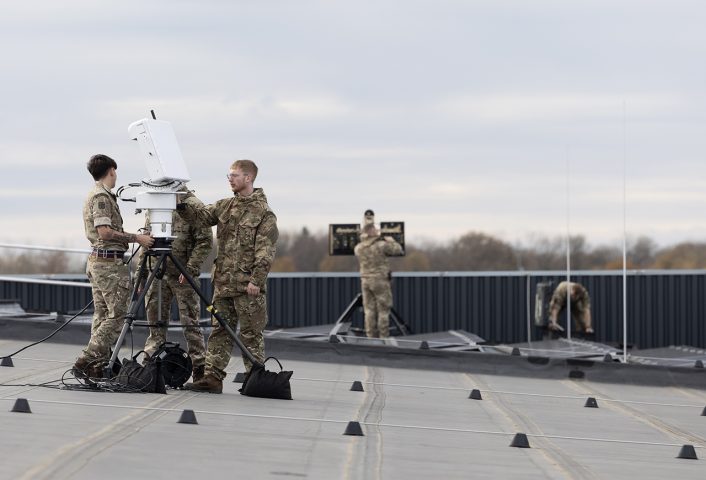
The Royal Air Force now have dedicated counter unmanned aerial systems (C-UAS) units, and RAF personnel and equipment were recently deployed to Belgium amid reports of unauthorised drone activity over airports and other sensitive locations. RAF Regiment, 2 Counter – Unmanned Aerial Systems (2 C-UAS) personnel were depicted setting up a wide range of technical equipment to help the NATO ally resist further drone incursions and prevent more disruption to civilian air traffic.
Following a number of suspected drone incursions over U.S. Air Force bases in the UK last year, the UK Government has now announced plans to implement changes to the law that would give the armed forces more authority to directly engage drones that are perceived to be threatening military bases.
While the power requirements of laser weaponry would currently prohibit widespread use on land vehicles, more permanent stationing of DragonFire systems alongside RF weapons and C-UAS equipment like Orcus may soon be seen at important military locations. Unlike protective technologies that have seen use defending forward bases in areas with ongoing conflicts or high risk of conflict, like the Phalanx based Centurion Counter-Rocket, Artillery, and Mortar (C-RAM) air defence system, directed energy weapons carry no risk of stray ammunition falling on public areas and require no specialist ammunition storage areas.
source
