

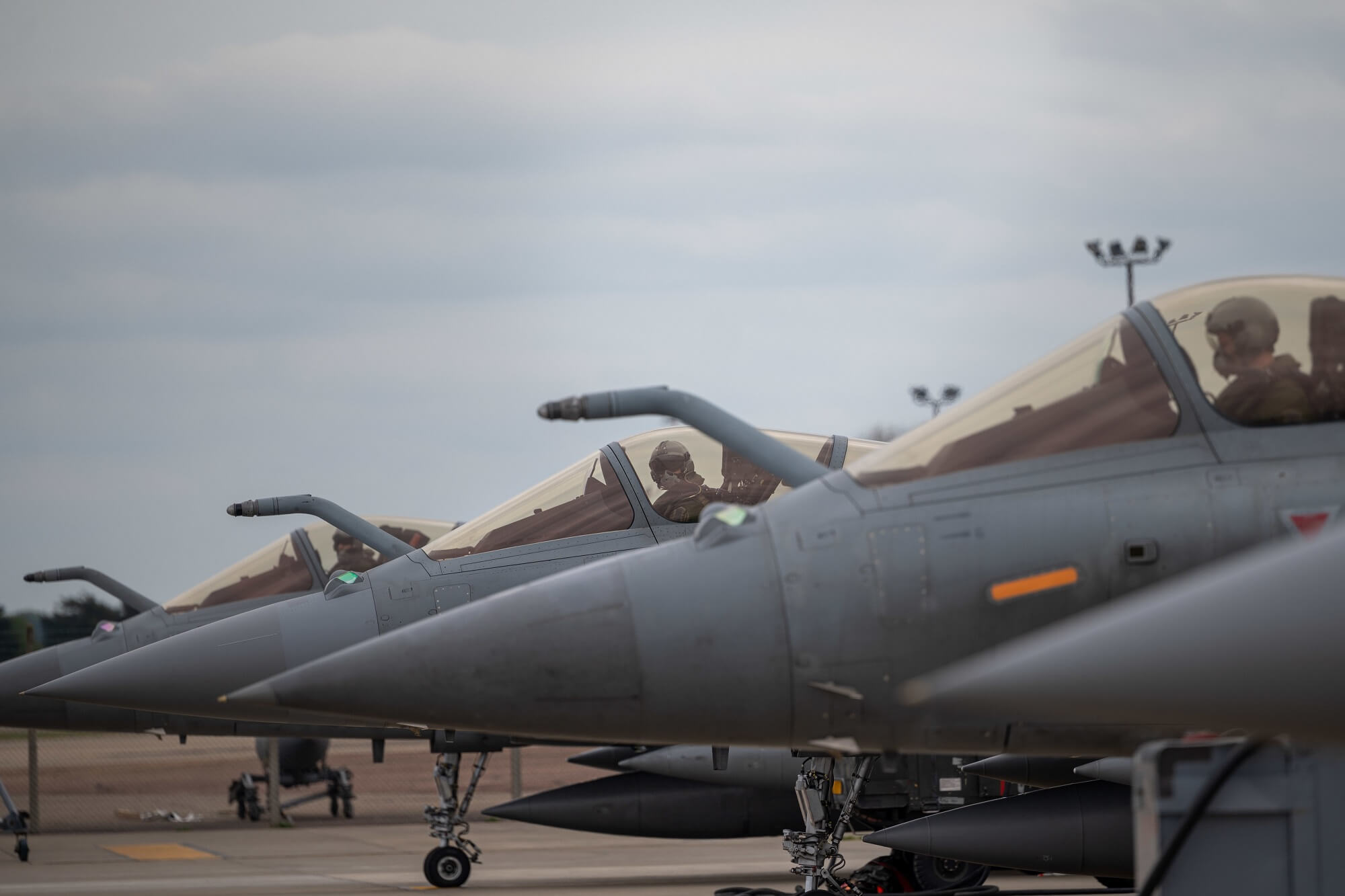
France and Ukraine have signed what both leaders called a historic defense agreement covering the procurement of 100 Dassault Rafale fighter jets, along with new air defense systems and drone capabilities. The signing took place on November 17, 2025, at Villacoublay Air Base, where French President Emmanuel Macron welcomed Ukrainian President Volodymyr Zelensky on the tarmac.
Zelensky described the accord as historic and said it will significantly strengthen Ukraine’s combat aviation and air defense network as it continues to face sustained Russian missile and drone attacks. Shortly after the ceremony, the Ukrainian president told TF1-LCI that Kyiv had placed an order for 100 Rafale fighters, the largest single combat aircraft acquisition in Ukraine’s history.
Ahead of the signing, French industry representatives presented the Rafale and its weapons package, the new-generation SAMP/T air defense system, and several drone platforms. The agreement is structured as a letter of intent, and the Élysée has not yet released full details on financing, delivery timelines, or industrial cooperation mechanisms. French officials framed the initiative as a way to place the strengths of France’s defense industry at the service of Ukraine’s long-term security.
The Rafale announcement follows Ukraine’s earlier letter of intent with Sweden, signed in October 2025, to explore the acquisition of up to 150 Gripen E fighters. That framework underscored Ukraine’s shift from urgent wartime deliveries to long-term force structure planning aimed at rebuilding a modern, predominantly Western-equipped air force. The Rafale deal places France alongside Sweden as one of the key partners shaping Ukraine’s future air combat capability.
Significant questions remain. It is not yet clear how many Rafales could be transferred from French stocks versus newly produced aircraft, how the package will be financed, or how quickly Ukraine will be able to train pilots, technicians, and maintainers for a high-end multirole platform. The integration burden is substantial, especially as Ukraine is already preparing to absorb F-16s while evaluating the Gripen framework.
Despite those uncertainties, the agreement signals a major political and industrial commitment by France and a strategic milestone for Ukraine. Delivery schedules, industrial ramp-up, and operational planning will determine how quickly Kyiv can translate this intent into combat-ready capability. Additional details are expected in the coming weeks as both governments outline the next steps.
source
