

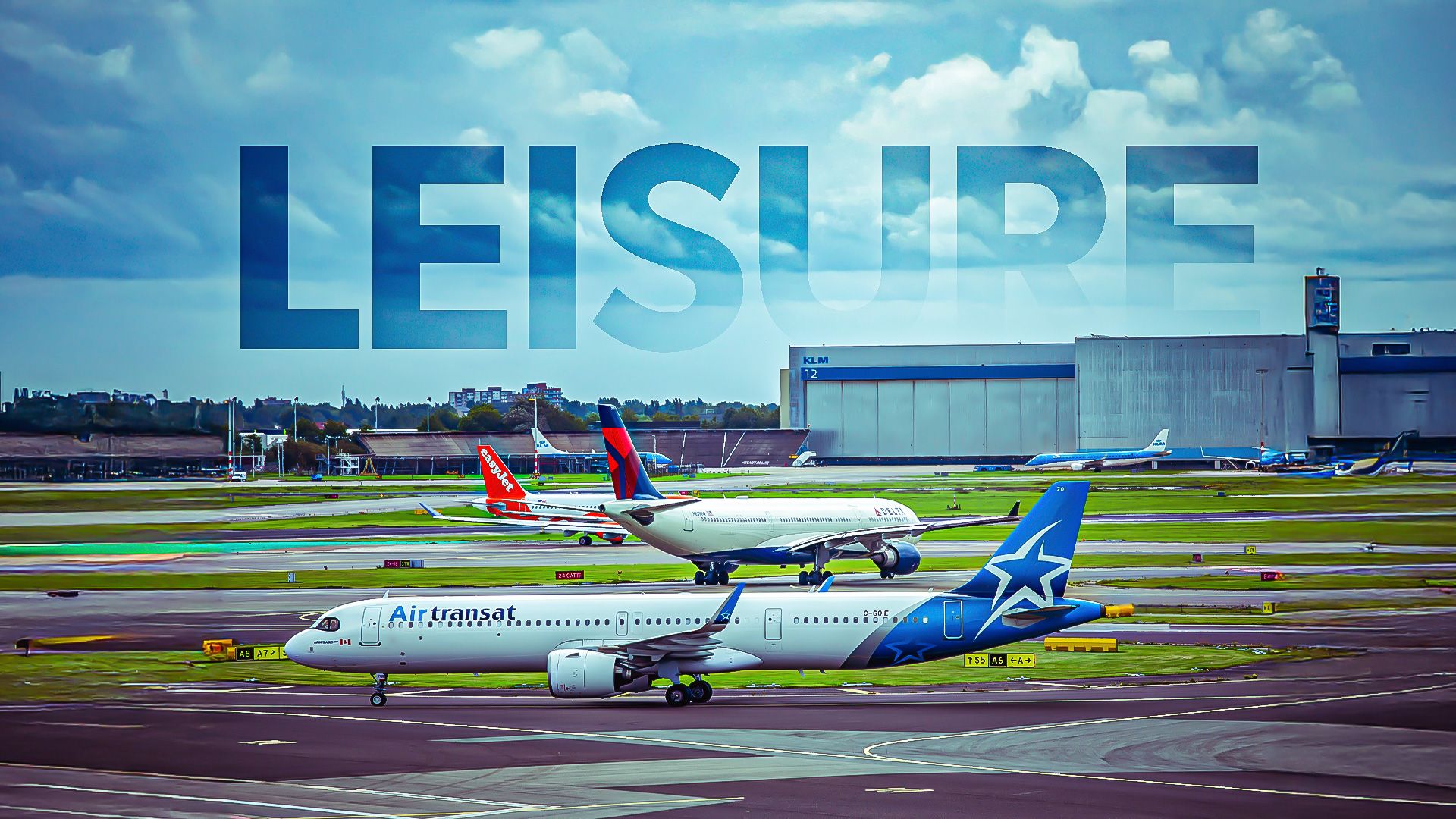
In an era when air travel increasingly focuses on speed, business class, and network efficiency, the world of leisure airlines deserves a moment of attention. These carriers excel at moving people toward the sun, sea, and escape, and they do it with service, brand identity, and destination-focus.
Our list is based on the results of the 2025 Skytrax World Airline Awards, specifically the “World’s Best Leisure Airlines” category, along with recent industry reports on routes, service, and customer experience. We rank the top 10 leisure carriers of 2025, highlighting what makes each one stand out and how they’ve earned their place.
Capital Airlines
China’s rising leisure airline

Beijing Capital Airlines enters this list at number 10, recognized in the Skytrax 2025 ranking for its evolving leisure-travel strategy and its growing presence in China’s domestic holiday market. It enters the list as a newcomer, reflecting the rapid growth of China’s domestic vacation market. With a stronghold on routes from Beijing and Shanghai to tropical destinations like Hainan and Sanya, the airline has become a favorite for Chinese travelers seeking sun and sea. In 2025, it also expanded its Hangzhou–Lisbon route to three weekly flights, signaling its ambition to bridge East and West for both business and leisure.
|
Official name |
Beijing Capital Airlines |
|
Headquarters |
Beijing Daxing Airport (PKX) |
|
Primary hubs |
|
|
Fleet (approx.) |
~80–85 aircraft (Airbus A320 family narrowbodies; Airbus A330 widebodies) |
|
Key routes |
Domestic: Sanya/Haikou (Hainan) et al.; International: Hangzhou Xiaoshan International Airport– Lisbon (seasonal/limited) |
|
Market focus |
Domestic resort traffic with selective long‑haul/ thin international expansion |
|
Why it matters |
High-frequency domestic leisure flows and growing international ambitions |
 Beijing Daxing Airport
 Shanghai Pudong International Airport
Though still evolving, its leisure-first strategy and network growth have earned it a place among the world’s top vacation carriers.
Its emerging leisure focus and strong network growth earned it a top‑10 position despite being a relative newcomer.
Corsair International
France’s long-haul vacation specialist

Corsair continues to shine as France’s top leisure airline, earning Skytrax’s top ten for the second year in a row, thanks to its long-haul connections from France to the Caribbean, Indian Ocean, and North America.
With direct flights from Paris and regional cities to Guadeloupe, Martinique, Réunion, and beyond, Corsair blends long-haul comfort with French hospitality. Thanks to its Train + Air program, travelers from 22 cities across France and Belgium can effectively buy a single itinerary from door to beach. Onboard, Corsair leans into simple comforts for long sectors: generous baggage allowances for families and menu items with regional touches, and its seasonal scheduling shows a carrier that calibrates capacity to tour-operator demand rather than hub-to-hub frequency.
Vietravel Airlines
Southeast Asia’s holiday newcomer

Vietravel Airlines claims the number 8 spot, making its mark in Asia’s vacation-travel space. The carrier is focused on beach and island destinations from Vietnam and neighboring countries, a market segment rebounding strongly post-pandemic. It operates routes to Phu Quoc Airport, Da Nang International Airport, and international destinations like Thailand, capitalizing on growing vacation demand post-pandemic.
The airline’s commercial playbook is familiar to leisure specialists: point-to-point routing timed for holiday windows, high-seat-density configs on narrowbodies, and a brand that sells the escape before it sells the seat.
For travelers in the region, Vietravel is increasingly associated with charter-like convenience and bundles that simplify the holiday purchase.
TUIfly
Europe’s integrated vacation airline

Being the aviation arm of Europe’s largest travel operator, TUIfly benefits from vertical integration with it. Focused on short- and medium-haul trunk routes from Germany , in 2025 it operates over 300 weekly flights to destinations like the Canary Islands, the Mediterranean, especially Egypt, and Cape Verde, plus a handful of long-range chartered services. TUIfly optimizes frequency and aircraft utilization to serve the classic European seasonal peaks.
Its product is designed for predictable, high-turnaround beach traffic: simple, reliable service, seat configurations that favor high-capacity leisure demand, and close coordination with TUI’s hotels and excursions. The ranking reflects robust positioning, though in a category with several global frontrunners, it ranks modestly.
Condor
Germany’s holiday-bridge airline

Condor continues to be Germany’s lifeline to the world’s sunniest spots. Its bold new livery, vertical stripes in vivid hues like coral red, towel-blue, or sand yellow, has redefined its brand, turning heads on the tarmac and evoking the joy of travel before you even board.
That look sits alongside a clear product push: Condor’s long‑haul operation is being standardized on the Airbus A330‑900neo family, a quiet, fuel‑efficient widebody that brings improved cabin pressurization, mood lighting, and refreshed IFE. The airline markets these aircraft as the backbone of its more comfortable long‑haul holiday product.
In the cabin, the airline aims for straightforward comfort: ergonomically sensitive seats in economy, upgraded premium economy offerings on long sectors, and lie‑flat options in business on some widebody services.
For holidaymakers, Condor’s selling point is familiarity paired with flair: it’s the airline you recognize in the resort car park and trust for a consistent return flight.
Edelweiss Air
Swiss precision for vacation flights

A subsidiary of  Lufthansa , Edelweiss Air is a lesson in boutique leisure done at scale. Operating from Zürich, the carrier concentrates on long‑haul holiday markets across Africa, the Americas, and Southern Europe, positioning itself as the more relaxed, tourism‑centric arm of the major airline group.
Edelweiss tends to choose equipment that improves range and comfort on long sectors, and its service tone emphasizes regional touches: destination-themed menus, curated in-flight media, and a reservation experience built to sell multi-leg holiday itineraries.
The result is an airline that reads premium without feeling like a full-service network carrier, precisely the reassurance travelers want when a flight is part of a larger holiday purchase. It operates vacation-oriented routes from Switzerland into Africa, the Americas, and Europe, pairing holiday destinations with premium service. Its placement bridges the gap between niche holiday carriers and full-service airlines that still serve vacation flyers.
Sunwing Airlines
Canada’s large-scale leisure specialist

Sunwing airlines is a case study in high-volume, price-focused leisure flying from Canada to the Caribbean, Mexico, and sun‑belt US markets. Its network is heavily seasonal and tour‑operator aligned, with a timetable that swells in winter to move families and sun-seekers south. Sunwing’s commercial strength is simple: aggressive pricing paired with packaged resort offers, charter-style seasonal capacity, and point-to-point routing that minimizes connections. In 2025, the brand’s flying operations were formally absorbed into WestJet, with Sunwing’s final commercial services in late May, and its narrowbody network migrated into WestJet’s operating certificates.
The practical effect for travelers is continuity rather than disappearance: with the same sun‑destination frequencies, many of the seasonal charters and Sunwing Vacations packages remain available, but aircraft, schedules and passenger operations are now planned and flown under WestJet’s timetable and commercial rules. For the industry, the transition matters because WestJet inherited Sunwing’s high‑turnaround winter capacity and tour‑operator relationships, consolidating Canada’s leisure offering and reshaping how packaged-sun travel will be marketed and operated going forward.
For Canadians seeking value and straightforward holiday logistics, Sunwing’s model of moving many passengers efficiently during peak windows remains compelling.
SunExpress
A Europe–Turkey holiday network heavyweight

SunExpress takes the bronze in the 2025 ranking. A joint venture between Lufthansa and  Turkish Airlines , SunExpress occupies a strategic sweet spot: it is optimized for Europe –Turkey leisure flows and the wider Eastern Mediterranean market. SunExpress balances scheduled services with charter flexibility, feeding vacation demand from Germany, the Netherlands, and other Northern and Central European markets into Turkish coastal hubs and beyond.
The carrier’s strength is network design: high-frequency feeds on short-haul leisure routes, pragmatic aircraft types that suit quick turnarounds, and seasonal route additions that follow European holiday patterns. This focus on a high-demand leisure corridor underpins its high ranking.
With extensive touristic routes all around Turkey, and also Egypt, Bulgaria, and beyond, it offers affordable fares and efficient service tailored to vacationers. Its third-place ranking confirms its dominance in one of Europe’s most popular holiday circuits. With effective network design geared for leisure, it offers both service and cost appeal.
TUI Airways
The UK’s vacation-travel powerhouse

TUI Airways functions as the group’s long‑range anchor and UK-facing brand. Operating modern widebodies and narrowbodies from UK gateways to long-haul resort destinations such as the Caribbean, the Red Sea, Cape Verde, and the Maldives. TUI Airways supports large-package holidays, specialist charters, and scheduled services that demand more range and onboard comfort. In practice, TUI Airways carries the chain’s highest-capacity leisure missions and longer sectors, with cabins and schedules tailored to families, large groups, and travelers buying all‑inclusive vacations.
Its network decisions are driven by the tour operator’s product needs: longer sectors, more luggage allowance, and the ability to upsize aircraft for peak weeks. TUI Airways is the UK’s leading leisure airline, backed by the global TUI tourism group. With a modern fleet and access to destinations from Spain to the Maldives, it offers fully integrated vacation experiences, from booking to beach. Its second-place slot underscores the power of combining airline operations with full-service tourism.
Air Transat
The world’s best leisure airline in 2025

Based in Montréal, the carrier’s strength is an integrated North American leisure network that balances transatlantic leisure services with dense seasonal services to the Caribbean and Mexico. Its fleet mix and seating choices are carefully matched to leisure demand: comfortable economy for holidaymakers, upgraded options for families and value-oriented ancillaries that complement package sales. Reputation matters in leisure travel, and Air Transat’s repeated recognition hinges on the small service decisions travelers remember: reliable schedules during peak holiday weeks, cabin touches designed for families, and a network that gets people where resorts want them.
With this top ranking, Air Transat stands as the benchmark in global leisure aviation, not simply a vacation carrier, but the standard by which others are measured.
source
