

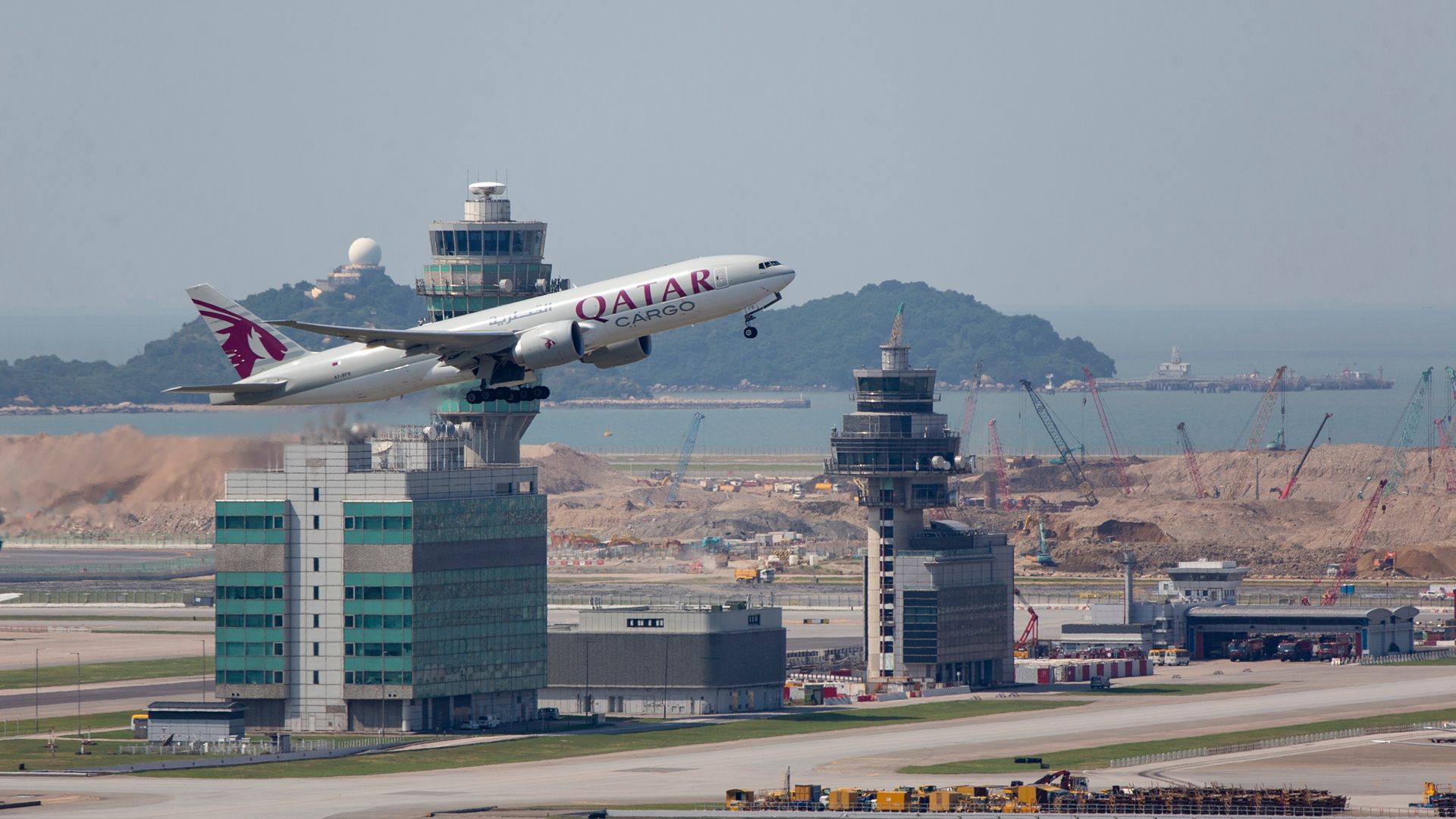
 Qatar Airways will officially divest its entire 9.6% stake in Cathay Pacific, ending its eight-year shareholding stint with the Hong Kong-based carrier. The Qatari airline will sell its shares back to Cathay in a deal worth almost $900 million.
Since completing its minority ownership back in 2017, Qatar has maintained a passive role at Cathay and is now cashing in to focus on other opportunities. Although benefiting from a 4% discount on market pricing, Cathay will be buying back the stake with a 35% premium on the price Qatar paid for its shares eight years ago.
Qatar Airways Sells Its Cathay Shares

Qatar Airways will sell its shares back to the Hong Kong airline in a buyback deal valued at $896 million, or $1.40 per share, following extended discussions between the two carriers. According to a filing with the Hong Kong Stock Exchange on November 5, Cathay will buy all 643,076,181 of Qatar Airways’ shares, which represents around 9.57% of the company.
The purchase will be subject to shareholder approval and will see Cathay reclaim the shares it had sold to Qatar Airways for over $660 million back in 2017. This vote will require 75% support and will take place at an upcoming extraordinary general meeting. Qatar and Cathay will remain close partners as part of their mutual  oneworld membership, and Hong Kong will stay a key market for the Qatari carrier.
Qatar Airways CEO, Badr Mohammed Al-Meer, commented,
“Following a period of record profitability and strong performance, this decision is part of a proactive strategy to optimise our investments and position the group for long-term growth.”
A Key Global Investment Player

Qatar Airways is one of the world’s most influential carriers, known not only for its global network and elite service, but also as a powerful investor in other airlines. The Qatari airline holds a significant 25.1% stake in IAG Group — owner of British Airways and other European airlines — as well as securing recent holdings in Airlink and Virgin Australia. It also has a hand in other airlines across the world, including shares in China Southern and LATAM.
When it sealed its stake in Cathay from Hong Kong-based company Kingboard Chemical Holdings in 2017, it represented the first time a Middle Eastern airline had invested in an Asian carrier. Having posted a record $2.15 billion full-year profit for 2024, Qatar Airways is in a strong position to continue influencing the global aviation industry, as noted by its CEO.
Its 25% acquisition of Virgin Australia has so far proven a shrewd maneuver, enabling Qatar to increase its presence in Australia after repeated attempts to obtain more slots were rebuffed by Australian authorities. It is also in the closing stages of securing a 49% holding in Rwanda’s national carrier, Rwandair.
Ownership Changes At Cathay

The two dominant shareholders of Cathay Pacific are Hong Kong-based conglomerate Swire Pacific and Chinese national carrier Air China. As it stands, Swire Pacific holds a 43% stake, while Air China maintains a 29% stake. With the acquisition of Qatar’s minority holding, the ownership structure at Cathay will be altered, with Swire Pacific’s stake going up to 47.7%, and Air China’s increasing to 37.8%.
Cathay is presenting the buyback deal as a move towards strengthening Hong Kong’s position as a global aviation hub, stating it would fund the acquisition through existing credit and internal finances. Cathay Chairman Patrick Healy pointed to over HK$100 billion ($12.8 billion) into the airline’s fleet and lounges over the course of seven years, signaling Cathay’s confidence in its future.
|
Aircraft Type |
Total |
Avg. Age |
|---|---|---|
|
Airbus A321neo |
16 |
3.0 years |
|
Airbus A330-300 |
43 |
17.2 years |
|
Airbus A350-900 |
30 |
7.7 years |
|
Airbus A350-1000 |
18 |
6.0 years |
|
Boeing 777-300 |
17 |
24.2 years |
|
Boeing 777-300ER |
35 |
13.1 years |
The carrier has a significant number of narrowbody and widebody aircraft on order, helping it modernize its fleet. This includes the Airbus A321neo, as well as the A330neo and Boeing 777X, the latter being a direct replacement for its 777-300ER fleet.
source
